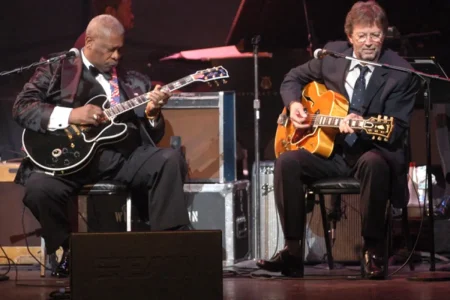
Some songs are born famous. “The Thrill Is Gone” was born tired, broke, and slightly bitter – and that is exactly why it worked. Before B.B. King made it sound like the blues could headline a modern radio playlist, it lived a different life as a 1951 rhythm-and-blues hit cut by Roy Hawkins’ original “The Thrill Is Gone”, a singer whose whole brand was heartbreak and hard luck.
The fascinating part is not that B.B. covered an older tune. It’s that he rebuilt it with the instincts of a DJ, the discipline of a bandleader, and the nerve of a pop producer – then acted like it was no big deal. That quiet confidence is the real thrill: the moment a master stops “playing blues” and starts designing emotions.
From Roy Hawkins’ sad-sack shuffle to a standard-in-waiting
Roy Hawkins released “The Thrill Is Gone” in 1951, and it became a major R&B success in its own right. Hawkins’ version sits in that early-50s space where jump blues and after-hours R&B overlap: a mournful shuffle, straightforward changes, and a vocal that sounds like it’s leaning on the bar for support.
That original recording matters because it shows what B.B. King didn’t do later. He didn’t simply modernize the sound; he changed the emotional grammar of the tune. Hawkins’ performance feels like a confession to the room. B.B.’s feels like a verdict delivered in public.
“Without tellin’ them what I was gonna do, I slipped into this tune. And everybody fell right in, and it seemed to be the sweetest sound ever to me.”
– B.B. King, recalling how he slipped into the tune and the band fell right in
Why B.B. King’s “Completely Well” sessions were a turning point
By the time “The Thrill Is Gone” landed on Completely Well, B.B. King was already a giant in the blues world. What he needed was not credibility – he needed translation. The late 60s and early 70s rewarded artists who could cross over without sounding like they were begging for permission.
Completely Well is often discussed as a pivot toward a more contemporary studio approach, and “The Thrill Is Gone” is the clearest example of that philosophy. The track doesn’t just feature B.B. King; it frames him like a lead actor in a carefully lit scene.
The hidden “pop move”: harmony that steps beyond three chords
Traditional minor blues harmony can be brutally effective with a simple i-iv-v vocabulary. The risk is that, to mainstream ears, it can also feel predictable. B.B. King’s arrangement adds a small but meaningful harmonic twist – a move that hints at pop composition without losing the blues spine.
That’s the kind of change that makes musicians nod and casual listeners lean in. It gives the vocal line a stronger sense of destination, so the lyric “the thrill is gone” lands like a realization rather than a repeated complaint.
Quick comparison: Hawkins vs. King
| Element | Roy Hawkins (1951) | B.B. King (1970) |
|---|---|---|
| Core feel | Mournful shuffle | Slow-burn soul-blues with rock-steady pulse |
| Vocal stance | Raw, personal lament | Controlled, public-facing statement |
| Hook strategy | Performance-driven | Arrangement-driven (intro note, riff logic, space) |
The famous opening note: a masterclass in tension
B.B. King’s recording begins with a single sustained guitar note, wide with vibrato, held long enough to make you wonder if the band is even going to come in. That is not an accident; it is a storytelling tactic. He makes space feel like part of the groove.
In older blues recordings, intros often function like a count-off with swagger. Here, the intro functions like a curtain rise. It tells you: this is going to be classy, slow, and merciless.

The groove conspiracy: bass, drums, and organ doing less (and winning more)
One reason “The Thrill Is Gone” endures is that the band resists the temptation to “blues it up” with constant fills. The rhythm section plays as if the song is a soul single first and a blues jam second. That choice makes the track feel modern even decades later.
The bass pattern is particularly important: it’s melodic but restrained, giving the vocal a staircase to walk down. The drums lock into a slightly behind-the-beat pocket that feels inevitable, not flashy. Organ colors the edges, giving the track a cool glow rather than a churchy shout.
Edgy claim: “The Thrill Is Gone” is blues that doesn’t apologize
Plenty of blues crossover attempts sound like compromise: “Let’s add strings and hope the kids bite.” “The Thrill Is Gone” doesn’t have that energy. It doesn’t chase the pop audience – it dares them to handle adult emotions without a sugar rush.
That’s why it hit. The record doesn’t ask for sympathy. It offers clarity. In a culture that often romanticizes messy heartbreak, B.B. King makes emotional finality sound elegant. That is a radical message in any era.
Chart impact and long tail: the song that followed B.B. everywhere
B.B. King’s “The Thrill Is Gone” became his biggest mainstream hit with a notable chart run and one of the defining recordings of electric blues. Its staying power is obvious if you look at how it continues to circulate on major streaming platforms, where it remains one of his most-played tracks.
It also became a calling card in live performance. A great blues performer can stretch a tune for ten minutes. A great entertainer can make those ten minutes feel like a single held breath. “The Thrill Is Gone” gave B.B. both options: a tight radio single and a stage vehicle.
Roy Hawkins’ afterlife: when a hit becomes raw material
There’s a bittersweet footnote here. Hawkins had the hit first, and his version deserves more attention than it gets. But B.B. King’s remake became the definitive reading for most listeners, essentially turning Hawkins’ success into a launchpad for someone else’s legend.
That isn’t theft; it’s folk process at record-industry scale. Blues history is full of shared phrases, recycled melodies, and traded titles. What changed in 1970 is that B.B. King showed how to take that tradition and make it competitive in a pop marketplace.
Listening guide: what to focus on if you want to hear the “upgrade”
1) The vocal melody is simpler on purpose
B.B. King’s vocal line is designed to be hummed. That matters because singable melodies survive format changes: AM radio, FM radio, jukeboxes, oldies stations, playlists, you name it.
2) The guitar answers, it doesn’t interrupt
His fills don’t fight the lyric; they echo it. Lucille functions like a second voice, but with better timing and fewer excuses.
3) The arrangement “breathes”
Notice how often nothing happens, and how much that “nothing” adds. Restraint is a production choice, not a lack of ideas.
For musicians: a practical way to steal the magic (legally)
If you want to capture the “Thrill” effect in your own playing or arranging, start with structure before tone. Yes, B.B.’s vibrato is iconic, but the larger lesson is how the song is staged.
- Leave space after vocal phrases so fills feel like commentary, not clutter.
- Use a steady, almost rock-like backbeat to make minor blues harmony feel contemporary.
- Build a signature intro (a single note, a short riff, a stark chord) that’s instantly identifiable.
- Choose one “color” instrument (organ, strings, muted horns) and keep it tasteful.
And if you want a nuts-and-bolts look at the chord-melody framework, published sheet music for “The Thrill Is Gone” can be a helpful map, even if you ultimately play it by ear.

The bigger legacy: B.B. King as a curator, not just a guitarist
B.B. King is often celebrated for technique: vibrato, phrasing, economy. But “The Thrill Is Gone” highlights a different talent: curation. He remembered an old record, carried it for years, and waited until he had the right band chemistry and studio conditions to make it unavoidable.
The Blues Hall of Fame recognition of B.B. King’s influence fits, but recordings like this explain how that influence traveled so far: he made the blues sound like it belonged in the present tense.
Conclusion: the thrill wasn’t gone, it was refined
Roy Hawkins gave the world a great heartbreak song. B.B. King turned it into a universal statement by tightening the melody, modernizing the pulse, and adding just enough harmonic sophistication to flirt with pop without abandoning the blues.
The punchline is almost rude in its simplicity: the “upgrade” wasn’t louder, faster, or more complicated. It was better designed. And that is why “The Thrill Is Gone” still feels like a lesson every time it plays.