
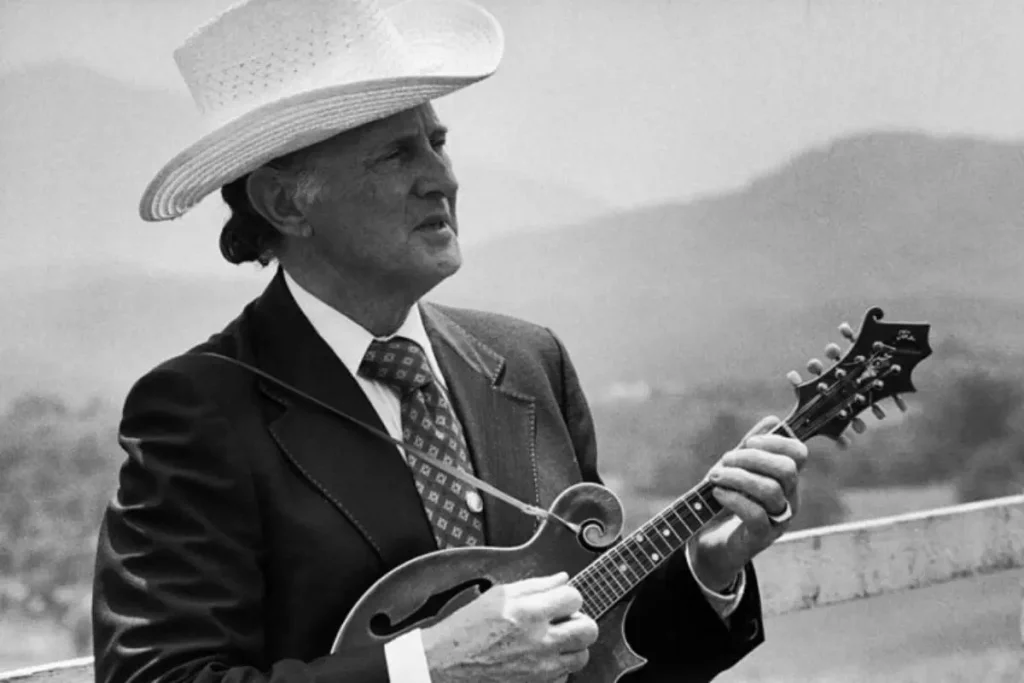
Bluegrass is often sold as wholesome porch music. Bill Monroe treated it like a contact sport: fast, acoustic, and unforgiving to anyone who played it sloppy.
After Monroe, the genre didn’t fade; it hardened into a blueprint that still decides what “traditional” means, from band lineup to solo etiquette.
Sept. 9, 1996: The High, Lonesome Sound Goes Quiet
Bill Monroe died in Springfield, Tennessee, at the Northcrest Home and Hospice Center after suffering a stroke earlier in the year. He was 84, and the man most credited with creating bluegrass became history overnight.
That matters because Monroe wasn’t only a star – he was the standard. Bluegrass musicians still argue with his ghost every time they debate what counts as “real.”
Monroe’s Recipe for Bluegrass: Bagpipes, Baptists, and Breakneck Tempo
Monroe once described bluegrass as “Scottish bagpipes and ole-time fiddlin’,” then pointed to church singing, blues, jazz, and the “high lonesome” sound. The classic bluegrass band setup is banjo, fiddle, guitar, mandolin, and bass, trading improvised breaks the way a jazz combo would.
His genius was making contradictions lock together: sacred harmony over dance tempos, old-world melody over blues phrasing, and a mandolin that snaps like a snare drum without ever becoming one.
The Monroe Brothers: Gospel Heat in a 1930s Recording Sprint
Long before “bluegrass” was a label, Bill and Charlie Monroe cut records as the Monroe Brothers. RCA Victor signed them in 1936; their gospel single “What Would You Give in Exchange for Your Soul?” hit quickly, and they recorded 60 tracks for Victor’s Bluebird label between 1936 and 1938.
Listen closely and you can hear the future: urgency, tight harmony, and a rhythm that leans forward like it’s late for its own train.
The Opry Audition: One Song, One Founder, and a 50,000-Watt Megaphone
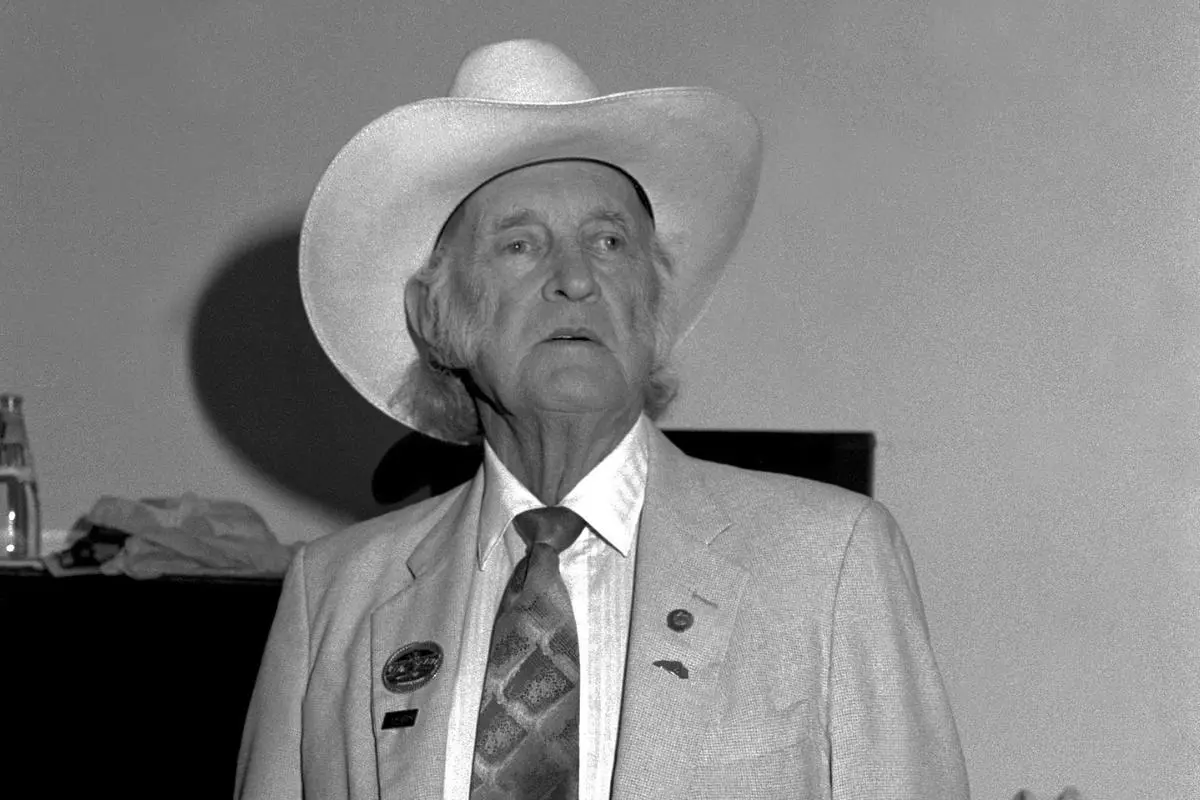
In October 1939 Monroe went to Nashville to audition for the Grand Ole Opry, and WSM’s George D. Hay and staff hired him on the strength of “Mule Skinner Blues.” WSM’s signal and NBC exposure pushed him nationwide, and his late-1940s Columbia sides with Earl Scruggs and Lester Flatt are now widely regarded as definitive, as documented in his Country Music Hall of Fame biography.
It’s a perfect origin story because it’s Monroe in miniature: traditional material, performed with new muscle. He didn’t borrow the spotlight from country music – he kicked the door in and renamed the room.
December 1945: When Flatt and Scruggs Joined and the Blueprint Locked In
On December 8, 1945, Monroe and the Blue Grass Boys took the Ryman stage with guitarist Lester Flatt and banjo player Earl Scruggs, a moment the Opry frames as the birth of a new style soon known as “bluegrass.”
Think of it as a five-part machine: Flatt’s rhythm kept the engine steady, Scruggs’ three-finger banjo became the supercharger, and Monroe’s mandolin drove the off-beat like a whip. The intensity came from attack, timing, and nerve.
Blue Grass Boys Boot Camp: The Band That Graduated Half the Genre
The Bluegrass Music Hall of Fame and Museum describes Monroe as a master blender, pulling “ancient tones” and influences (from the British Isles to blues and holiness gospel) into a new form. It notes that bluegrass crystallized when Scruggs joined in 1945, and that the years with Monroe, Flatt, Scruggs, Chubby Wise, and Howard Watts set a “high water mark” through performances and Columbia recordings.
Translation for working musicians: the Blue Grass Boys were a finishing school with a dropout rate. Monroe demanded adults-only precision at kids-only speed, and the graduates reshaped American acoustic music.
The Million-Dollar Mandolin: A Relic, a Crime, and a Reconstruction
Monroe’s most mythic tool was his 1923 Gibson F-5 mandolin built under Lloyd Loar at Gibson, the instrument that became synonymous with his sound. In 1985, an intruder smashed that mandolin at Monroe’s home – an act one writer called “sheer sacrilege” to bluegrass fans.
The lesson for gear-obsessed pickers is brutal: the magic is not the price tag, it’s the right hand. Monroe didn’t invent bluegrass because he owned a rare instrument; the instrument became rare because he invented bluegrass on it.
“Blue Moon of Kentucky”: The Crossover That Proved Bluegrass Could Mutate
The Library of Congress added Bill Monroe and the Blue Grass Boys’ 1947 recording of “Blue Moon of Kentucky” to the National Recording Registry in 2002, calling it the song’s earliest recording and noting Elvis Presley’s later Sun-session take. Presley’s version hit hard enough that Monroe revised his own performance to reflect that influence.
Elvis cut “Blue Moon of Kentucky” at Sun Studio on July 7, 1954, and it appeared on Sun single 209 that month. One of rockabilly’s early shocks was built on a Monroe tune.
When the Establishment Finally Agreed With the Pickers
The awards came late, but they came loud: Monroe was named a 1982 NEA National Heritage Fellow; he received the Recording Academy’s Lifetime Achievement Award; and he was a 1995 National Medal of Arts recipient. Rock’s gatekeepers inducted him in 1997 as a Musical Influence, and Nashville’s songwriters enshrined him in their 1971 class.
If anyone dismisses bluegrass as “simple,” point to that list. Institutions don’t hand out medals for simplicity – they do it for originality that won’t go away.
How to Steal Monroe’s Lightning (Without Becoming a Copy)
- Chase drive, not speed. Start slower, then raise tempo only when the chop and bass pulse stay calm.
- Make mandolin rhythm the priority. Lead breaks are famous, but the off-beat chop is the engine.
- Sing harmony like a high-wire act. Stack a tenor line above the melody and keep it clear, not sweet.
- Take shorter, cleaner breaks. A perfect eight bars beats a messy sixteen.
- Learn sacred and secular sets. Moving from gospel feel to breakdown is the full story.
Most of all, remember Monroe’s unspoken rule: bluegrass should sound alive. If your band can’t make a room feel like it’s tipping forward, you’re playing the notes but missing the point.
Conclusion
Bill Monroe’s death closed one life, not one chapter. Bluegrass is still arguing with him, imitating him, and trying to outrun him – which is exactly what happens when one musician doesn’t just lead a genre, but invents the engine that powers it.


