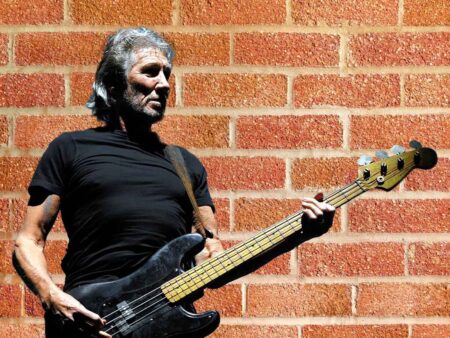

Few rock stories are as mesmerising and as petty as the cold war between Roger Waters and David Gilmour. Pink Floyd wrote music about madness, war and alienation, then went home and lived all three. What broke the band was not a lack of ideas, but a surplus of ego.
Today their feud is routinely cited as one of music’s most entrenched conflicts, with journalists and even drummer Nick Mason describing the pair as ageing men still locked in a bitter stand off. To understand why Waters came to feel he was bigger than Pink Floyd itself, and what really happened after he walked away, you have to wind back to the 1970s.
From psychedelic comrades to power struggle
After Syd Barrett’s collapse and departure at the end of the 1960s, Waters and new guitarist David Gilmour gradually became the twin engines of Pink Floyd. Waters steered the concepts and lyrics; Gilmour provided the soaring guitar voice and much of the melodic sense. Albums like Meddle, The Dark Side of the Moon and Wish You Were Here turned a once underground psychedelic group into one of the biggest acts on the planet.
By the mid 70s, Waters had taken firm control of the band’s direction, writing all the lyrics on Dark Side and becoming the dominant songwriter on Wish You Were Here and Animals. French reporting on the band has described an internal split between the “architects” (Waters and Mason, obsessed with structure and concept) and the “musicians” (Gilmour and Richard Wright, focused on feel and harmony), with tensions already simmering during the making of Wish You Were Here.
Commercially, they were untouchable. Artistically, the gap between Waters’s increasingly rigid vision and the rest of the band was widening fast. A group that once improvised in clubs was turning into a vehicle for one man’s psyche.

The Wall and the quiet coup
The Wall in 1979 was the moment Waters effectively staged a bloodless coup. The concept was his, the narrative was his, and he pushed the others to execute it with near-military discipline. Keyboardist Richard Wright was forced out during the sessions and rehired only as a salaried player for the tour, a humiliation that underlined who was really in charge.
Two years later came The Final Cut, a bleak, political record originally conceived as a soundtrack project and ultimately released with a subtitle that framed it as Waters’s requiem, merely performed by Pink Floyd. He wrote all the material and sang almost all the lead vocals, while contributions from Gilmour and Mason were minimal. Biographers and critics widely treat it as a de facto Waters solo album that happened to carry the band name.
Inside the group, resentment was boiling. Gilmour felt he was being reduced to a session guitarist on his own band’s records, while Waters saw a lack of new material from his bandmates as proof that he alone was carrying the creative weight. In his mind, Pink Floyd without his concepts was simply not worth continuing.
‘I was Pink Floyd’: ego, exit and a High Court offensive
By 1984, relations were so bad that a dinner between Waters, Gilmour, Mason and manager Steve O’Rourke ended with each side walking away believing the exact opposite of what had been decided. Gilmour and Mason thought the band might carry on after Waters finished his solo work; Waters left convinced Pink Floyd was effectively over.
In 1985 Waters formally notified the record companies that he was leaving, then went to the High Court seeking to dissolve the partnership and prevent the others from using the Pink Floyd name. In court filings he described the group as a “spent force creatively”, effectively arguing that without him there was no real band left. It was not just a business move; it was a statement that his writing was the only thing that truly mattered.
Gilmour did not take kindly to being declared artistically dead. Interviewed later, he said Waters was acting like a dog in the manger and called the idea that any one member was Pink Floyd “extremely arrogant”. Nick Mason has been even blunter, saying Waters tended to judge everything by the writing and did not properly respect Gilmour’s playing or singing.
The lawsuit that backfired
The legal battle dragged on for roughly two years, with fierce wrangling over the name, logos and future touring rights. Contemporary accounts describe it as a miserable period that turned private grudges into a public civil war. The fight finally ended with an out of court settlement on Christmas Eve 1987 aboard Gilmour’s houseboat on the Thames.
The outcome was brutal for Waters’s ego. Gilmour and Mason kept the Pink Floyd name and the right to tour the classic catalogue; Waters retained control of The Wall concept and certain stage elements, but he did not get to bury the band. In later interviews he has admitted he was wrong to sue, calling it a bad commercial decision and acknowledging that the Pink Floyd name had value independent of his opinion of the others.
In short, Waters walked out convinced he was better than the band – and the courts effectively told him the band could live on without him.

Two Pink Floyds: what happened next
Gilmour’s Pink Floyd: inheritance and reinvention
Gilmour faced a nasty question in 1987: had Waters been right? If Pink Floyd without Roger was a hollow shell, the first post Waters album would expose it.
A Momentary Lapse of Reason arrived that year after a fraught recording marked by ongoing legal threats from Waters. It was built largely from material Gilmour had intended for a solo record and brought in outside writers to fill the lyrical gap Waters left. Critics were split, and Waters sneered at the project, but commercially it was a juggernaut, going multi platinum and powering a stadium tour that reasserted Pink Floyd as a live force.
Gilmour later admitted it was, in effect, a carefully crafted imitation of classic Floyd, joking that it was a fair forgery, but it proved a crucial point: audiences were happy to accept him as the face of Pink Floyd. The follow up, The Division Bell in 1994, was more collaborative with keyboardist Rick Wright and reached number one in both the UK and US, again backed by a colossal tour.
By the time the mostly instrumental The Endless River appeared decades later, Pink Floyd under Gilmour had released three successful studio albums and some of the biggest tours in rock history without Waters. Artistically you can argue about quality, but in business and legacy terms, Waters’s claim that the band was finished without him simply did not come true.
Roger Waters solo: the provocateur in his own theatre
Waters, for his part, finally got what he had wanted inside Pink Floyd: absolute control. His solo albums, from The Pros and Cons of Hitch Hiking and Radio K.A.O.S. through to Amused to Death and later work, pushed his political and narrative obsessions even further, often with less concern for band chemistry and more for lyrical message.
On stage he leaned heavily on Floyd material he wrote, mounting vast productions of The Wall and complete performances of The Dark Side of the Moon, alongside newer songs. In recent years he has re recorded The Dark Side of the Moon as a stark, spoken word heavy solo project and continued to tour arenas and stadiums with visually aggressive shows, all while working on a steady stream of new music.
Commercially, he has remained a major live draw. Culturally, he has become a polarising figure, admired for uncompromising politics and theatrical ambition, criticised for the same traits. That polarisation has bled back into the Pink Floyd story, keeping the old wounds with Gilmour very much open.
A feud that refuses to die
For a brief moment, it looked as if age might cool tempers. In 2005, Waters, Gilmour, Mason and Wright reunited at Live 8 in London for a short but powerful set, their first performance together since 1981. Fans dreamed of a full tour; Gilmour shut the door almost immediately, saying the rehearsals had been tense and he had no appetite to rejoin a band he had finally stabilised.
Since then there have been only carefully controlled one offs: Gilmour guesting on Waters’s The Wall tour in 2011, Mason sitting in on certain shows. Otherwise, the pattern has been familiar: moments of civility followed by new flashpoints.
In 2018 and 2020, interviews and online statements showed the bitterness had not faded. Mason expressed disappointment that his old friends were still, in his words, older men at loggerheads. Gilmour was quoted describing Waters as something of a megalomaniac, while Waters publicly complained that Gilmour blocked him from using the official Pink Floyd website and social media to promote his solo work, a dispute that spilled into a public feud over the band’s online presence.
More recently, their political differences – particularly over Waters’s outspoken views on global conflicts – have further deepened the divide, with news reports noting social media clashes and very different public stances. Both men have ruled out any meaningful reunion. Waters has bluntly said there is no reason for them ever to share a stage again; Mason has admitted that, while he would be open to it, there is simply no appetite from the principals.

Who really ‘won’ – Waters or Gilmour?
| Aspect | Roger Waters | Post Waters Pink Floyd |
|---|---|---|
| Artistic control | Total control of concepts, lyrics and staging on his solo work, free from band compromise. | More collaborative, with Gilmour steering sound and inviting contributions from Wright, Mason and outside writers. |
| Commercial outcome after 1985 | Strong touring career and respected albums, but largely trading on Pink Floyd material he wrote. | Three hit studio albums, massive world tours and a preserved band brand that massively out earned expectations. |
| Myth and legacy | Seen by many as the conceptual architect of Floyd’s golden era, but also as domineering and difficult. | Sometimes viewed as a slick continuation or even a forgery, yet for millions of fans Gilmour’s guitar and voice are Pink Floyd. |
If Waters’s unspoken thesis was “I am the band”, history delivered a mixed verdict. He was right that his writing defined the 1973 to 1983 run; without his obsessions there is no Dark Side, no Wall. But he was dead wrong that the others were expendable. Those records work because Gilmour’s melodies, Wright’s harmonies and Mason’s feel balance his rage and paranoia.
Gilmour, for his part, proved that the name Pink Floyd could thrive without Waters, but he never matched the sheer conceptual bite of Waters at his peak. Even supporters admit the later albums can sound like luxurious echoes of past glories rather than radical new statements.
What the rift really cost
For fans who grew up with the band in the 60s, 70s or 80s, the real loss is not measured in record sales, but in missed possibilities. A functional Waters Gilmour partnership in the late 80s and 90s could have produced a handful of towering records rather than two separate, competing catalogues that each feel slightly incomplete.
There are also lessons here for any band, at any level:
- If one member controls everything for too long, they will eventually believe they are the band.
- Legal victories do not heal artistic or personal wounds. Waters won nothing meaningful by suing; Gilmour won the name but not peace.
- The audience often loves the chemistry more than any single genius. Remove one ingredient and the flavour changes, even if the label stays the same.
Conclusion: a masterpiece poisoned by pride
In the end, the rift between Roger Waters and David Gilmour left a strange legacy. Pink Floyd as a business and touring machine survived and even flourished without its chief architect. Waters as a writer and performer continued to command huge stages and headlines. On paper, both sides “won”.
Yet Pink Floyd as a living, evolving band effectively died around the time Waters decided he was better than the rest of them. The outcome is a catalogue of unbeatable music and an equally towering cautionary tale about what happens when talent and ego are left to fight it out with no referee.