

Talking Heads’ And She Was
is one of those songs that sounds like sunlight even when it’s singing about escape. It’s bouncy, clean, almost suburban in its sparkle. But the origin story is stranger, darker, and far more American than the guitar jangle suggests: David Byrne wrote it after hearing about a woman he knew who’d take LSD and lie in a field near a Yoo-hoo factory, describing how she’d float out of her body and fly above the landscape.
That detail matters because it’s not a generic psychedelic
anecdote. It’s transcendence with an industrial aftertaste: fields, factories, rusted cars, fast food joints, and a person trying to rise above it all while also disappearing inward. Byrne’s own phrasing makes the tension clear: it felt tacky, but it also felt real.
What David Byrne said the song was about
The cleanest explanation comes from Byrne himself, in the liner notes for Once in a Lifetime: The Best of Talking Heads. In those notes, he describes the “hippie chick in Baltimore” and her LSD ritual: taking acid, lying down near the Yoo-hoo factory, then fly out of her body
.
Byrne doesn’t present it as glamorous counterculture mythology. He calls it a tacky kind of transcendence
and then immediately admits why it stuck: it felt like a new religion
emerging from everyday American debris.
“It seemed like such a tacky kind of transcendence, but it was also so real. Like a new religion growing out of piles of rusted cars and fast food joints.”
David Byrne, liner notes for Once in a Lifetime: The Best of Talking Heads
Chris Frantz’s read: romance, frustration, gravity
Drummer Chris Frantz has offered a complementary, more human angle: not just a girl flying
, but someone being watched by a narrator who wants her back. In Frantz’s summary, the guy telling the story is in love with her and wishes she’d be more normal, more grounded, but she won’t come down.
That interpretation reframes the song as a push-pull between liberation and intimacy. The narrator isn’t necessarily judging the trip; he’s reacting to what the trip does to their relationship. It’s a love song with a leash in its hand.
“The guy who’s writing the song is in love with her and he wishes she’d be more normal, come back down to earth, but she doesn’t.”
Chris Frantz, quoted in Songfacts
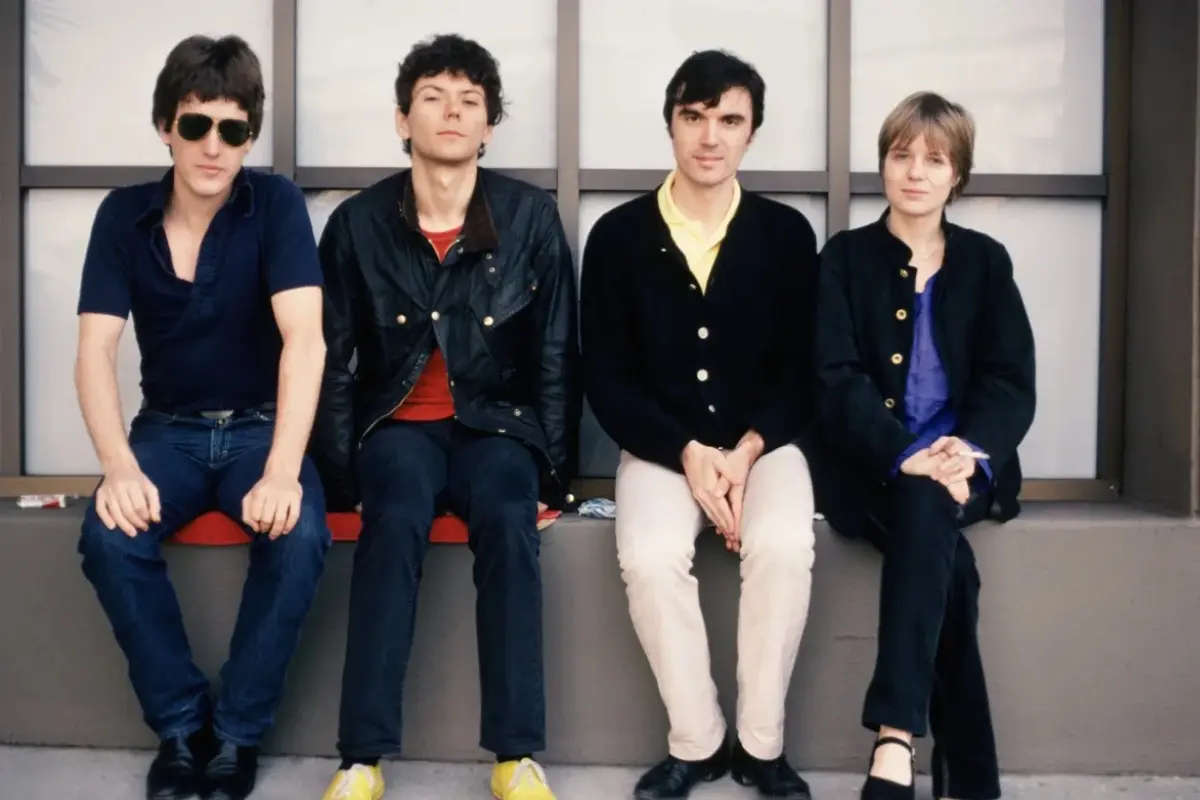
Where ‘And She Was’ sits in the Talking Heads story
And She Was
appears on Little Creatures (1985), a record that often feels like Talking Heads translating their art-school weirdness into something resembling pop radio. Rolling Stone’s original review highlighted the album’s more accessible, guitar-forward direction while still crediting the band’s idiosyncratic intelligence.
If you’re used to the polyrhythmic paranoia of Remain in Light, Little Creatures can sound almost friendly. That’s part of the trick: And She Was
smuggles a dissociative, druggy vision into a song that could pass for a summer single.
Quick facts (for context, not trivia)
| Item | What to know |
|---|---|
| Album | Little Creatures |
| Release era | Mid-1980s Talking Heads pop pivot |
| Core inspiration | Byrne’s Baltimore acquaintance describing LSD out-of-body flight |
| Core emotional conflict | Narrator’s longing vs her refusal to return to “normal” |
Reading the lyrics like a scene (instead of a poem)
One reason the song endures is how physical its imagery is. This isn’t abstract psychedelia; it’s cinematic blocking: she’s in a yard, she’s moving, she’s lifting, she’s gone. For lyric reference, Genius preserves the standard lines and structure that listeners argue over (and sing wrong) decades later.
Even if you never decode every phrase, the narrative motion is unmistakable. The verse lines stay grounded in ordinary surroundings, then the chorus breaks the laws of physics. It’s pop songwriting as special effects.
The “tacky transcendence” idea is the point
Byrne’s key phrase is basically an entire Talking Heads thesis. They were fascinated by the sacred hidden inside the cheap, the spiritual urge expressed through consumer signage and city grime. He’s not mocking her experience; he’s noticing how American it is to search for revelation in the shadow of a factory.
That’s also why the song works musically. The arrangement is tight and bright, like the world she’s leaving behind is neat and well-lit. The lyric, meanwhile, keeps slipping out of that frame.
The music video: levitation turned into playful paranoia
The official video pushes the flying above it all
concept into a collage of scale shifts and disorientation. It’s worth watching because it shows how the band’s visual language could make a drug narrative feel both whimsical and unsettling in the official music video for “And She Was”.
In other words, the video doesn’t simply illustrate the lyric. It recreates the sensation: the world becomes toy-sized, perspective becomes unreliable, and the body feels optional. If you only know the song from radio, the video reveals the bite behind the grin.
So was it literally about LSD?
Yes, in the most important sense: the seed story Byrne told explicitly involves taking acid.
But the song’s staying power comes from what it does with that fact. It turns LSD into a metaphor for any kind of private reality that a lover cannot enter, whether that’s drugs, mental illness, religion, obsession, or simply a refusal to live by the same rules as everyone else.
How to hear it if you’re not a “drug song” person
- As a love story: the narrator is enchanted, then threatened, then left behind.
- As a commentary on normalcy: “come back down to earth” as a social command.
- As a snapshot of America: spiritual hunger taking place next to industrial everyday life.
- As body politics: she owns her experience, even if it makes her unreadable.
Why it still hits: the song isn’t pro-LSD or anti-LSD
The laziest take is Talking Heads wrote a drug song
. The more interesting take is that And She Was
stages a conflict: transcendence as freedom versus transcendence as abandonment. Byrne can be both impressed and repelled by what she’s doing, which is why the story feels honest.
That ambiguity is also why the song travels well across generations. Plenty of listeners have never taken LSD, never wanted to, and still recognize the emotional weather: someone you love disappears into a world you can’t access, and you’re left trying to sound cheerful about it.

Listening tips: what to focus on in the track
If you’re revisiting the song, try listening like a musician rather than a biographer. The guitar figures keep the track buoyant, but the rhythm section stays locked, almost insistent, like gravity arguing with the lyric’s levitation. When the chorus arrives, it feels less like a key change than a physics change.
Streaming platforms make it easy to A/B this track against the rest of Little Creatures and notice how it functions as a thesis statement for the album’s pop-facing side.
Talking Heads’ broader obsession: the sacred hiding in the ordinary
The new religion
line in Byrne’s notes is not a one-off. Talking Heads repeatedly treated modern life like anthropology: rituals of shopping, commuting, dating, working, repeating. The Library of Congress catalog record documenting Talking Heads reflects the band’s cultural footprint through archiving and historical documentation related to their work and era.
Within that worldview, a woman levitating near a factory isn’t random. It’s a perfect symbol: the human need for ecstasy surviving inside the infrastructure of mass production. That’s not a hippie fantasy; it’s a very adult, very urban form of yearning.
Conclusion: a bright song with a bruised heart
And She Was
remains a rare pop achievement: it’s catchy enough to feel effortless and strange enough to reward obsession. Byrne’s Baltimore LSD story gives it an origin, but Frantz’s romantic reading gives it its pulse.
Play it again with both in mind. It’s not just about a woman flying. It’s about the terrifying moment you realize she might not want to land where you are.


