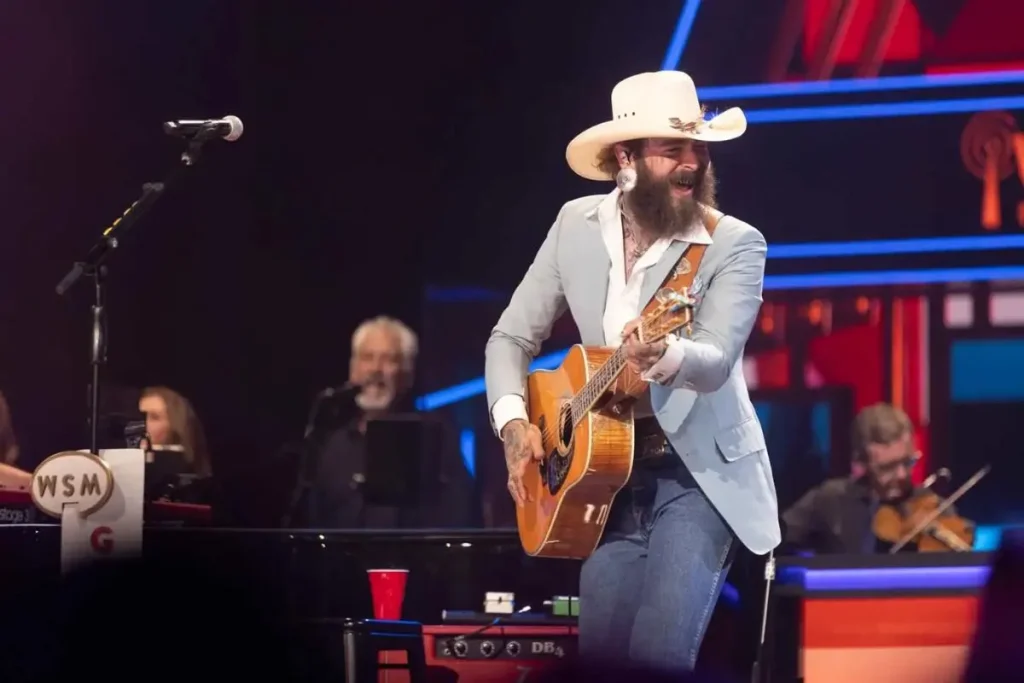
Post Malone has done the funniest thing a pop star can do: he found a lane, and then refused to treat it like a “detour.” After the warm reception (and loud arguments) around F-1 Trillion, he’s openly signaled that country album number two is already in motion. If you were hoping he’d politely hop back to rap-adjacent pop after a single twangy experiment, consider that hope officially repossessed.
The headline is simple: Post is still going country. The interesting part is why it’s working, why it irritates gatekeepers, and what a “second” country album could mean when the first one already proved he can hang in the room. Let’s dig in with a musician’s ear and a fan’s appetite for chaos.
“I think I’m going to keep making music I love.” – Post Malone (as widely quoted across press coverage of his genre shifts)
What we actually know: a second country album is in progress
Post Malone has repeatedly talked about loving country music and wanting to keep exploring it, and recent festival-era interviews have pushed that from “someday” into “already happening.” In other words: this isn’t a brainstorm on a tour bus. It’s work-in-progress momentum.
At big, high-visibility moments like Coachella, artists tend to speak carefully because every word becomes a headline. So when Post teases more country material and collaborations, it’s not just fan service. It’s a strategic breadcrumb trail: he wants listeners to expect continuity, not a novelty project.
Coachella’s own festival platform sets the context for how these announcements land: massive mainstream audience, cross-genre discovery, and press everywhere. That’s the perfect stage to normalize “country Post” as part of the mainline brand, not a side quest.
Why F-1 Trillion mattered (even if you didn’t like it)
Country has always had outsiders, but it has a special talent for sniffing out cosplay. The reason F-1 Trillion hit harder than a typical crossover attempt is that Post didn’t show up with a joke accent and a checklist of clichés. He showed up like a guy who has actually been listening for years.
Even if you think the album is uneven, it proved an important point: his voice suits the genre’s storytelling range. He can do tender, bruised ballad delivery and pivot to rowdy bar-stomp energy without sounding like he’s reading from a “How to Country” script.
And the public record is clear that F-1 Trillion is positioned as a country album, not a “country-inspired” EP or a one-off collab bundle. Spotify’s album listing and categorization reinforce how it’s being presented and consumed.
The uncomfortable truth: country is pop now, and pop is country now
Here’s the spicy take that makes comment sections combust: modern country is already designed to compete in the same attention economy as pop. Big hooks, clean choruses, playlist-friendly runtimes, and arena-ready production are not “invaders” from outside. They’re native infrastructure.
So Post isn’t dragging pop into a pure genre. He’s stepping into a genre that has been negotiating pop instincts for decades, from crossover radio eras to stadium-country spectacles. That’s why the fit is less shocking than critics pretend.
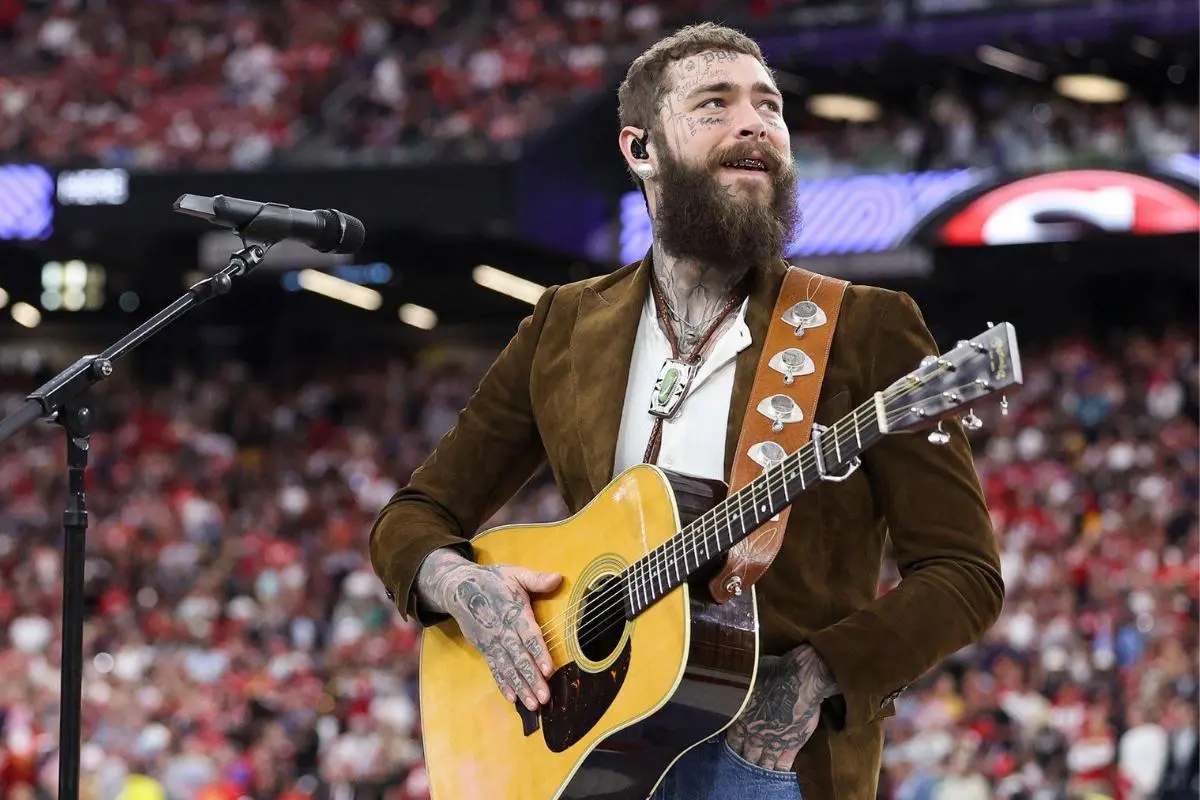
Post Malone’s musical DNA makes country a logical next chapter
Strip away the tattoos and headline-friendly genre labels and you’ll hear a songwriter who has always leaned melodic. Post’s biggest records succeed because he can write singable lines that feel personal, even when the production is glossy.
Country rewards exactly that skill set: vocal phrasing that sounds like a human talking, choruses that feel communal, and lyrics that aim for emotional specificity. This is also why his softer, more vulnerable material has often connected with listeners who don’t care about rap at all.
His catalog history is well documented, including the way he’s moved across hip-hop, pop, and rock-adjacent textures over multiple albums. That flexibility is part of his core identity, not a recent pivot.
What country album No. 2 could sound like (three realistic directions)
We can’t responsibly invent tracklists or confirmed features without hard citations, but we can talk about plausible musical outcomes based on how first-wave crossover projects typically evolve. If the first country record is the proof-of-concept, the second record is where artists usually get bolder and more opinionated.
1) More traditional arrangements, fewer pop guardrails
If Post wants credibility with the “you better mean it” crowd, the second album could lean into band-first recording. Think more room sound, more audible acoustic guitar dynamics, more fiddle and steel that isn’t tucked behind a pop drum kit.
For listeners, this would feel less like “Post Malone featuring country” and more like “Post Malone made a country record.” The difference is subtle but huge: it’s about choices that put the song and performance ahead of the sheen.
2) A songwriter’s album: slower tempos, sharper storytelling
Country has always had space for flawed narrators, moral gray areas, and endings that don’t resolve neatly. Post’s best work often thrives on that same bittersweet ambiguity. A second album could push deeper into narrative songwriting and character sketches rather than party-first singles.
This is the path that wins older listeners who grew up on story songs and who want more than catchphrases. If he goes here, expect fewer “look at me” moments and more “here’s what it cost me” lines.
3) The “Nashville pop machine” super-collab approach
There’s also the big-business option: a feature-heavy record stacked with major names, built for streaming and radio. Post is already a proven collaborator across genres, so it would be unsurprising if he treats country the same way he treated pop: build a universe of voices around him.
That approach can be thrilling when it’s curated well, but it also risks making the album feel like a playlist instead of a statement. If he’s teasing more collaborations, the question is whether they serve the songs or serve the headlines.
The gear and production choices that will make or break “country Post”
For a site called Know Your Instrument, let’s get practical. Country authenticity is less about cowboy hats and more about sonic decisions that musicians can hear instantly.
Quick checklist: sounds that signal “real country” fast
- Acoustic guitar as a rhythmic engine (not just a texture under a programmed beat)
- Pedal steel used melodically, with expressive swells and human timing
- Snare and kick that breathe, even if the mix is modern
- Background vocals that feel like a room of people, not a grid
- Lyrics with place, consequence, and detail rather than generalized vibe
The more Post leans into these elements, the less anyone will be able to dismiss the music as a costume. And if he deliberately ignores them, that’s also a statement: he’d be betting on a new hybrid style that lives between formats.
Why the backlash keeps happening (and why it probably won’t matter)
Every time a superstar touches country, some fans react like a sacred space has been invaded. But country has never been a closed system. It’s been borrowing, trading, and evolving since its earliest commercial forms, and it has repeatedly absorbed outside voices that brought new listeners with them.
The real friction is cultural, not musical. Country fandom can be intensely identity-based, so a crossover artist forces people to ask: “Who is this music for?” Post’s popularity makes that question unavoidable, especially when he’s not asking permission.
And yet, the economics are simple: if the songs connect and the live shows deliver, the industry adapts. That’s why a second album matters. One album can be a stunt. Two albums is a strategy.

How to listen like a musician: three things to focus on
If you want to judge the next record on music rather than marketing, use these three listening tests. They work whether you’re a country purist or a curious outsider.
1) Vocal phrasing
Is he riding the groove naturally, stretching syllables like a storyteller, and letting consonants land with intention? Country singers often “talk-sing” without losing pitch center, and that skill can’t be faked for long.
2) Lyric specificity
Count the concrete nouns: streets, bars, objects, weather, times of day. Specificity is emotional proof. Vague lyrics can still be catchy, but they rarely become the songs people keep for decades.
3) Band chemistry
Listen for micro-timing: tiny pushes and pulls in the pocket, especially in fills and turnarounds. If everything sounds perfectly snapped to a grid, it may still be good, but it won’t hit the same as a band that’s breathing together.
Where to track updates without getting baited
When an artist says “album in progress,” the internet immediately manufactures release dates and feature lists. Skip the noise and watch channels that reliably publish verifiable updates: the artist’s official site for announcements and tour info, label channels for press releases, and reputable video interviews for direct quotes.
Post’s official website is still the cleanest hub for confirmed public-facing updates.
For the collaboration teases and interview clips, primary video interviews are often where the direct quote lands first, before it gets paraphrased into clickbait.
Conclusion: the second country album is the real test
The first country record answered, “Can Post Malone do this?” The second one answers a sharper question: “What does Post Malone sound like when he stops proving himself and starts making choices?” That’s where great genre records live.
If he leans into craft, band chemistry, and storytelling, he could end up doing something country music actually needs: reminding the mainstream that the genre isn’t a museum piece, it’s a living language. And if he makes a mess? That’s still more interesting than playing it safe.
Note: Some outlets have reported on the second-album tease in festival interviews, but availability and permalinks vary. The sources below prioritize stable, primary or platform-level references where possible.