
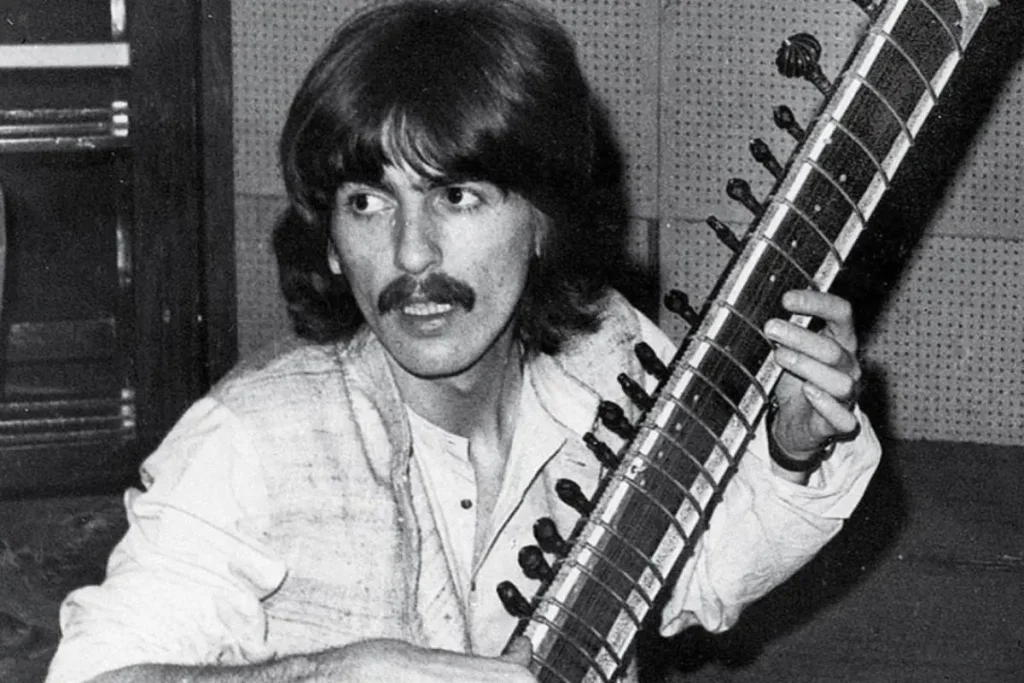
When George Harrison released “My Sweet Lord,” he didn’t just step out from the Beatles’ shadow – he scorched it. In late 1970, the so-called “quiet Beatle” delivered a song that sounded like a radio-friendly prayer, and the world responded like it had been waiting for permission to feel something again.
It went to No.1 on both sides of the Atlantic, becoming a defining early post-Beatles moment and a loud announcement that Harrison’s solo career was not going to be a tasteful footnote. It was going to be the main event, as reflected in the song’s No.1 chart record.
“First ex-Beatle No.1”: why that detail matters
There’s a reason fans still lead with this brag. In the scramble after the breakup, each Beatle was being judged not just as a musician, but as a brand-new standalone identity. “My Sweet Lord” hitting the top first was a cultural gut-punch to anyone who assumed George was only ever the third songwriter in the room, and the single’s status as the first post-Beatles solo No.1 remains central to its legend.
In the UK, the track’s chart story has been unusually long-lived, with later re-entries and renewed interest proving that the song’s appeal isn’t locked to 1970 nostalgia. The Official Charts database shows the single’s repeated life on the UK chart, including its original run and later returns.
The shock: a spiritual chant as pop ammunition
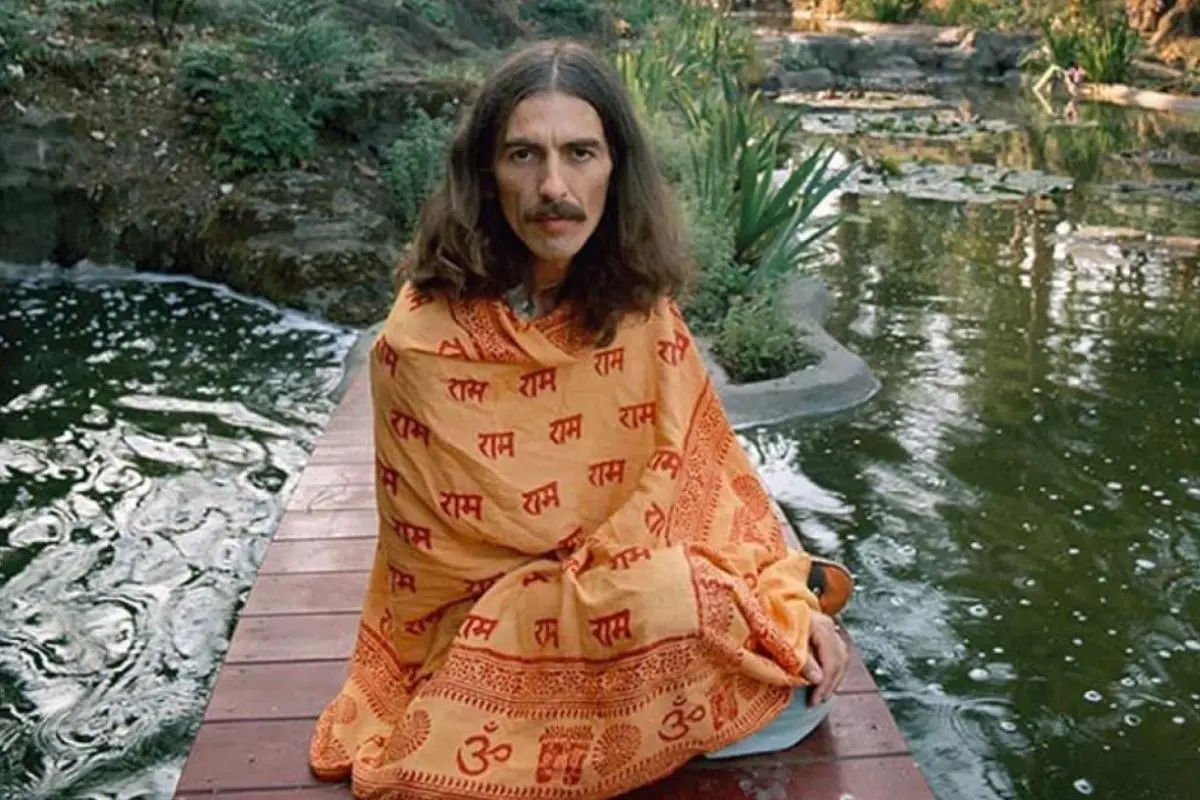
“My Sweet Lord” is a Trojan horse: it arrives dressed like a breezy singalong, then slips devotion into your head. Harrison fused gospel-style call-and-response with a mantra-like refrain that toggles between “Hallelujah” and “Hare Krishna,” a move that would have sounded risky on paper and inevitable on record.
That wasn’t a marketing angle. Harrison had been seriously exploring Hindu philosophy and devotion, and the song plays like his most direct attempt to make spiritual yearning feel normal on AM radio. An overview of the track’s blend of pop structure and explicitly religious intent is captured in the song’s background and composition summary.
A provocative take: it’s the most “1970” No.1 possible
Lots of songs from this era pretend to be rebellious. “My Sweet Lord” actually is – not by being loud, but by treating faith like a hook. In a pop world that sold sex, heartbreak, and swagger, Harrison sold surrender, and somehow it moved units.
Songwriting origins: the Billy Preston connection
One of the best bits of “My Sweet Lord” lore is that Harrison didn’t initially hoard it for himself. He floated the song to Billy Preston before cutting his own version, a detail that frames the track less as ego and more as community-minded songwriting in retellings of the song’s origin story and early versions.
That makes sense when you remember Preston’s place in the Beatles’ late period and in Harrison’s musical circle. Harrison wasn’t just writing for George Harrison – he was writing for the people around him, and “My Sweet Lord” happened to be too powerful to stay “just” a handoff.
Recording and sound: why it feels huge without being heavy
Part of the magic is scale. Harrison’s early solo era often sounds like he’s finally letting decades of ideas flood out at once, and “My Sweet Lord” is a controlled release of that pressure: layered guitars, stacked vocals, and a rhythm that keeps the song moving like a procession.
As part of the All Things Must Pass era, the track benefited from sessions that aimed for grand, enveloping production rather than the tight minimalism associated with earlier Beatles recordings. uDiscoverMusic’s album feature underlines how expansive the project was in ambition and sonic scope, especially in its big, wall-of-sound album framing.
“My Sweet Lord” was the single that made people realize George Harrison wasn’t just escaping the Beatles – he was escaping the idea that pop had to be shallow.” – analysis of the song’s story and impact
The charts: proof, not mythology
The claim that “My Sweet Lord” blew up worldwide is not fan exaggeration. The single’s UK performance and ranking are documented by Official Charts, which tracks its No.1 status and long-term footprint.
In the US, contemporaneous Billboard issues show Harrison sitting at the top of the Hot 100 during its peak run, the kind of primary-source evidence that ends arguments fast via the Hot 100 listings in early 1971.
Quick snapshot: what “My Sweet Lord” achieved
| Milestone | Why it’s a big deal |
|---|---|
| First solo single by George Harrison | His opening shot as a frontman, not “Beatle No.3.” |
| No.1 in the UK | Confirmed by Official Charts performance data. |
| No.1 in the US | Documented in period Hot 100 listings. |
| One of the era’s signature post-Beatles hits | It set expectations for what “solo Beatles” could be, and retrospectives on the track’s release context and ripple effects help explain why. |
Note: You’ll see some sources call it the UK’s biggest-selling single of 1971. Sales rankings can vary depending on methodology (calendar-year sales vs chart-year, and updates as archives are revised), so it’s smartest to anchor the claim to what the Official Charts database explicitly shows for the song’s chart performance and longevity.
The lawsuit: the “subconscious” plagiarism that wouldn’t die
No history of “My Sweet Lord” is complete without the uncomfortable subplot: the plagiarism case comparing it to The Chiffons’ “He’s So Fine.” The court’s written opinion is publicly accessible and lays out the logic behind its findings in unusually direct language for a pop-music dispute, as seen in the published decision.
What makes this case fascinating (and a little terrifying if you’re a songwriter) is the concept that you can copy something without intending to. The decision is often remembered as a cautionary tale: influences don’t just shape you – they can sneak into your fingers when you think you’re writing something new.
Edgy but fair: the case may have made the song bigger
Let’s be honest. Controversy is oxygen, and nothing says “classic” like a hit that comes with a courtroom drama. The irony is brutal: a song about devotion became one of the most famous examples of how messy human creativity can be.
Why the song endures: it’s built like a hymn, marketed like a single
“My Sweet Lord” lasts because it does two things at once. It works as a personal statement of belief and as a communal singalong, which means it can soundtrack both private moments and public ones. That dual function is rare.
Beatles Bible notes how the song’s structure and lyrical approach blend spiritual messaging with pop accessibility, a key reason it still gets played by listeners who aren’t “religious music” people.
The genius move Harrison pulled
- He made the chorus emotional before it was doctrinal. Even if you don’t share the belief, you can feel the yearning.
- He used repetition like meditation. Pop hooks and mantras are cousins, and he treated them that way.
- He framed spirituality as modern, not antique. The song sounds like a living room, not a cathedral.
Listening guide: what to focus on (if you think you already know it)
If you’ve heard “My Sweet Lord” a thousand times, try this: listen like a producer for one play, then like a choir director for the next. The track is a lesson in layering and dynamics, building intensity without ever turning aggressive.
For a broader view of how the song sits in Harrison’s post-Beatles arc and why All Things Must Pass still gets treated like an event rather than an artifact, album-at-50 reflections on All Things Must Pass as a cultural moment make a strong, album-centered companion read.
Try these “micro-listens”
- Guitar texture: notice how the strumming and leads serve the vocal rather than compete with it.
- Backing vocals: the responses feel like a crowd joining in, not studio decoration.
- Lift moments: track how the arrangement gradually widens, as if the room is getting bigger.
Legacy: the moment George stopped being “the quiet one”
Harrison’s reputation has steadily shifted from “underrated Beatle” to “architect of one of rock’s most influential spiritual crossovers.” “My Sweet Lord” is the cornerstone of that shift: not perfect, not controversy-free, but undeniably powerful.
And if you want a final detail that underscores its durability: the UK chart story of “My Sweet Lord” isn’t frozen in the 70s. Its presence across multiple chart eras, visible through the Official Charts search and song page, shows how certain songs behave less like products and more like recurring cultural weather.
Conclusion
“My Sweet Lord” worked because Harrison dared to put the deepest part of himself on a 7-inch single and trusted the public to meet him there. It became a global hit, sparked a landmark copyright debate, and remains a rare pop anthem that doesn’t apologize for wanting transcendence.
In a world that often treats sincerity as uncool, Harrison’s biggest solo moment still feels like a quiet act of rebellion.
Check the music video below:


