
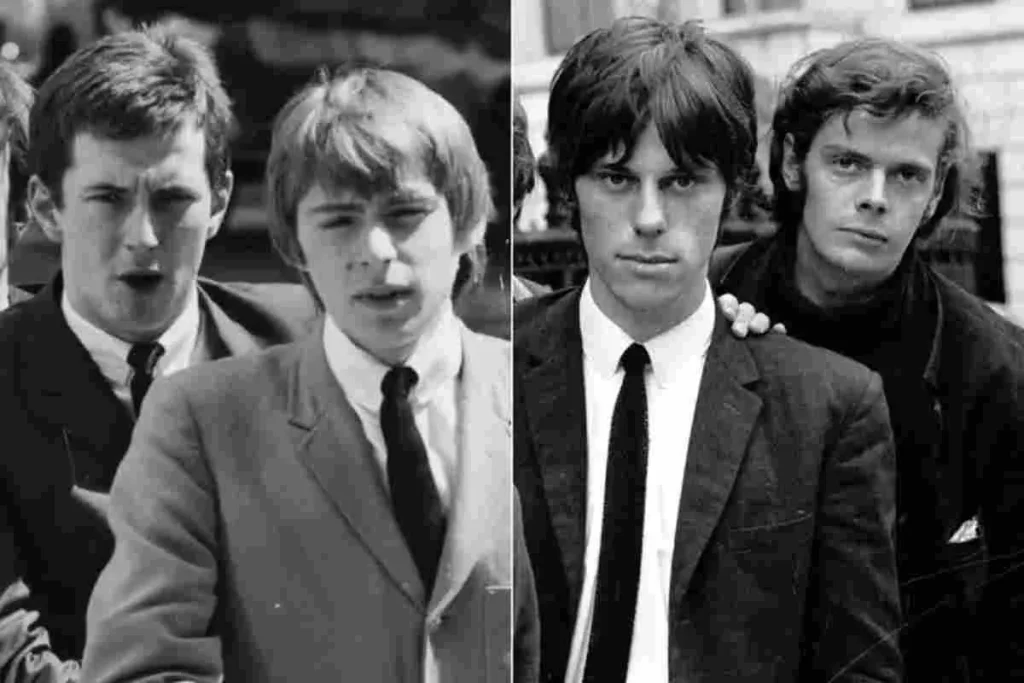
“Beck’s Bolero” is the kind of rock artifact that feels too improbable to be real: Jeff Beck leading an instrumental built on Maurice Ravel’s famously hypnotic “Boléro,” with Jimmy Page and John Paul Jones in the room, Keith Moon on drums, and Nicky Hopkins adding the elegance. Then comes the extra spice: Eric Clapton, allegedly present and playing, but hidden behind the credit dodge “A.N. Other.”
The story is irresistible because it sits at the crossroads of 1960s London’s most competitive guitar scene and the murky business reality of exclusive contracts. The problem is that the “Clapton played on it” claim has been repeated so often that it’s easy to forget how uncertain the evidence can be.
What “Beck’s Bolero” is (and why it matters)
Recorded in 1966 and released in different forms afterward, “Beck’s Bolero” became a prototype for what heavy rock would soon become: stacked guitars, dramatic dynamics, and a drum performance that sounds like it’s trying to break out of the speakers. It’s frequently discussed as a key moment in the prehistory of Led Zeppelin because of Page and Jones’s presence.
It also matters because it captures the “session culture” of London at full speed. In that world, the line between bands was porous, the best players were constantly orbiting each other, and the credit list sometimes told the truth and sometimes told a convenient version of it.
The confirmed core lineup: Beck’s all-star “one-off” band
Most credible accounts agree on the essential players most listeners hear immediately: Jeff Beck on lead guitar, Jimmy Page on second guitar, John Paul Jones on bass, Keith Moon on drums, and Nicky Hopkins on piano.
That lineup alone is enough to make the track legendary, but it also explains why rumors flourish. When a session is that stacked, people assume more famous hands must have touched it, and the atmosphere invites name-dropping.
Why these names were even in the same room
In 1966, Beck and Page were both connected to The Yardbirds universe (Beck already in, Page moving in), and London’s top rhythm section players were used to jumping between projects. Page and Jones, in particular, were deep in the session circuit, and Moon was known for chaotic, impulsive “yes” decisions when a good time or a good musical dare appeared – an energy that matches the band’s wider identity across The Who’s catalog.

The Clapton claim: what people say happened
The lore usually goes like this: Clapton turned up, played rhythm guitar, then for legal or label reasons had to be disguised in the credits, leading to “A.N. Other” appearing on some releases. In some retellings he is there at the start; in others he is there but barely on the final take; in others the credit is pure misdirection.
Popular retellings of the “A.N. Other” credit story repeat the idea that Clapton participated, which reflects how widespread the claim has become in music writing.
What “A.N. Other” actually means
“A.N. Other” is a cheeky way of saying “another person.” In British credits, it has long been used when someone’s name can’t be printed (contract restrictions, union issues, label politics) or when a production wants to keep a cameo unadvertised. The phrase is so perfectly evasive that it practically invites fans to turn it into a conspiracy board.
“The guitar gods didn’t always want their paperwork to know where they’d been.” – a sentiment echoed in countless 1960s session anecdotes, and exactly the kind of logic that keeps the “A.N. Other” mystery alive.
So did Clapton actually play on “Beck’s Bolero”?
Here’s the most responsible answer: Clapton’s involvement is plausible, frequently repeated, and hard to prove definitively from surviving public documentation. The best-documented narrative centers on Beck, Page, Jones, Moon, and Hopkins, and that’s the lineup most formal summaries lock onto.
That mainstream consensus is often summarized in the commonly cited lineup details, which foreground the Beck-Page-Jones-Moon-Hopkins personnel while treating other claims more cautiously.
Why definitive proof is difficult
Session paperwork from the era is inconsistent, credits changed between releases, and memories from participants drift over decades. On top of that, the track was recorded in a scene where “uncredited” didn’t automatically mean “not present,” and “present” didn’t always mean “audible on the master.”
Another reality: when two top-tier guitarists are both on a track, separating who played what can be tricky if parts double each other. If Clapton contributed a basic rhythm layer that was later replaced or mixed low, you could have a true “he played” story and a true “you can’t really hear him” result at the same time.
Why the secrecy rumor makes sense (even if the details are fuzzy)
The mid-60s British rock business was contract-heavy. Artists were often tied to managers and labels who did not like outside appearances, especially if the appearance might boost a rival project. Even a harmless instrumental session could be a legal headache if it looked like an “official release.”
That’s why pseudonyms flourished: they were a pressure valve for a scene that wanted musical freedom but was trapped inside exclusivity clauses. Clapton, in particular, had multiple high-profile affiliations during that era, so the idea that his name might be “kept off paper” is not crazy – it’s historically on-brand for an artist with a long, heavily managed career.
The more provocative take: “A.N. Other” is also marketing
Even if the credit was initially a legal workaround, it became a myth machine. A mystery credit on a track featuring Beck, Page, Moon, and Jones practically dares the public to guess another superstar. The hidden-name gimmick doesn’t just protect the session – it makes the record feel forbidden, and forbidden sells.
Listening like a detective: where a “third guitar” could hide
Put on good headphones and focus on texture, not just lead lines. “Beck’s Bolero” is arranged like a slow-burn crescendo: drums and bass are bold, the lead guitar is obvious, and there’s room for a supporting guitar to sit in the midrange without jumping out.
Three things to listen for
- Doubling patterns – moments where the rhythm feels unusually thick, as if two guitars are reinforcing the same chord voicing.
- Pick attack differences – Page and Clapton have different right-hand signatures; Page often sounds sharper and more percussive, Clapton smoother and more “rounded,” especially in that period.
- Room bleed and amp character – a second rhythm part might reveal itself by a different reverb tail or speaker texture when the band hits accents.
None of this proves Clapton is there, but it turns the mystery into an enjoyable ear-training exercise rather than a barroom fact.
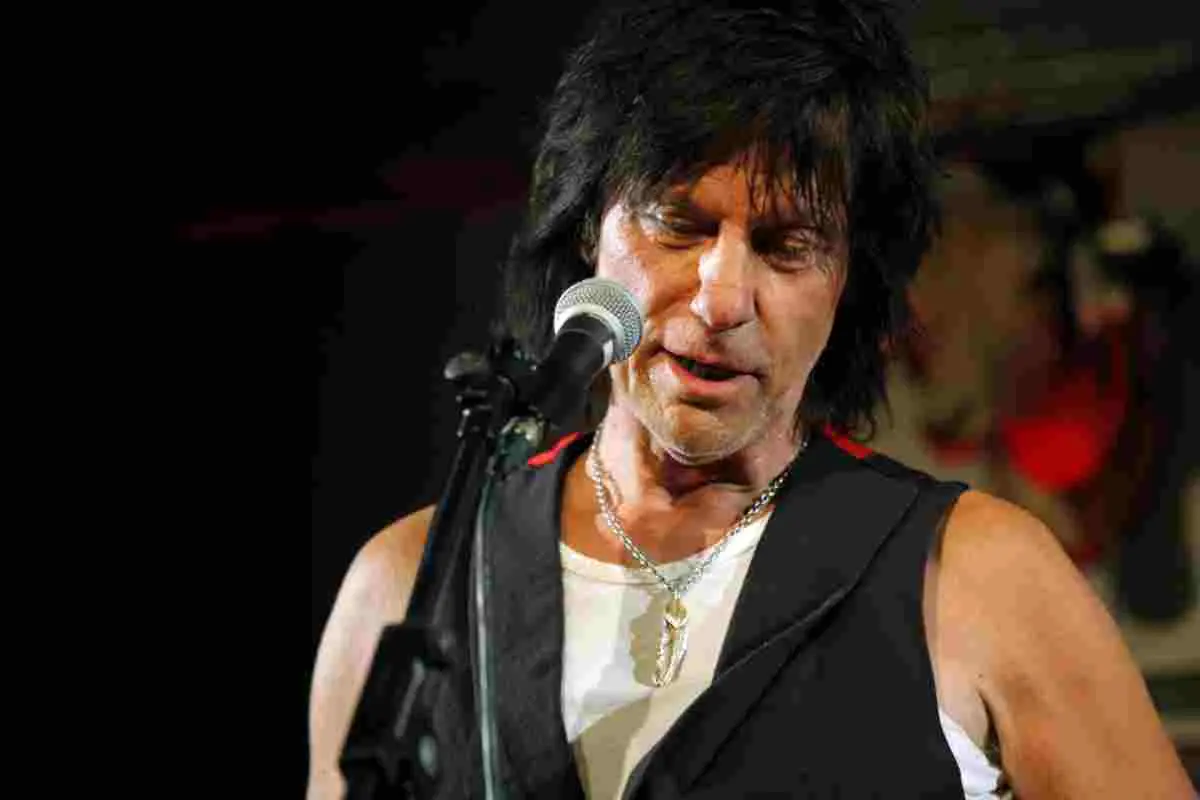
The super-session’s bigger meaning: a prototype for hard rock
The fascination with Clapton can distract from the more important point: “Beck’s Bolero” is an early example of rock musicians raiding classical structure for drama, then pushing it through amplifiers until it becomes something else entirely. That “borrow and transform” move is a straight line into late-60s heavy rock, prog, and even metal’s love of grand forms.
The track’s reputation also benefits from the later careers of the players involved. When listeners learn that Page and Jones are here, they hear the future forming in real time, which is why the song remains a recurring reference point in Page’s 1960s sessionography discussions.
A quick personnel cheat sheet
| Musician | What you hear most clearly | Why it fuels the legend |
|---|---|---|
| Jeff Beck | Lead guitar voice and phrasing | It’s the “Jeff Beck sound” crystallizing |
| Jimmy Page | Supporting guitar architecture | People hear Zeppelin DNA in the arrangement |
| John Paul Jones | Locked bass foundation | Shows his pre-Zeppelin session power |
| Keith Moon | Explosive fills and momentum | Moon turns a “serious” piece into a brawl |
| Nicky Hopkins | Piano color and lift | Adds class, contrast, and tension |
| Eric Clapton (disputed) | Possibly low-mixed rhythm guitar | “A.N. Other” makes the rumor evergreen |
Where the “A.N. Other” rumor sticks to the record
What keeps this story alive is that it fits a pattern: famous musicians using aliases when contracts or politics made the simplest truth inconvenient. It’s why the phrase “secretly played” works so well here – it implies both musical intrigue and industry cynicism.
It also plays into a deeper fan impulse: people want rock history to have hidden doors. A straightforward credit list feels too clean for a scene as competitive and chaotic as 1966 London. “A.N. Other” gives listeners permission to imagine the off-the-books handshake agreements that probably did happen more often than labels ever admitted.
How to talk about this without repeating myths as fact
If you want to be accurate (and still have fun at parties), frame it like this: Clapton’s participation is a persistent claim connected to alternate credits, but the widely accepted, clearly documented lineup is Beck, Page, Jones, Moon, and Hopkins.
That phrasing protects you from overstating the evidence while still honoring the cultural fact that the Clapton rumor is part of the song’s legacy.
Where to hear it and what to compare
Different releases and compilations have presented “Beck’s Bolero” in slightly different contexts, which is part of why credits and stories drift. Official uploads and widely circulated recordings can at least anchor your listening to a consistent audio reference while you explore the lore.
For comparison, listen to mid-60s Clapton rhythm work and mid-60s Page session work back-to-back, then return to “Beck’s Bolero.” The closer you get to their touch, the less the debate feels like trivia and the more it becomes about how guitarists imprint identity on supporting parts.
Conclusion: the mystery is the point (but the music is the proof)
Did Clapton play on “Beck’s Bolero”? Maybe – and that “maybe” is exactly why the track stays fun to talk about. The alias story captures how 60s rock really operated: brilliant musicians moving fast, contracts moving slower, and the truth living somewhere between tape boxes and half-remembered sessions.
Even if Clapton never touched the final master, “Beck’s Bolero” remains a rare moment where multiple future legends collided on a single instrumental and accidentally sketched the blueprint for what came next.


