

Mick Jagger and Jerry Hall were never just a celebrity couple. They were a long-running collision between rock stardom and high fashion, staged in public, negotiated in private, and complicated by fame’s worst habit: making normal relationship rules feel optional.
They were together for more than two decades, had four children, and even held a wedding ceremony that later became the centerpiece of a legal and tabloid firestorm. Here’s the relationship in detail, with the romance, the ruthlessness, and the real-life consequences.
How they met: when runway glamour met permanent tour life
By the mid-1970s, Jagger was already the face of the Rolling Stones, a band that sold rebellion like a luxury product. Hall, a Texas-born model, had risen into the upper tier of fashion’s new celebrity class, the era when models became household names rather than anonymous mannequins.
The mythology around their first encounter varies depending on who’s telling it, but the broad outline is consistent: they met in the late 1970s and quickly became a high-wattage pairing that made perfect sense to photographers. Hall later told NPR, discussing her memoir, that her life in that period was crowded with “characters,” and she framed her story as a mix of glamour and hard lessons rather than a fairy tale ending.
The early dynamic: power couple on paper, asymmetry in practice
From the outside, they looked like equals: a rock frontman with global cultural power and a supermodel with serious earning power and fashion-world clout. But the relationship operated inside the Stones’ gravitational field, and that tends to bend everything.
Jagger’s career meant constant travel, access, and temptation, plus a long-standing public reputation for complicated romantic entanglements. Hall’s career meant visibility and independence, but also the expectation that she’d be the “cool” partner who could survive the circus with style. Even their public image did double duty: romance for magazines, brand reinforcement for both.
What made them stick?
- Mutual image value: together they were a ready-made headline and a photogenic symbol of late-20th-century celebrity.
- Shared taste for spectacle: both seemed comfortable turning life into a kind of performance, whether on stage or on a red carpet.
- Family as anchor: the arrival of children created a deeper, harder-to-escape bond than publicity ever could.
The children: the part of the story that is not “show business”
They had four children together: Elizabeth (born 1984), James (1985), Georgia May (1992), and Gabriel (1997). Those facts are widely documented in standard biographical references like their family details and children’s birth years.
It’s easy to treat celebrity parenting like a lifestyle sidebar, but for Hall, motherhood appears to have been central to how she evaluated the relationship over time. Whatever the couple’s agreements, the kids turned their partnership into a long-term household project, not just a romance.
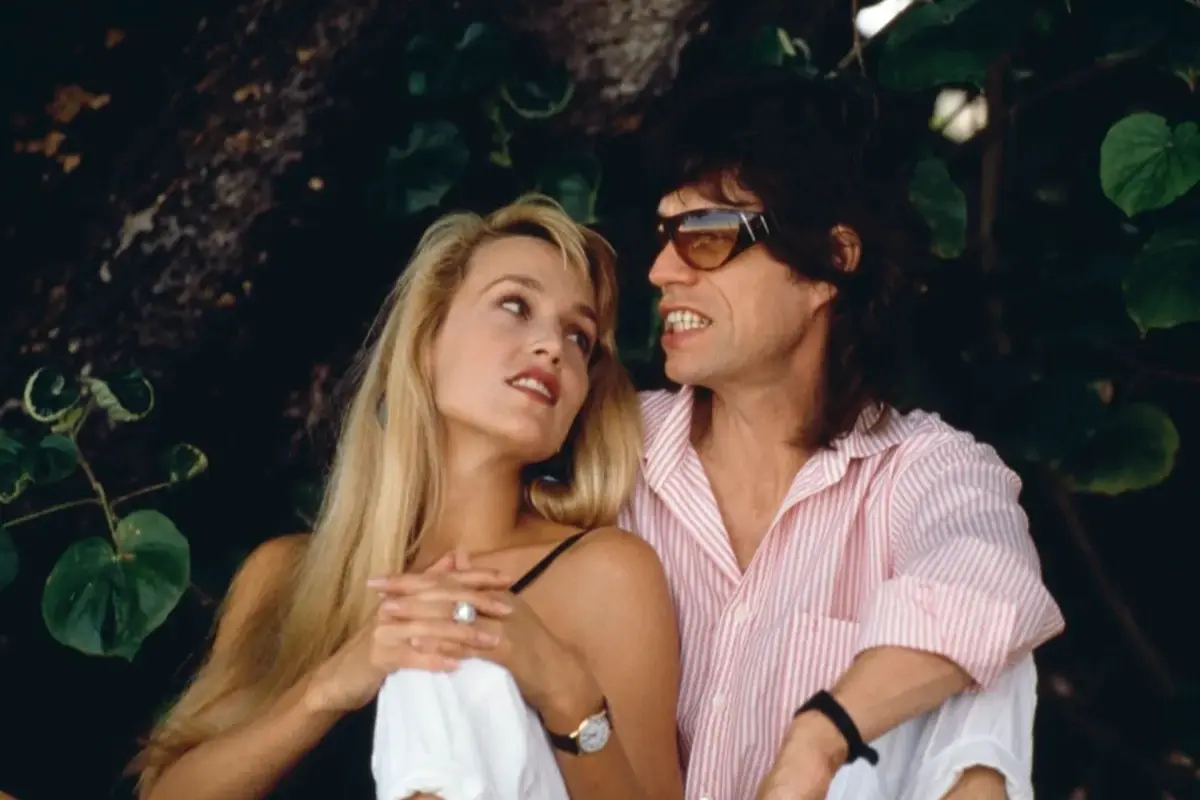
The wedding ceremony: Bali, 1990, and the legal grenade underneath
In 1990, Jagger and Hall held a wedding ceremony in Bali. For years, the event was commonly described as a marriage, and it certainly functioned socially like one in the eyes of the public.
Then came the twist that still feels like a very Jagger-era plot point: when the relationship ended, a court determined the marriage was not legally valid under English law. A contemporaneous report summarized the ruling as the marriage being declared invalid, a detail that mattered enormously once money, status, and custody arrangements entered the conversation.
“It wasn’t a real marriage.”
Jerry Hall, reflecting on the legal status of the Bali ceremony (as discussed in interviews around her memoir)
The legal reality did not erase the emotional reality, but it changed leverage. If you want a provocative takeaway: the “wedding” was romantic symbolism until it became financial infrastructure, and symbolism is a weak currency in court.
The breaking point: infidelity, publicity, and the relationship’s end
Relationships don’t usually implode from one thing, but public narratives often crystallize around a single catalyst. In this story, the most famous shockwave was Jagger fathering a child with Brazilian model Luciana Gimenez Morad, which became public in 1999 and arrived like an eviction notice for any remaining illusions of stability.
Hall’s account of Jagger’s infidelity has been part of the public record for years, and she has spoken about the humiliation and anger of discovering affairs. The relationship ended in 1999, and the legal unraveling of the “marriage” followed shortly after, creating a two-part collapse: emotional separation first, then the paperwork that clarified what they were and were not entitled to.
A pattern worth naming (without moral panic)
Rockstar relationships often run on a bargain: the partner accepts a level of chaos in exchange for proximity to a thrilling life. The problem is that chaos does not stay contained. Once children, property, and long-term identity are tied up in that bargain, the costs rise sharply.
After the split: co-parenting, distance, and the strange calm of “after”
Post-breakup, they moved into a more conventional arrangement: shared responsibility for their children, separate lives, occasional overlap at family events. The public drama cooled, but the cultural fascination didn’t. For many fans, the relationship remains a reference point for “classic Stones-era decadence,” partly because it lasted long enough to feel like a dynasty.
One reason the story remains sticky is that it doesn’t resolve cleanly into hero and villain. Hall is often framed as the wronged partner, and Jagger as the habitual rule-breaker. But the reality is messier: she stayed a long time, he stayed too, they built a family, and the breakup still came with legal and emotional shrapnel.
Jerry Hall’s later remarriage: a contrast that doubles as commentary
Years later, Hall married Rupert Murdoch. Even if you don’t care about Murdoch as a figure, the remarriage is fascinating as a contrast: from rock-and-roll instability to something that, at least structurally, looked more formal and traditional. Her biography lays out the later-life timeline around Jagger’s long personal history in a way that makes the contrast easy to see.
If you want the spicy interpretation: Hall’s second marriage reads like a rebuttal to the Jagger years, a choice that says, “I’m done auditioning for the role of unbothered girlfriend.” But it can also be read more gently as a person trying different kinds of partnership as she got older.

What the Jagger-Hall relationship reveals about fame (and why musicians should care)
This is Know Your Instrument, so let’s connect the dots to music culture rather than just celebrity archaeology. Jagger’s job was not only singing; it was being Mick Jagger, a persona powered by attention. Relationships in that ecosystem become part of the act, and the act never stops touring.
Three practical lessons for artists and artist-adjacent partners
- Define the relationship off-camera: if you can’t say what the rules are in private, the public will invent them for you.
- Symbolic commitments are not legal protections: ceremonies, rings, and headlines don’t automatically translate into rights.
- Protect the family layer: kids experience the fallout even when parents have PR teams.
Fast timeline: the relationship in key dates
| Year | What happened |
|---|---|
| Late 1970s | Jagger and Hall begin their relationship publicly after meeting in the late-70s celebrity circuit. |
| 1984-1997 | They have four children: Elizabeth, James, Georgia May, and Gabriel. |
| 1990 | They hold a wedding ceremony in Bali. |
| 1999 | They split; the legal status of the “marriage” becomes a major issue in the separation. |
Conclusion: a love story with a contract-shaped hole in it
Mick Jagger and Jerry Hall weren’t a fling. They were a long-term partnership that mixed devotion with volatility, family with tabloid catastrophe, and romance with the cold mechanics of legality.
If the relationship has a moral, it’s not “never date a rock star.” It’s simpler and darker: in a life built around applause, loyalty can feel like background noise until it’s gone.


