
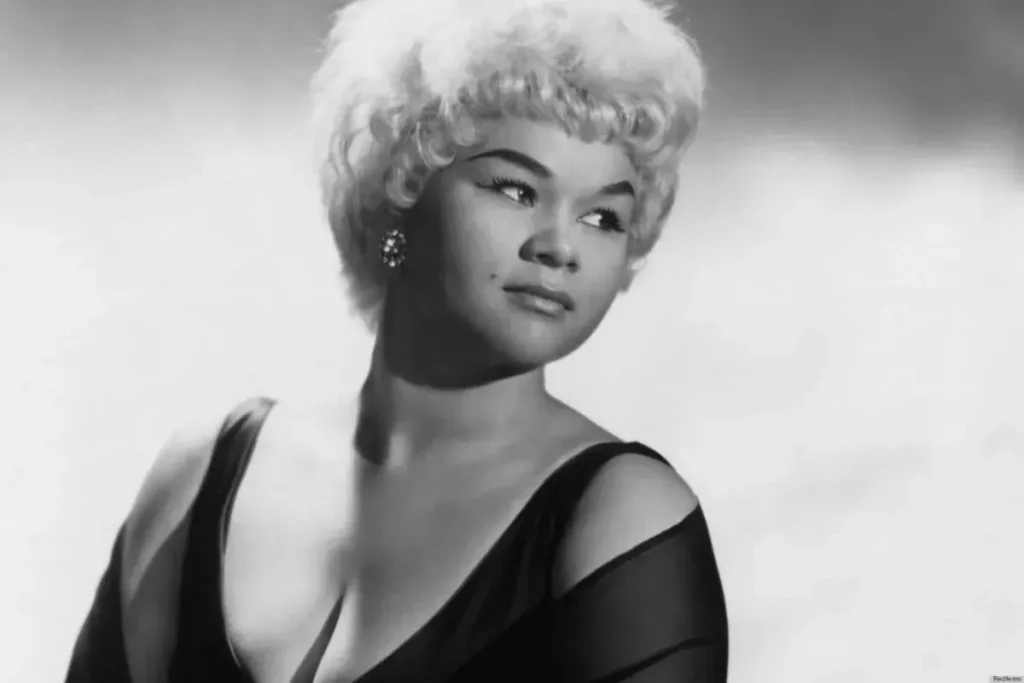
Before social media feuds, before “diss tracks” became a genre sport, and long before anyone typed “ratio,” rhythm and blues had a built-in mechanism for public clapbacks: the answer record. In the mid-1950s, this trend turned a jukebox into a conversation, with singers responding to one another in real time. And one of the sharpest early examples also introduced the world to a teenager who would grow into one of the most commanding voices in American music: Etta James, then billed with her group The Peaches.
Her breakout hit “The Wallflower (Roll With Me, Henry)” (1955) is widely understood as a response to Hank Ballard and the Midnighters’ smut-tilting smash “Work With Me, Annie”. The setup is almost sitcom-perfect: Annie talks, Henry answers, and the audience gets the joke. But underneath the flirtation is something bigger: a snapshot of how Black popular music traded ideas, coded sexuality, and street-level wit on wax, fast.
What is an “answer record,” really?
An answer record is a song designed to reply to a previous hit, often borrowing its hook, rhythm, structure, or characters. In the 1950s, it was part marketing move and part creative tradition: listeners already loved the original, so a reply felt like the next episode of a story.
Sometimes the response was friendly, sometimes it was corrective, and sometimes it was straight-up competitive. The important point is that the “conversation” was intentional, and audiences understood the references. The Annie/Henry cycle became one of the best-known mini-sagas of this type, spawning multiple follow-ups and variations in a short window. The fact that preserved jukebox-era releases capture multiple titles from this chain suggests it wasn’t a one-off novelty – it was a moment.
The spark: “Work With Me, Annie” and the Midnighters’ wink-wink R&B
Hank Ballard and the Midnighters scored huge with “Work With Me, Annie,” a record that leaned into innuendo so hard it practically invented a rulebook for it. If you hear the song as tame today, remember that mid-’50s radio and record distribution lived under pressure from gatekeepers, and “dirty blues” humor still had to travel in code.
Even modern summaries don’t pretend it was subtle. One widely circulated rundown of the song notes its notoriety and the wave of response records it triggered. That ripple effect is key: “Work With Me, Annie” wasn’t just a hit – it was bait for a broader market to cash in on the characters, the catchphrases, and the delicious scandal.
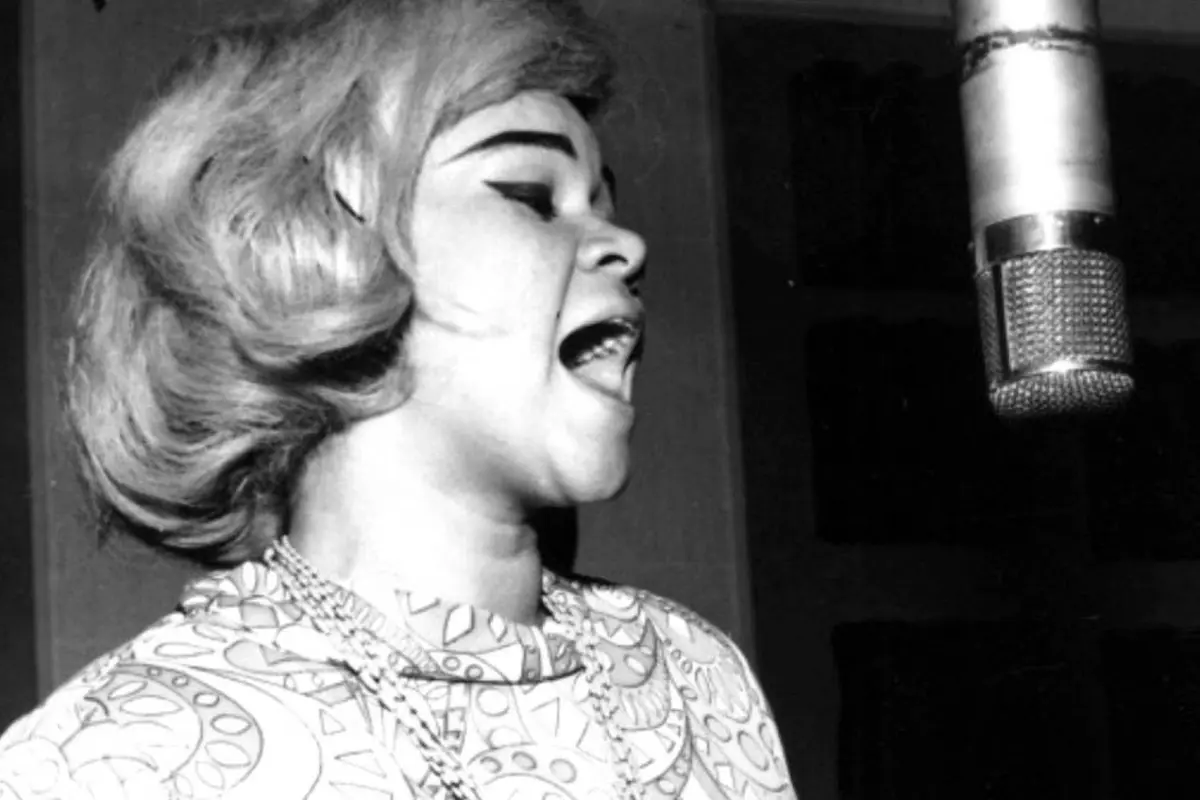
Etta James enters: a teenage powerhouse with something to say
In 1955, Etta James was still early in her career, recording under the wing of bandleader and producer Johnny Otis. Her early credits sometimes appear as “Etta James and the Peaches,” a reminder that this was a group-fronted R&B world, not yet the era of the solo pop superstar brand.
Biographical overviews of James consistently emphasize how quickly she moved from raw talent to national attention. And “The Wallflower (Roll With Me, Henry)” is the record that lit the fuse: it gave her a persona that could be playful, bold, and loud enough to punch through the noise of the crowded mid-’50s R&B scene.
“The Wallflower (Roll With Me, Henry)”: the clapback that became a calling card
First, the title is a trick. A “wallflower” suggests someone shy and sidelined at a dance. But the parenthetical tells the truth: “Roll With Me, Henry” is a direct invitation, and the record is anything but timid. The song flips the male-led proposition of “Work With Me, Annie” into a female-forward demand: if Henry wants action, he’s going to hear terms and attitude.
“Roll with me, Henry.”
Etta James and the Peaches, “The Wallflower (Roll With Me, Henry)”
The best way to understand how “answer” this record is: it keeps the conversational frame (Annie and Henry as archetypes) while repositioning control. The woman isn’t merely responding; she’s steering. That matters in 1955, when so much pop storytelling still treated women as plot devices rather than narrators.
The listing also helps place the recording in context by documenting it as a Johnny Otis-linked early milestone and preserving it within the broader story of Etta James’s career.
Why it hit so hard: hooks, humor, and coded heat
Musically, “The Wallflower” rides a danceable groove that makes the lyric feel like a party scene rather than a courtroom testimony. That’s an important difference from later diss tracks: the sting is delivered with a grin, in public, over a beat you can move to.
Lyrically, it’s the mid-century version of “I said what I said.” Etta’s delivery sells confidence that doesn’t ask permission. There’s flirtation, sure, but also a dare: try to keep up. For older listeners, this is one reason the record still feels modern – the posture is recognizable.
The “Annie/Henry” mini-trend: serialized storytelling on 45s
The Annie/Henry concept was bigger than two songs. “Work With Me, Annie” became notable partly because it helped trigger a whole batch of related records, sequels, and replies. The summary of the broader “Annie” sequence captures how quickly the premise multiplied.
Think of it as a pop universe with recurring characters: familiar enough to be instantly legible, flexible enough for different artists to put their stamp on it. It’s also an early example of how the music business reacts to controversy: if a song is “too hot,” someone will sell a cooler edit, a funnier parody, or a sharper comeback. Everybody eats.
Was it really a “diss track”? Not exactly, and that’s the point
Calling “The Wallflower” a diss track is useful shorthand, but it undersells the nuance. Answer records weren’t always hostile. Often they were competitive and collaborative at the same time: artists borrowed a hit’s frame, but the public got a richer scene in return.
Still, there’s real edge here. “Work With Me, Annie” is a man pushing a scenario; “The Wallflower” answers with a woman who refuses to be passive. In a genre ecosystem where women were frequently boxed into sweetness, Etta arrived sounding like she could out-sing and out-talk anybody in the room.
How to listen like a musician: hearing the “answer” in the arrangement
If you want to hear the clapback mechanics, try this approach:
- Compare the chorus posture: “Work with me” is persuasion; “Roll with me” is command.
- Listen for crowd energy: both records lean on a communal, party-like feel that makes the lyric land harder.
- Track the vocal authority: Etta’s tone is forward and brassy, signaling that she is not playing defense.
- Notice the names as symbols: Annie and Henry are less “characters” than placeholders for a flirtation script everyone recognizes.
For extra ear training, use preserved recordings as references. The Library of Congress National Jukebox entries provide stable documentation of this era’s releases, including the early work that helped establish Etta James’s legend.
Controversy, censorship, and why this stuff spread anyway
One reason answer records flourished is that controversy creates demand, and demand creates copies. If one version gets banned or frowned upon, another version can slip through different channels. R&B in the 1950s had a vibrant parallel infrastructure: independent labels, jukebox networks, and regional radio.
That ecosystem rewarded speed. You didn’t need a two-year album rollout to respond; you needed studio time, a bandleader who knew the market, and a singer who could sell the message. Johnny Otis’s role in developing young talent is part of why this record feels so “of the moment” – it was designed to compete in the same marketplace, immediately.
From “Miss Peaches” to the matriarch: what this debut tells us about Etta’s legacy
Etta James’s career would stretch far beyond novelty conversation songs, but her first big hit already revealed her core strengths: storytelling, swagger, and emotional clarity. Later eras would frame her as a master of blues, soul, and pop standards, but the origin story is pure street-smart R&B.
Major retrospectives often highlight her voice as uniquely forceful and expressive, with a life and career that moved through multiple American genres. Even at the start, you can hear it: she’s not waiting to be discovered. She’s arriving.
It also helps explain why she could later own radically different material, from gutbucket blues to lush ballads. If you can make an answer record feel like a personal manifesto at 17, you can probably sing anything.
A quick timeline table: the “conversation” at a glance
| Year | Record | Artist | Role in the “conversation” |
|---|---|---|---|
| 1954 | “Work With Me, Annie” | Hank Ballard and the Midnighters | Original spark, innuendo-driven hit |
| 1955 | “The Wallflower (Roll With Me, Henry)” | Etta James and the Peaches | Answer record that flips the power dynamic |
The modern takeaway: this is what “going viral” looked like in 1955
“The Wallflower” isn’t just a fun piece of R&B history. It’s evidence that pop culture has always loved interconnected stories, public replies, and characters you can reuse like memes. The difference is that in 1955, the algorithm was a jukebox and the comment section was the dance floor.
And if you’re looking for the moment Etta James first sounded like a legend-in-progress, this is it: a teenager stepping into a national conversation and owning it.
Conclusion: Etta James’s first big hit worked as an early musical clapback because answer records weren’t side content – they were a mainstream engine of R&B. “The Wallflower (Roll With Me, Henry)” is the rare reply that outlived the argument, and it still plays like a power move.


