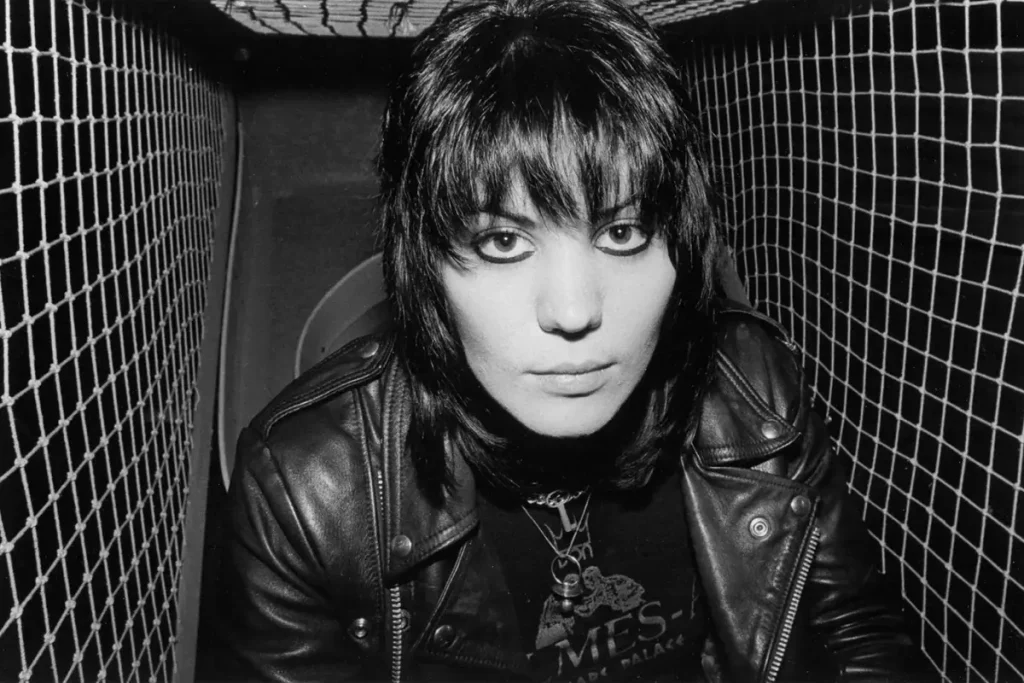
Joan Jett did not politely “break into” rock. She kicked the door until the hinges gave up.
Across The Runaways, Joan Jett & the Blackhearts, and her DIY label work, she proved an unfashionable truth: the music industry rewards gatekeepers, but history rewards the stubborn. If you only know her from “I Love Rock ’n’ Roll,” you are missing the more interesting part: how she built a career by refusing to be made “palatable.”
Who is Joan Jett, really?
Joan Jett (born Joan Marie Larkin) is an American singer, guitarist, songwriter, producer, and label co-founder whose sound sits at the loud intersection of glam, punk attitude, and classic rock hooks.
Her public image often gets reduced to leather, a sneer, and a power chord. The deeper story is work ethic, arrangement instincts, and a willingness to play the villain in other people’s narratives if it kept her moving forward.
“I don’t give a damn ’bout my bad reputation.”
Joan Jett, “Bad Reputation”
The Runaways: teenage chaos that rewired the idea of who gets to be loud
Jett’s first major jolt came with The Runaways, the all-female rock band formed in the mid-1970s that became famous for both its raw energy and the way the culture obsessed over their age, looks, and “shock value.”
That attention was a trap and a megaphone at the same time. The trap was obvious: critics and executives treated the group as a novelty, like the band was a marketing stunt rather than a real musical unit.
The megaphone mattered more. The Runaways put a stake in the ground: girls could play hard rock without asking permission, without singing softly, without being “the cute one” on stage.
Why The Runaways still matter to musicians
- They normalized aggression in a way that later punk and riot grrrl scenes could build on.
- They exposed industry double standards about sexuality, youth, and control.
- They made “all-female band” a fact, not a genre.
Rejection, then reinvention: the Blackhearts and the “DIY or die” blueprint
After The Runaways ended, Jett hit the career phase that separates icons from trivia answers: she got rejected, repeatedly, and treated that “no” like free market research.
Instead of waiting to be rescued by a label, she built infrastructure. Jett and her longtime creative partner Kenny Laguna co-founded Blackheart Records, a move that is now celebrated as a classic independent-label play.
That label story is more than business trivia. It is the reason her music ended up on radio at all, and it is a key reason she became a symbol for artists who want leverage instead of permission slips.
DIY, but make it practical
If you are a musician, Jett’s lesson is not “be independent” as a vibe. It is “own your master plan.” Build a team you trust, learn how revenue actually flows, and keep your live show sharp enough that labels chase you, not the other way around.

“I Love Rock ’n’ Roll”: the hit that hides a smarter career move
“I Love Rock ’n’ Roll” is the song that turned Joan Jett into a household name, but it is also a useful case study in taste and timing. Jett’s version was a cover of a song originally recorded by The Arrows, and she helped turn it into a cultural slogan.
It worked because it is musically blunt and lyrically direct. The groove is simple enough to chant, but the performance is all conviction: the vocal sits right on the edge of a dare.
| Element | What you hear | Why it works |
|---|---|---|
| Riff | One of rock’s stickiest two-bar hooks | Instant recognition, easy to cover |
| Vocal | Half-sung, half-commanded | Attitude becomes the “melody” |
| Lyric | Plain language, no poetry contest | Anthemic, memorable, universal |
Sound and style: not “punk,” not “classic rock” – a weaponized hybrid
Joan Jett is often filed under punk, and she absolutely shares punk’s impatience. Even so, her catalog is full of classic rock structure: clear verses, big choruses, strong hooks, and a guitar tone that prioritizes impact over complexity.
If you want a clean definition of punk rock as a musical and cultural idea, dictionaries emphasize its aggressive, rebellious style and its stripped-down approach.
Jett’s genius is that she uses stripped-down tools like a pop songwriter. The songs land fast, the arrangement never wastes a bar, and the guitar parts serve the vocal rather than showing off.
What to listen for (guitarists, this is your homework)
- Downstroke drive: tight rhythm playing makes simple chords feel huge.
- Midrange-forward tone: the guitar lives where it can fight through a band mix.
- Riff as identity: the riff is not decoration; it is the hook.
The documentary era: controlling the narrative, finally
For decades, Jett’s story got filtered through headlines about “wild girls,” “bad influence,” or “shock rock.” The documentary Bad Reputation helped reframe her career as a deliberate, long-term artistic and business project rather than an accident of attitude.
The film also highlights a truth older audiences recognize immediately: when women play loud music, the culture tends to debate their “image” instead of their timing, gear choices, and songwriting craft.
Toronto International Film Festival included Bad Reputation in its lineup, an institutional signal that Jett’s impact belongs to cultural history, not just nostalgia playlists.
Edgy but accurate: Joan Jett’s real threat was competence
Here is the provocative claim that holds up: Joan Jett scared the industry less with leather and more with proof. She proved that a woman could front a hard rock band, lead with guitar, and still sell records without being marketed as a side character.
And she did it while keeping her private life relatively private, which is its own kind of rebellion in a business that profits off exposure. Jett’s refusal to feed the celebrity machine makes her easier to mythologize and harder to trivialize.
Iconography vs. agency
Plenty of artists borrow her look. Fewer borrow her agency: owning rights, shaping production, picking battles, and staying on the road long enough that trends have to deal with you.
Joan Jett as an influence: the “permission slip” she never asked for
Whether you trace lines into 1990s alternative, punk revival scenes, or modern indie rock, Jett’s influence shows up in three places: vocal attitude, riff-first songwriting, and an insistence that stage presence is earned, not styled.
Her larger legacy also lives in the broader push for women’s autonomy in public life. Advocacy groups have documented how women’s rights work spans culture, policy, and equal access, and rock stars who model agency contribute to that ecosystem even when they are not acting as politicians.

A quick, practical guide: how to get “Joan Jett energy” into your playing
1) Write with a riff, not a chord chart
Start with a two-bar guitar idea you can remember the next day. If the riff is strong, the arrangement becomes easier and the chorus becomes inevitable.
2) Make the rhythm part your lead instrument
In Jett’s world, rhythm guitar is not background. Lock with the drummer, keep the strumming consistent, and let your right hand be the engine.
3) Keep lyrics concrete and singable
Her best lines sound like something you would say out loud, not something you would workshop in a notebook. Clarity is a weapon in rock.
4) Treat DIY as a business plan
Independence is paperwork, relationships, and long-term consistency. Jett’s story is a reminder that “do it yourself” really means “learn how it works.”
Essential listening: where to start (and why)
- “Bad Reputation” – the mission statement in under three minutes.
- “I Love Rock ’n’ Roll” – a masterclass in turning a cover into a brand.
- “Crimson and Clover” – shows how she reinterprets classics with grit.
- Deep cuts and live tracks – her catalog rewards hearing the band as a unit, not just the singles.
Conclusion: the simplest way to understand Joan Jett
Joan Jett’s career is the sound of a closed door getting tired. She became a rock icon not by being “first” at anything, but by being relentless, competent, and impossible to ignore.
If you want the real takeaway, it is this: attitude is cheap, but ownership, songwriting, and stage discipline are revolutionary. Jett had all four.