There are concerts you remember because the band was tight.
And then there are concerts you remember because they rearranged your brain chemistry.
For Pearl Jam lead guitarist Mike McCready, that line is drawn at The Gorge Amphitheatre in Washington, where he watched Stevie Ray Vaughan tear into “Couldn’t Stand the Weather” as literal weather rolled in like a stage effect from God. McCready later described it as a “religious experience” that pulled him out of a dark spiral and back into playing guitar. The shockwaves from that night didn’t just revive a musician – they helped keep the future of one of rock’s defining bands alive.
Before Pearl Jam: when a guitarist goes quiet
McCready’s story is compelling because it’s not the usual “kid practices eight hours a day and wins.” It’s the opposite: a talented player who hit a wall so hard he stopped caring.
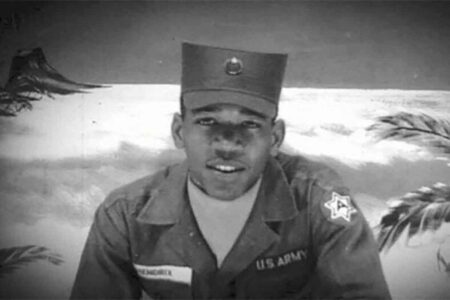
In the late 1980s he’d been in a Seattle band called Shadow, and the group took a swing at Los Angeles chasing a record deal. It didn’t pan out, and the band eventually split. McCready has spoken about being depressed, cutting his hair, enrolling in community college, and working nights at a video store – a very unglamorous limbo for someone wired to communicate through six strings.
If you’ve ever put your instrument in the corner “for a while” and felt the weeks turn into months, you understand the specific dread: you’re not just avoiding practice – you’re avoiding yourself.
The setting: why The Gorge feels like another planet
Plenty of venues host legendary shows, but The Gorge has a particular kind of myth baked into its geography. It’s carved into the Columbia River Gorge, with sweeping views that make even average opening acts look like they’re playing the end of the world.
The venue’s own visitor information leans into the idea that it’s a destination, not a pit stop, because getting there is part pilgrimage, part road trip endurance test. That isolation matters – when the sky changes, everyone notices.
And yes, the wind and rain do their thing out there. McCready’s point wasn’t “it rained at a show,” it was that the music and the storm synced up so perfectly it felt orchestrated.
The moment: “Couldn’t Stand the Weather” and the storm that hit on cue
McCready’s recollection is vivid: as soon as Vaughan kicked into “Couldn’t Stand the Weather,” massive clouds rolled overhead and rain poured down. When the song ended, the rain stopped. Then came the punchline that reveals how deep it landed: it lifted him out of his negative mindset and got him playing again.
In a recap that’s been widely quoted in rock press, the key phrase is the one that makes musicians nod instantly: “It was like a religious experience, and it changed me.”
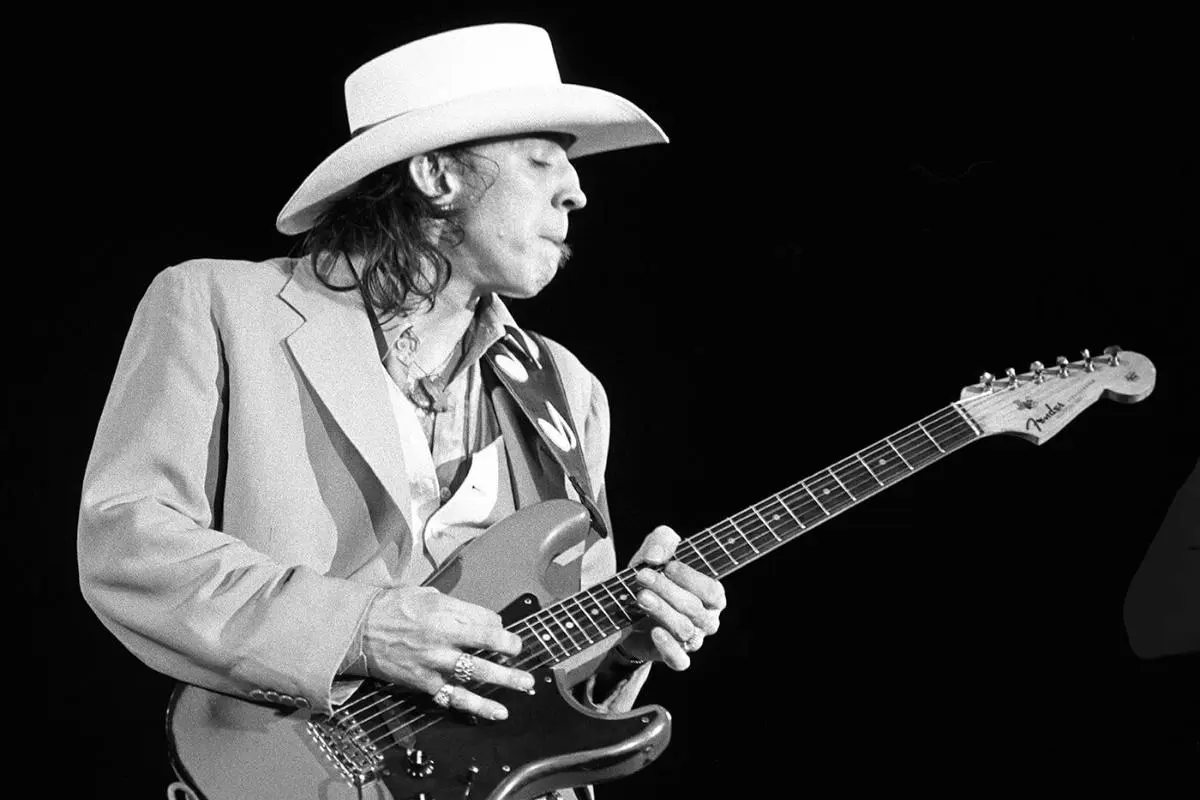
“As soon as he started ‘Couldn’t Stand the Weather,’ these huge clouds rolled in overhead, and rain began pouring down. When the song ended, the rain stopped! It was like a religious experience, and it changed me.” – Mike McCready
That story hits because it’s not about virtuosity alone. It’s about timing, drama, and the feeling that the universe is briefly paying attention to your life.
Why Stevie Ray Vaughan could do that to people
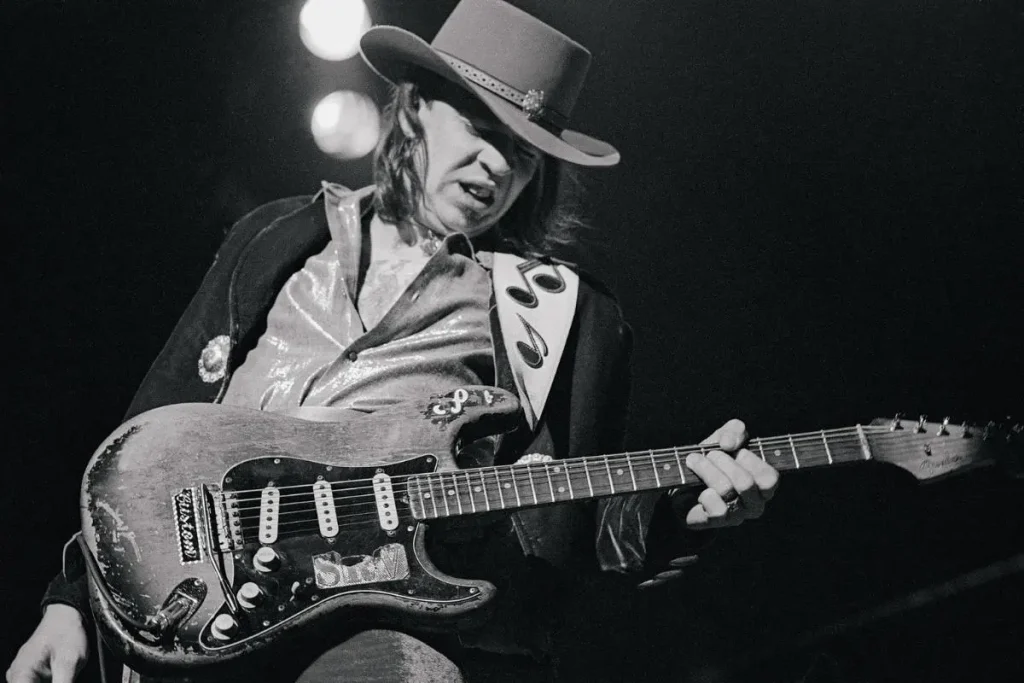
Stevie Ray Vaughan wasn’t merely “a great blues guitarist.” He was a walking contradiction: raw but precise, traditional but explosive, reverent to the past but loud enough to scare the future into showing up.
Biographical profiles tend to underline the arc: a Texas player who helped spark a mainstream blues revival in the 1980s, fusing Albert King and Jimi Hendrix into something both classic and dangerously present-tense.
And that matters for McCready, because by the late 1980s hard rock guitar could feel like a circus of hair-sprayed technique. SRV wasn’t selling perfection – he was selling truth. If you were depressed, cynical, or burnt out, that kind of playing didn’t just entertain you. It indicted you.
The song choice wasn’t accidental
“Couldn’t Stand the Weather” is built like a warning: shuffle rhythm, sharp accents, and a vocal that feels like a dare. The track’s title alone is a neat irony for a rainstorm, but the music is the real hook – tension and release over and over, like the body trying to shake itself awake.
When a player hits that tune with authority, it lands as a statement: you can’t control the storm, but you can control how hard you swing into it.
The unsung hero: the friend who got him moving again
Even the most cinematic turning points usually have a practical setup. McCready credits a friend, Russ Riedner, with getting him “out of my college mode and back into playing guitar.” That line is important because it frames the comeback as both social and musical.
Depression isolates. Musicianship thrives on community: someone lending you a record, dragging you to a show, or simply reminding you that you used to love this.
In other words, the Stevie moment may have been the ignition, but friendship was the oxygen.
What changed in McCready after that night?
McCready didn’t become a Stevie clone, and that’s the point. Inspiration that lasts doesn’t copy – it unlocks.
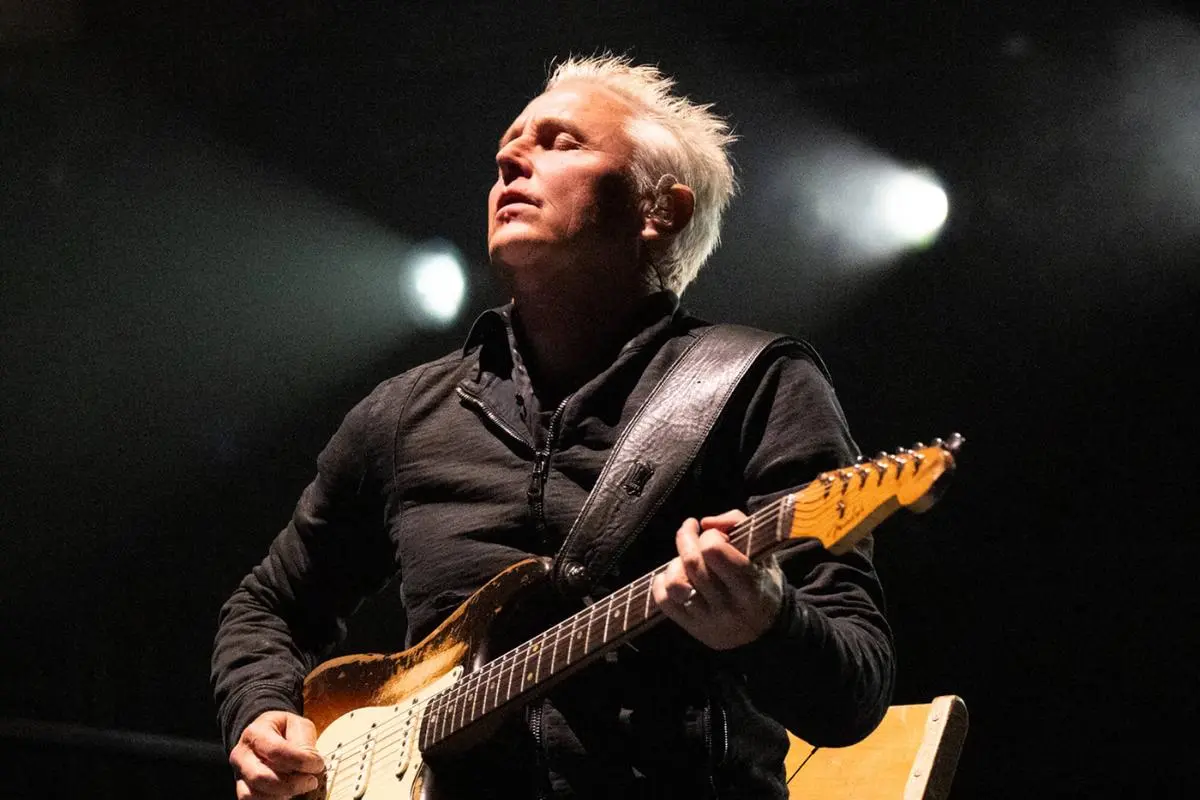
You can hear his DNA in Pearl Jam’s leads: blues phrasing, vocal-like bends, and a willingness to let a solo sound a little dangerous rather than clinically clean. On the early records, his guitar often functions like a second singer – not decoration, but a narrator.
Pearl Jam’s debut Ten is a reminder of how much melodic lead guitar still mattered in the early 1990s, even as “grunge” tried to pretend it didn’t care about chops.
Edgy claim (with a fair warning label)
Here’s the provocative version: without Stevie Ray Vaughan’s weather-cursed set at The Gorge, there’s a non-zero chance Pearl Jam’s signature lead voice never forms the same way.
Is that impossible to prove? Sure. But the logic is simple: if McCready stays checked out, the Seattle ecosystem loses one of its most expressive players, and bands are chemistry experiments – remove one reactive element and you don’t get the same explosion.
“Religious experience” is not a metaphor (at least not only)
Musicians overuse spiritual language until it becomes background noise, but McCready’s quote lands differently because it’s attached to a concrete sensory memory: clouds, rain, the exact moment a song starts and ends.
Psychologically, this is how “conversion experiences” work – a high-intensity emotional jolt that reorders priorities. Music is uniquely good at triggering that because it bypasses rational defenses. You don’t argue with a backbeat; you submit to it.
If you’re stuck in a negative mindset, a show like that can feel like somebody reached in and yanked the emergency brake on your thoughts.
SRV’s wider legacy: it wasn’t just guitar nerd worship
Vaughan’s legacy isn’t confined to tone-chasers and Texas blues purists. He’s formally recognized for his impact and catalog, including being inducted in the Blues Hall of Fame.
And in the broader rock conversation, he’s repeatedly held up as one of the instrument’s defining modern voices, showing up high in major “greatest guitarist” lists.
That matters because it confirms what McCready felt wasn’t random fandom. He witnessed an artist operating at a level that changes other artists’ trajectories.
Want to hear what McCready heard? A practical listening map
If you’re trying to understand why a single song could reboot someone’s entire identity, don’t just stream the studio track once and move on. Use this checklist to recreate the “conversion” effect as closely as possible.
Start with the core SRV vocabulary
- “Couldn’t Stand the Weather” – the riff, the shuffle, the lightning-strike accents.
- Live SRV performances – where the dynamics get sharper and the risks get louder.
- Gear context (optional) – knowing the tools can help you hear the choices, not just the notes.
For guitarists who want to zoom in on the physical side of it, rundown guides to Vaughan’s guitars and rig choices can be useful as long as you don’t confuse equipment with essence.
Then connect it to McCready’s voice
- Pearl Jam: “Alive” – early evidence of blues phrasing inside a modern rock frame.
- Pearl Jam: “Yellow Ledbetter” – lyrical bends and a conversational, Hendrix-meets-SRV sensibility.
- Any long live solo stretch – where he stops “playing the part” and starts testifying.
The Gorge factor: when nature becomes stage lighting
Outdoor venues can be unforgiving: wind ruins sound, rain wrecks gear, and cold hands kill bends. But when it works, it adds an element no arena can fake.
At The Gorge, the landscape is so dominant that you can’t pretend you’re in a sealed entertainment bubble. You’re in the open, under a sky that might cooperate or might not.
McCready’s story is the dream scenario: the storm doesn’t sabotage the music – it collaborates with it.
A quick fact check corner (what we can and can’t verify)
| Claim | What we can say responsibly |
|---|---|
| McCready said the SRV show changed his life | Multiple music outlets have published McCready’s quote and context about the Gorge experience. |
| The Gorge Amphitheatre is a major Washington venue and destination | The venue’s official site frames it as a travel-worthy amphitheatre with unique setting and logistics. |
| SRV is considered a foundational modern electric blues figure | Mainstream biographical coverage places him as a key 1980s blues revival force. |
What musicians can steal from this story (besides licks)
McCready didn’t get “saved” by a practice routine. He got saved by being reminded why the instrument mattered in the first place.
So the actionable takeaway is brutally simple: if you’re burned out, stop negotiating with your motivation and go get hit by something real. That might be a show, a record, a rehearsal with friends, or an hour playing along to your heroes with your phone on airplane mode.
And if you have a friend stuck in the “college mode” version of their life, be the Russ Riedner in the story. Drag them back toward the thing that makes them feel alive.
Conclusion: one storm, one song, one reopened door
The legend of that Gorge night works because it’s specific: a song title that mocks the sky, a downpour that behaves like it’s following cues, and a guitarist in the crowd who needed a reason to pick up the instrument again.
Stevie Ray Vaughan didn’t just play “Couldn’t Stand the Weather.” He played it in a way that made another musician believe in music again. And sometimes, that’s the biggest thing a great guitarist can do: not impress you, but resurrect you.