
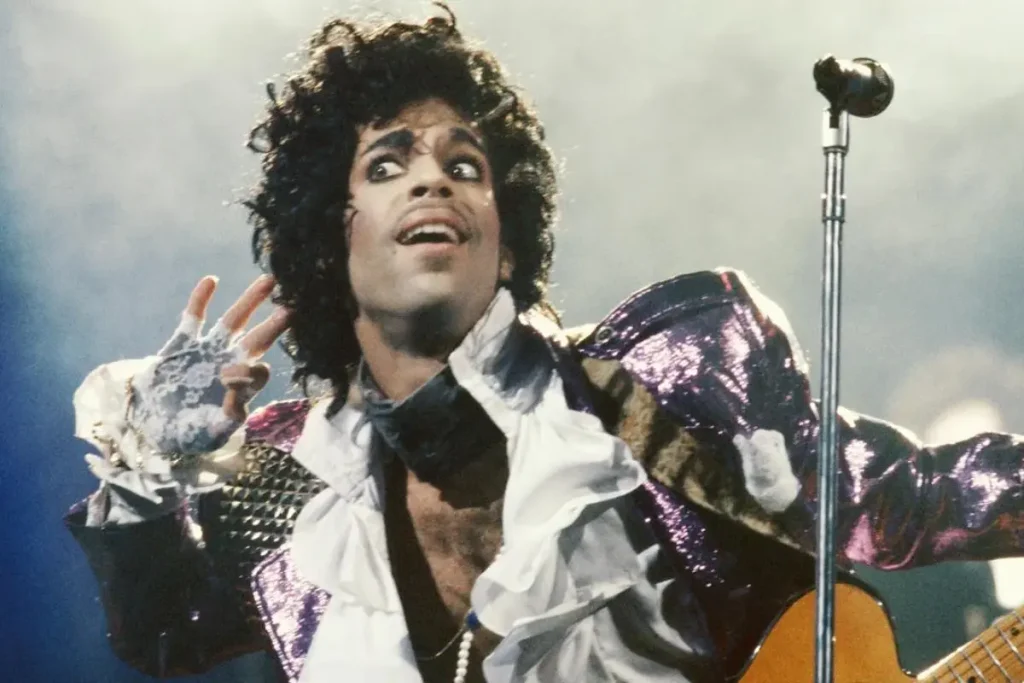
Prince winning an Oscar sounds like a punchline until you remember what Purple Rain actually did: it made a rock star’s album behave like a blockbuster, made a movie soundtrack act like a greatest-hits set, and pushed a fiercely self-directed Black artist into Hollywood’s most buttoned-up room.
The twist is that Prince’s Academy Award moment wasn’t a long speech, a victory lap, or even an especially “Oscar-y” performance of gratitude. It was brief, controlled, and a little bit alien in the way only Prince could be. And that’s exactly why it’s worth revisiting.
First, the key fact: what Prince won (and when)
Purple Rain (1984) won the Academy Award for Best Original Song Score at the 57th Academy Awards, honoring the film’s overall original song score rather than a single song.
The credited recipients were Prince, John L. Nelson, and Morris Day, the official names attached to the film’s “song score.”
So what does “Best Original Song Score” even mean?
This category was designed for films where the musical storytelling is carried mainly by a body of original songs, not a traditional orchestral score. It is not the same as “Best Original Song,” and it’s not the same as “Best Original Score.”
It also has a strange history: the Academy discontinued it and brought it back in different forms, meaning Purple Rain sits in a small, quirky club of winners. In other words, Prince didn’t just win an Oscar; he won a kind of Oscar that signals “the songs are the movie.”
The acceptance: small talk was never the point
If you’re expecting a classic Hollywood speech, Prince’s Oscar moment can feel almost confrontational. He shows up, accepts the award, and doesn’t “play the room” the way many winners do.
That wasn’t shyness. It was brand discipline. Prince was famous for refusing easy narratives about himself: he rarely gave conventional interviews, he controlled access, and he treated public moments like compositions. When you watch the footage, the vibe is clear: he’s not trying to become part of the Academy. He’s letting the Academy briefly orbit him, consistent with how his career is often described as intensely self-directed and tightly controlled in public-facing moments.
“Prince was a control freak in the best sense: his music, his image, his output, his rules.” – The New York Times (obituary overview of his career and persona)
That control matters here because Oscars are built for emotional disclosure. Prince’s acceptance is the opposite: economical, unsentimental, and all signal, no small talk.
Why the win was bigger than the speech
The Oscar validated something the industry still struggles to admit: pop music can be the main engine of cinema, not just a garnish. Purple Rain wasn’t a prestige drama with a tasteful theme song. It was a loud, messy, hyper-stylized star vehicle that used songs as plot, character, and advertising.
To see how unusual that is, consider how the film is described in standard reference summaries: a semi-autobiographical drama built around performances and a fictionalized Minneapolis club scene, with Prince at the center – an outline that aligns with how the movie is positioned in standard reference listings for the film.
The Academy awarding that kind of movie wasn’t just “nice.” It was Hollywood admitting that a rock-driven, youth-driven, Black-led music film could be legitimate craft and not merely profitable noise.
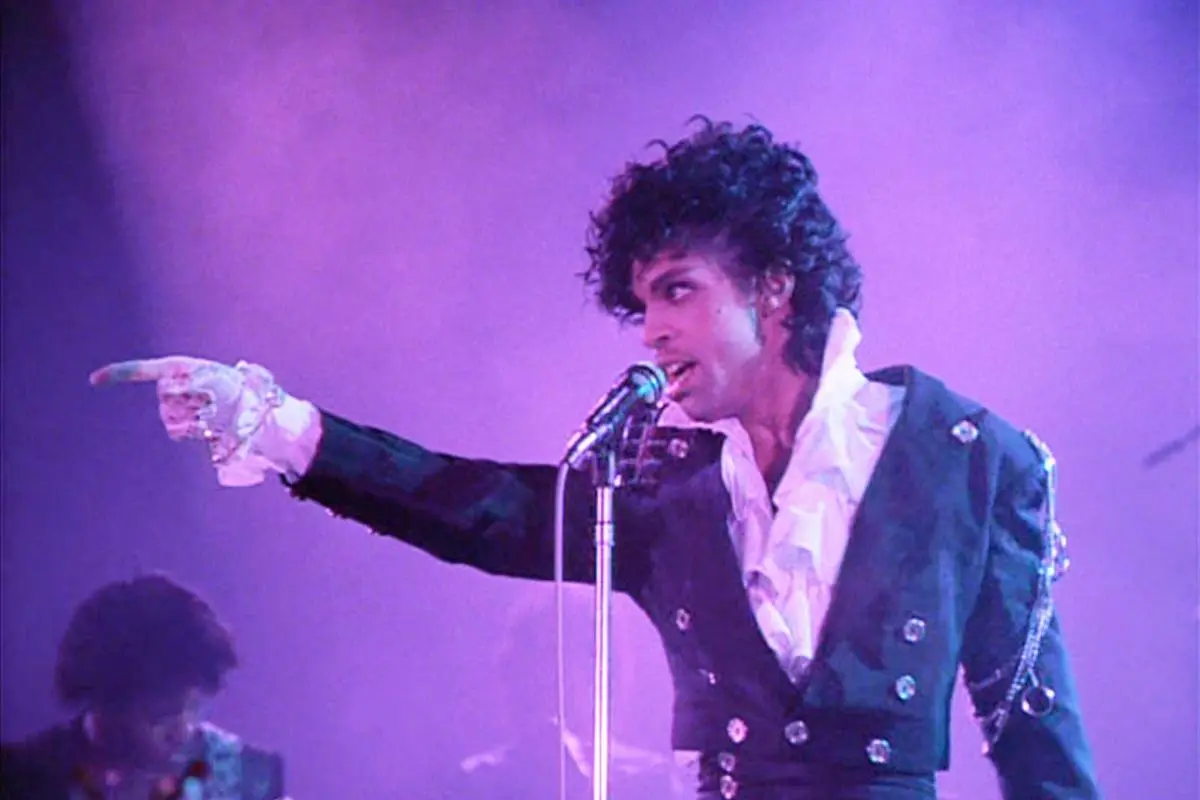
How Prince got to the Oscars in the first place
Prince didn’t stroll into Hollywood as a charming crossover act. He arrived as a musician already known for blending rock, funk, R&B, and pop into something that made radio formats look outdated.
By the time Purple Rain hit, he had a working band (The Revolution), a visual identity that TV couldn’t ignore, and a writing style that treated songs like short films. This is why the “song score” category fits: the narrative logic was already in his music.
And yes, the film worked commercially, too. The industry’s measurement of Prince’s commercial pull – seen in how quickly attention and listening could surge around him – helps underline that Purple Rain wasn’t a minor cult item at release.
Breaking down the song score: what the Oscar was really rewarding
Part of the fun is that the Oscar is not strictly rewarding the soundtrack album as you know it. It’s rewarding the film’s original song score as used in the movie: how songs function dramatically, how they frame scenes, and how they carry character arcs.
Here’s a practical way to think about it: Purple Rain is a movie where songs don’t just appear, they make decisions. In a typical musical biopic, the performance is the dessert. In Purple Rain, the performance is the argument.
What makes the Purple Rain approach so potent
- Diegetic power: many key songs happen on stage, inside the story, so the performances feel like plot events.
- Persona as character: “The Kid” is a fictional role, but the movie leans into Prince’s public mystique instead of sanding it down.
- Arrangement as storytelling: ballad-to-rock dynamics, tension-and-release guitar solos, and stacked vocals do emotional work even when dialogue is minimal.
Edgy claim: the Academy rewarded Purple Rain because it couldn’t contain it
Here’s the provocative read: the Oscar win wasn’t the Academy “embracing” Prince so much as acknowledging that Purple Rain had already conquered the culture and ignoring it would make them look clueless.
Prince had become unavoidable: radio, MTV, fashion, live performance mythology. The Academy’s choice looks less like a gentle tip of the hat and more like institutional catch-up.
That read is easier to understand when you remember how rapidly his work could command public attention – something reflected in reporting on how his catalog surged on charts when the culture snapped back to him.
The “quiet” Oscar moment fits Prince’s larger relationship with awards
Prince won plenty of trophies, including Grammys. But he never acted like awards were the point. The point was ownership: of the sound, the masters, the image, the stage. Awards were, at best, documentation.
Official pages for the 27th Annual GRAMMY Awards show the era’s Grammy context around Purple Rain and related work, reinforcing that this was a peak period of recognition across institutions.
And yet, the Oscar acceptance still feels different from a “music industry” moment. It’s Hollywood’s stamp, and Prince treats it like a quick transaction: thanks, next.
Why Purple Rain still reads as historically important
Some music films age like merch: fun, disposable, locked to their decade. Purple Rain has dated elements, sure, but its core achievement endures: it’s a document of an artist who could write, perform, arrange, and command a band at an arena level, then translate that intensity to film.
The Library of Congress National Recording Registry essay on “Purple Rain” underscores how the work has been framed as culturally and historically significant, which helps explain why the Oscar win has staying power beyond trivia nights.
Meanwhile, the official Prince site is a reminder that the title has a life in enduring cultural memory and curated legacy, not just fan lore.
Watch it like a musician: what to listen for around the Oscar win
If you’re a player, producer, or songwriter, Prince’s Oscar moment is a good excuse to revisit the craft behind the spectacle. Try this listening checklist:
1) Guitar tone as narrative voice
Prince’s lead tone often shifts from clean and glassy to saturated and vocal-like. It’s not random, it’s emotional punctuation. When the solo feels like it’s “talking,” it’s because it is.
2) The snare is the handshake
So much of Purple Rain lives in the snare sound: crisp, bright, and forward. It’s engineered to cut through guitars and synths and still feel like a live room.
3) Backing vocals as architecture
Listen to how group vocals create width and authority. They don’t just sweeten the chorus; they make the chorus feel inevitable.
The human side: Prince as a public figure, briefly visible
One reason people keep searching for the Oscar clip is that it’s a rare mainstream moment where Prince is present in a traditional celebrity ritual. You get a glimpse of how he carried himself when he couldn’t fully control the script.
An NBC News retrospective on Prince’s culture-shifting impact captures how widely he was seen as a transformative figure, which helps explain why even a short acceptance reads like a historical artifact.
A detailed career overview of Prince’s life and public persona also helps contextualize why a restrained awards-show appearance can feel so “Prince”: guarded, deliberate, and unmistakably authored.
Fast facts table (for quick reference)
| Item | What to know |
|---|---|
| Award | Academy Award for Best Original Song Score |
| Film | Purple Rain (1984) |
| Recipients | Prince, John L. Nelson, Morris Day |
| Why it matters | Validated songs-as-cinema and elevated a pop-driven music film into Oscar history |
Conclusion: the Oscar didn’t tame Prince, it documented him
Prince accepting the Oscar for Purple Rain is memorable precisely because it refuses the usual Oscar script. It’s not a confessional, not a joke, not a campaign victory. It’s a moment of institutional recognition meeting an artist who never begged for it.
And that’s the real lesson for musicians: you don’t have to perform gratitude to prove legitimacy. Sometimes you just make something undeniable, then let the room catch up.


