
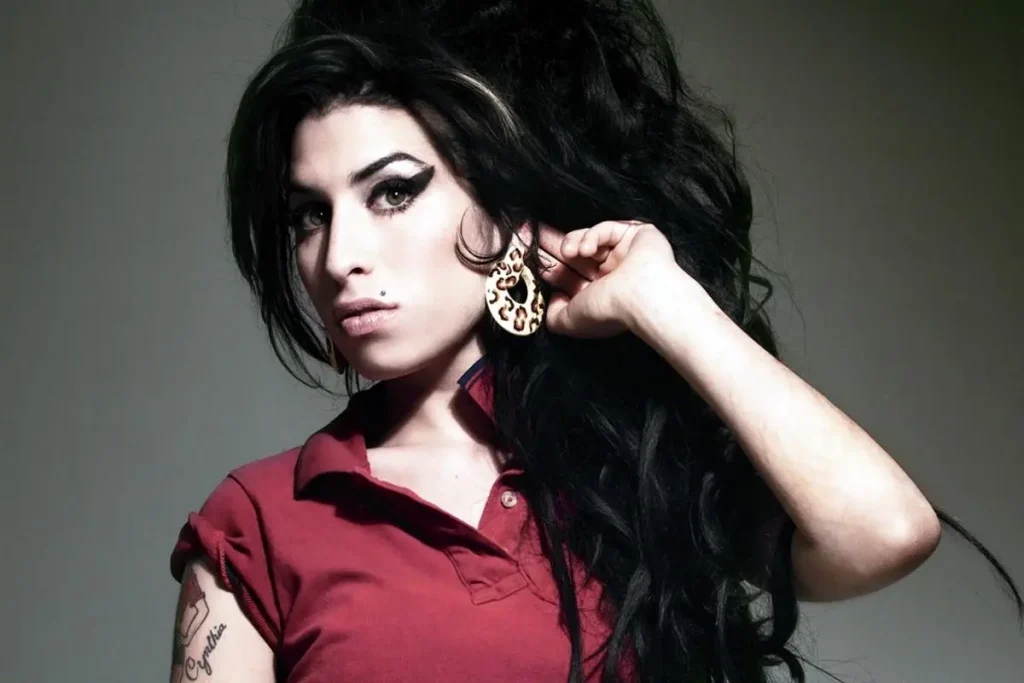
Amy Winehouse did not just sing songs – she testified. Her voice could sound like velvet one bar and broken glass the next, and that whiplash is exactly why her work still lands so hard. In an era of slick pop gloss, she brought back the sound of jazz clubs and girl-group drama, then spiked it with brutally modern confessionals.
People remember the beehive, the eyeliner, the headlines. But the real shock is the craft: phrasing that swings, melodies that nod to old records without cosplaying them, and lyrics that refuse to tidy up the mess for anyone’s comfort. Back to Black was not “retro” – it was revenge, grief, and self-sabotage set to impeccable groove.
She wasn’t “throwback” – she was a modern classicist
Winehouse is often boxed as a throwback because of the Motown and jazz fingerprints all over her music. The bigger truth is that she understood tradition the way a great blues singer does: as a vocabulary, not a costume. Her singing uses jazz-style behind-the-beat placement and conversational timing, where the emotional meaning changes depending on which syllable she leans on.
That’s why her records feel timeless even when you know exactly what she’s referencing. She could make a simple line sound like an argument in progress, or a confession she regrets the moment it leaves her mouth. The intensity is not volume – it’s intention.
Amy’s “secret weapon”: phrasing over fireworks
Winehouse rarely relied on vocal gymnastics. Instead she used micro-decisions: clipped consonants, bent notes, and sudden softness that makes the listener lean in. You can hear it in her best-known hooks where the pain isn’t in the word choice alone – it’s in how she delays or rushes the words like she’s thinking out loud.
“They tried to make me go to rehab, I said, ‘No, no, no.’” – Amy Winehouse, “Rehab”
That opening is basically a mission statement: funny, stubborn, and tragic all at once. It’s also a reminder that the song is not a public-service announcement – it’s a snapshot of denial with a beat you can dance to.
Back to Black: an album that made pain danceable
Back to Black is the rare breakup album that refuses to be polite. It is not a diary with the names changed – it’s a diary with the page ripped out and waved in your face. The sound is deceptively tight: classic soul changes, big choruses, and arrangements that feel like they’ve always existed.
One reason the record endures is that it balances melodrama and detail. She can be theatrical (“We only said goodbye with words”) and petty (“You know I’m no good”) without losing credibility, because the delivery is too specific to be fake. The album’s track list has become the public shorthand for her, and it still streams like a modern hit album rather than a museum piece because listeners keep returning to songs like “Rehab”.

Key tracks and what they reveal
- “Rehab” – dark comedy and defiance, with the punchline landing harder every year.
- “You Know I’m No Good” – a masterclass in self-incrimination that somehow keeps its swagger.
- “Tears Dry on Their Own” – a pop-soul engine built to carry a resignation speech.
- “Back to Black” – noir heartbreak with a chorus that feels inevitable.
Even if you do not know the biography, the songs communicate their own story. That’s the difference between “confessional” and “craft.” The record holds up because it is written and arranged like a real album, not a playlist of singles.
The look: beehive as armor, eyeliner as exclamation point
Winehouse’s style became a symbol because it was instantly readable: big hair, sharp liner, and a silhouette that screamed old-school glamour with a punk attitude. But the image was not just branding – it often functioned like stage armor. When your writing is that exposed, you build a frame around it.
Her visual identity also helped re-open a mainstream lane for classic soul aesthetics in the 2000s. That influence is easy to spot in the wave of artists who leaned into vintage palettes afterward, even when their music was more pop than jazz.
The hard part: when the myth eats the person
Amy Winehouse is inseparable from the modern celebrity machine that treats personal collapse as content. That machine did not create her struggles, but it absolutely amplified them and sold them back to the public as “drama.” The result was a feedback loop: the more vulnerable she looked, the more attention she got, and the more pressure she carried.
This is the provocative claim that still matters: the world loved Winehouse’s honesty, but it often punished her for living honestly. There is a difference between admiring an artist’s vulnerability and feeding on it.
Talking about addiction without turning it into theater
Winehouse’s catalog is filled with references to self-destructive cycles, and “Rehab” is the headline example. But addiction is not a punchline, and it is not a personality trait – it is a health issue with severe risks, including fatal outcomes.
After her death, official reporting and responsible journalism focused on alcohol as a major factor in the coroner’s findings, rather than gossip-friendly speculation. When we discuss her story, the most respectful thing is to keep the facts clean and the voyeurism out.
A quick, practical listening guide (for older-school ears)
If you grew up on Motown, Stax, jazz standards, or British R&B, Winehouse can hit like a jolt of recognition. The trick is to listen for the old language inside the new confessionals. Try this sequence:
| Start Here | Listen For | Why It Works |
|---|---|---|
| “You Know I’m No Good” | Behind-the-beat vocal placement | She sounds like she’s arguing with herself mid-verse. |
| “Back to Black” | Classic chord movement + modern bite | Old-soul structure carrying a very current emotional bluntness. |
| “Tears Dry on Their Own” | Up-tempo resignation | The groove says “keep moving” while the lyric says “it’s over.” |
| “Rehab” | Hook delivery and comedic timing | The chorus lands like a one-liner with consequences. |
Awards, recognition, and the canonization question
Industry recognition can be shallow, but it does mark cultural impact. Winehouse’s work became an awards-era reference point, with her songs and performances turning into shorthand for “real soul in a pop world.” The 50th Annual Grammy Awards, for example, document her presence in that mainstream canon.
Critics also treated her as more than a tabloid figure. Major outlets framed her as a serious artist and songwriter, not merely a “voice” fronting a vibe, as reflected in coverage like this obituary that emphasizes her artistry.
Even earlier, the Mercury Prize ecosystem was already paying attention to her and the scene around her, capturing the era in which British pop started tilting back toward jazz and soul-influenced writing via the Mercury Prize’s archived shortlists.
Legacy: why she still influences singers (and still makes labels nervous)
Winehouse’s legacy is not just “she inspired people.” It’s that she raised the bar for emotional specificity in mainstream songwriting. You can hear the ripple in later artists who write more bluntly, sing with more conversational phrasing, and embrace imperfections that feel human rather than manufactured.
She also left the industry with an uncomfortable lesson: the same machine that profits from “authenticity” can also exploit it. That tension is still unresolved, and her story is one of the clearest case studies.
Watch-listen moments that capture the Amy effect
- A live “Valerie” performance moment where charm and grit collide in real time.
- Back to Black as a studio statement: minimal wasted motion, maximum emotional burn.
- “Rehab” as pop culture artifact: a hook that became a headline, and a headline that became a hook.

Conclusion: the voice that told the truth too well
Amy Winehouse remains unforgettable because she refused to sanitize her experience. She turned shame into melody, denial into rhythm, and heartbreak into something people could sing in a car with the windows down.
Her life ended early, but the work is stubbornly alive. And the real legacy is not the tragedy – it’s the standard she set for saying the quiet part out loud, beautifully.


