
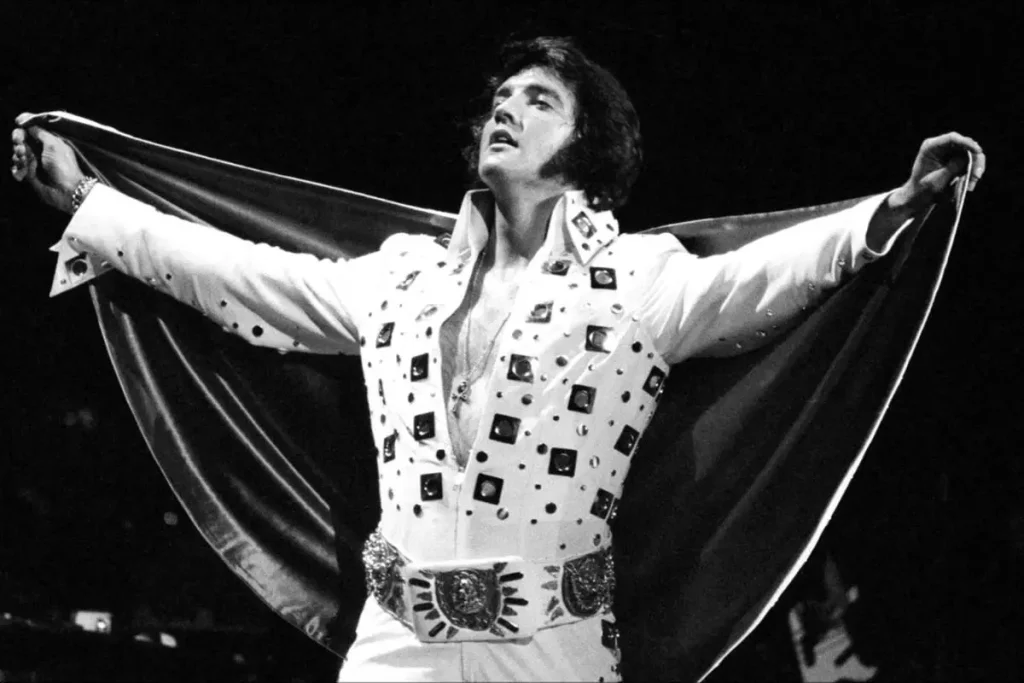
Elvis Presley loved Hawaii the way a touring musician loves a quiet backstage hallway: it felt like an exit, a reset, a place where the noise softened. In March 1977, he made what’s widely described as his last vacation to the islands, a short, private getaway that landed like a whisper between two loud chapters: an exhausting late-career touring schedule and the final months of his life in standard Elvis biographies.
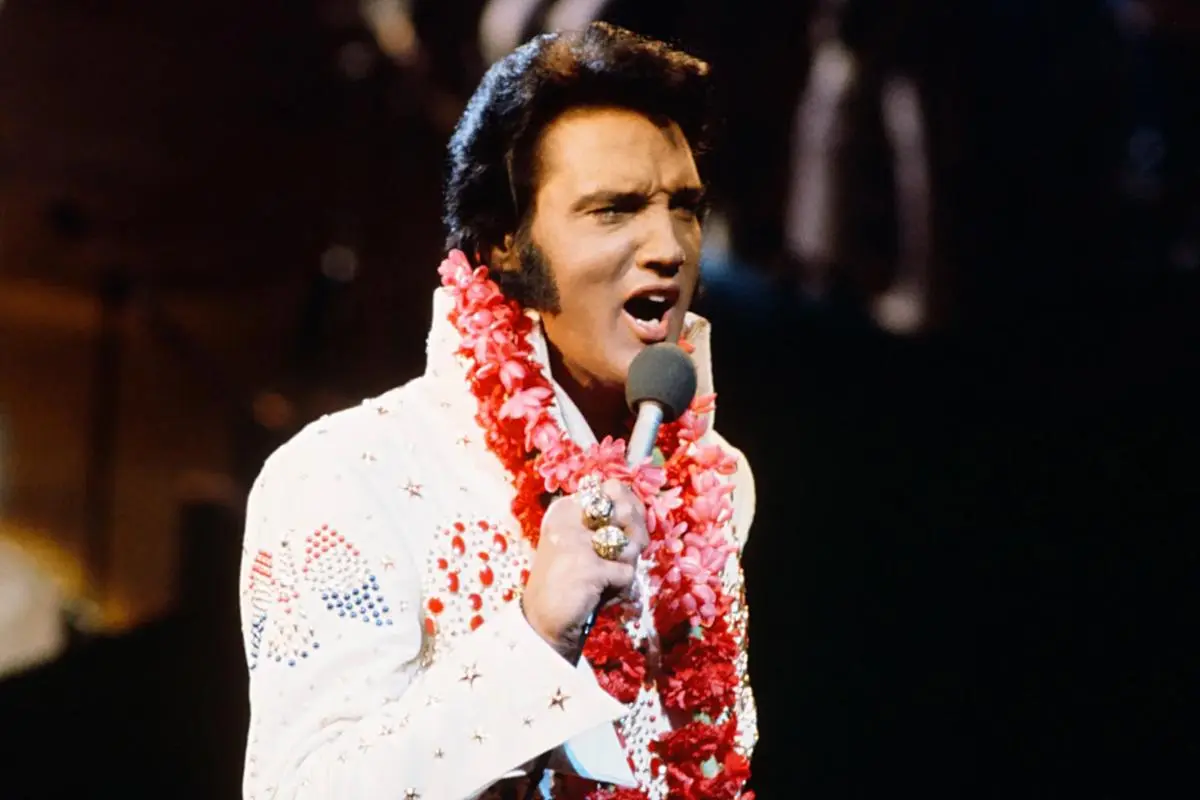
This trip matters not because Elvis recorded a new masterpiece there or staged a headline concert, but because it shows the endgame of fame in the most human way. Hawaii is where he once looked invincible, broadcast live via satellite and crowned by leis and applause. In 1977, it became a hiding place, a controlled bubble, a “leave me alone” vacation for a man who could not actually be left alone.
Why Hawaii, again? Elvis’s long romance with the islands
Elvis’s Hawaii story had been a profitable myth for years: tropical films, iconic music tie-ins, and an image of the King as relaxed, tan, and playful. The peak of that relationship, culturally, was the globally televised Aloha from Hawaii era, which cemented the islands as an Elvis “safe” setting where fans expected spectacle and romance rather than tabloid ugliness.
That backdrop is important. When you understand how deeply Hawaii was tied to his public image, the 1977 trip reads differently: it wasn’t a promotional move. It was an attempt to get the benefits of the place without the obligations of the brand.
What was happening in Elvis’s life by early 1977?
By 1977, Elvis was still performing, still drawing crowds, still surrounded by a working machinery of entourage, security, travel logistics, and expectation. But the body that carried the voice was under obvious strain, and his personal life was increasingly dominated by health issues and heavy prescription drug use, a theme widely addressed in mainstream Elvis overviews.
Here’s the uncomfortable but necessary point: “vacation” in Elvis’s late period often meant a change of scenery, not a change of habits. A few days in paradise can’t fix sleep problems, dependence, and relentless isolation, especially when you bring the same circle and routines with you.
March 1977: the last Hawaiian vacation, as reported
Much of what’s publicly discussed about this March 1977 trip comes from later retrospective coverage and Elvis-world chroniclers rather than real-time press accounts, because it was intentionally kept low profile. That low profile itself is a key detail: Elvis, who once turned Hawaii into a worldwide broadcast, now treated it like a private bunker.
Multiple retrospectives describe the trip as a final getaway to Hawaii in March 1977, a last chance to rest and step away from the mainland grind in reported Elvis roundups. The framing is consistent: Elvis was not there to work. He was there to disappear, at least temporarily.
Where did he stay?
Accounts commonly place Elvis on Oahu and associate his stay with the Honolulu area, where privacy could be managed through controlled access, security, and a cooperative hospitality infrastructure. Even without pinning down a single room number, the pattern fits how Elvis traveled late in life: he relied on trusted handlers and environments that could minimize surprise encounters.
If you’re looking for a “walking tour” of exact addresses, be cautious. Many specific claims online are repeated without documentation, and some are stitched together from fan lore. The credible takeaway is simpler: he chose settings that made seclusion possible and reduced friction with the public.
Who was with him?
Elvis rarely traveled alone, and late-period trips typically included members of his inner circle, staff, and security. This wasn’t just celebrity indulgence; it was necessity. A man as famous as Elvis couldn’t casually rent a car and hit the beach without turning it into a public event.
The more provocative interpretation is that the entourage became both shield and trap. It protected him from the world, but also insulated him from honest feedback and everyday reality. In a career built on adoration, insulation can be as dangerous as harassment.
What did Elvis actually do in Hawaii in 1977?
Most descriptions emphasize ordinary vacation behavior filtered through extraordinary logistics: relaxing, riding around, eating, shopping, and staying mostly out of sight. That “mostly” matters. Elvis could still generate a scene just by being spotted, and sightings and anecdotes are part of why the trip remains discussed decades later.
One reason the trip is compelling is its lack of a clean storyline. There’s no neat concert arc, no studio session, no cinematic plot. It’s a snapshot of a superstar trying to be a person, and discovering that the person is exhausted.
A vacation, not a comeback plan
It’s tempting to romanticize this as a “final recharge,” but the historical record of Elvis’s final year is grim. Within months, he would be gone as noted in a widely cited timeline of his death. Hawaii didn’t reverse his trajectory; it merely paused it.
“Elvis Presley died today…” – The Guardian, reporting on his death in 1977.
The myth machine: why this trip attracts exaggeration
Elvis history lives in a strange ecosystem where verifiable documents sit next to rumor, and rumor often spreads faster because it’s more dramatic. When you read about March 1977, you’ll see claims ranging from “secret medical treatments” to “mysterious meetings” to “last great romances.” Some might be loosely based on something real, but most lack the kind of sourcing historians prefer.
A useful anchor is to separate timeline facts from interpretations. The trip happened and is widely cited as his last Hawaii vacation. The “why,” “who exactly,” and “what every day looked like” are more speculative unless backed by contemporaneous reporting or direct testimony.
Why people want a conspiracy
Because the real story is too ordinary and too tragic. The last Hawaii vacation is not a thriller; it’s a tired man chasing calm. That’s less clickable than secrets, but it’s more believable and, frankly, sadder.
The internet also tends to flatten Elvis into either a saint or a cautionary tale. The 1977 trip supports a third reading: he was a working musician who had become a global institution, trying to rest while the institution kept moving.
Hawaii as a mirror: then vs. 1977
To understand the emotional weight of March 1977, put it next to Elvis’s earlier Hawaii highs. In the early 1970s, Hawaii symbolized mastery: peak fame, peak production, peak confidence. By 1977, it symbolized withdrawal.
| Earlier Elvis-Hawaii image | March 1977 reality |
|---|---|
| Public spectacle and “event” energy | Privacy-first, low-profile movement |
| Optimism and cultural dominance | Health strain and shrinking margins |
| Hawaii as a stage | Hawaii as a hiding place |
That contrast is why this trip is so haunting. Same location, different man.
What this trip tells musicians today (and why it’s not just celebrity gossip)
For working artists, Elvis’s last Hawaii vacation is a sharp lesson in the difference between rest and recovery. Rest is time off. Recovery is rebuilding the conditions that make time off actually restorative: stable sleep, medical oversight, accountability, honest relationships, and boundaries around work.
Three practical takeaways
- Environment helps, but it doesn’t cure. Changing scenery can lower stress, but it won’t undo systemic health issues.
- Your inner circle is part of your health plan. If the people around you can’t tell you “no,” you’re at risk.
- Privacy is not the same as peace. You can be hidden and still be drowning.
How close was this trip to the end?
Elvis died later in 1977 at age 42. That fact turns March into a grim punctuation mark: the last time he reached for a familiar kind of comfort before the final collapse. Even if you avoid sensationalism, the calendar alone makes the trip feel like a final exhale.
Many outlets that summarize Elvis’s final months emphasize the accelerating health problems and the intensity of his schedule, which adds context to why a private Hawaii escape would have been so attractive, as reflected in an institutional summary of his final years.
A note on what we can verify (and what we can’t)
There is a lot of confident-sounding detail online about this vacation. The most responsible approach is to treat specifics like exact daily activities, private conversations, or medical claims as unproven unless tied to credible journalism, official documentation, or firsthand accounts that can be evaluated.
For readers who want primary-material context on Elvis as a cultural and musical force, institutional sources help ground the conversation away from rumor, including guidance on how to use primary records responsibly.
Conclusion: a paradise that couldn’t protect him
Elvis’s last vacation in Hawaii in March 1977 wasn’t a glamorous epilogue. It was a quiet attempt to find relief in a place that had once made him look unstoppable, even as his real life was becoming increasingly fragile.
The edgy truth is that fame didn’t kill Elvis by itself, and Hawaii didn’t save him. The story of March 1977 is about a man trying to rest inside a machine that never stopped, and learning that sometimes the most beautiful scenery in the world can’t drown out what’s happening inside your own body.


