
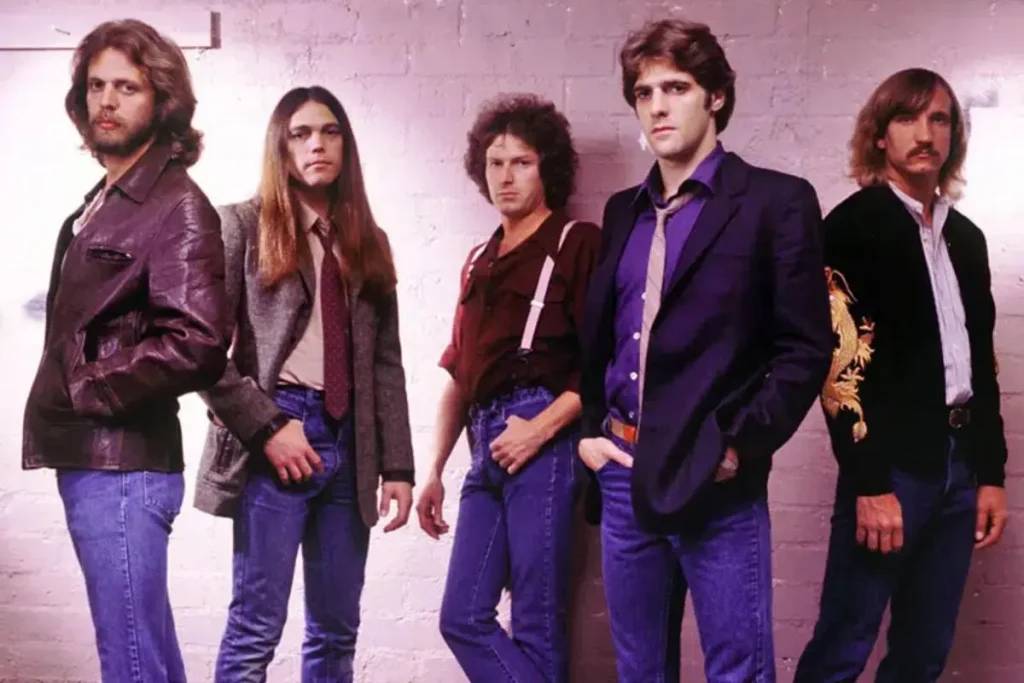
In 1975 the Eagles stopped being an upstart country-rock band and turned into a ruthless hit machine – and nearly tore themselves apart in the process.
The spark was One of These Nights, the band’s fourth studio album, released on June 10, 1975. It became their first US No. 1 LP, spun off three Top 10 singles and eventually shipped more than four million copies in America.
Setting the stage: from desert harmonies to the fast lane
By early 1975 the Eagles were no longer just another Laurel Canyon harmony group. As Rhino notes, they had already scored their first No. 1 single with Best of My Love from 1974’s On the Border, and were hunting for a full-length that could finally dominate the album charts.
Crucially, producer Bill Szymczyk pulled them away from the genteel London sessions favored by Glyn Johns and into a bicoastal grind. For One of These Nights the band tracked between Record Plant in Los Angeles and Criteria Studios in Miami in late 1974 and early 1975, with bassist Randy Meisner co-writing and singing two key songs, Too Many Hands and Take It To The Limit, on a record that would sit atop the US charts for five weeks.
The stakes were suddenly brutal. The band had to prove they were more than pretty harmonies and an outlaw image, and Henley and Frey knew radio now wanted something slicker and darker than the dusty ballads of Desperado; 1975 became the year they turned those instincts into cold, calculated momentum.
One of These Nights: slick, sinister California pop
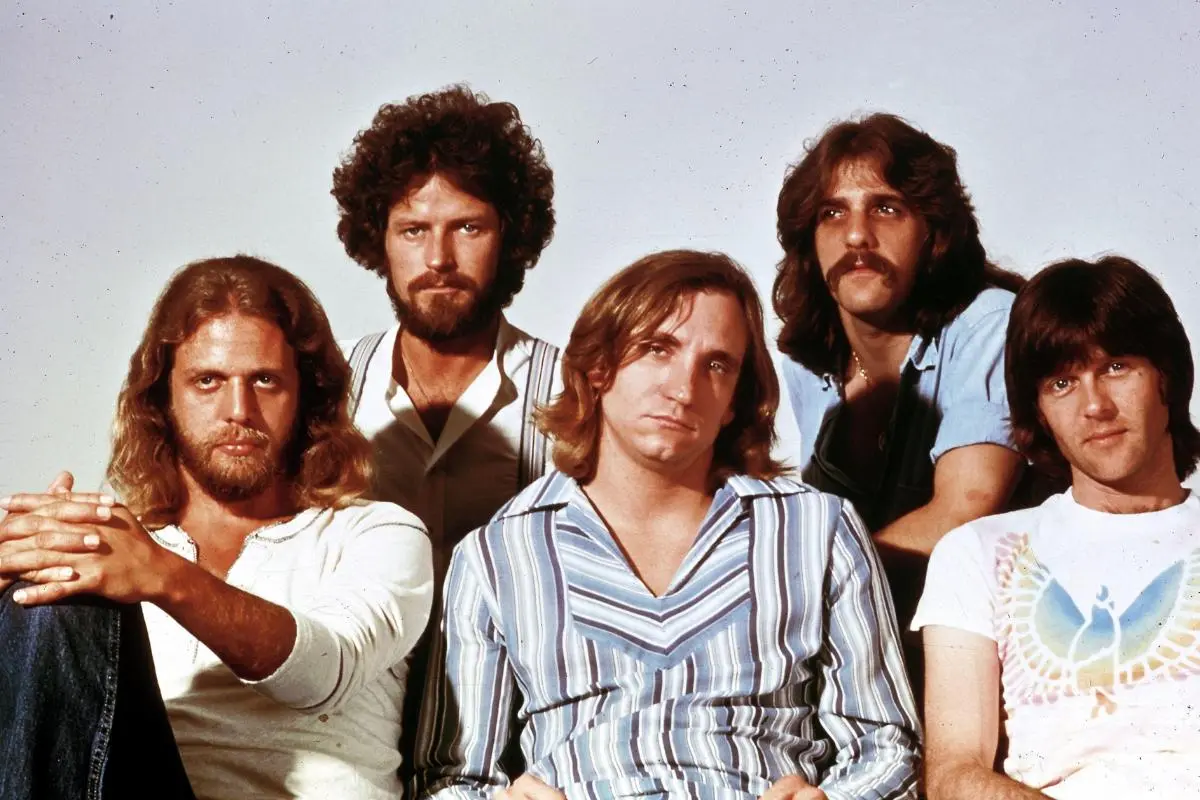
On paper the album’s story looks like corporate rock triumph. A detailed album overview notes that One of These Nights became the Eagles’ first No. 1 on the Billboard album chart in 1975, spawned three Top 10 singles, sold around four million copies, earned major Grammy nominations, marked the last studio appearance of Bernie Leadon and featured Don Felder’s lone lead vocal on Visions as the band launched a worldwide tour.
Society of Rock adds vivid color to that narrative. The band cut the record in Miami and Los Angeles, the title song became their second No. 1 single, Lyin Eyes reached No. 2, and Take It To The Limit climbed to No. 4 while winning them their first Grammy for Best Pop Performance; in the same piece Henley calls the era a “dark time, both politically and musically” and jokes that the group had entered a “satanic country-rock” phase as they folded disco and rhythm-and-blues into their desert-born sound.
Apple’s editors underline how that darkness came wrapped in gloss. Working with producer Bill Szymczyk, the band layered intricate twin-guitar lines on Too Many Hands, stretched Leadon’s banjo piece Journey of the Sorcerer into a mini-epic and built the title track around a soul-inflected falsetto over a dance-floor beat, a combination they credit with propelling the Eagles into true stadium-headliner status.
| Single | US Hot 100 peak | Main voice & flavor |
|---|---|---|
| One of These Nights | No. 1 | Henley in soulful falsetto over a sleek, almost-disco groove. |
| Lyin Eyes | No. 2 | Frey’s storytelling drawl framed by country harmonies and pedal steel. |
| Take It To The Limit | No. 4 | Meisner’s soaring tenor pushing the band’s stacked harmonies to the brink. |
On the road in 1975: from college gyms to TV spectacle
Listen to live tapes from 1975 and you can hear a band adjusting to its new size in real time. In May they hit Kent State University’s Memorial Gym, playing to a sold-out crowd of about 5,000, with the student paper marveling that very few groups could boast even one top-flight guitarist while the Eagles came armed with three.
By late September the same lineup was headlining California stadium shows alongside Jackson Browne and Linda Ronstadt. At Balboa Stadium in San Diego their “One of These Days” concert was filmed for ABC’s short-lived variety series Saturday Night Live With Howard Cosell, capturing Already Gone and Best of My Love for national television and giving middle America a glimpse of the band’s suddenly massive reach.
The One of These Nights tour turned the Eagles into a finely drilled road machine: long sets that threaded early country material with slick new hits, big harmony stacks that had to land every night and a work schedule that left room for little besides travel, substances and sleep. In hindsight, 1975 sounds like the year they proved they could sell out almost any room they entered – and the year the lifestyle started to erode their sanity.
Inside the band: power shifts, burnout and the beer
Behind the scenes, the creative center of gravity had already shifted. One detailed band history traces how On the Border brought Don Felder in via his slide work on Good Day In Hell, and by One of These Nights the Henley-Frey songwriting axis was firmly in charge, driving a more aggressive rock stance even as stress from recording, relentless touring and clashing egos all escalated.
Leadon, the group’s resident country and bluegrass polymath, found himself increasingly sidelined as Felder’s harder-edged guitar and Henley-Frey’s pop instincts took over. Ultimate Classic Rock relays producer Bill Szymczyk and Henley recalling how the band was getting more “rocked out”, with Bernie growing unhappy, associating big-time success with selling out, and how a 1975 argument over the band’s direction ended with him pouring a beer over Glenn Frey’s head; the same account notes that his departure became official that December and that Joe Walsh took his place shortly afterward.
In his own telling, Leadon now frames that moment as both deliberate and regrettable. Speaking years later, he said that during a 1975 band meeting he told the others he would stay through the end of the year, then upended a beer on Frey’s head and suggested they simply finish the remaining shows as well as they could – a spontaneous act he has since described as disrespectful and a “funky” legacy to be remembered for.
Other reporting digs into the less cartoonish reasons for his exit. A Grunge summary of his later interviews highlights the grind of album-a-year cycles, the way Henley and Frey increasingly monopolized the songwriting and Leadon’s insistence that he actually enjoyed straight rock and roll, pushing back on the idea that he left because he wanted to play country and nothing else.
Swap Leadon for Walsh and you effectively swap a banjo-playing mystic for a grinning wrecking ball of a guitarist. The pedal steels and mandolins never disappear completely, but from this point on the Eagles sound less like a country-rock band flirting with pop and more like a gleaming, guitar-heavy franchise built to dominate arenas.
Felder’s guitars and Meisner’s high-wire moment
Leadon’s departure did not suddenly give the band edge; they already had Felder, whose lines coil through almost every track on One of These Nights. An Ocala Magazine profile stresses that his guitar work was crucial to the impact of both Lyin Eyes and the title track, and that the same melodic aggression would soon anchor the famous Hotel California solo.
Bassist Randy Meisner also briefly stepped into the spotlight. Far Out points out that Take It To The Limit was the only Eagles A-side single with Meisner as sole lead vocalist, and that its skyscraping final note became such a nightly strain that his anxiety about delivering it helped push him toward his own departure a couple of years later.
Journey of the Sorcerer: the weird heart of 1975
For all the album’s polish, its longest track is basically a stoned science-fiction film score. The BBC’s Hitchhiker’s Guide site notes that Bernie Leadon’s six-and-a-half-minute banjo-led instrumental Journey of the Sorcerer, recorded for One of These Nights, became the signature theme for the original The Hitchhiker’s Guide to the Galaxy radio and TV series and remains the franchise’s most recognisable piece of music.
The idea that a country-rock picker’s banjo tune would come to define interstellar absurdism says a lot about where the Eagles sat in 1975. They were rooted in Americana yet already halfway to space-age studio pop, and Journey of the Sorcerer sits right in the middle – too weird for AM radio, but far too good to bury in the vaults.
Listening now: how to hear the Eagles in 1975
If you came to the band through the early albums, start this record with Hollywood Waltz, Too Many Hands and I Wish You Peace. The harmonies are still pure Laurel Canyon and Leadon’s fingerprints are all over the textures, but the rhythms are tighter and the production more clinical – a country band learning to live inside a pop machine.
Listeners raised on Hotel California should focus on the title track, Lyin Eyes and Take It To The Limit. The guitar voicings, stacked vocal arrangements and moody Henley-Frey narratives are a direct dress rehearsal for what would come next, only with a slightly softer, more vulnerable edge that many long-time fans quietly prefer.
Taken as a whole, One of These Nights is the sound of the American dream getting queasy: songs about infidelity, aging out of your own fantasies and staying on the road one tour too many. It is also the last time the original quartet of Henley, Frey, Leadon and Meisner, with Felder freshly plugged in, would ever bottle that chemistry in the studio.
Conclusion: one glorious, dangerous year
1975 is the moment the Eagles became unavoidable. They had the biggest hits of their career so far, a live show honed to lethal precision and, behind the curtain, a level of exhaustion and resentment that would claim one founding member by year’s end and another not long after. Spin One of These Nights today and you can hear both sides at once – immaculate California pop and the sound of a band sprinting toward the edge, determined to take it to the limit one more time.


