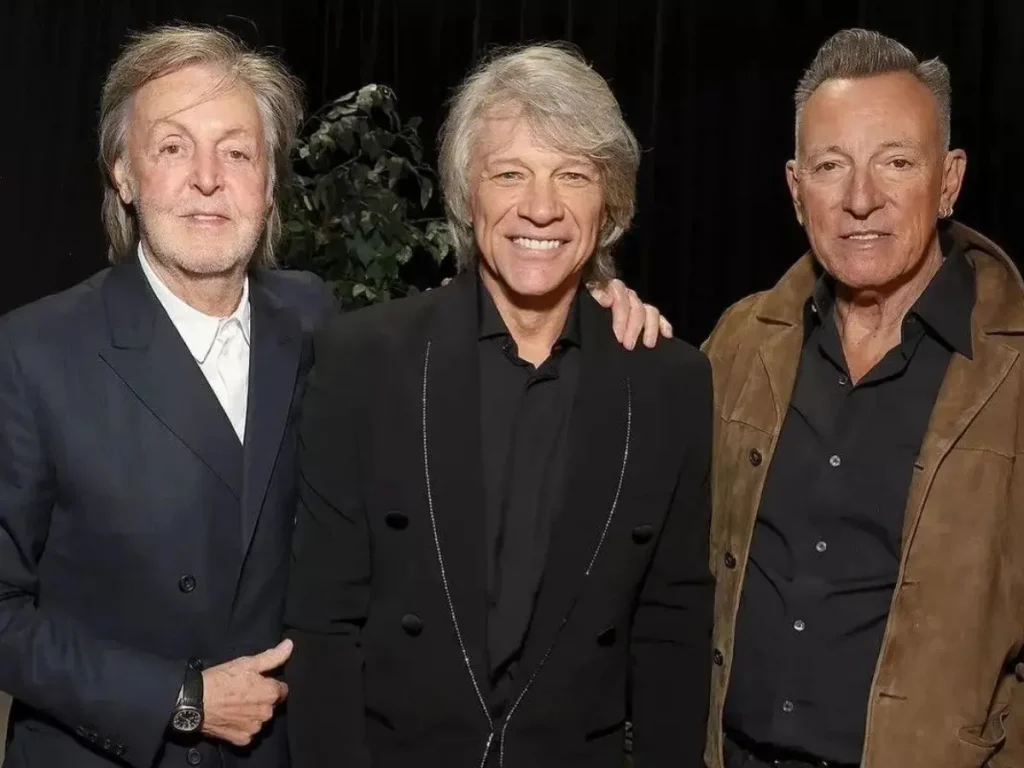
If classic rock has a royal court, it was all seated at one table on February 2, 2024 in Los Angeles. Paul McCartney, Jon Bon Jovi and Bruce Springsteen turned the MusiCares Person of the Year gala into something more than a fundraiser. It became a live snapshot of how rock legends age, hurt, give back and still outshine everyone in the room.
The setup: a charity gala that felt like a coronation
The 2024 MusiCares Person of the Year event took over the Los Angeles Convention Center two nights before the 66th Grammy Awards. Jon Bon Jovi was the honoree, celebrated not just for four decades of arena anthems, but for work that has quietly kept thousands of people fed and housed. Proceeds from the black tie concert support MusiCares, the Recording Academy charity that provides medical, financial and mental health support to music professionals in crisis.
Bon Jovi was a logical choice for the award. Through the JBJ Soul Foundation and JBJ Soul Kitchen community restaurants, his team has spent nearly two decades tackling hunger, poverty and homelessness with a mix of housing projects and pay-what-you-can meals. The MusiCares stage was essentially the charity world saying what rock fans already knew: this guy used stadium money to do something more than buy bigger stadiums.
Yet even in a room packed with stars, three names bent the spotlight: the night’s honoree, his New Jersey brother in arms Bruce Springsteen, and the Beatle who started the whole modern rock songbook, Paul McCartney.
| Artist | Role at MusiCares 2024 | Signature moment |
|---|---|---|
| Jon Bon Jovi | Honoree, performer, closing speaker | Debuted “Legendary” and told the story of his first guitar |
| Bruce Springsteen | Guest of honor, duet partner | Ripped through “Who Says You Can’t Go Home” and “The Promised Land” days after his mother died |
| Paul McCartney | Past MusiCares honoree, honored guest | Sat beside Bon Jovi and Springsteen as the quiet center of gravity |
Jersey soul: Springsteen and Bon Jovi light the fuse
Bon Jovi opened the musical portion of the night with a brand new song, “Legendary,” a mid tempo anthem that would soon become the lead single from the album Forever. Debuting it at a charity gala instead of a streaming rollout was a pointed move. It said that for Bon Jovi, the new chapter of his career begins in a room full of peers, benefactors and the very professionals MusiCares helps keep afloat.
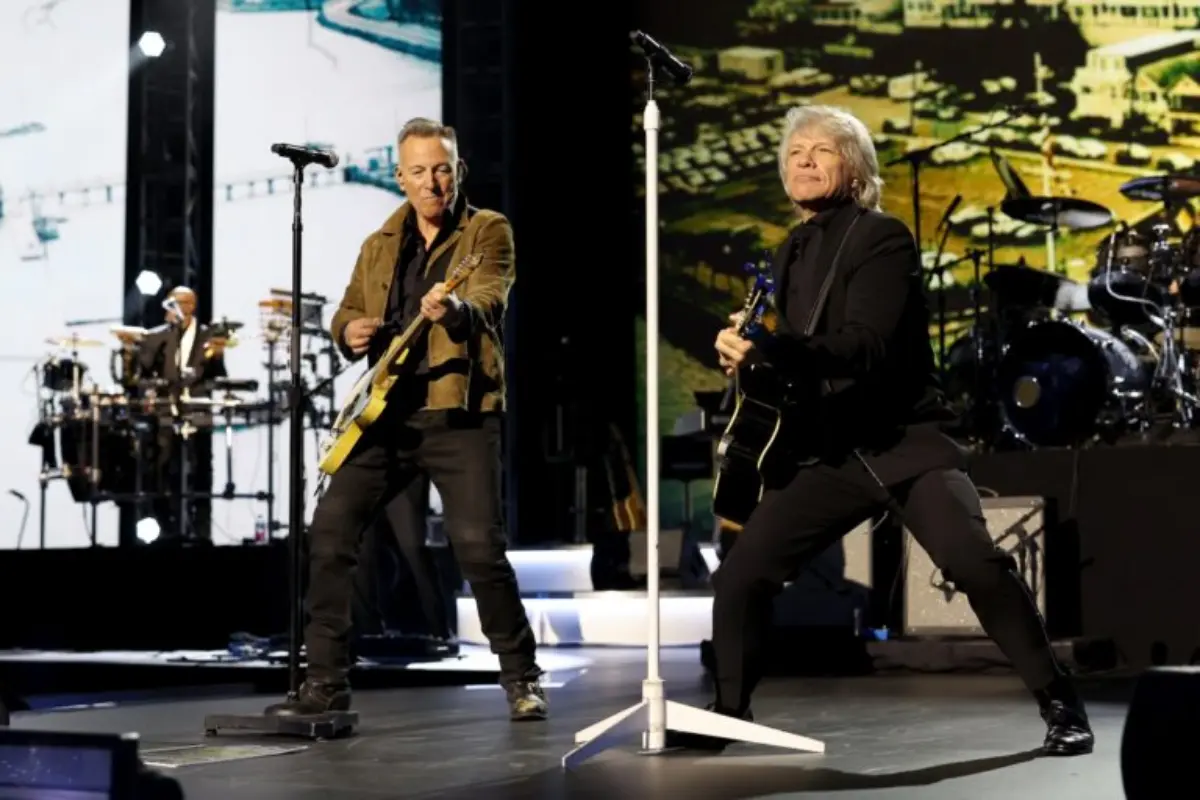
Then he played his trump card. Bon Jovi brought out Bruce Springsteen, introducing him as mentor, hero, brother and friend, before the pair exploded into a joyous “Who Says You Can’t Go Home” and a roaring version of Springsteen’s “The Promised Land.” The performance turned the convention center into a Jersey bar with a billionaire guest list, harmonicas wailing and Bruce still throwing scissor kicks like the laws of aging do not quite apply, as recaps of the night made clear.
What the cameras could not ignore was the context. Springsteen’s mother, Adele, had died only two days earlier, yet he boarded a plane and showed up anyway. Onstage, Bon Jovi told the crowd that he would have understood if Bruce had canceled, but instead Springsteen chose to be there for MusiCares and for his friend, a decision Jon said he would be “forever grateful” for, according to those who were in the room. It was not a rock star entrance so much as an act of loyalty filmed in real time.
Grief, guitars and a mother’s shadow
To longtime fans, that choice cut especially deep. Adele Springsteen had been a beloved presence at her son’s shows for years, famously dancing onstage with him at Madison Square Garden and elsewhere, becoming a living symbol of the roots he never disowned. Seeing Bruce rip into “The Promised Land” so soon after losing her turned the song’s stubborn hope into something almost defiant.
It is easy to say “the show must go on.” It is rarer to see it carried out in a way that does not feel cynical. At MusiCares, Springsteen’s appearance read less like obligation and more like a final dance with his mother’s memory, channeled through a Telecaster and a harmonica.
Paul McCartney: the quiet kingmaker at the table
If Bon Jovi and Springsteen supplied the muscle, Paul McCartney supplied the gravity. McCartney, a past MusiCares Person of the Year himself, attended as a guest and was seated beside the two New Jerseyans, creating the immediately iconic shot of all three rock giants at one table. It looked less like a seating chart and more like the rock hall of fame condensed into a single photo.
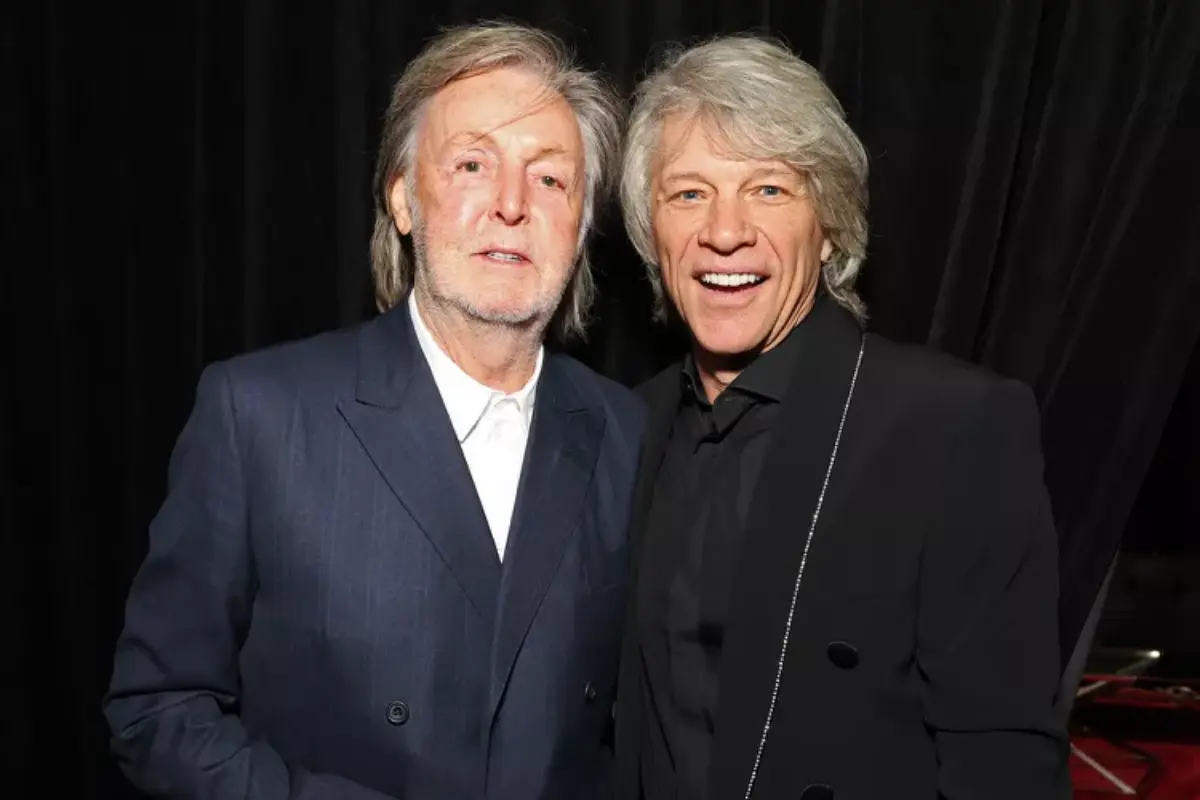
During his acceptance speech, Bon Jovi singled McCartney out, saluting him as a previous honoree and essentially telling the room that most of them were there because of Paul’s musical example, a moment also highlighted in coverage of the event. You could read it as flattery, but it felt closer to confession. Generations of songwriters, Springsteen and Bon Jovi included, built careers on the harmonic, melodic and lyrical language that McCartney helped codify in the 60s.
What makes McCartney’s presence interesting is that he is not coasting on that history. Recent performances, including a raw Abbey Road medley at the SNL 50th anniversary, have shown an older voice that cracks yet still commands a room through phrasing, emotion and sheer songcraft. At MusiCares, he did not need to sing a note. Simply sitting beside Bon Jovi and Springsteen turned the evening into a visible lineage from Beatlemania to MTV to the streaming era.
That reach goes far beyond boomer nostalgia. Pop singer Sabrina Carpenter later described meeting McCartney at this very gala as stepping into an alternate universe, the childhood crush from Beatles deep cuts suddenly standing in front of her in real life. In a room already packed with fame, McCartney was the one person who still made stars feel like fans.
Inside the room: covers, cameos and one very important guitar
Tribute shows can easily feel like karaoke with better lighting, but MusiCares 2024 mostly dodged that trap. A cross generational lineup ripped through Bon Jovi’s catalog, with Sammy Hagar tackling “You Give Love a Bad Name,” Melissa Etheridge turning “Blaze of Glory” into a blues sermon, Wolfgang Van Halen taking on “Have a Nice Day,” and Jason Isbell giving “Wanted Dead or Alive” a weathered Americana edge. It was less a nostalgia revue and more a reminder of how many worlds Bon Jovi’s songs can live in.
Country upstarts and modern hitmakers put their own fingerprints on the material, too, from Jelly Roll growling through “Bad Medicine” to Lainey Wilson and others bringing heartland twang into the mix, as detailed in human-interest coverage of the night. When Bon Jovi finally closed the night by leading “Livin’ on a Prayer” with the entire cast, it felt like the inevitable sing along you get when three generations of radio are shoved into one chorus.
Bon Jovi’s speech added another layer for gear heads and romantics alike. He told the crowd about tracking down his first electric guitar, a neighborhood axe he had sold as a teenager, and buying it back decades later. The case still held five strings and old sweat marks, and the first thing he did after cradling it again was write a new song.
For a site like this, that detail matters. In an era of infinite plug ins and perfectly modeled tones, the MusiCares honoree still talks about one battered physical instrument as a “best friend for life.” That is not sentimentality. It is a reminder that sometimes the most powerful musical tools are the ones that survived our worst gigs, apartments and decisions.
McCartney, Bon Jovi and Springsteen: one night, one axis of influence
Jon Bon Jovi has admitted he is still half stunned to call Paul McCartney a friend, describing lunches together and collaborations while marveling that he is “sitting here with a f***ing Beatle.” He has also shared other stages with McCartney and Springsteen, including a tour finale where they joined Paul to celebrate his birthday. MusiCares 2024 was not the first time these circles overlapped, but it may be the most symbolically loaded.
Look at that table and you can map rock history: McCartney representing the British invasion and songcraft at its most sophisticated, Springsteen as the blue collar poet of the 70s and 80s, Bon Jovi as the hook slinging survivor of the MTV and hair metal era who figured out how to outlast the trends. In another decade, they might have been competitive. In that ballroom, they looked like a three generation board of directors for a genre that once scared parents and now raises millions for charity.
This kind of gathering around McCartney is not new. At the 2010 Kennedy Center Honors, Steven Tyler tore through an Abbey Road medley in front of Paul, turning classic Beatles material into a glam rock love letter that left McCartney visibly moved. MusiCares 2024 simply flipped the script: this time McCartney was the one in the audience, watching younger legends honor someone else, and smiling like a proud co conspirator.
What musicians and fans can take from MusiCares 2024
- Show up, even when it hurts. Springsteen chose to honor a commitment in the immediate wake of personal loss, turning a gig into a statement about loyalty and purpose.
- Let philanthropy be part of your band’s myth. Bon Jovi’s legacy now includes housing projects and community kitchens as firmly as hit singles, and MusiCares put that on the record.
- Protect your first good instrument. The guitar you buy for a hundred bucks as a kid might still be fueling new songs 40 years later if you treat it as a partner, not a prop, as Bon Jovi’s reunion with his first electric made clear.
- Age honestly. McCartney’s recent performances prove that vulnerability and experience can be more compelling than pitch perfect vocals, especially when the songs are built to last, as that SNL 50 Abbey Road medley showed.
- Honor your influences in public. Whether it is Tyler screaming Beatles lines at the Kennedy Center or Bon Jovi thanking McCartney from the podium, visible gratitude keeps the musical family tree alive.
Conclusion: one photograph, a whole era
In the end, the lasting image from MusiCares 2024 is deceptively simple: Paul McCartney, Jon Bon Jovi and Bruce Springsteen sitting shoulder to shoulder at a charity gala. It is a picture of rock moving from rebellion to responsibility without entirely losing its edge. For listeners who came of age between the 50s and the 90s, that single frame felt like a final, bittersweet coronation of the classic rock era, played not in an arena, but in a ballroom raising money so the next generation of musicians can survive long enough to have legends of their own.