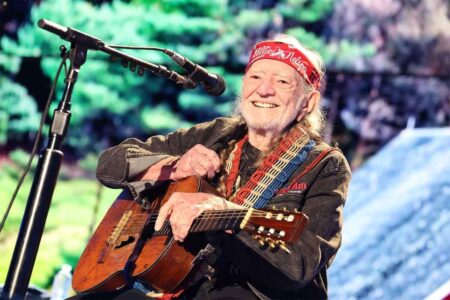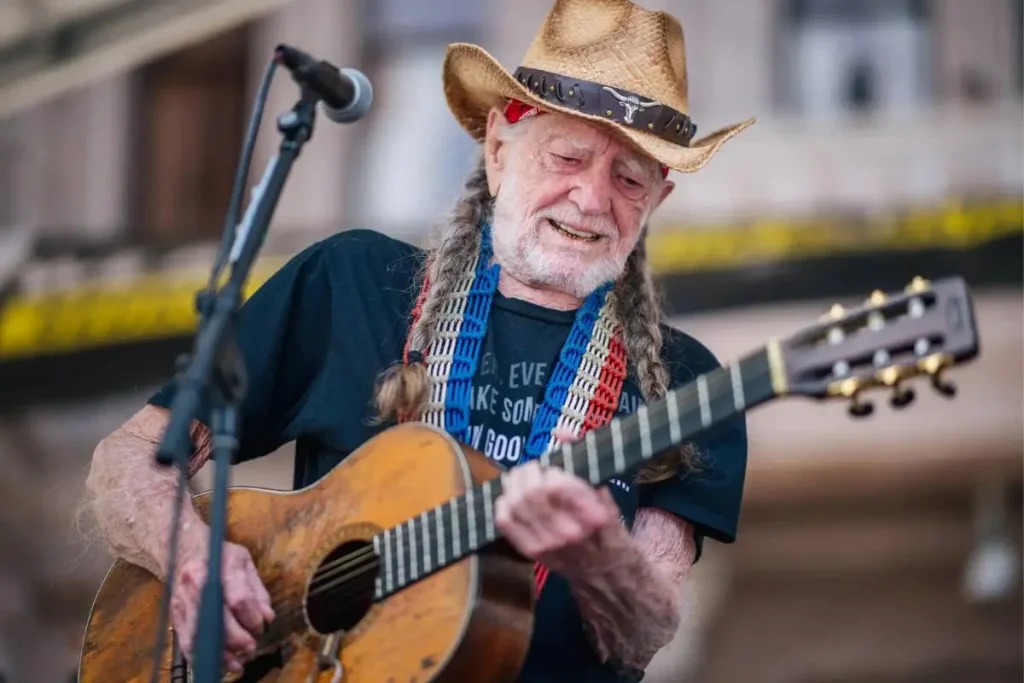
Most country stars pose with horses on album covers. Willie Nelson bought the ones nobody else wanted – the horses standing one step away from the kill chute.
On a stretch of Texas Hill Country he calls Luck Ranch, roughly 70 formerly slaughter-bound horses now spend their days roaming, grazing and getting hand-fed instead of ending up as meat. It sounds like a tall Texas tale, but it is one of the most quietly radical chapters of Willie’s life.
The day 70 “burger-bound” horses found Luck
Just outside Spicewood, Texas, Willie owns about 700 acres of rolling Hill Country, dotted with oaks and weathered fences. Local TV crews who have ridden along with him report that more than 70 horses live there, most of them rescued before they could be shipped to slaughterhouses, and that Willie calls them “the luckiest horses in the world” who are hand-fed twice a day.
These animals were not pampered show stock. Many arrived thin, skittish and one auction bid away from a one-way trailer ride. Willie’s joke is that the last thing they remember is standing in a kill pen, which is why they look so relaxed now that their biggest problem is deciding where to nap.
From slaughter pipeline to sanctuary
To understand how extreme that turnaround is, you have to look at what usually happens. Even after domestic horse slaughter plants closed in the United States, tens of thousands of American horses a year have continued to be trucked to Mexico and Canada to be killed for meat, often after brutal, crowded transport.
Animal welfare groups describe a shadow economy of auctions and “kill buyers” who scoop up unwanted horses cheaply, then flip them by the pound across the border. In that world a horse is a commodity measured in carcass weight, not personality. Willie’s herd slipped out of that system and landed in something closer to a retirement commune.
Nelson has not been content to just write checks and feel good about himself. He has lent his voice and image to Habitat for Horses in a video called “The Love of Horses,” standing beside rescuers as they campaign to end slaughter, protect wild herds and push for stronger cruelty laws.
Luck Ranch – the western movie set Willie refused to burn
The place those horses now call home did not start as a sanctuary at all. In the mid 1980s Willie and screenwriter Bill Wittliff built an old West town outside Austin as the set for the film version of Willie’s concept album “Red Headed Stranger.” The original script ended with the town in flames, but Willie refused to let it be torched and ordered the ending rewritten so the set could survive.
He later built his house up the road from the facades and christened the property Luck, Texas – Luck Ranch to the rest of us. Over time the dusty storefronts turned into a private hangout for poker games, holiday services in the little chapel and late-night song swaps, before being revived as the site of the annual Luck Reunion festival.
That familiar line he tosses off – “When you’re here, you’re in Luck, and when you’re not, you’re out of Luck” – is not just a gag. For 70 horses who should statistically be dead, it is practically a mission statement.
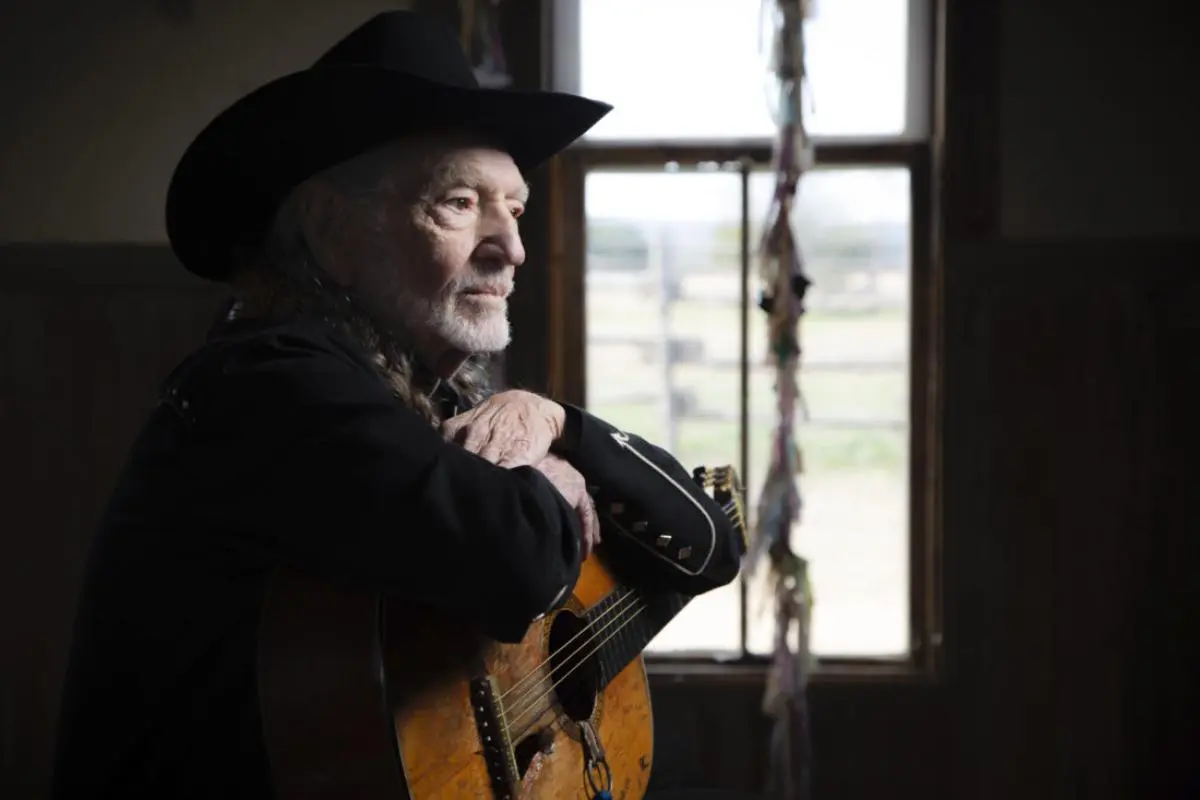
Inside the herd’s new “job description”
On many ranches, animals earn their keep by working cattle, racing, or breeding. At Luck Ranch the job description is simple: heal, eat, and not run Willie’s truck off the dirt road when he comes rattling through to check on them.
He has said they are hand-fed twice daily and given room to roam instead of being penned like livestock on a timetable. In a music business obsessed with metrics and algorithms, Willie has quietly invested a small fortune in something that will never chart on Billboard: the slow, unfussy restoration of trust in prey animals that had every reason to stop trusting people.
| Detail | At Luck Ranch |
|---|---|
| Location | Spicewood, Texas, in the Hill Country near Austin |
| Size | About 700 acres of pastures and scrubland |
| Horses | Roughly 70, most rescued from the slaughter pipeline |
| Daily routine | Free roaming plus twice-daily hand feeding |
| Main purpose | Permanent sanctuary, not breeding or resale |
The outlaw with the softest heart
Part of why this story hits so hard is who is telling it. Willie Nelson, born in Abbott, Texas in 1933, grew from honky-tonk songwriter to one of the most popular and enduring country, piling up Grammys, Country Music Association honors and a spot in the Country Music Hall of Fame along the way.
In the 1970s he turned his back on Nashville polish, grew his hair long, picked up his battered classical guitar and helped lead the so-called outlaw country movement alongside Waylon Jennings, trading string sections for bar-band grit and hippie philosophy. The braids, the bandanna, the behind-the-beat phrasing – it all added up to a guy who looked like he might roll a joint on your kitchen table, then write a song that broke your heart in three chords.
Seen through that lens, Luck Ranch is perfectly in character. Outlaw country was always less about posturing and more about siding with the people the system was grinding down. Willie just extended that ethic to four-legged refugees.
From farm fields to feedlots: picking the underdog
Willie’s most famous cause has always been human farmers. In 1985 he co-founded Farm Aid with John Mellencamp and Neil Young to raise money and awareness for family farmers facing foreclosure and a rigged agricultural economy. The annual Farm Aid festival has since raised more than $85 million to support programs that help small farmers stay on their land and challenge industrial agriculture.
Seen side by side, Farm Aid and Luck Ranch tell the same story. Where corporate agriculture treats both farmers and animals as expendable units in a supply chain, Willie keeps throwing his money, time and songs at the idea that land, people and animals deserve better than that.
Some country stars play the rebel onstage, then cash checks from the very corporations hollowing out rural America. Willie has never been that kind of outlaw. His rebellion tends to look boring on paper – phone calls to lawmakers, benefit sets in the rain, and, yes, quietly saving horses the rest of the world has priced at so many dollars per pound.
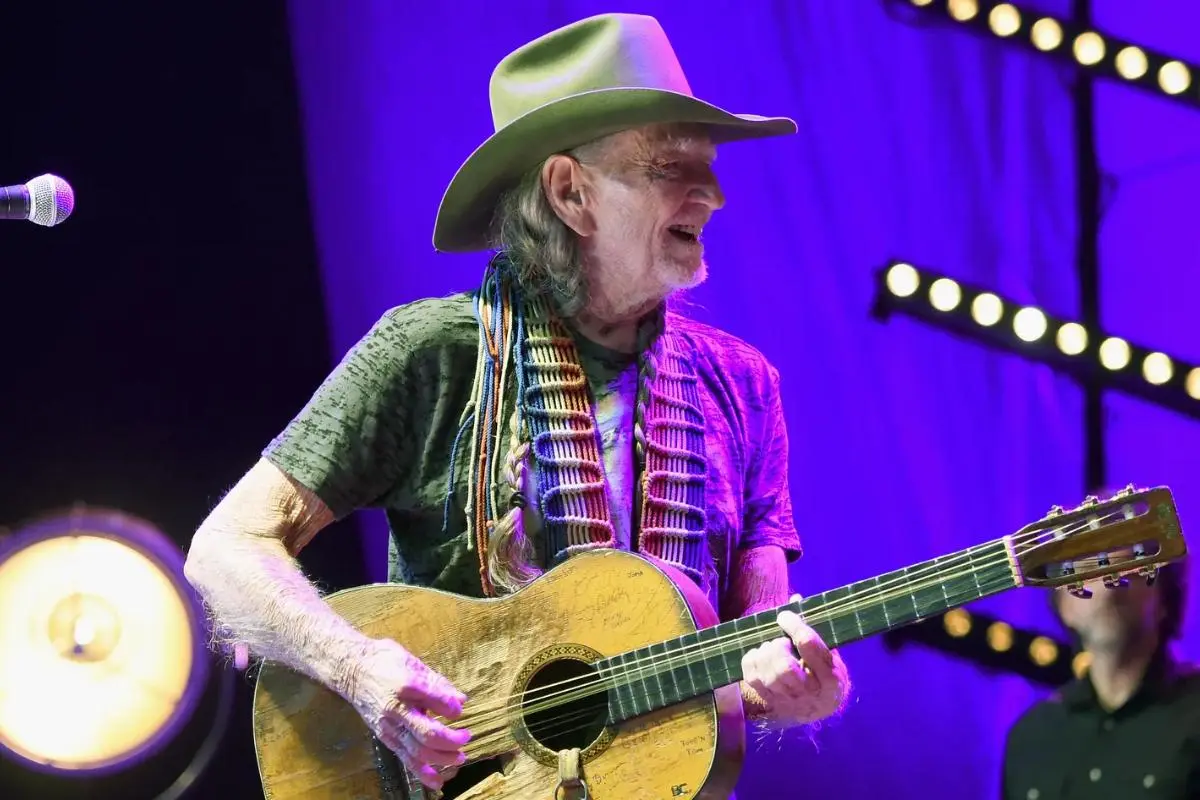
When the ranch writes the songs
Willie’s affection for those horses is not just a hobby; it has literally made its way into the grooves. His song “Ride Me Back Home” became the title track of a 2019 album and went on to win the Grammy Award. The track was written by Sonny Throckmorton and others, but the story song was directly inspired by the dozens of rescue horses roaming his Luck, Texas ranch.
Listen closely and you can hear the sanctuary in the music. The narrator is a worn-out horse asking to be taken back home, away from concrete and cruelty, to the open land where it belongs. It is not subtle, and it is not trying to be. Willie has reached the point in his career where he can turn a protest into a prayer and still have it played on country radio.
That gentle, loping groove is carried by Trigger, his scarred Martin N-20 nylon-string guitar that has been his constant companion since the late 1960s and is now as legendary as its owner. Trigger’s warm, slightly ragged tone, paired with Willie’s lazy phrasing, makes “Ride Me Back Home” feel less like a studio cut and more like an old man talking to a friend at the end of the day – which, in a way, is exactly what it is.
Why this story still matters
It would be easy to file the Luck Ranch horses under “nice celebrity gesture” and move on. That misses the point. In a country where more than twenty thousand horses a year are still being shipped over the border for slaughter, the idea that one aging musician quietly intercepted 70 of them and gave them life sentences of peace is more subversive than it looks.
For fans who grew up with “On the Road Again” on the radio and Farm Aid on TV, the horse rescue feels like the logical last verse of a song Willie has been writing for decades: siding with the little guy, refusing to play nice with systems that chew people up, and trusting that kindness is more powerful than polish.
Country music has always sold images of cowboys and open ranges. Willie Nelson did something rarer. He took the money those fantasies generated and bought a real piece of land, then filled it with the very animals the modern economy treats as disposable. Call it mercy. Call it stubbornness. Either way, those horses are still out there, wandering the pastures of Luck, living proof that sometimes the outlaw is the only one willing to cut the rope.