Roy Buchanan: the quiet Telecaster assassin
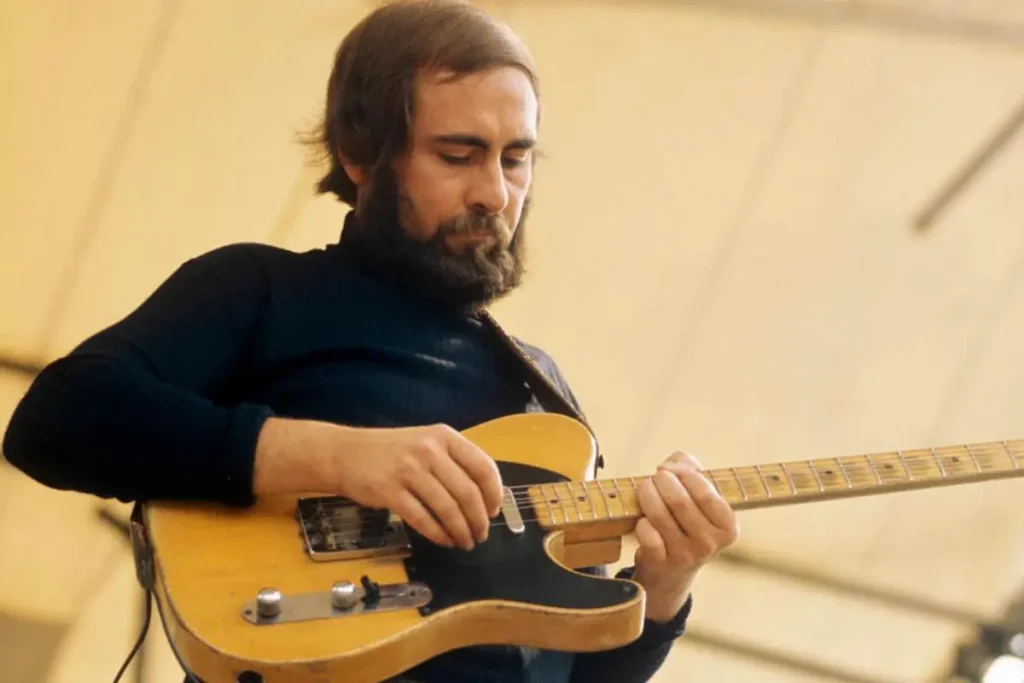
Roy Buchanan never looked like a guitar hero. No wind machines, no stadium poses, just a stock Tele strapped high and a face that barely moved while his playing made people stop breathing.
His secret was not speed. It was the brutal honesty of one perfectly placed note and a mindset that treated every band, every drummer and every bar gig as a new challenge rather than a comfort zone.
Who was Roy Buchanan, really?
Leroy “Roy” Buchanan was an Arkansas-born blues and rock guitarist whose career ran from the 1950s until his death in 1988. He became a cult figure rather than a radio star, praised as a pioneer of the screaming, vocal Fender Telecaster sound and cited as an influence by players as serious as Jeff Beck and Gary Moore.
In the mid 1980s he resurfaced with When A Guitar Plays The Blues, his Alligator Records debut, a record he bluntly called “the best album I ever made”. The label’s notes describe how a public television special that billed him as “The Best Unknown Guitar Player In The World” turned a local legend into a national cult attraction.
Alligator later highlighted how that album and its follow ups, Dancing On The Edge and Hot Wires, finally captured his live fire with gritty Chicago musicians, winning critical praise and solid sales without sanding off his rough edges.
Playing the field instead of playing it safe
Most guitarists find one band that tolerates them and then cling to it. Buchanan did the opposite. He bounced between rockabilly outfits, soul groups, bar bands and studio gigs, constantly walking into unfamiliar songs with almost no rehearsal.
That restlessness forged his ears. When the singer rushed, he learned to drag the band back into the pocket. When the drummer played too loud, he adjusted his right hand and volume knob instead of whining. Every lineup shift became an ear-training exercise under fire.
Stealing from horns, drums and voices
Buchanan openly said it was smart to “listen to other instruments” and copy them, not just other guitars. He talked about chasing sax lines, imitating drum fills and ripping phrasing from scat singers so his playing would not collapse into stock blues clichés, a mindset echoed in his best tips for guitar players.
Years in horn groups, often as the only chord player onstage, forced him to think like an arranger instead of a noodler. When the brass section punched accents, he had to choose chord voicings and rhythms that supported their hits, filled the harmony and still left air for the vocal.
Out of that pressure he built serious rhythm chops. He stopped treating rhythm as something you do while waiting for your solo and started treating it as the spine of the whole band. That discipline is exactly what is missing from a lot of modern bedroom shredding.
Telecaster torture: the sound behind the philosophy
The philosophy would not have mattered if his tone had been polite. It was not. Buchanan’s trademark sound was a vintage Telecaster into an overdriven Fender amp dimed, a legacy of his early lap steel playing, chicken pickin attack and his almost abusive use of pinch harmonics, as described in fan recollections and tone breakdowns.
He squeezed even more expression out of that rig with knob work rather than pedals. Lessons based on his style show him using the tone knob for faux wah effects, long volume swells and savage compound bends, proving you can get terrifyingly vocal sounds with a simple Tele if your hands and touch are honest enough, as demonstrated in Roy Buchanan’s Tele tricks.
Live recordings and concert footage of When A Guitar Plays The Blues show him running a Tele into a Fender Vibrolux with the tone cranked, riding the guitar’s volume knob mid-phrase to create organ-like swells. Witnesses remember the intensity of those bends and harmonics as much as the licks themselves, which makes sense for a player whose last years ended in a troubled, tragic death in his late forties.
Tension first, chops second
Plenty of guitarists know their scales. Very few know how to make an audience physically lean forward on a single sustained note. Buchanan understood that solos live or die on tension, not theory diagrams.
Conceptually, he treated improvising like working a pressure valve. Start with something simple, repeat it, then twist it slightly and raise the volume or register, always staying just ahead of what the listener expects. If your new phrase does not “beat” the one you just played, the arc dies and the solo collapses into noise.
That mindset is not unique to Buchanan. Jeff Beck, another master of bending time and pitch, built entire careers worth of solos around shaping notes rather than stacking scales, a hallmark of his expressive style. Buchanan simply applied that same ruthless focus to a lean Telecaster setup that gave him almost no place to hide.
The one-note apocalypse
The line that makes guitar players nervous is Buchanan’s belief that sometimes it “boils down to one note”. He was not being mystical for the sake of it; he was describing how much information a single note can carry if your timing, vibrato and touch are fully awake, an idea he returned to often in his practical advice.
On slow pieces like “The Messiah Will Come Again” or “Sweet Dreams”, he often let one held note, slightly bent and wobbled, do more emotional damage than an entire bar of sixteenth notes ever could. That kind of playing is terrifying because there is nowhere to hide. If your vibrato is weak or your intonation sloppy, every ear in the room hears it.
He pushed the idea further, suggesting that a truly committed note almost feels like it contains all the other notes inside it. That is not physics, it is psychology: the overtones, the micro-bends and the way the note blooms or dies trigger memories of other pitches in the listener’s ear. Shredders stack notes to impress other musicians; Buchanan stacked meaning inside a single one to own the room.
How to practice the Roy Buchanan way
If you want Buchanan’s results, you cannot just cop a few licks off a tab site. You have to rebuild how you think about practice, gigs and what a “good” solo even is.
Turn his philosophy into a practice plan
| Buchanan principle | Concrete exercise |
|---|---|
| Play with many different bands and feels | Say yes to every halfway competent jam or bar band for six months. No charts, no rehearsals longer than one run through. Learn to survive. |
| Steal from horns and drums | Transcribe eight bars of a sax solo and a drum fill. Play them on guitar until they feel natural. Do not “fix” the weird rhythms. |
| Rhythm guitar as your main job | For a week, record yourself playing only rhythm over backing tracks. No solos allowed. Listen back and judge it like you would a funk guitarist. |
| Tension over speed | Solo using only quarter and eighth notes for an entire chorus. Your only tools are dynamics, vibrato and note choice near the vocal. |
| The one-note test | Over a slow 12-bar blues, pick one note and see how long you can make it interesting with bends, timing and volume swells. |
Daily habits that matter more than speed
Spend ten minutes a day doing nothing but slow bends with a tuner, making sure every held note actually lands and stays in tune. If Buchanan’s one-note idea scares you, this is how you make sure that note does not betray you.
Then spend another ten minutes taking simple rhythmic figures from a snare drum pattern or a horn riff and moving them around the neck. The point is not clever harmony; the point is learning to think like a band, not a scale diagram.
Finally, record your solos and ask one cruel question: could I cut half these notes and make the story clearer? If the answer is yes, you are getting closer to the kind of brutal simplicity that let Buchanan “win” guitar battles with a single, perfectly aimed sound.
Bringing it home
Roy Buchanan will never be as famous as the guitar heroes whose posters covered bedroom walls, and that is probably the way he liked it. His legacy is not about celebrity; it is about a Telecaster, a small amp and the courage to let one exposed note carry an entire song.
If you are willing to jump between bands, learn from horns and drummers, and let your ego take a back seat to tension and feel, his philosophy will infect your playing. Whether you are into 50s rock and roll, 60s soul or 70s blues rock, Buchanan’s one-note apocalypse is still waiting for someone brave enough to pick up a guitar and mean it.