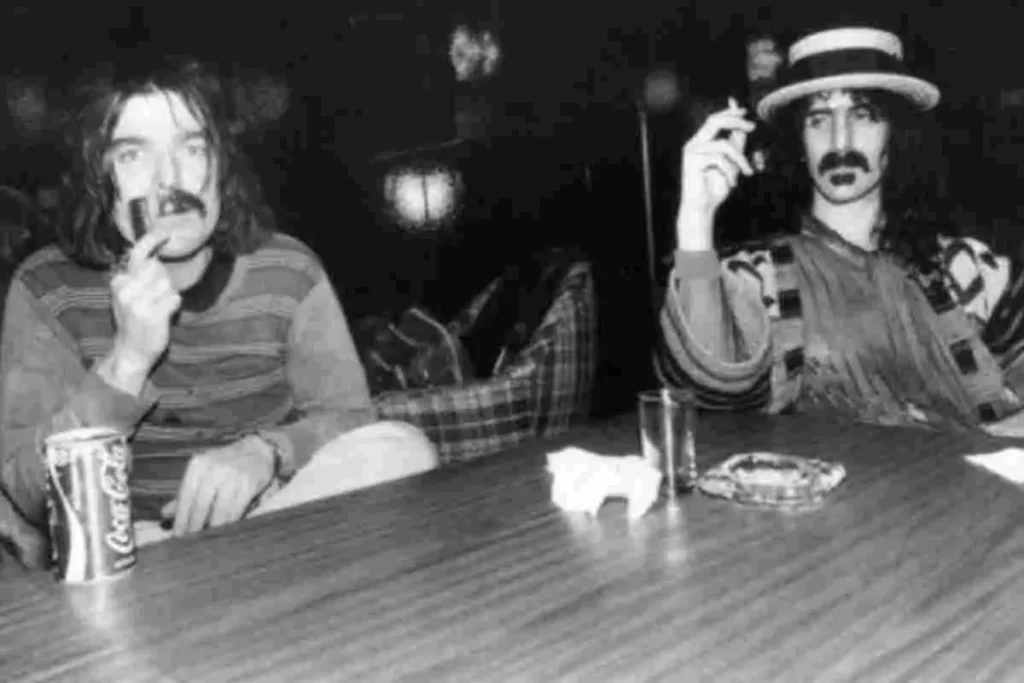
Trout Mask Replica is routinely sold as an origin story: Captain Beefheart the feral genius, Frank Zappa the benevolent mad scientist, and a band pushed through a months-long boot camp before a brutally fast recording session. That story is not just trivia – it is one of the mechanisms by which the album keeps sounding dangerous.
But “produced by Frank Zappa” means something very different here than it does on a typical rock record. Zappa’s real power was structural: money, studios, and a label willing to release something radio would never touch. Beefheart’s power was musical: composition, rehearsal discipline, and the day-to-day rule of the Magic Band.
“There was only one note I could play and it was a B-flat, and I played that note for almost a year.” – Victor Hayden, quoted in Trout Mask Replica (33 1/3 series)
What “Produced by Zappa” practically meant (and what it didn’t)
In industry terms, Zappa’s producer credit on Trout Mask Replica is inseparable from his role as co-founder of Straight Records, the imprint that released the album. Straight was created with Herb Cohen and distributed by Warner/Reprise, giving Beefheart access to major-label distribution without a major-label aesthetic filter.
Zappa’s side: financing, access, and “permission to be uncommercial”
Label release and business umbrella. Straight Records put the album into the marketplace with legitimate distribution, which matters because the record’s extremity was a commercial liability. The album’s original Straight/Reprise release context anchors the story to a real infrastructure, not just counterculture vibes.
Studio access and scheduling. Zappa had the clout and relationships to secure recording resources that a fringe band could not easily obtain on its own. Even fans who argue he did “nothing” on the floor generally concede the project benefited from his ability to make the session happen at all.
Producer as overseer, not co-author. A key practical detail: the album was not assembled via typical producer interventions like rewriting, restructuring, or “fixing” performances. The consensus across many accounts is that Beefheart’s material arrived essentially as a complete universe, and Zappa’s job was to capture it and get it released.
Beefheart’s side: composition, rehearsal regime, and band direction
Composition and conceptual design. The songs, the rhythmic logic, the surrealist lyric voice, and the overall sequencing are Beefheart’s. Even the record’s reputation as an “anti-rock” manifesto centers on his authorship rather than Zappa’s, as reflected in major critical takes on the album’s singular, auteur-level identity.
The Trout House rehearsals. The famous pre-recording period, where the band lived and rehearsed obsessively, is not a Zappa-managed training camp. It is portrayed by people close to the project as Beefheart’s system: punishing, intensive, and designed to weld humans into a machine capable of executing impossible parts. The Beefheart-focused archival write-up on the larger Zappa/Beefheart documentation ecosystem is often used by fans to trace how lore, credits, and adjacent materials circulate outside official liner notes.
Micro-level control. Even if players disagreed with his methods, they generally describe Beefheart as the one demanding precision in parts that sound like chaos only until you try to play them. The discipline is part of why the record feels “livewired” rather than edited into shape.
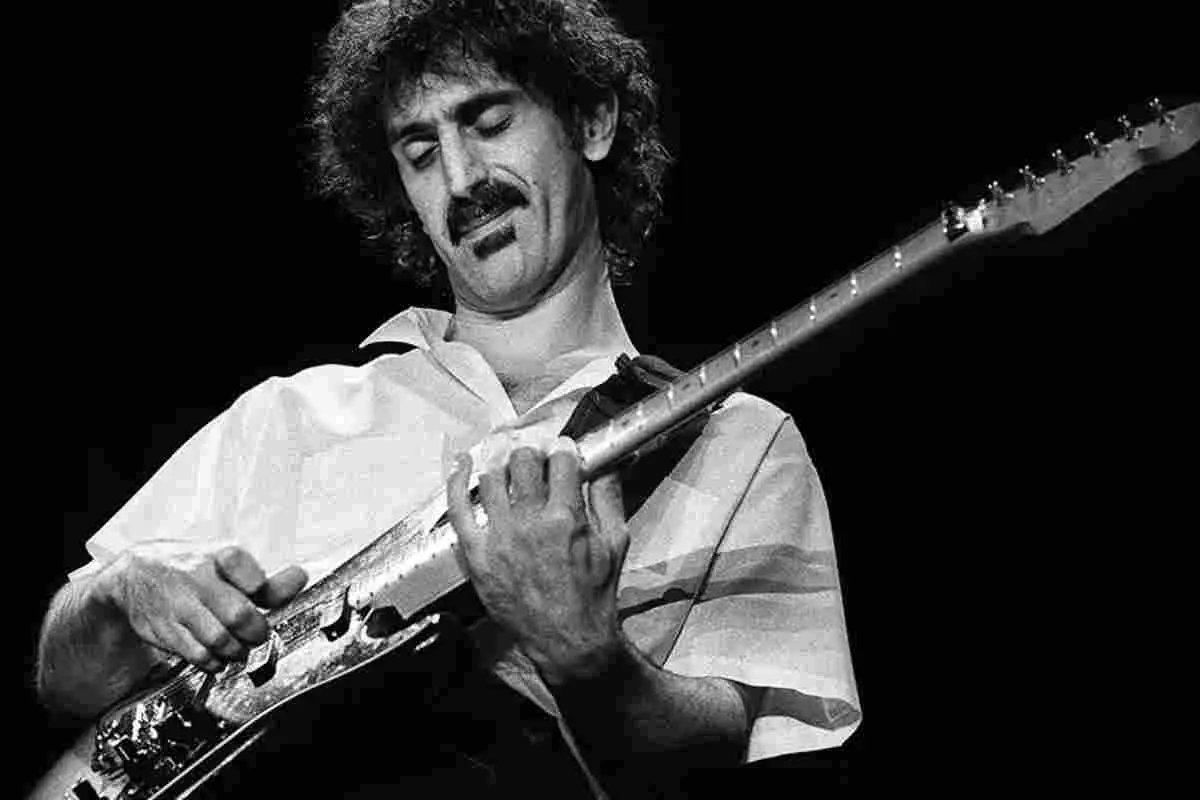
The creative paradox: pure Beefheart statement, inseparable from Zappa’s infrastructure
This is the paradox that makes the album endlessly discussable: Trout Mask Replica reads like a solitary vision, yet it is also a product of a specific ecosystem that Zappa helped build. Without that ecosystem, the album might have remained a private mythology – a stack of charts and tape experiments with no distribution pipeline.
Critics often describe the record as a singular shock to rock’s nervous system, but that shock required a delivery vehicle. The same critical tradition that helped cement its avant-rock landmark status also shows how its “outness” became a value, not a defect.
At the same time, Zappa’s taste matters. He was not just a wallet; he was someone for whom the avant-garde was not a phase but a working language. A label owned by a conventional A&R mind might have tried to sand off the hardest edges or demand a single. Zappa’s presence helps explain why no one pulled the emergency brake.
A helpful way to think about it: authorship vs. enablement
Beefheart authored the musical world. Zappa enabled the world to exist publicly, with the technical and commercial scaffolding to become an artifact. That distinction sounds neat, but the album’s mythology is built precisely on how messy that boundary feels when one auteur owns the means of release.
The tension narrative (without turning it into a tabloid)
Fans love a creative-power struggle because it supplies an emotional plot to music that can feel abstract. But the Zappa-Beefheart dynamic is better understood as two competing perspectives that can both be partially true.
Perspective 1: “Zappa as enabler” (the patron who didn’t flinch)
One credible view is that Zappa’s greatest act of “production” was restraint: he did not try to translate Beefheart into something safer. Even later reissue promotion frames Zappa’s producer role as part of the album’s enduring legacy, treating the collaboration as a meaningful stamp rather than a cautionary tale.
From this angle, the power dynamic is almost heroic: Zappa uses industry leverage to smuggle radical art into the mainstream supply chain. The record’s later canonization then looks like proof that the risk was worth it.
Perspective 2: “Zappa as controlling or benefiting from the spectacle”
A second view argues that Zappa benefited from the album’s extremity and the legend around it, even if he did not micromanage every take. If you are already Zappa, an “unlistenable masterpiece” on your label reinforces your brand as the patron saint of the weird.
Some accounts also imply a subtler control: not over notes and lyrics, but over framing. When the producer is also a label owner, the project can be marketed as an extension of his avant-garde credibility, sometimes eclipsing the artist’s autonomy in the public imagination.
This is where mythology gets sticky. The album’s backstory can drift into a narrative where Beefheart is the wild animal and Zappa is the ringmaster. That framing flatters Zappa’s curatorial power and can underplay how fiercely intentional Beefheart’s writing and arranging were.
Why both perspectives can coexist
Both can be true because “control” is not only musical. Zappa may have been hands-off in composition while still holding structural power: budget, studio time, final release decisions, and the halo effect of his name on the cover. When people say he “controlled” the project, they may be describing that structural leverage rather than creative authorship.
Meanwhile, Beefheart can be the artistic dictator and still depend on Zappa’s system to get the record made. The myth persists because the album sounds like it should not exist inside a normal business environment, so listeners assume someone had to “make it happen.”
So what did Zappa likely shape sonically?
Even if we reject the idea that Zappa “composed” the album, a producer can still shape outcomes through process. Here are the plausible areas where Zappa’s producer role mattered without rewriting Beefheart’s music.
| Area | Zappa’s likely influence | Beefheart’s likely influence |
|---|---|---|
| Session strategy | Keeping recording efficient and capturing full-band performances | Insisting parts be performed as written, even when they sounded “wrong” to outsiders |
| Documentary realism | Letting the record sound unpolished rather than “fixed” | Using roughness as an aesthetic: the human strain is part of the composition |
| Album presentation | Producer credit and label context that signaled avant-garde legitimacy | Artistic identity: voice, lyrics, and the surreal persona |
That “documentary realism” point is crucial. Much of the album’s power comes from hearing a band execute hyper-complex unison figures while sounding like it could fall apart at any second. A more interventionist producer might have tried to clean that up – and accidentally removed the electricity.
Why the power dynamic became part of the album’s mythology
Mythologies form where audiences feel a gap between what they hear and what they believe is possible. Trout Mask Replica sounds like an unrepeatable event, so listeners want a creation story that matches the intensity.
Zappa’s dual role (producer plus label owner) provides a ready-made narrative engine: patron vs. prophet, infrastructure vs. vision. The “uneven leverage” angle adds stakes. It lets people debate whether this was liberation (Zappa enabling) or exploitation (Zappa benefiting), and debate is how cult albums stay alive.
Online archival communities keep that mythology circulating by curating session lore, personnel notes, and band recollections. Avant-garde archival curation around Beefheart reinforces the idea that the album belongs to a wider world of outsider art rather than normal rock commerce.
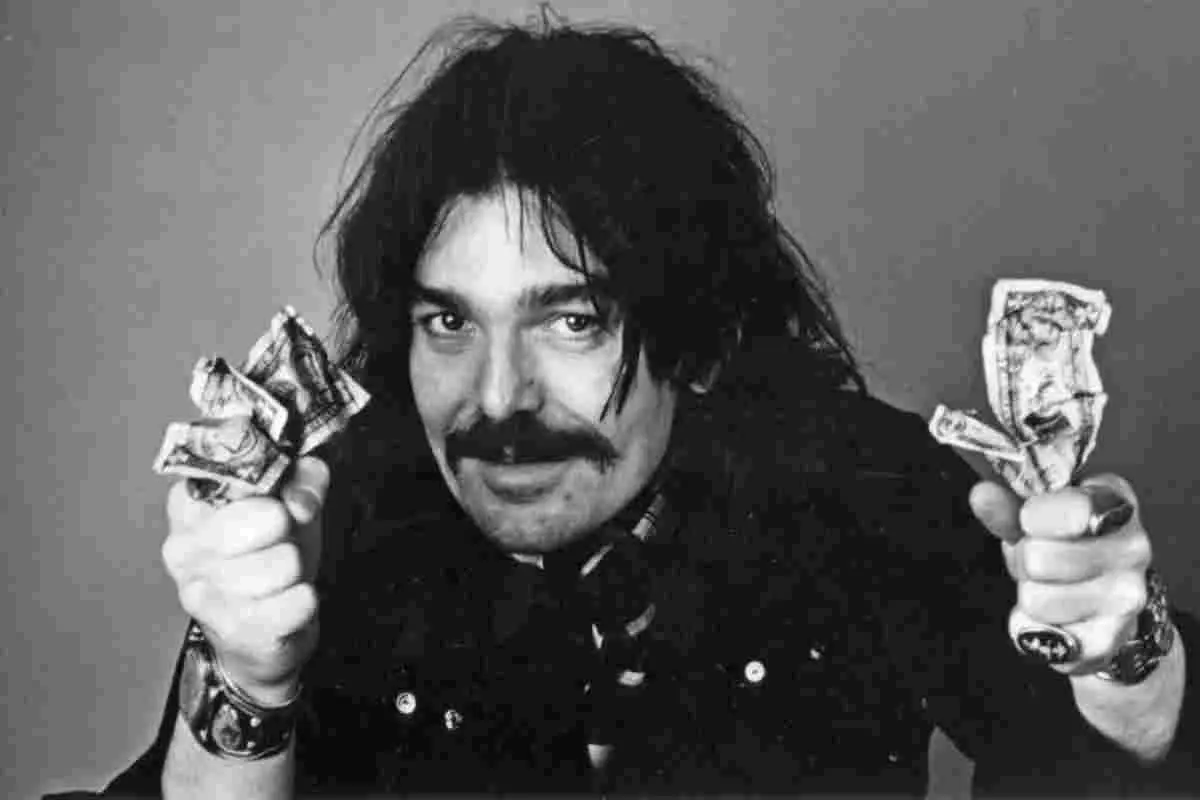
Landmark status: the music alone, or also the story?
The music is the primary reason it is a landmark. The rhythmic independence, the collision of Delta blues ghosts with modernist fragmentation, and Beefheart’s vocal presence are not “explained” by any producer credit. The album’s canon position is widely summarized as a radical, influential outlier in rock history.
But the story supercharges the music. Knowing there was a label owner-producer willing to bankroll the unmarketable, and a band forced into near-military rehearsal discipline, changes how you hear the record. The audible strain becomes narrative evidence.
So yes: Trout Mask Replica became a landmark because of the sound, but it became a myth because of the collaboration under uneven leverage. Two auteurs did not merge into one voice. They collided, and the record is the splatter pattern.
In other words: Beefheart built the monster. Zappa opened the laboratory and told the town to come look.