
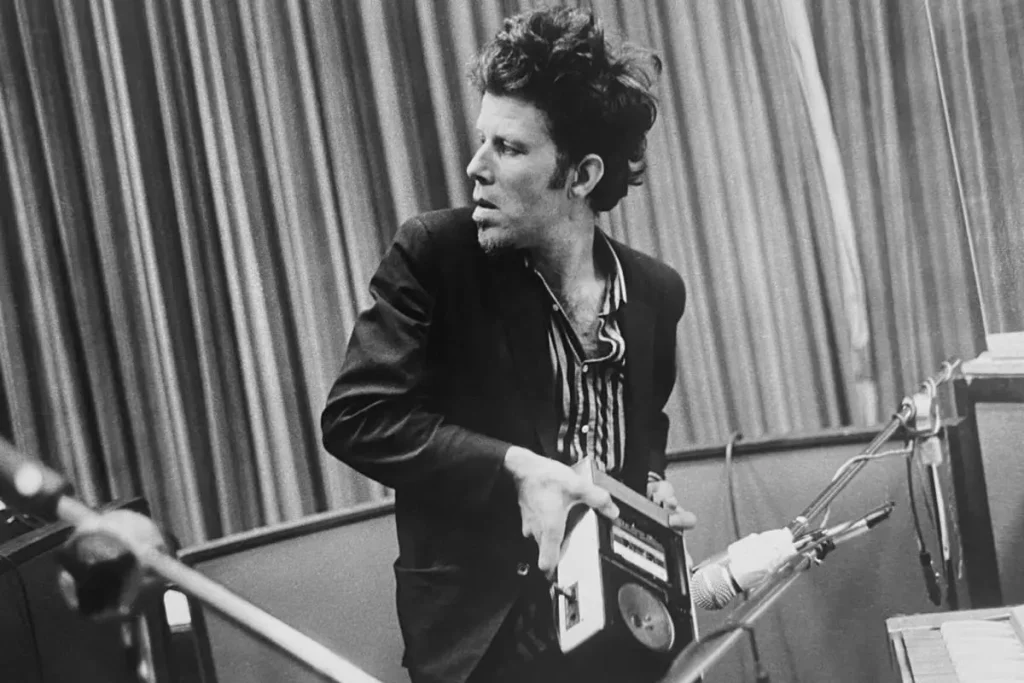
Tom Waits has never been shy about mythologising his heroes, but his description of Keith Richards might be his sharpest character sketch yet. In a few tangled sentences he turns the Stones guitarist into a piece of cookware, a sailor, a predator and, somehow, a kind of holy fool.
At the centre of it is one killer idea: everybody loves music, but what you really want is for music to love you back. For older rock listeners who grew up on 45s and vinyl, it is a reminder that this stuff is more than a hobby or a playlist setting; it is a relationship you have to earn.
When music decides it loves you back
In that tribute, Waits imagines music as the one doing the choosing, not the musician. You are not the author so much as the horn or the strings that the song decides to blow through for a few minutes.
That flips the usual guitar hero story on its head. Instead of conquering the stage with speed or volume, the job is to be clear, receptive and unpretentious enough that the right notes can move through you without getting blocked by ego.
Richards is his Exhibit A. Decades into roaring across stadiums, Waits still sees him as someone who treats music like weather rolling through the room, not as a product line to manage.
Rain Dogs: the flippant joke that summoned Keith
The friendship began during the sessions for Rain Dogs, when Waits had just reinvented himself with clattering percussion, weird horns and alleyway waltzes. Asked who he would love to bring in, he half joked, ‘What about Keith Richards?’, only to watch the label actually call him, leading to a New York session where Richards turned up with a truckload of guitars, played on three cuts including Big Black Mariah, Union Square and Blind Love, and earned the description of ‘a frying pan made from one piece of metal’ that simply changes colour as it heats.
Key Waits – Richards recordings
That one dare you phone call turned into a loose thread of collaborations that runs from mid 80s New York to pirate ballads in the 2010s.
| Year | Record | Main connection |
|---|---|---|
| 1985 | Rain Dogs – Tom Waits | Richards guitar and vocals on three tracks |
| 1986 | Dirty Work – The Rolling Stones | Waits appears as a backing vocalist |
| 1992 | Bone Machine – Tom Waits | Co wrote and duetted on That Feel |
| 2011 | Bad As Me – Tom Waits | Richards guitar on several songs including Chicago and Satisfied |
| 2013 | Son of Rogue’s Gallery (various artists) | Waits and Richards duet on the folk song Shenandoah |
Predator instincts, blue collar tools
When Waits talks about Richards as a player, he almost never mentions scales or theory. He calls him “impeccable” at knowing what a song needs or does not need, the kind of guy who insists on hearing every track before overdubbing so he can slip into exactly the right gap, moving like an animal that just smells where the meat is.
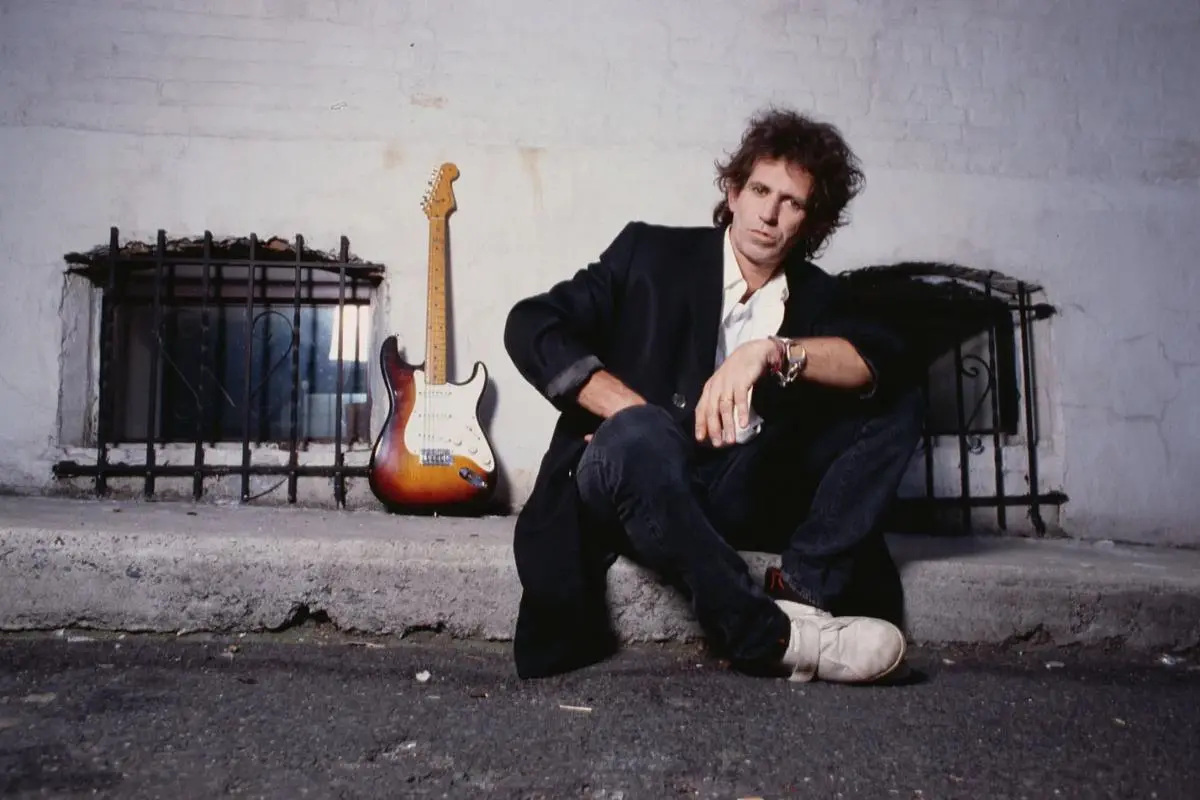
It fits the way Richards treats his equipment. He has long favoured blunt, workmanlike guitars like the Fender Telecaster Custom and Deluxe, turning Leo Fender’s so called canoe paddle into a snarling rhythm machine that helped define the Stones and inspire generations of Tele slingers after him.
No wonder Waits reaches for images of dock workers and swabbies instead of delicate virtuosos. In his world, Keith is not the flashy soloist at the front of the ship; he is the guy down in the engine room keeping the whole thing from sinking.
Wingless Angels and the crickets in the dark
If you really want to hear the side of Richards that Waits is responding to, you have to leave rock behind. Wingless Angels is a project built around Justin Hinds and a circle of Nyabinghi Rastafarian drummers and singers that Richards recorded at his home near Ocho Rios in Jamaica, later adding subtle guitar and releasing it on his own label.
Waits has blessed that album as one of his favourite things Keith has ever done, raving about how the very first sound is the Jamaican night itself, with crickets and distant patter wrapped around slow, earth pulse chants that feel less like a session and more like a ceremony.
That is Keith in pure listener mode, sitting inside a spiritual groove he did not invent and refusing to clean it up for polite consumption. For a guy best known for indestructible riffs, it is a startlingly humble role, and exactly the sort of thing a fellow studio rat like Waits would notice.
Music as medicine and the deficit of wonder
In the same riff on Richards, Waits jokes that old writers used to claim the guitar could cure gout, epilepsy, sciatica and migraines. That sounds like barroom exaggeration until you remember that thinkers such as Theophrastus really did recommend flute music as a treatment for sciatica and epilepsy, arguing that carefully played melodies could heal body and mind, a notion that surfaces in ancient debates on music therapy.
Modern medicine would file that under folklore, but there is a grain of truth in the idea that certain sounds change the way pain feels. Anyone who has ridden out heartbreak with Exile on Main St. humming in the background, or let Rain Dogs numb a bad night, has road tested that theory the old fashioned way.
What worries Waits is less our lack of cures than our lack of awe. In a mid 2000s interview he complained that we now ask, “What is the story on that?”, run to a computer, and get the answer in seconds, leaving us, as he put it, with a serious deficit of wonder.
By contrast, his portrait of Richards is almost childlike. He describes Keith stopping in the studio, lifting his guitar and quietly staring at it as if it were some mix of woman, religion and sky, something you do not analyse so much as live with and keep asking questions of, an attitude he has also framed in terms of education and mystery.
For two men who have seen every backstage trick the industry has to offer, that attitude is weirdly radical. It says that the real magic is not in the gear or the career but in keeping a part of yourself permanently astonished by the noise a bit of wood and wire can make.

What this means for the rest of us
Strip away the Waits wordplay and the lesson is simple. Loving music is easy; making yourself into someone music might occasionally choose to move through is harder.
That means showing up like a labourer rather than a diva, listening to the whole band before you touch the fretboard, trusting feel over perfection and leaving some questions deliberately unanswered. If that approach is good enough for a gravel voiced barroom poet and the Human Riff himself, it is probably good enough for the rest of us trying to make a little honest noise.


