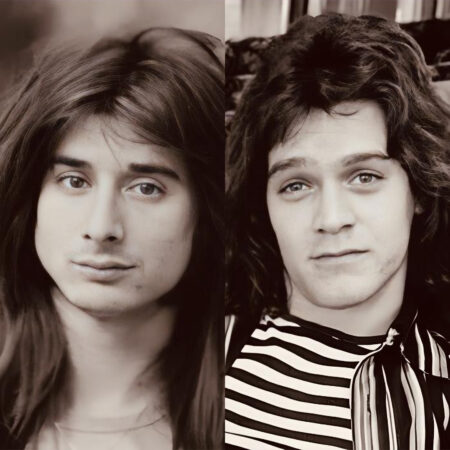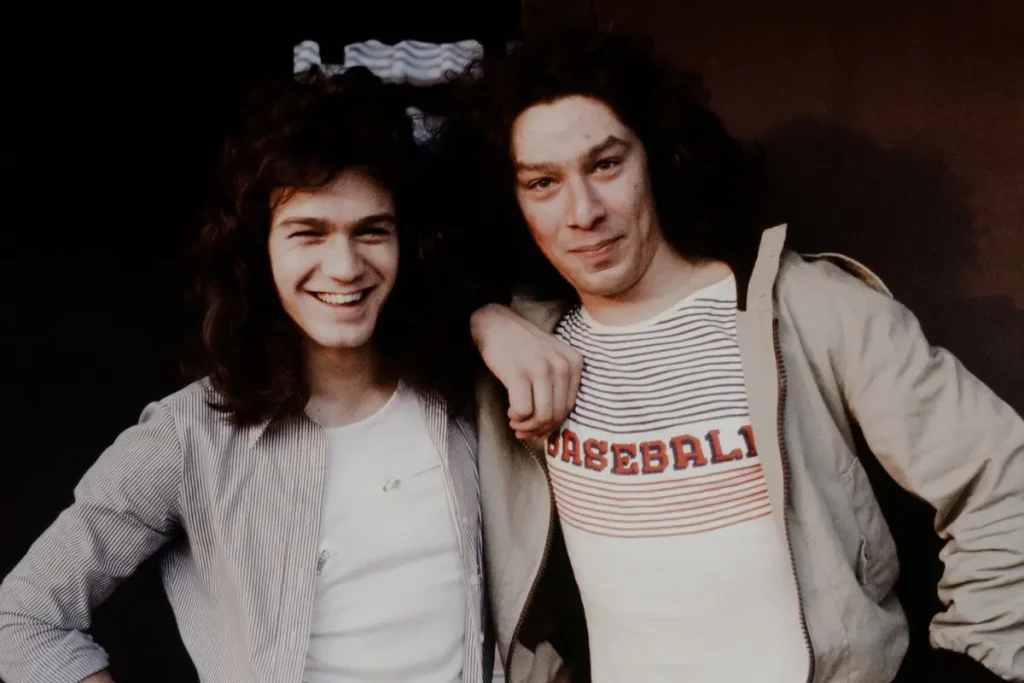
Two Dutch-Indonesian immigrant kids landed in California with a piano, a few dollars and parents who barely spoke English. Within a decade the world knew them as Eddie and Alex Van Halen, the engine behind a band so explosive that even headliners and hotel chains learned to fear their arrival.
Their saga is not just tapping solos and spandex. It starts in Java, runs through ugly racism in Europe and America, and explodes into some of the most notorious – and surprisingly calculated – rock’n’roll antics of the late 70s and 80s.
From Java to Pasadena: the brothers’ Indonesian roots
The Van Halen story begins in the former Dutch East Indies. Their mother, Eugenia (often spelled Eugenie) van Beers, was born in Rangkasbitung in West Java, Indonesia, then a Dutch colony, an Indonesian-born woman of mixed heritage. Their father, Jan van Halen, was a Dutch jazz clarinetist and saxophonist who moved to the Indies after World War II to work as a traveling musician.
Jan met Eugenia while gigging on Java; they married in 1950 and relocated to Amsterdam a few years later. Accounts of Eddie’s life describe how elder son Alex and younger son Eddie were both born there, growing up in a household where Javanese food, Dutch language and swing-era jazz shared the same cramped space.
Multiple accounts – including Eddie’s son Wolfgang spelling it out as “Dutch/Indonesian” family heritage on social media – confirm that the brothers were not simply Dutch but of mixed Indonesian and European descent through their mother. That Indo background made them visually and culturally different in postwar Holland, and, later, in 1960s California.
Because their parents were a mixed-race couple, the family encountered open racism in the Netherlands and eventually decided to get out. In 1962 they boarded a ship for the United States, arriving in Pasadena with roughly fifty dollars, a piano and not much else. Jan took janitorial work alongside club gigs; Eugenia cleaned houses. It is a far cry from the private jets the band would ride a couple of decades later.
| Year | Place | Key moment |
|---|---|---|
| Late 1940s–1950 | Java, Indonesia | Jan meets Indonesian-born Eugenia van Beers while touring the Dutch East Indies |
| 1950s | Amsterdam, Netherlands | Alex and Eddie are born into an Indo-Dutch musical household |
| 1962 | Pasadena, USA | Family immigrates with about $50 and a piano, starting over as working-class immigrants |
| Early 1970s | Pasadena / Los Angeles | The brothers form a band that will become Van Halen, graduating from backyard parties to LA clubs |
| 1978 | North America | Debut album and tour; Van Halen start blowing headliners like Journey off the stage |
Racism, Pasadena and the immigrant chip on their shoulder
David Lee Roth has bluntly described the Van Halens’ upbringing: a “horrifying racist environment” in 1950s Holland where their mixed marriage parents and “half-breed” sons were treated as outsiders until the family finally left. In a later illustration he contrasted what he called “the two Pasadenas” – the polished suburban image versus the brothers’ rough reality.
America was hardly a utopia. Eddie has said his Pasadena grade school was still segregated, and because he and Alex could not yet speak English, they were classified as minority kids. He remembered his first day of school as “absolutely frightening,” bullied by white students who tore up his homework and even forced sand into his mouth, while Black classmates were the ones who stuck up for him. Those early memories of racism never really left.
It is not hard to hear that history in Van Halen’s attitude: the permanent outsider’s defiance, the sense of us-against-the-world. The band’s swagger was not just showbiz; it was a survival mechanism sharpened by being the visibly mixed kids in two different countries that did not quite know what to do with them.

From piano lessons to Frankenstrat fury
Before the pyro and the splits, the brothers were serious music students. In Pasadena they were trained as classical pianists and Eddie won local recital competitions despite never mastering formal sight-reading; he learned everything by ear. Rock records by the Beatles and the Dave Clark Five soon proved more interesting than sonatas, and the brothers switched instruments – Eddie from drums to guitar, Alex from guitar to drums – when Alex nailed the surf-rock drum break in Wipe Out.
Eddie became obsessed. He has described sitting on the edge of his bed with a six-pack of cheap beer, practicing guitar for hours while Alex went out, only to find him still in the same spot, still playing, when he returned in the early morning. That immigrant work ethic, filtered through teenage rebellion, birthed an entirely new approach to rock guitar.
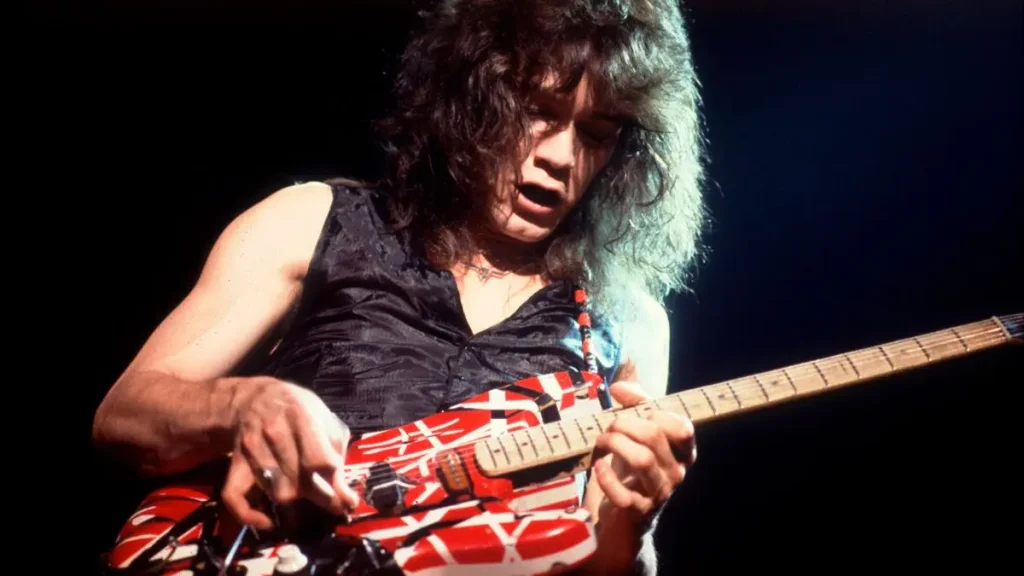
Frustrated that no off-the-shelf guitar could give him the thick roar of a Gibson and the tremolo tricks of a Strat-style body, Eddie built his own mutant instrument. He cobbled together a discounted Strat-type ash body and a maple neck, routed the body to cram in a Gibson PAF humbucker at the bridge, and gradually turned the homemade, red-black-and-white striped Frankenstrat into his main weapon. It was pure working-class ingenuity – an immigrant kid hacking together a future museum piece out of factory seconds.
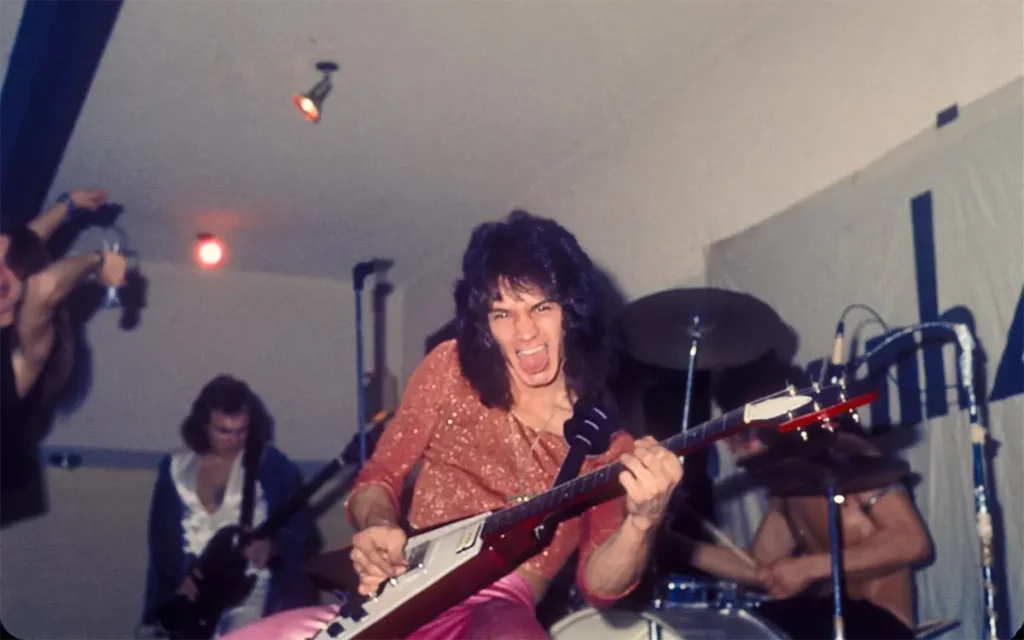
By 1978, Van Halen had gone from Pasadena backyard parties to opening arena shows for Journey and Montrose. As we have documented before, their high-voltage sets were so overwhelming that headliners were reportedly furious about having to follow them, and the brothers often played without a soundcheck yet still sounded terrifyingly tight every night. That competitive edge, born from always having something to prove, never left them.
Chaos with a plan: the truth about the brown M&Ms
For many people, Van Halen’s reputation boils down to one infamous demand in their 1980s tour rider: a bowl of M&Ms backstage with all the brown ones removed. The clause even threatened that if a brown candy appeared, the show could be forfeited at full price. It sounded like peak rock-star arrogance.
In reality, it was one of the smartest safety hacks in touring history. As Roth later explained, Van Halen were hauling nine eighteen-wheeler trucks and an enormous lighting rig – hundreds of heavy PAR cans – into old arenas that were never designed for that kind of load. The technical rider read like a phone book, specifying power, rigging and floor load limits in brutal detail.
Buried in the middle of all that was a petty-looking line about M&Ms with “absolutely no brown ones.” Promoters who had not read the rider closely would miss it. If Roth walked into catering and saw brown M&Ms, he knew the venue had probably cut corners elsewhere, and he would immediately order a full line-check of the staging and electrics before anyone risked going on. The candy bowl was a canary in the coal mine.
Alex Van Halen’s recent memoir Brothers backs this up, stressing that the candy clause was a precision test for professionalism, not a color phobia or a power trip. In interviews he has emphasized that it was no “power trip” at all. The band happily played up the diva legend in public, but behind the scenes it was immigrant-level paranoia about getting killed by a collapsing stage.
Sheraton madness: frozen fish, fire extinguishers and a lifetime ban
If the brown M&Ms showed how methodical Van Halen could be, their three-day stay at Madison’s Sheraton Inn in March 1978 showed how unhinged they were when left to their own devices. Wisconsin music journalist Susan Masino, who had backstage access, simply called it “three days of total mayhem and chaos.”
The noise complaints were so relentless that local police were reportedly told just to park in the hotel lot, waiting for the next call. Alex entertained himself by shoving his head between closing elevator doors, then badgering Masino into doing the same. She later recalled the sound as like her skull being crushed, while Alex laughed so hard he slid down onto the floor.
By the third night, with a day off from touring, the band turned the seventh floor into their private war zone. Someone launched a table out of a window into the snow below. They taped frozen fish to the hallway ceiling so the thawing water would rain on unsuspecting guests, stripped rooms of every sheet, pillow and towel to outfit the tour bus, and escalated into a squirt-gun fight using fire extinguishers.
Alex was reportedly seconds from hurling a television out the window before Journey singer Steve Perry intervened, pointing out that the damages would come out of his paycheck. Incredibly, no one was arrested, but the band earned a lifetime ban from Sheraton properties – although the remodeled hotel later leaned into the legend with a tongue‑in‑cheek plaque.
MTV’s Lost Weekend: debauchery as a prize
By 1984, Van Halen’s excess was such a selling point that MTV literally packaged it as a contest. The network’s Lost Weekend with Van Halen promotion promised one fan that they would have no idea where they were going, and probably no memory of it afterward. Over a million postcards came in; the winner was 20-year-old Kurt Jefferis from Phoenixville, Pennsylvania.
MTV flew Jefferis and his friend Tom Winnick by private jet to Detroit, where Van Halen were playing two nights at Cobo Arena. Jefferis later told reporters that the moment he walked off the plane a member of the entourage handed him a bottle of Jack Daniel’s, followed quickly by a joint – the beginning of what one writer called “The Lost Weekend” chronicles of his time with the band.
During the show, the band hauled him onstage, smashed a massive cake in his face and soaked him in champagne in front of a roaring crowd. Backstage, things escalated. Jefferis remembers steak, lobster and lines of cocaine, including a now legendary moment where he snorted “a little” off David Lee Roth’s extended pinky finger – a detail that later turned up in wild accounts from college dudes on a Van Halen bender.
According to Jefferis, MTV staff and band insiders, Roth then declared that “Kurt needs Tammy” – a notorious Detroit groupie who proceeded to perform a striptease and take the wide-eyed contest winner into the shower. The next day Jefferis was so wrecked that he had to fake drinking malt liquor while Alex tried to force more down his throat; the weekend ended with a dressing-room food fight.
Jefferis has been sober for decades and describes the whole escapade as enough insanity for one lifetime, but the story lives on in the short documentary Lost Weekend, which premiered at Tribeca and turned the whole bender into modern rock mythology.
Hotel bars, groupies and controlled chaos on tour
Lost Weekend was not an exception; it was Van Halen distilled. On the Diver Down and 1984 tours, eyewitnesses described backstage areas labeled things like “Love Dungeon,” hotel floors taken over by the band and crew, and a rolling cocktail bar nicknamed the Libation Station where exotic drinks were mixed until dawn. One long-form tour piece simply dubbed them “America’s ultimate party band.”
Opening acts remember huge bowls of leftover brown candies – the rejects from Van Halen’s M&M test – waiting in their dressing rooms, queues of groupies snaking down hotel corridors, and a giant cake from which a naked woman would emerge at birthday parties. Eddie reportedly traveled with flight cases custom-cut to hold bottles of Jack Daniel’s, while rooms were quietly set aside for cocaine and other chemical amusements.
Yet those same witnesses emphasize that even when the band were “completely and utterly wasted,” as one support musician put it, they still walked onstage and delivered frighteningly precise, high-energy shows. The Van Halen brothers in particular operated like a locked-in machine: Alex’s artillery-fire drums and Eddie’s molten Frankenstrat tone never lost their aim, however chaotic the dressing room had been an hour earlier.
The bill comes due
Behind the laughs, there was a darker through-line: addiction. In his memoir, Alex admits he had his first drink at six, handed to him by his father, and that alcohol was definitely a problem in our family. Eddie has been just as blunt, saying he started drinking and smoking at 12, considered himself an alcoholic, and described himself as a “very angry drunk” by the early 2000s.
Sammy Hagar’s memoir Red and later interviews paint a grim picture of the 2004 reunion tour, with Eddie allegedly unkempt, frighteningly thin and swigging wine straight from the bottle, calling it one of the worst experiences of his life. Eddie later pushed back, saying Hagar had embellished, but he did not dispute that his drinking had become destructive. Hagar, for his part, has said that reconciling with Eddie before his death meant “everything” to him.
The Van Halen brothers’ story ends with reconciliation and tragedy: Eddie finally achieved sobriety, reconnected with Hagar, and then died of cancer not long after, closing the book on one of rock’s great innovators. Alex has spoken about quitting alcohol after their father’s death and watching his younger brother fight the same demons. The wildness that thrilled fans also exacted a price on bodies, friendships and unfinished plans for a last, all-lineups “kitchen sink” tour.
From Java to Jack Daniels – and why it still matters
Seen in full, Van Halen’s legend is not just a montage of cake fights and flying furniture. It is the story of two Indo-Dutch kids whose mother was treated as expendable in colonial and postwar Europe, who arrived in segregated California with almost nothing, and who clawed their way to the top of American rock using homemade instruments, lunatic work ethic and a taste for chaos. Biographical pieces on Eddie’s life and heritage make clear just how far he traveled – musically and geographically – in a single lifetime.
Their antics – the brown M&Ms, the Sheraton’s ruined seventh floor, MTV’s Lost Weekend – make for great bar stories. But under all of it is an immigrant survival instinct and a perfectionist streak that changed how guitars are built, how tours are run and how far a rock band can push things without quite dying in the process. For anyone who grew up on 70s and 80s rock, understanding the Van Halen brothers’ Indonesian roots and brutal early years makes those blazing solos and feral drum fills sound even more like what they really were: the sound of two outsiders forcing the world to pay attention.