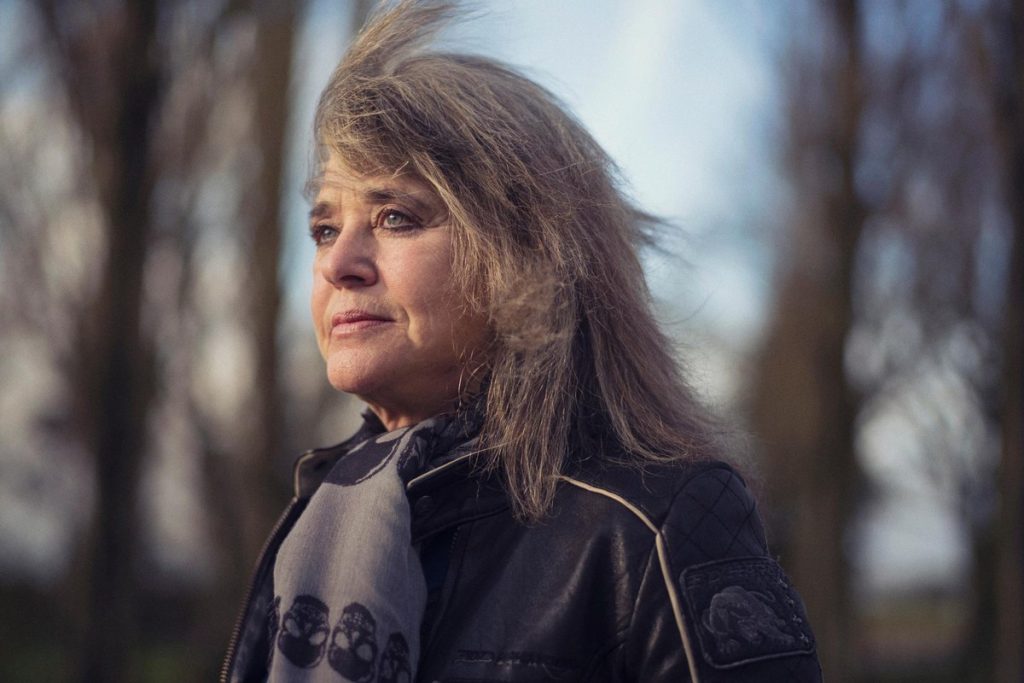
Suzi Quatro has spent half a century being the answer to a question she never asked to be asked, and at 76 she has stopped being polite about the one honor that has never come her way. Asked by the Guardian why she is not in the Rock and Roll Hall of Fame, she did not reach for diplomacy.
“It is absolutely crazy,” she said. “It used to bother me but now I’ve read up on lots of people who aren’t in it, and I’m in good company!”
Then came the sentence that has traveled furthest: “I just hope they’re not waiting for me to die so they can do it posthumously.”
It is a startling thing to read from a woman who is, by every visible measure, in rude health — still touring, still recording, still built like someone who could do two hours in leather without breaking stride. But it is also the most honest description anyone has offered of how the Hall has treated a certain kind of artist: not rejected, exactly, just left waiting long enough that the induction becomes a wreath.
The argument she is making
Quatro’s case rests on one claim, and she put it plainly in the same interview. “I always thought it was a no-brainer, because there was never a woman playing an instrument in a rock’n’roll band with world success before me.”
That is the part of her argument most worth examining rather than simply repeating, because it is the part people will contest. Women were playing instruments in rock bands before 1973. Goldie and the Gingerbreads were gigging and recording in the mid-sixties. Honey Lantree was behind the drum kit on a Honeycombs number one in 1964. Fanny, formed in 1969, were a self-contained all-female rock band signed to a major label, and David Bowie spent years telling anyone who would listen that they had been criminally overlooked. Carol Kaye had already played bass on more hit records than most inductees have released.
Read strictly, then, Quatro’s claim is arguable. Read the way she clearly means it — a woman playing bass, singing lead, fronting her own band, in leather, with worldwide number ones rather than cult respect — it is a great deal harder to dispute. Can the Can and Devil Gate Drive both went to the top of the charts across multiple countries in 1973 and 1974. She has sold upwards of 50 million records. Whatever the qualifications, the image she created did not exist before her, and a long line of women who came afterward have said so in public.
The awkwardness is who else is in the building. Alice Cooper, her fellow Detroit native and the guest on her most recent album, is a member. So are the Stooges, whose Iggy Pop ran the same streets at the same time. Quatro, who was there with both of them, is not.
The complaint has changed shape
What is genuinely new here is not the grievance but the temperature of it. Quatro has raised the subject before and the coverage has been blunt: Billboard and Stereogum both reported her calling the snub “disgusting” and saying she was through being polite about it, while Ultimate Classic Rock headlined her verdict as simply “dumb.”
Set against that, the Guardian answer is almost gentle. The anger has cooled into something closer to a shrug — she has looked up who else is on the outside and decided the company is good enough. Only the last line breaks the calm, and it does so by moving the argument from pride to time. She is not asking to be recognized. She is asking to be recognized while she is still around to enjoy it.
What she is doing in the meantime
Not waiting by the phone, on the evidence. Freedom, released in March, is her third album made with her son L.R. Tuckey as producer and co-writer, following No Control in 2019 and The Devil in Me in 2021. It was mastered at Abbey Road, and its centerpiece is a version of the MC5’s Kick Out the Jams recorded face to face with Alice Cooper — two people who met as Detroit teenagers, when she was 15 and he was 17, going back to the record that their city made notorious. Quatro has said it was Tuckey who pushed for the song for years before she agreed, and that Cooper said yes almost immediately.
The album’s theme, she told MetalTalk when the title track appeared, is “getting back to who you are. Being comfortable in your own skin, having nothing to prove to anyone.”
Retirement, meanwhile, keeps receding. She has been fielding the question since she was 35, when she first said she would quit the day she turned her back on an audience, shook herself and heard silence. At 75 she gave what she called her final answer on the subject, and it was less of a joke: she will stop when she goes on stage and does not deliver to her own standard, and not before.
What happens next
Quatro takes Freedom to Australia between 14 November and 6 December, and a screenplay for a film of her life is in progress — she has floated Scarlett Johansson, with the caveat that she would need to meet whoever got the part and feel something in them that cannot be acted.
The Rock and Roll Hall of Fame has not publicly responded to her remarks, and has never explained her absence from it. She has now made it as plain as she can that she would rather hear from them while she can still answer the phone.