
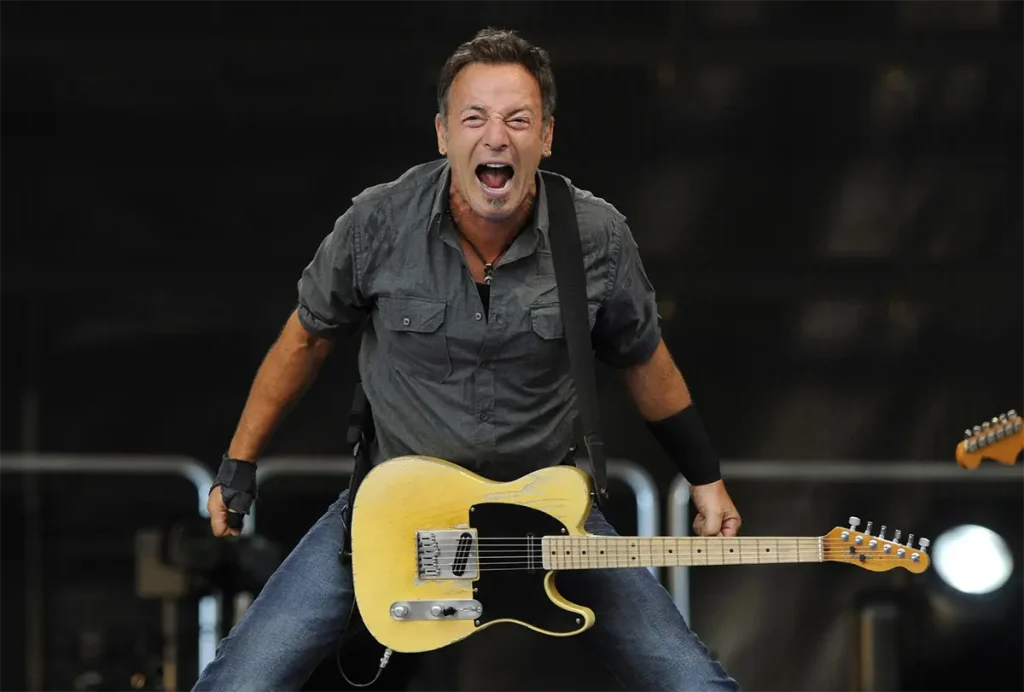
Bruce Springsteen has never been subtle about what he thinks America is supposed to sound like. With the release of “Streets of Minneapolis,” he is again using a three-minute song as a blunt instrument – a protest track honoring Alex Pretti and Renee Good, two Minneapolis residents killed during encounters tied to federal immigration enforcement operations, as described in widely circulated reporting and Springsteen’s own post about “American Skin (41 Shots)”.
The headline detail is simple: Springsteen dedicated the song to Minneapolis, to “innocent immigrant neighbors,” and to Pretti and Good by name. The more interesting story is what the song implies: he is not merely criticizing policy, he is challenging the legitimacy of the government’s version of events and treating public documentation (phones, videos, crowds) as a civic weapon.
What happened in Minneapolis, and why this song landed like a flare
According to reporting on the release, Springsteen wrote the song days after Pretti, an ICU nurse, was shot and killed by U.S. Customs and Border Protection agents, and he connected that death to a broader atmosphere he called a “state of terror.” The track also memorializes Renee Good, a Minneapolis mother of three reportedly killed in a separate shooting involving an ICE agent earlier in the year.
Springsteen’s lyrics frame Minneapolis residents as active witnesses rather than passive bystanders – people who follow operations to record them, confront agents, and counter official statements with video evidence. This is protest music with a very modern thesis: the chorus is not “vote,” it is “watch.”
“It’s dedicated to the people of Minneapolis, our innocent immigrant neighbors and in memory of Alex Pretti and Renee Good.” – Bruce Springsteen (via social post quoted in reporting)
The political knife edge: “state of terror” vs. “law enforcement”
The White House response, as reported, did not engage the specific factual disputes around the shootings. It dismissed the song as “random” and “irrelevant,” while insisting the administration’s focus is removal of “dangerous criminal illegal aliens.”
That clash matters because it shows what Springsteen is really attacking: not just raids, but the messaging architecture around raids. When politicians and agencies frame enforcement as targeted and clean, and residents capture scenes that feel chaotic or indiscriminate, a credibility war starts. “Streets of Minneapolis” is Springsteen choosing a side in that war.
Why a Springsteen protest song still matters in the age of algorithms
It is tempting to say protest songs cannot move anything anymore. That is lazy. Protest music does not have to “change policy” to change culture – it can name a feeling, legitimize public anger, and give movements a shared language.
Springsteen’s advantage is that he arrives with decades of credibility as a songwriter who documents the friction between American promises and American consequences. The song’s power is not novelty; it is continuity.
Springsteen has done this before, and paid for it
“American Skin (41 Shots)” was written in response to the 1999 police killing of Amadou Diallo, an unarmed immigrant who was shot repeatedly by NYPD officers – and the song sparked public controversy and backlash from law enforcement groups, a kind of cultural collision that still echoes in debates over homeland security and law enforcement.
That history explains the posture in “Streets of Minneapolis.” Springsteen is comfortable writing into the hottest part of an argument, because he has already been there when the stakes were social, not just musical.
A quick musical read: how Springsteen makes protest feel personal
Even without a full bar-by-bar breakdown, Springsteen’s protest writing usually follows a reliable pattern: specific names, specific streets, and an everyman narrator who sounds less like a lecturer and more like a witness. That formula is how he avoids “issue song” stiffness.
In other words, he does not write editorials with guitars. He writes character sketches that happen to indict systems. The chorus slogan (“ICE out now!” as reported) is the chant, but the names are the dagger.
Why naming victims hits harder than arguing statistics
Policy debates often hide behind abstraction. A person’s name removes the escape hatch. It forces the listener to contend with a real life and a real absence, not a category like “enforcement outcomes.”
That is why the ending refrain matters: “we’ll remember the names.” It turns memory into resistance, and it implies that forgetting is a kind of compliance.
What “phones and whistles” means: protest tactics meet surveillance culture
When Springsteen highlights “whistles and phones” (as described in reports), he is pointing to a new model of street-level accountability: crowdsourced documentation. In many cities, residents now treat filming as both self-protection and public record.
This is not purely romantic. Filming can be risky, legally complicated, and emotionally corrosive. But it is also one of the few tools ordinary people have when interactions escalate quickly and the first official statement is not trusted.
How immigration enforcement is structured (and why the alphabet soup matters)
ICE and CBP sit under the Department of Homeland Security, which coordinates a wide span of enforcement and security missions. That structure matters because the public often experiences these agencies as interchangeable, while their authorities, training, and operational contexts can differ.
For readers trying to decode headlines, it helps to start with how the agencies describe themselves. CBP’s Newsroom publishes operational updates and press releases, which is where official framing often appears first.
ICE’s public Newsroom similarly maintains announcements and statements that can shape early narratives around high-profile encounters. When songs, videos, and local reporting contradict those narratives, you get the kind of legitimacy crisis that protest music thrives on.
Edgy claim (with context): Springsteen is calling “law and order” a brand, not a principle
“Streets of Minneapolis” is provocative because it treats the state not as a neutral provider of safety, but as an actor capable of terror. That is a heavy word, and Springsteen chose it anyway.
The uncomfortable implication is that “law and order” can operate like a marketing slogan – a way to sell fear, excuse force, and pre-load public sympathy for whoever has a badge. You do not have to agree with Springsteen to recognize the strategy: he is trying to strip the shine off the slogan and force listeners to look at outcomes.
Where this fits in the longer American tradition of dissent music
Protest music is not a genre; it is a recurring American reflex. From labor songs to civil rights anthems to punk and hip-hop, musicians have long responded to state power with melody and accusation.
Institutions like the Library of Congress’s National Jukebox preserve recordings and context around America’s musical heritage, reminding us that popular music has always been tangled up with politics, technology, and public life.
A practical lens for listeners: questions to ask when a protest song drops
- What is the claim? In this case, a “state of terror” created by raids and violence.
- What is the evidence framework? Phones, bystander video, and public witnessing.
- Who is named? Victims and officials, which raises the legal and reputational stakes.
- What is the ask? Not vague unity – a direct demand (“ICE out now!”), as reported.
For fans of older rock: why this should not be dismissed as “celebrity politics”
There is a cynical take that this is just a 76-year-old star yelling into the void. The better take is that Springsteen is doing what elder statesmen of folk and rock have always done: using the platform they earned in safer songs to sing the dangerous ones when it counts.
His official site positions him not just as a legacy act, but as a working artist still releasing material and statements in real time. Whether you love or hate the message, that persistence is part of the story.
How to listen closely (even if you disagree)
If “Streets of Minneapolis” bothers you, listen anyway – but listen like a musician, not a pundit. Pay attention to the narrator’s viewpoint, the repeated phrases, and the way the chorus functions like a crowd rather than a solo voice.
Then compare the song’s narrative to official channels and credible reporting, including public White House briefings and statements. If nothing else, this track is a reminder that in America, the argument about power is also an argument about who gets to tell the story first.
Conclusion: a protest song as a stress test for public trust
“Streets of Minneapolis” is not background music. It is a stress test: of government credibility, of citizen documentation, and of how comfortable we are when a beloved rock icon calls state violence what many officials refuse to call it.
Springsteen is betting that memory and witness still matter. And in a country where the loudest megaphone often wins, he just brought a stadium-sized one to the street.
Further reading and reference points
| Topic | Why it helps |
|---|---|
| Official government statements | Shows how raids and incidents are framed publicly by the administration and agencies. |
| Understanding immigration courts | EOIR materials provide context on the adjudication side that sits downstream from enforcement. |
| Immigration policy basics | USCIS offers plain-language background on the legal framework that enforcement claims to uphold. |
| Independent public broadcasting | PBS NewsHour coverage regularly provides explanatory coverage and interviews across political divides. |
You can listen to the song below:


