
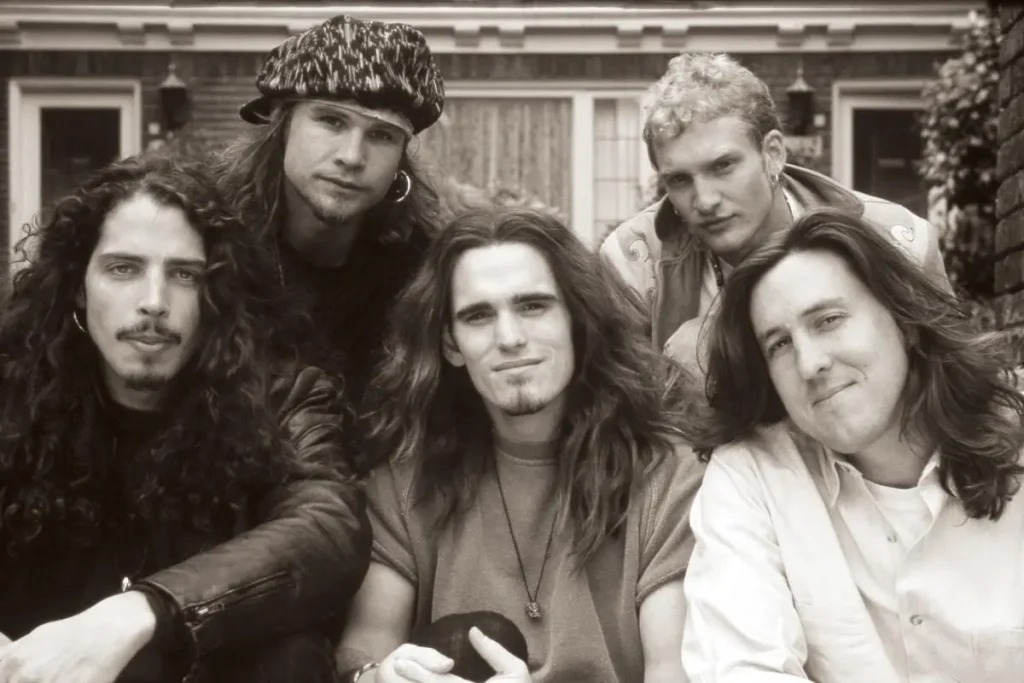
Some movies capture a moment. Singles trapped one in amber, slapped a flannel shirt on it, and shipped it worldwide. Released in theaters on September 18, 1992, Cameron Crowe’s Seattle-set rom-com stars Matt Dillon and Bridget Fonda, but its real lead is the city’s then-local rock ecosystem, filmed right as it was mutating into a global industry.
The edgy claim: Singles is not “about grunge.” It is about what grunge ate on its way to superstardom: community, cheap apartments, bad decisions, and great songs played by people who still had to haul their own gear. The movie’s charm is that it does not sound like a corporate brand plan. It sounds like friends.
What Singles actually is (and why that matters)
On paper, Singles is a romantic comedy about a cluster of twenty-somethings navigating love, work, and self-sabotage in Seattle. In practice, it’s an unusually music-literate film where bands are not just background wallpaper, but part of the social fabric and the joke structure.
Its setting is not generic “cool city.” Crowe pins scenes to real Seattle textures: clubs, sidewalks, and the small-scale anxieties of creative people who feel late to their own lives. That groundedness is why the film still plays better than most era pieces that try to cosplay the early ’90s.
Basic film details (director, cast, release, and the Seattle focus) are straightforward and well documented.
The cameos: a rock-star “where are they now?” filmed in real time
Singles has cameos from musicians who were already significant locally, but not yet canonized everywhere. It is now famous for capturing members of Pearl Jam, Soundgarden, Alice in Chains, and others in the same frame as working actors, like it’s no big deal.
The key point is not the trivia of who pops up where. The key point is how the cameos are used: casually. They are treated like part of the neighborhood, not like mascots. That choice makes the film feel less like a “music movie” and more like a city movie where music happens to be the city’s bloodstream.
Pearl Jam’s early-era framing and context around Ten helps explain why their Singles appearances now feel like seeing a stadium act before the stadium existed.
Seattle before the souvenir shops: the “pre-explosion” vibe
It’s tempting to watch Singles like a museum exhibit: “Look, kids, this is what grunge looked like.” But the movie is more interesting as an accidental document of a scene that hadn’t been totally monetized yet. Seattle is portrayed as livable, weird, and slightly sleepy, which is exactly what made it incubate bands with time to develop.
That pre-explosion vibe is also why the film can feel emotionally sharper than later portrayals of the era. Nobody in Singles is acting like they’re inside a movement. They’re acting like their rent is due, their relationships are messy, and their friends’ bands might be good – but also might break up next week.
For a useful broader snapshot of how the Seattle sound developed into a wider cultural wave, HistoryLink’s overview provides regional context without turning the story into myth.
The soundtrack: not just grunge, but a map of alternative rock’s fault lines
Here’s where Singles becomes more than a film: the soundtrack plays like a curated mixtape from someone who actually went to shows. It pulls from the Pacific Northwest and beyond, reflecting how “Seattle” was never a sealed jar – it was a trade route of influences, labels, and touring circuits.
Even if you remember the big titles, the sequencing matters. The album moves between raw guitar catharsis and pop-leaning alt rock, showing that the early ’90s were not one sound. They were a collision of sounds, briefly sharing radio space before formats tightened again.
If you want a clean, quickly scannable way to see the soundtrack’s official configuration and credited artists in one place, an oral history-style rundown is a practical reference point.
Why the soundtrack hit so hard
Most movie soundtracks function like product tie-ins. Singles works because it behaves like a scene report. It does not try to “summarize grunge” with one mood; it shows how many moods lived under that umbrella, from bruised ballads to snarky power-pop to noise-rock abrasion.
There’s also an underappreciated industry reality: soundtrack albums were a major distribution channel then. If you lived far from the coasts, this kind of compilation could be your first exposure to a cluster of bands that record stores in your town simply didn’t stock.
The film’s contemporary critical read on its music-and-relationship balance underlines why it still plays like a time capsule rather than a marketing stunt.
Quick guide: standout tracks and what they represent
Rather than rank songs (an argument nobody wins), here’s a practical way to listen: treat each track as a clue to what “alternative” meant before it calcified into genre lanes.
| Listening lens | What to listen for | Why it matters |
|---|---|---|
| Guitar texture | Fuzz vs. chime vs. metallic bite | Shows how “grunge” shared space with other rock dialects |
| Vocal attitude | Confession, sarcasm, menace, sweetness | The era’s emotional palette was wider than the stereotype |
| Production choices | Room sound, drum tone, vocal dryness | Documents a shift away from glossy ’80s aesthetics |
| Songwriting DNA | Pop hooks hiding inside heavy arrangements | Explains why this music crossed over without losing teeth |
The rom-com core: why Dillon and Fonda keep it human
It’s easy to talk about Singles like it’s a concert film with a plot. But it’s still a character-driven story, and that’s why it holds up. Matt Dillon’s musician character and Bridget Fonda’s counterpart aren’t saints or caricatures; they’re charming and exhausting in realistic proportions.
Crowe’s best move is refusing to make “the scene” a magic solution. Music does not fix anyone. It just amplifies who they already are, which is a much more honest depiction of creative life than the usual fantasy that art automatically makes you emotionally mature.
A handy behind-the-scenes refresher is the Sundance Institute’s rundown of production details and scene-adjacent cameos, which helps explain why the Seattle milieu feels specific instead of generic.
The myth vs. the mechanics: what Singles gets right about scenes
“Scenes” are often romanticized as if they’re only about genius. Singles quietly argues the opposite: scenes are about infrastructure. Who’s dating whom, who has a couch to crash on, which club will book weird bills, who knows a photographer, who can get you on a compilation.
That is why the cameos matter. They don’t just signal fame-to-come. They demonstrate density: the sense that talented people are within a few degrees of each other, seeing each other in the same rooms, and cross-pollinating.
One way to quantify the film’s reach is its release and box-office performance, which shows it was visible enough to push images and music well beyond the Northwest.
Did Singles predict grunge…or help sell it?
This is the provocative part. Singles is often framed as a love letter to a scene. But it also functioned as a gentle export mechanism: it made Seattle look emotionally legible and aesthetically cool to people who would never step inside the Off Ramp (or any club, anywhere).
That does not make the film “inauthentic.” It just means it sits at the exact hinge point where subculture becomes market category. Watch it with that tension in mind and the movie becomes richer, not poorer.
If you want to experience Singles like a music nerd
1) Listen first, then watch
Try the soundtrack before the film. You’ll notice how the movie uses songs as social signals, not just mood setters. Characters “belong” to different sounds, and those sounds telegraph values.
2) Watch for how the camera treats musicians
In many films, musicians are filmed like gods. In Singles, they are filmed like people you might bump into after the show while you’re trying to find your friends. That is a huge tonal difference.
3) Follow the rabbit holes
Pick one band you only vaguely know from the soundtrack and explore their discography. That exercise recreates how the early ’90s actually felt: partial information, word-of-mouth, and sudden obsession.
If you need a simple, viewer-facing reference for where the film is streaming right now, an availability tracker is the fastest way to check.
One last detail: the “Seattle object” effect
Every city has landmarks, but Singles also thrives on what you might call objects of local meaning: venues, posters, street corners, and public art that silently tell you, “Yes, this is here.” That texture is part of why the film feels like memory rather than cosplay.
For a sense of how grunge-era visuals get preserved, an archive-style exhibit of photographs from when grunge ruled helps frame the period’s aesthetics beyond just music.

Conclusion: the sweetest Trojan horse of the early ’90s
Singles endures because it works on two levels. It’s a rom-com about people making predictable mistakes, and it’s a snapshot of a music scene right before it was forced to become a brand. That combination is rare, and it’s why the movie still feels alive instead of archived.
“What I loved about Seattle was that it wasn’t trying to be anything.”
Cameron Crowe, quoted in Sundance Institute feature on Singles


