
Introduction
Buried between the filthy groove of “The Lemon Song” and the stomp of “Heartbreaker” sits one of Led Zeppelin’s most disarming moments: “Thank You.” It is not a riff monster or a Tolkien trip, but a plain-spoken promise of love that slipped onto one of the heaviest albums of its era.
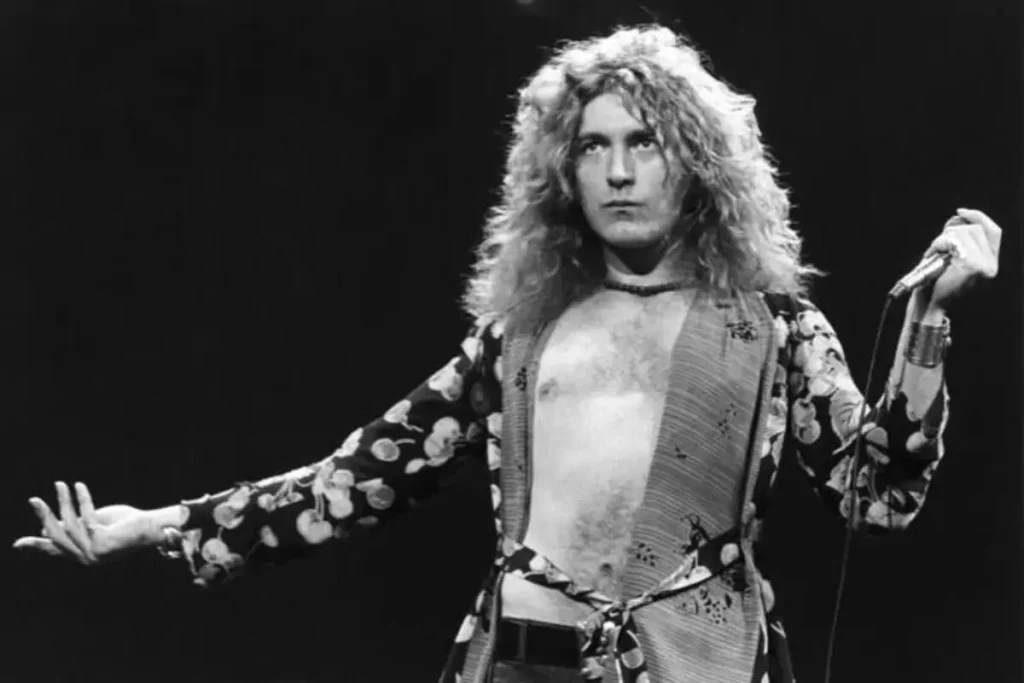
With this single track, Robert Plant stopped being just the golden god wailing over borrowed blues lines and became Led Zeppelin’s in-house poet. At the same time, Jimmy Page quietly stepped up to the microphone, and John Paul Jones turned a Hammond organ into the emotional center of the band.
The moment Robert Plant became Led Zeppelin’s lyricist
On the first Zeppelin album, most of the lyrics were either traditional blues or thinly disguised rewrites. Plant sold every line with conviction, but he was more interpreter than author. “Thank You,” cut for “Led Zeppelin II,” was the first time he took complete control of the words and wrote a lyric that was wholly his. Thank You
Spanish-language reference works describe the track as a slow ballad that marked a deeper involvement from Plant in the band’s songwriting, stressing that it was the first Zeppelin song whose lyric he wrote entirely alone and that he dedicated it to his wife Maureen Wilson. Those same sources even flag that the opening lines bear a resemblance to Jimi Hendrix’s “If 6 Was 9,” an overlap fans have argued about ever since.
A love letter written in the chaos of 1969
Session reconstructions put the recording of “Thank You” in June 1969 at Morgan Studios in London, grabbed between brutal tour legs as the band raced to finish “Led Zeppelin II” in time for an autumn release. The song ultimately appeared as track four, closing side one of the LP, with Plant on vocals, Page on twelve-string guitar and backing vocals, Jones on bass and Hammond organ, and John Bonham playing unusually restrained drums. session reconstructions
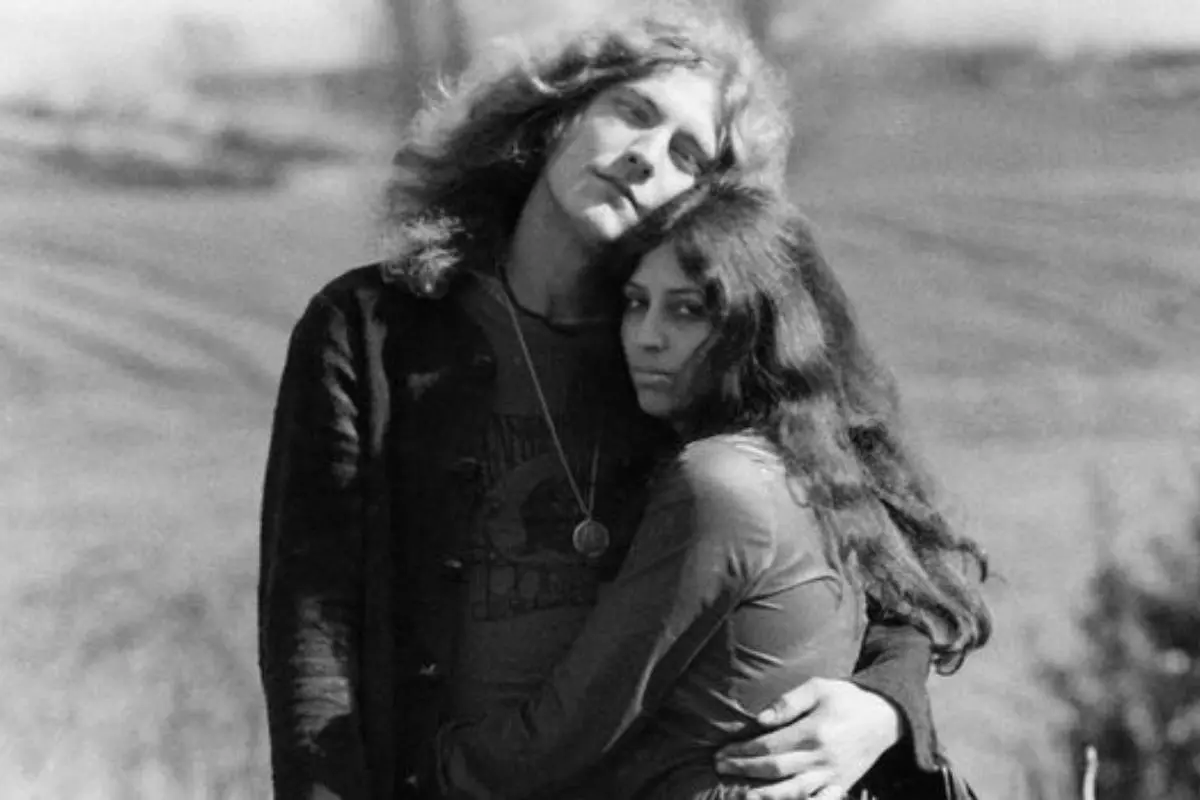
American Songwriter paints a vivid picture of how unlikely this tender ballad was in context: Plant was about 20, newly married to Maureen, with a baby at home while the band crisscrossed continents and Atlantic Records demanded a second album in less than a year. The magazine frames “Thank You” as a direct expression of gratitude to Maureen, a promise that their love would survive even when “dark suns” and collapsing mountains stood in for the pressures of sudden fame and distance. American Songwriter
That tension is part of what makes the lyric so striking. Plant is not bragging, seducing or preaching mysticism; he is trying to sound like a grown man who can be trusted, and you can hear the effort in every line.
Inside the track: guitars, harmonies and organs
Page’s acoustic shimmer and rare backing vocal
On paper, “Thank You” should be a simple folk tune: a mid-tempo ballad grounded in D, riding a gentle progression and a 12-string arpeggio. In practice, Page turns it into something stranger and more luminous, layering chiming Vox Phantom XII guitar with subtle swells and a dramatic false ending that fades to near silence before surging back in a brief crescendo.
Fan-oriented breakdowns note that this is one of the very few Zeppelin songs where Page is openly credited with backing vocals as well as guitars, and they point out that he sings harmonies behind Plant, helping the choruses blossom rather than leaving Plant isolated in crooner mode. Those same summaries highlight the false ending and late-song swell as quirks that caused headaches for radio programmers who had to decide whether to chop the fade or sit through the dead air. fan-oriented breakdowns
Listen closely to the “my, my, my” refrain and you can hear that second voice shadowing Plant. It is not a polished choir part; it sounds like a guitarist stepping up to the mic, rough and human, which only adds to the song’s intimacy.
John Paul Jones, the secret hero
If Page gives “Thank You” its glimmer, John Paul Jones gives it its spine. His Hammond organ does more than fill space; it moves like a tide underneath the vocal, shifting from church-like chords in the verses to a swirling, almost psychedelic wash around the instrumental break. The much-discussed false ending works largely because Jones lets the organ breathe, then pushes it back in with a swell that feels like a last rush of emotion.
Writers who approach the track as a love letter rather than a riff showcase stress how unusually gentle the arrangement is for Zeppelin, calling it a calm, sweet dedication made more affecting by the sincerity of the performance. a calm, sweet dedication When you focus on the organ part, it is hard to disagree: Jones sounds less like a sideman and more like a co-narrator, answering Plant’s vows with sustained chords that seem to say, “Yes, this is serious.”
| Member | Main role on “Thank You” |
|---|---|
| Robert Plant | Lead vocal, first fully self-written Zeppelin lyric, emotional focal point |
| Jimmy Page | Electric and 12-string acoustic guitars, arrangement, subtle harmony vocals |
| John Paul Jones | Bass guitar and Hammond organ, providing the song’s melodic and dynamic bed |
| John Bonham | Drums, unusually restrained, holding back power until the climactic swell |
On stage: when “Thank You” became a keyboard showcase
In the studio, “Thank You” is a model of restraint. Live, it often turned into a vehicle for John Paul Jones to step out of his usual supporting role and take a spotlight that Page and Plant rarely ceded. An official setlist for the legendary Royal Albert Hall show on January 9, 1970, lists an “Organ solo / Thank You” segment, making explicit what the tapes reveal: Jones would improvise on organ, then glide straight into the song. Royal Albert Hall show
By the early 70s, those organ introductions could become long, exploratory pieces in their own right. Glide Magazine unearthed audio from Sydney, February 27, 1972, in which Jones spins out an extended, improvised solo before the band crashes into “Thank You,” the organ practically dueling with Plant’s vocal for emotional dominance. Glide Magazine For a group stereotyped as a guitar-and-drums juggernaut, these performances are a reminder that a quiet, lyrical Hammond line could bring crowds to a roar just as effectively as a 10-minute guitar solo.
Hendrix, R&B and the shared apocalypse
Plant opens “Thank You” with a cosmic image: if the sun stopped shining and mountains fell into the sea, his love would survive. Fans quickly noticed how close that language is to Jimi Hendrix’s “If 6 Was 9,” where Hendrix sings about the sun refusing to shine and mountains falling into the sea with a shrug that says he will still live his own way. If 6 Was 9
Some modern summaries of “Thank You” go so far as to say Plant’s lyric was influenced by “If 6 Was 9,” and given Hendrix’s huge impact on the late 60s rock world, it is hard to imagine Plant had not heard the earlier song. At the very least, the echo ties Zeppelin’s tender ballad to the psychedelic individualism Hendrix was preaching just a couple of years earlier.
But the apocalyptic-romantic image is older than either of them. In Ben E. King’s “Stand By Me,” released in 1961, the narrator promises that even if the sky tumbles and “the mountain should crumble to the sea,” he will not cry as long as his lover stands by him. Stand By Me Plant’s opening feels like it compresses that entire lineage of Black American gospel, R&B and psychedelic rock into two short lines, then rewires it as a young Englishman’s vow of devotion.
Is that theft, homage or just the way pop songwriting works? The safest answer is that it is all three. Rock lyrics have always been a collage of inherited phrases, half-remembered lines and deliberate nods; what matters is what the writer does with them. Plant takes a familiar image of the world ending and, instead of using it to declare his independence, uses it to swear he will stay.
Why “Thank You” still matters
Heavier and more iconic Zeppelin songs get most of the airplay, but “Thank You” is where the band quietly proved they could be as disarming as they were devastating. It is the moment Robert Plant stops shouting over borrowed blues tropes and starts writing as himself, a young husband trying to sound worthy of the woman waiting at home.
It is also one of the few studio glimpses of Jimmy Page as a harmony singer and one of the first recorded moments where John Paul Jones’s keyboards take center stage, hinting at how much color he would bring to later epics. Strip away the mythology and the Marshall stacks and you are left with something almost embarrassingly simple: a rock god saying “thank you” and, for once, sounding like he really means it.


