
Ringo Starr has had two weddings that could not have been more different. One was a dawn raid on a London registry office at the height of Beatlemania, the other a paparazzi circus in the middle of the 1980s rock aristocracy.
Put those two ceremonies side by side and you get a sharp story about fame, female fans, addiction, and what it costs to be the drummer in the most mythologised band in history. If you grew up with Beatles singles on the radio, Ringo’s love life is a surprisingly raw way to rewatch the entire movie.
Why Ringo’s weddings still matter in rock history
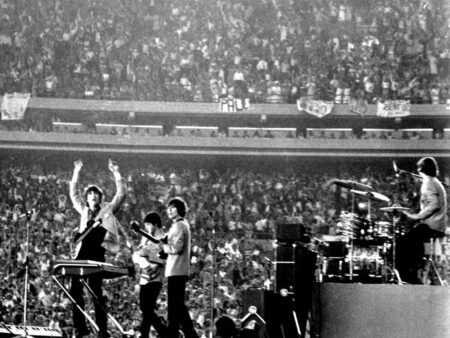
The Beatles were not just a band, they were a full‑blown social fever. Contemporary accounts describe Beatlemania as mass hysteria: fans screamed so loud the group could barely hear themselves, fainting at airports and mobbing limousines like pilgrims around a shrine.1963’s chart‑topping run only deepened that sense that this was no ordinary fandom.
Now drop a marriage into the middle of that hysteria. Ringo’s first wedding meant one of the four “untouchable” idols was suddenly a husband and soon a father. His second wedding happened after the dream had died, in an era of rehab, excess and nostalgia tours. Together, they trace rock culture’s journey from innocent fantasy to brutal adulthood.
1965: The secret Beatle wedding at Caxton Hall
On the morning of 11 February 1965, Ringo slipped into Caxton Hall Register Office in Westminster under his legal name, Richard Starkey, to marry 18‑year‑old hairdresser Maureen Cox. The guest list was tiny but nuclear: John Lennon and George Harrison made it, Beatles manager Brian Epstein was best man, and Paul McCartney was out of the country on holiday.
After the brief civil ceremony, the couple drove to Hove on the Sussex coast for a short honeymoon at the home of the Beatles’ solicitor David Jacobs.That low‑key escape should have been a quiet break; instead, it became the first lesson that you cannot secretly marry a Beatle and expect privacy.
The morning Beatlemania lost its “single” drummer
The New York Times report on the wedding captured the absurd mix of romance and hysteria. It noted that the “oldest and most popular” Beatle had finally tied the knot at 8:15 a.m., described Ringo’s light gray tweed suit and Maureen’s off‑white lacy ensemble, and quoted John Lennon joking that the band had considered wearing radishes in their buttonholes instead of carnations.
Outside, teenage girls were not amused. One 16‑year‑old fan moaned that the marriage was “terrible” and would hurt his popularity, a perfect snapshot of the way young women were encouraged to treat real partners as enemies who had “stolen” their idols.Those bitter reactions were early proof that the supposedly cute hysteria around the Beatles could turn vicious as soon as a woman crossed the line from fan to wife.

Maureen Cox: the fan who married the drummer
Maureen was not some society debutante parachuted into the story. She was a working‑class Liverpool girl who had been a trainee hairdresser and die‑hard Cavern Club regular long before she married Ringo. She fought her way through the same queues as every other fan and knew exactly how ugly the competition for access to the band could get.
By the time Ringo proposed at London’s Ad Lib Club in January 1965, she had already endured threats and even physical attacks from rival fans, to the point where she gave up hairdressing altogether.They married that February, had three children together, and lasted a full decade before divorcing in 1975, a longer run than most people expect from a Beatle marriage in the pressure cooker of the 1960s.
If you are looking for the dark side of Beatlemania, start with Maureen. Her reward for loving the nice Beatle was being scratched, stalked, and told she should not exist. It is hard to call that “cute.”
1981: Barbara Bach and the Marylebone rock‑royalty reunion
Fast forward sixteen years. The Beatles are long gone, the solo careers are in full swing, and Ringo is drifting through the late 70s in a haze of booze and patchy records. Then he signs on to a stone‑age slapstick film called Caveman and meets American actress and former Bond girl Barbara Bach.
The pair have told the story many times: they were both involved with other people during most of the shoot, insisting they “weren’t together” until the final week, when the friendship abruptly turned into a full‑on romance.Less than a year later, on 27 April 1981, they married in London in front of about 70 guests, including Paul McCartney and George Harrison, turning the wedding into a low‑key Beatles reunion in everything but name.
The Marylebone Town Hall circus
The ceremony took place at Marylebone registry office, the same Old Marylebone Town Hall that would become Britain’s most infamous rock‑star wedding machine.ts reputation as a celebrity venue was only just beginning. Ringo and Barbara arrived in a fleet of London cabs, his in red, to face a wall of around 350 screaming fans who had turned a municipal building into a substitute Ed Sullivan stage.
Contemporary reports describe Barbara in a cream silk dress with red roses, Ringo in black suit, black shirt and black bow tie, and the crowd losing its mind again as Paul and Linda McCartney sprinted past police lines to get inside.For anyone watching from the pavement, it must have felt like Beatlemania had briefly rebooted for one last wild episode.
Inside the reception: spoons, silver stars and 80s excess
After the vows, the party moved to the West End club Rags, where roughly 70 guests ate, drank and danced into the night. One witness likened the atmosphere to a full‑blown knees‑up, with guests playing spoons on the tabletops while champagne flowed.
Every guest left with a solid silver star as a memento, and even the wedding cake was star‑shaped, as if the couple were leaning into Ringo’s stage persona as the showman who had somehow outlived the band that made him famous.It was decadent, a little tacky, and very on brand for 1981.
Marylebone: the registry office that became rock’s chapel
Ringo and Barbara’s wedding helped cement Marylebone Town Hall as the closest thing Britain has to a secular rock chapel. The venue went on to host a staggering number of celebrity ceremonies, from Cilla Black and Bobby Willis to multiple trips down the steps for Liam Gallagher and two separate marriages for Paul McCartney.
By its centenary, more than 125,000 couples had married there, with Westminster Council openly billing it as a place where rock stars and ordinary Londoners share the same worn stone staircase. If Caxton Hall belongs to black‑and‑white Beatlemania footage, Marylebone is pure color: confetti, paparazzi flash and a sense that pop culture itself is one of the invited guests.
Two weddings, one drummer: a quick comparison
| Detail | 1965 – Maureen Cox | 1981 – Barbara Bach |
|---|---|---|
| Venue | Caxton Hall Register Office, Westminster | Marylebone Town Hall, London |
| Vibe | Rushed, secretive, early morning | Glam 80s, media circus, semi‑Beatles reunion |
| Beatles present | John, George, plus Brian Epstein | Paul and George among roughly 70 guests |
| Fan reaction | Shock and jealousy, fear it would hurt his popularity | Nostalgic screaming, more celebration than outrage |
| Ringo’s life phase | Peak Beatles grind, just before filming Help! | Post‑Beatles, heavy drinking, about to hit a wall |
From wedding bells to rehab and survival
The easy narrative is that Maureen got the Beatle and Barbara got the survivor, but that undersells how much the second marriage reshaped Ringo’s fate. By the mid‑80s he has admitted that the 70s and 80s were a blur of alcohol and anger over the band’s breakup.
The turning point came when he and Barbara finally checked into rehab together in the late 1980s. He later recalled realizing, within days, that he was genuinely ill, did everything the program asked of him, and walked out determined never to drink again, a streak of sobriety now stretching for decades.That hard reset effectively gave him a second act.
It is not sentimental to say that this would have been harder without a partner prepared to go into treatment at the same time. The same woman he had married in a blaze of tabloid flash effectively became his sponsor in private.

A long marriage in a business built on divorce
In recent interviews, Ringo has been blunt about the “secret” of his four‑decade marriage to Barbara: there is no rulebook. He talks about stupid days, arguments, and simply getting over it, while she boils her own philosophy down to one unsentimental line: she loves the man, and that is that.
Between them they have raised a blended family of five children from previous relationships, navigated his touring life, her retirement from acting, and the endless recycling of Beatles mythology.Their shared history underlines that in a culture where rock marriages are usually punchlines, their staying power is almost aggressively un‑rock and roll, which might be exactly why it works.
What Ringo’s weddings really tell us
Viewed from a distance, Ringo’s two weddings chart the arc of postwar pop. The first exposes the cruelty behind “innocent” fandom, where a young working‑class woman could be scratched and threatened simply for marrying the drummer. The second shows the industry’s decadent middle age, where a Bond girl, a former Beatle and a registry office built into a photo set coexist with addiction and burnout.
Underneath all the noise is a working musician who spent his twenties holding the entire Beatles live sound together and his thirties stumbling through the wreckage of their breakup. The first wedding tried to hide that reality; the second, and everything that followed, forced him to confront it.
You do not have to mystify the Beatles to see why these two days still resonate. Ringo Starr’s weddings are not just celebrity gossip. They are two hard snapshots of what happens when real human relationships collide with the loudest band story of the 20th century.