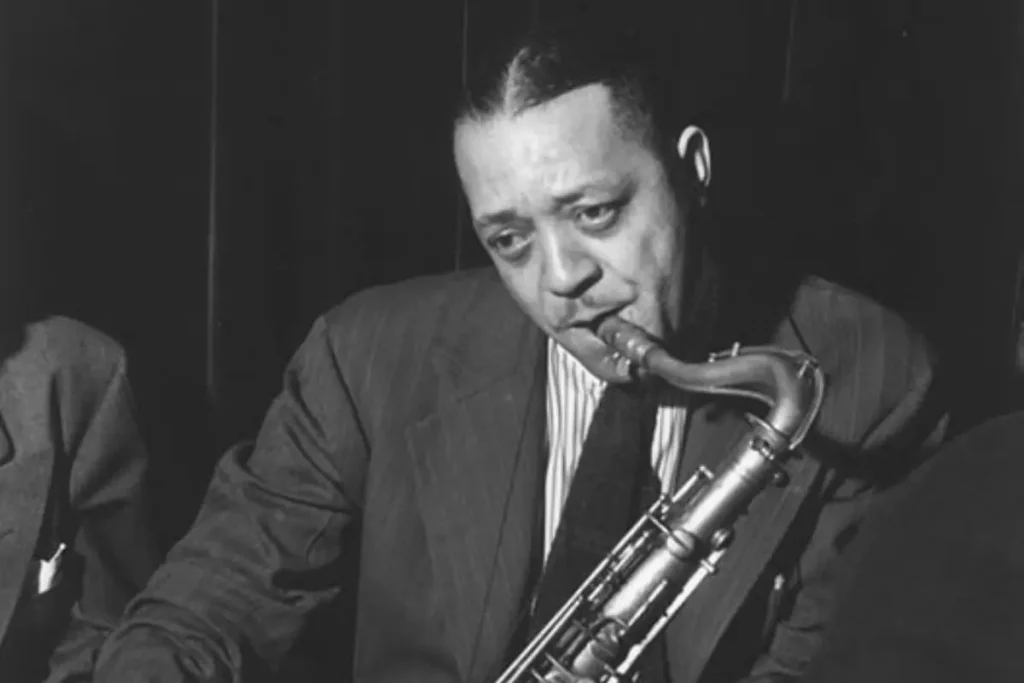
Lester Young did not just play a different tenor saxophone. He projected a different way to be a musician in public: understated, angled off to the side, dressed like he had no interest in impressing you, and somehow more impressive because of it.
Steven A. Cerra’s description of Young as an “outsider’s nonconformist” is dead on, and it gets at why his influence refuses to fade: he changed the sound and the social temperature of jazz. When people talk about “cool” as an attitude, a fashion, or a vibe, Young is one of the key reasons that word carries cultural weight beyond the bandstand.
“He looked different, he played different, he was different.”
Steven A. Cerra
The look was the message: porkpie hat, sideways horn, quiet power
Young’s visual signature was not a marketing gimmick. It matched his musical one: avoid the obvious, refuse the blare, and make the audience lean in.
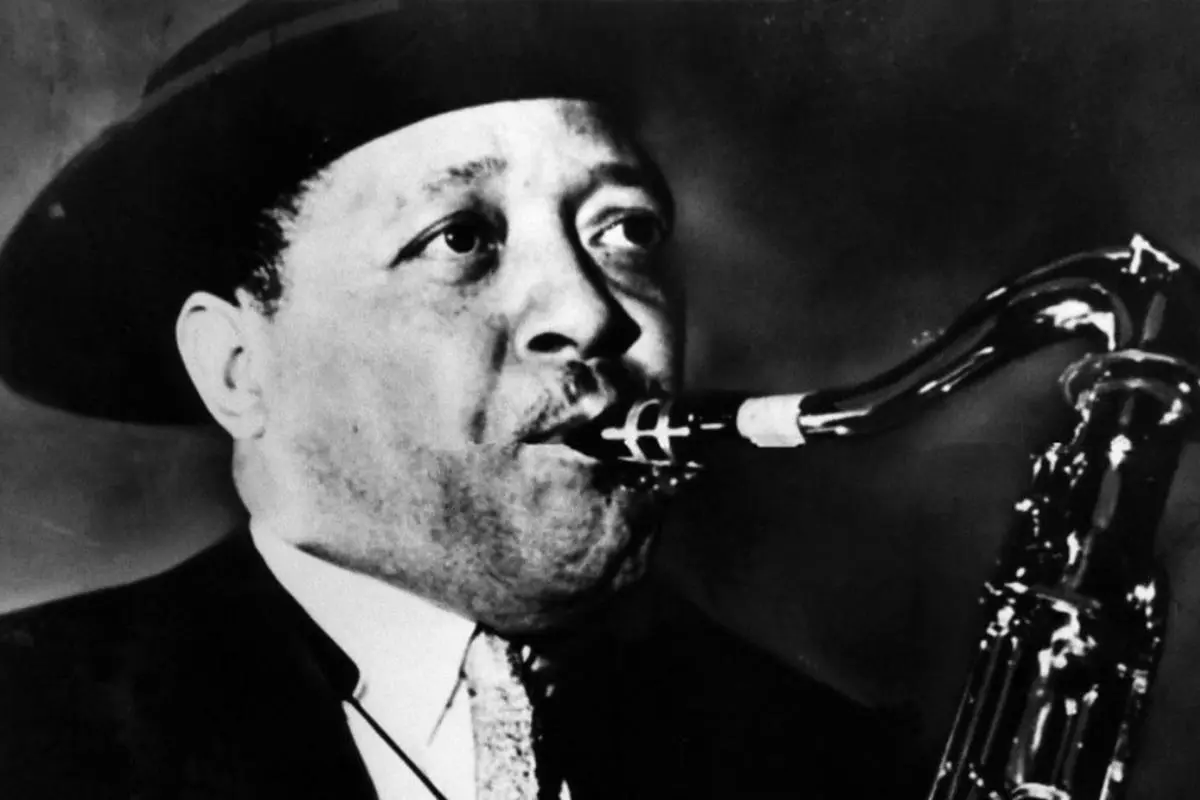
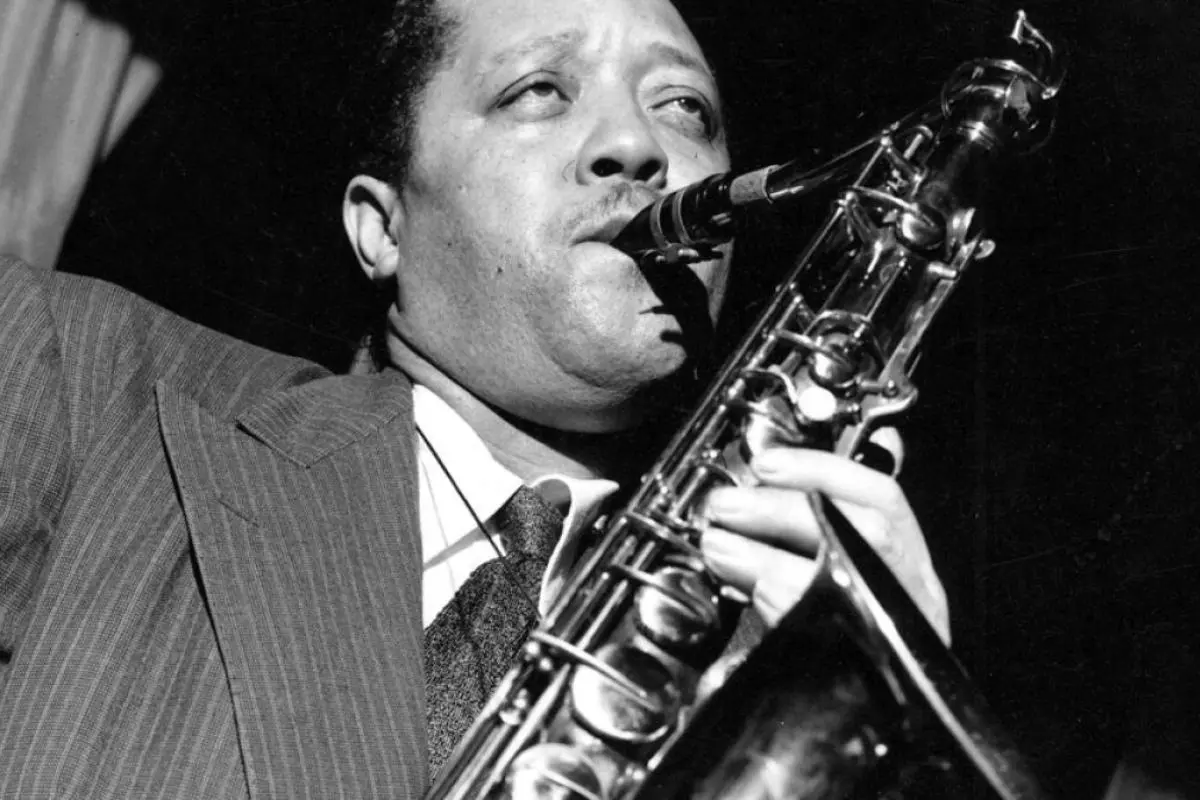
The porkpie hat became a lasting symbol of jazz style, but it also became shorthand for Young’s refusal to posture like a “hot” soloist. He often held the sax at an angle, and that physical stance seems to telegraph his artistic stance: not head-on aggression, but slantwise poetry.
From “hot” to “cool”: how Young rewired tenor sax language
In swing-era tenor battles, “bigger” and “louder” could win the room. Young’s rebellion was to prove that lighter could be stronger, as long as time feel and melodic logic were ruthless.
Where Coleman Hawkins leaned into a dense, harmonic, vibrato-rich authority, Young favored an airy tone, smoother articulation, and long, floating phrases. His lines often sounded like singing, not sermonizing, and that difference opened the door for modern tenor conceptions that prized space as a weapon.
What “cool” means in sound, not slogans
“Cool” is often misused as a personality label, but in Young’s playing it’s a technical and aesthetic package. Here is what you can actually listen for.
| Trait | What it sounds like | Why it mattered |
|---|---|---|
| Airy, light tone | Less buzz and bark, more breath and shimmer | Made subtle phrasing audible as drama |
| Relaxed time feel | Behind-the-beat glide without dragging | Turned swing into something conversational |
| Melodic economy | Motifs, repeats, gentle variations | Hooked listeners like a great pop singer |
| Space as structure | Rests that feel intentional, not empty | Gave later modernists permission to breathe |
The Basie years: where the “Pres” mythology becomes reality
Young’s most celebrated early platform was Count Basie’s orchestra, where his lightness acted like a laser cutting through big-band density. In that setting, his phrases did not compete with the band; they redirected it.
His nickname “Pres” (short for “President”) points to how other musicians heard him: not a sideman with a pretty sound, but a leader of taste. The Library of Congress summary of Young’s innovations captures him as a major figure whose approach changed jazz history, which is as close to an institutional understatement as you will ever see in music writing.
“He talked like he played”: slang, softness, and the politics of persona
Young’s private language is not a cute footnote. It was an extension of his self-protection and self-definition in a business that could be punishing, racist, and loud in every sense.
His lingo circulated through musicians and fans, helping jazz culture leak into American vernacular. If you want an edgy claim that holds up, try this: Young didn’t merely reflect hipness, he helped standardize it, turning insider code into a portable identity that later scenes would borrow.
The rougher truth: war, trauma, and the cost of being “cool”
It is tempting to romanticize Young’s quiet as Zen-like detachment. But a lot of that restraint reads differently when you remember what he endured in mid-century America, including military service and the way institutions treated Black artists.
Many accounts describe his later years as marked by declining health and heavy drinking. When you listen across decades, you can hear a musician whose early buoyancy becomes more fragile, as if the tone itself is carrying extra weight.
Recordings that prove the point (and what to listen for)
You do not need a jazz history degree to hear why Young mattered. Pick a track, and focus on how he enters a phrase, not just what notes he plays.
Starter list: the “tenor sax blueprint” playlist
- Basie-era features: listen for how Young rides the rhythm section rather than fighting it.
- Small-group sides: notice the intimacy, like he is speaking to one person at the bar.
- Later recordings: hear the vulnerability and the way he still shapes melody even when the tone thins.
If you want a practical exercise, steal this method: sing a Lester Young solo phrase-by-phrase before you touch the horn. His lines are built to be sung, and that is the secret behind their lasting influence.
Why everyone stole from him (even the players who didn’t admit it)
Young’s impact is not limited to saxophonists. His concept of understatement influenced phrasing ideals across jazz instruments, and his “cool” persona previewed the modern artist as a whole package: sound, look, language, and stance.
Wikipedia’s overview of his collaborations and legacy is broad but useful for a quick map of his deep association with Basie and his stature among the defining jazz voices of the 20th century.
Influence chain in plain English
- Tenor sax: a lighter, linear approach becomes a viable alternative to the Hawkins model.
- Cool jazz aesthetics: restraint stops being “weak” and becomes “advanced.”
- Pop culture: “cool” becomes a transferable identity, not just a musician’s in-joke.
The photographs: making “cool” visible
Young’s image is so strong that even people who can’t name a single recording recognize the silhouette: hat, coat, horn. The National Portrait Gallery’s portrait record for Young reinforces how his cultural imprint went beyond audio.
It is worth saying out loud: in a century of American music, very few instrumentalists became a visual archetype. Young did, and that matters when we talk about legacy.
Where to dig deeper (without drowning in trivia)
If you want more than legend, look for archives and library-level material, not just fan summaries. The National Jazz Archive in the UK is one of the key institutional hubs for jazz research and context.
For accessible commentary and curated journalism, the New York Public Library’s jazz guide can help you branch from Young into the broader ecosystem of swing and modern jazz.
And if you want a fun, readable profile that frames Young’s story for modern audiences, a narrative biography of Young emphasizes both style and personal complexity.
Steal his vibe responsibly: what musicians can learn from Lester Young
You cannot copy Young’s tone and expect it to sound authentic on your body and horn. But you can copy his values, and that is where the real lesson lives.
A practical “Pres” checklist
- Make time feel your superpower: practice with a metronome on 2 and 4, then on just beat 2.
- Use fewer notes: write a chorus using only quarter notes and eighth notes, then add ornaments.
- Phrase like a singer: breathe on purpose and let silence be part of your vocabulary.
- Choose elegance over volume: if you must shout, do it once and mean it.
Conclusion: the real scandal is how modern he still sounds
The most provocative thing you can say about Lester Young is also the simplest: a lot of jazz never fully caught up to him. He proved that softness could swing harder than aggression, that style could be substance, and that an instrumentalist could reshape everyday language.
Sixty-plus years after his death, “Pres” still feels like the future disguised as a porkpie hat and a half-smile.
Additional reading and context sources used once each: educational jazz history context provides broader listening frameworks; ongoing reporting and features about his legacy reflect continuing interest; and scholarly reference entries on major figures like Young offer deeper study.