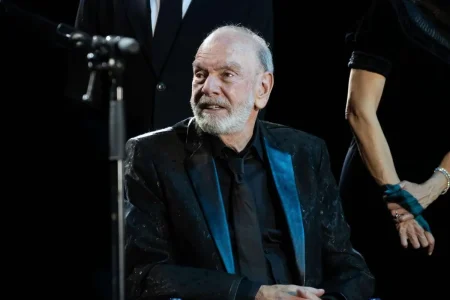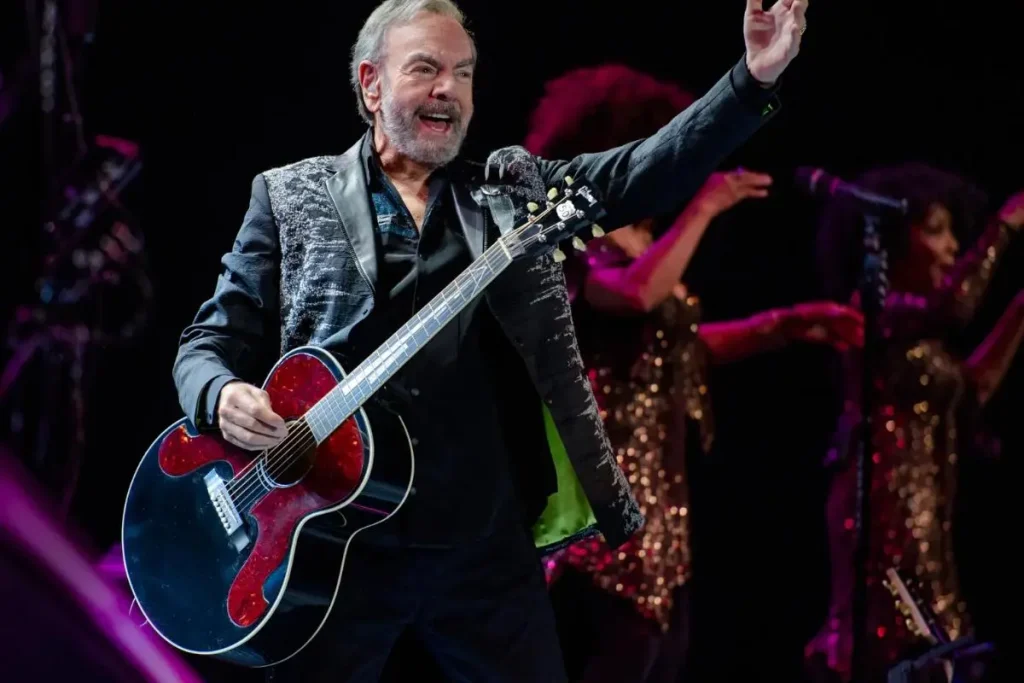
Neil Diamond’s origin story is the kind of narrative our culture claims to love – immigrant parents, a scholarship, a “sensible” career path, and then the moment a kid chooses art over safety. It is also the kind of story we secretly punish in real life, right up until it works. Diamond did not just write hits; he lived the long, humiliating middle stretch where nobody claps, the rent is late, and you keep writing anyway.
That’s why his catalog still hits older listeners in the gut. The melodies feel inevitable, but the life behind them was anything but. And if you want a provocative claim to chew on, here it is: Neil Diamond may be the most underrated architect of modern crowd singing, because “Sweet Caroline” is basically a three-minute social contract disguised as a pop song.
Brooklyn to the Brill Building: the job nobody romanticizes
Diamond grew up in Brooklyn and studied at New York University before leaving school to chase songwriting, a move that reads heroic now and reckless in the moment. The broad outline of that path – NYU, songwriting, early singles, then stardom – is well documented in standard biographical references.
Here’s what often gets skipped: early professional songwriting was not “creative freedom.” It was output, deadlines, and rejection, all in a business that could be brutally transactional. If you’re imagining a lone genius scribbling masterpieces, swap that image for someone clocking in, trying to get something cut, and living with the constant fear that he backed the wrong horse.
The “six years of nothing” are the real story
Diamond’s early success as a writer (including songs recorded by others) didn’t immediately translate into being a household-name performer. That gap matters, because it is where craft becomes muscle. His later “conversational” classics work because they are engineered to sound like a person talking across a table, not a performer lecturing from a stage.
“I’m a believer, I couldn’t leave her if I tried.”
Neil Diamond, “I’m a Believer” (as recorded by The Monkees)
Even the most famous “breakthrough” example, “I’m a Believer”, underlines the lesson: the big win came first through someone else’s voice, and the songwriter still had to decide whether to be satisfied behind the curtain. The song’s history and authorship are widely referenced in accessible summaries.
Why Neil Diamond insisted on singing his own songs
Plenty of writers stay writers. Diamond pushed to become the face and voice of his material, and that choice shaped how audiences relate to him. A Neil Diamond record is not just a tune; it is the guy selling you the tune, with a directness that can feel almost confrontational.
It also set him apart from many Brill Building contemporaries. Where others leaned into teen pop polish, Diamond leaned into adult emotion and big choruses. The “edgy” part is that he made sincerity sound like power, at a time when coolness was becoming a religion.

Diamond’s vocal persona: the secret weapon
Technically, he is not a nimble, acrobatic singer in the way later pop audiences got used to. But he has what matters for mass-sing material: strong midrange projection, clear diction, and phrasing that invites a listener to anticipate the next line. When people say his songs feel like “old friends,” they are describing arrangement and delivery choices, not nostalgia magic.
“Sweet Caroline”: the hook that escaped the record
“Sweet Caroline” is a masterclass in communal design. The verse sits comfortably in a singable range, the chorus rises without becoming a workout, and the title line is a rhythmic landing pad. The details of the song’s background and release history are commonly summarized in reference entries.
Then there is the myth question: who is Caroline? Over the years, Diamond has told versions that point to inspiration from a childhood photo of Caroline Kennedy, while also framing the name choice in practical songwriting terms. The “mystery” and shifting explanations around the song’s inspiration capture why the ambiguity persists.
The “BA BA BAAA” chant: not in the sheet music, but in the culture
The most famous part of “Sweet Caroline” is not technically the chorus. It is the crowd’s response – the call-and-response chant that turns a pop record into a ritual. That moment is a reminder that audiences co-author meaning, and sometimes they create the most durable “arrangement” of all.
From a musician’s perspective, the chant works because it lands on strong beats after a lyrical phrase that already feels like a downbeat. In plain English: it is easy to time, even if you have zero rhythm, three beers, and a mouth full of hot dog.
How Boston adopted “Sweet Caroline” (and why it spread)
Plenty of songs get played at sporting events. Very few become mandatory. Fenway Park’s relationship with “Sweet Caroline” is one of the most famous examples of a stadium tradition turning a catalog cut into a national chant, especially as it became closely associated with Red Sox games in the late 1990s and beyond, a story also echoed through Diamond’s official public-facing legacy.
Once a stadium ritual exists, it teaches the song to new generations faster than radio ever could. People don’t learn it as “a 1969 single.” They learn it as “the thing everyone does in the eighth inning.” That is a different kind of immortality, and it is arguably stronger.
Provocative claim: “Sweet Caroline” is a secular hymn
Look at what it does in a room: strangers lock into tempo, chant in unison, and experience a brief suspension of social boundaries. That is hymn behavior. The melody is the architecture; the crowd is the choir; the chant is the liturgy. You can roll your eyes, but you cannot deny the effect.
From stadiums to weddings: why Diamond’s songs function as family heirlooms
Diamond’s catalog is full of songs that feel tailor-made for life events: first dances, road trips, breakups, “remember when” moments. This is not accidental. He writes in plain language, with choruses that summarize emotional states in a sentence anyone can borrow.
That is why his work travels across generations. Younger listeners may not know chart positions, but they know the chorus their parents scream at barbecues. In a fragmented music world, that kind of multi-generational transmission is rare.
Quick anatomy of a Neil Diamond “always works” chorus
| Ingredient | What it does |
|---|---|
| Short title phrase | Gives everyone a handle to grab in real time |
| Stepwise melody | Keeps singing accessible for non-singers |
| Clear downbeats | Makes clapping and chanting idiot-proof |
| Emotional certainty | Lets people sing without feeling ironic |
The late-career pivot: Parkinson’s and the end of touring
In 2018, Diamond announced that he had been diagnosed with Parkinson’s disease and would retire from touring.
This is the part of the story where the inspirational posters usually show up. But the musically interesting angle is simpler: touring is not just income, it is the feedback loop that keeps a performer’s instrument sharp. Losing that stage removes a huge part of how a singer calibrates phrasing, stamina, and connection.
He stopped touring, not creating
Diamond’s public presence still reflects an artist whose identity is bigger than the road, and the broader business context matters too: how the recording industry measures itself keeps changing, even as legacy artists remain culturally active.
For fans, that distinction is emotional. For working musicians, it is strategic: if your identity is only “the tour,” then an illness or injury takes everything. If your identity is “the work,” you can adapt the output even when the format changes.
Legacy by the numbers (and why numbers are the least important part)
Diamond has been positioned by labels and catalog partners as a blockbuster seller for decades, often cited in the “over 100 million records” class of legacy acts. A mainstream overview of his career and long-running commercial stature reflects that framing.
Still, focusing only on units misses his real achievement: he wrote songs that people use. Not just listen to, but deploy – to celebrate, to flirt, to mourn, to belong. That is a deeper level of cultural function than chart peaks.
What musicians can steal from Neil Diamond (without copying him)
1) Write for the room, not the algorithm
Diamond’s biggest cultural moments now happen in spaces where streaming recommendations do not matter: stadiums, weddings, bars, family parties. If you can write a chorus that survives bad speakers and loud conversations, you have written something stronger than “playlist pleasant.”
2) Let your songs be co-owned
“Sweet Caroline” became a phenomenon because it stopped being a “Neil Diamond statement” and became a public ritual. The crowd’s chant is not copyrightable magic, but it is cultural capital. Great songs invite participation rather than demanding reverence.
3) Sincerity can be subversive
In eras where coolness is currency, open-hearted writing reads as dangerous. Diamond built a career on emotional directness that some critics mocked and millions of listeners trusted anyway.

Conclusion: the doctor fantasy, the songwriter reality
There is a delicious irony in the “pre-med dropout” framing: his parents wanted him to heal people, and he did, just by different means. When a stadium of strangers sings together, the effect is not trivial. It is communal therapy with a backbeat.
Neil Diamond’s story is not proof that every artistic risk pays off. It is proof that the only way the risk has a chance is if you keep writing through the years when nobody is listening. And when “Sweet Caroline” starts up and the room answers back, you are hearing the sound of persistence turning into tradition.