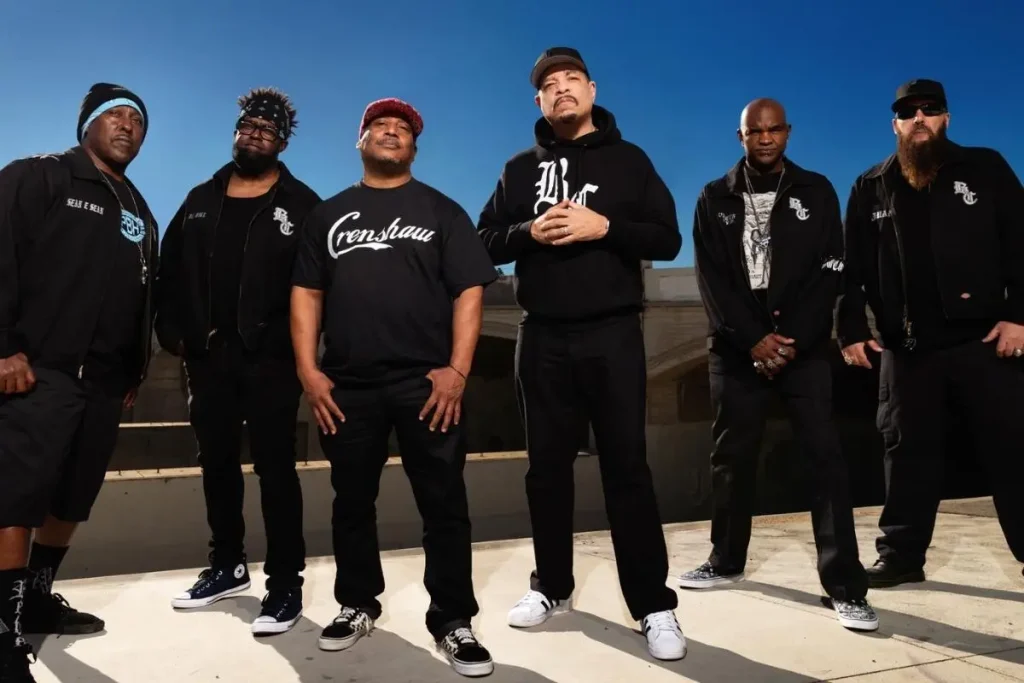
Body Count did not arrive politely. The band hit the early 1990s like a thrown brick through the window of music’s “stay in your lane” rulebook, with a rapper at the mic, a metal guitarist calling the shots, and songs that refused to separate entertainment from America’s ugliest headlines.
Officially formed in 1990 by Ice-T and guitarist Ernie C, Body Count became a lightning rod because it sounded dangerous and because it was willing to say the quiet parts out loud. Their musical DNA is a blunt blend of thrash metal, hardcore punk, groove metal, crossover thrash, and rap metal. Their lyrical focus is even sharper: police brutality, racism, gang life, political hypocrisy, and violence as lived reality, not movie scenery.
From “Ice-T’s live instrumentation” to a full-time metal band
Body Count’s origin story is more practical than mythical: Ice-T wanted a band behind him that could hit like rock, not just loop like rap. Before the name became a headline magnet, the earliest formation traces back to 1989 sessions around Ice-T’s album The Iceberg/Freedom of Speech… Just Watch What You Say! where future Body Count members played live instruments on select tracks, effectively road-testing the concept in real studio time.
That detail matters because it frames Body Count less as a “rapper tries metal” novelty and more as a continuity project – a working unit that grew out of Ice-T’s expanding musical toolbox. By 1990, Ice-T and Ernie C formalized the group as Body Count, with a lineup that would evolve over time but kept the same core engine: riff-driven metal under lyrics written like street-level editorials.
The sound: why Body Count is heavier than the “rap metal” label
Plenty of articles reduce Body Count to “rap metal” because it’s an easy shelf to point at in a record store. But the band’s best material plays like a collision of scenes: hardcore punk’s speed and slogans, thrash’s gallop and precision, and hip-hop’s rhythmic attack, all welded together by Ernie C’s guitar work and Ice-T’s unflinching voice.
If you want a quick map of what’s in the mix, here’s a practical breakdown of the ingredients listeners tend to hear – and what each one contributes in the band’s approach.
| Genre element | What it adds to Body Count | What to listen for |
|---|---|---|
| Thrash metal | Velocity and aggression | Palm-muted downpicking, rapid transitions |
| Hardcore punk | Directness and protest energy | Chanted hooks, short sharp structures |
| Groove metal | Weight and head-nod momentum | Mid-tempo riffs that hit like machinery |
| Crossover thrash | Scene-hopping credibility | Punk pacing with metal tone and tightness |
| Rap metal | Rhythmic vocal phrasing and swagger | Locked-in cadence riding riffs, not beats |
What makes Body Count distinct is how “unblended” the blend can feel. They do not sand down metal’s edges to accommodate rap, and they do not soften rap’s bite to fit rock radio. It is purposely confrontational music – a sonic posture that matches their topics.

The lyrics: social issues with teeth (and consequences)
Body Count’s lyrical reputation is built on subject matter that many artists circle, hint at, or metaphorize. Ice-T tends to do the opposite: he states the scene, names the power structure, and then lets the audience deal with the discomfort. The band’s recurring themes – police brutality, politics, violence, gang life, and anti-racism – are not just “content,” they are the band’s whole point.
That is why Body Count regularly gets discussed in the same breath as American debates around censorship, corporate pressure, and whether angry art is “dangerous.” The controversy did not appear because the band was subtle. It appeared because the band was legible.
“The record is not about killing cops. It’s about killing the idea of police brutality.”
Ice-T, via Reuters
Ice-T has repeatedly argued that the most infamous Body Count song was written from a character’s perspective and aimed at exposing rage and injustice rather than advocating real-world harm; that framing sits within the broader public record around music-industry institutions and their handling of controversial work. You do not have to agree with the artistic choice to see the blueprint: Body Count uses extreme language the way horror films use extreme imagery – to force a reaction, to make the audience confront what they would rather ignore.
“Cop Killer”: the track that became a national argument
No Body Count history is complete without acknowledging “Cop Killer,” the track that turned the band into a cultural flashpoint. The song drew condemnation from political figures and organizations, and it put enormous pressure on the band and their label. The dispute became part music controversy, part free speech debate, and part public relations crisis that set a template for how America handles offensive art: amplify it, panic about it, then argue about it for decades.
One reason the story still matters is that it was never only about one song. It was about who gets to speak, what kinds of anger are considered “unacceptable,” and why fictional violence in one genre can be tolerated while political rage in another becomes a scandal. You can read the band’s own framing of its identity and history through the band’s official site and current presence, which keeps the project alive long after the early 1990s media storm.
The band members: the early core and what it represented
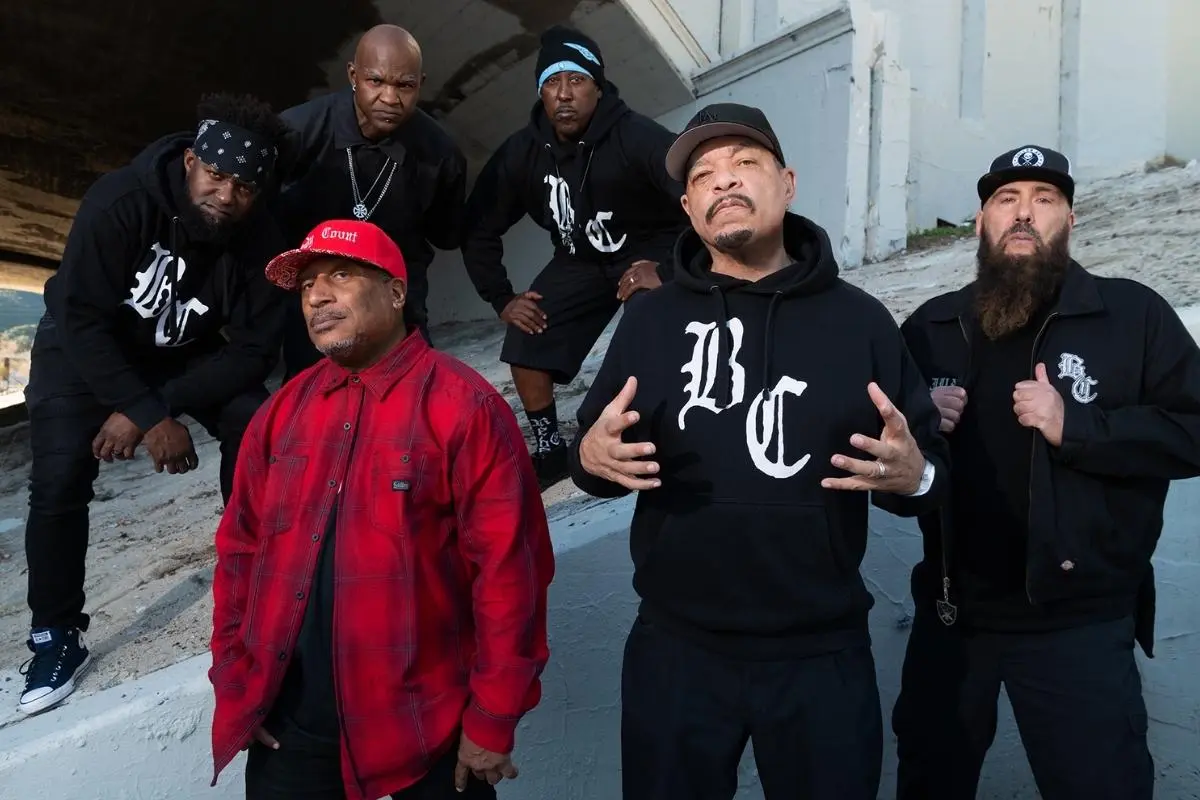
Body Count’s early lineup is often described as a meeting of worlds: Ice-T as the famous rapper stepping into metal, and Ernie C as the guitarist with the musical authority to make it real. Around them were key players who helped define the band’s feel and credibility, including bassist Mooseman and drummer Beatmaster V in the formative era (both later deceased).
That core matters for a musical reason, not just a biographical one. A “rap artist plus metal backing band” can easily sound like a feature. Body Count aimed to sound like a band that happened to have a rapper as vocalist. The difference is discipline: tight stops, aggressive arrangements, and a rhythm section that treats riffs as the song’s spine, not decoration.
Body Count’s long game: awards, late-era relevance, and why they didn’t fade
Many 1990s “genre collision” acts burned brightly and then became nostalgia. Body Count’s arc has been messier, heavier, and surprisingly durable. The band continued releasing records across decades, and their later work re-centered them as a modern political metal act rather than a historical footnote.
That durability is reflected in major-industry recognition: Body Count won the Grammy Award for Best Metal Performance for “Bum-Rush,” an achievement reflected in their broader notoriety around key songs like “Cop Killer” and the long tail of their public reception. They followed with another win for Best Metal Performance at the 65th Annual Grammy Awards for “Fck What You Heard.”
Grammys do not “prove” a band’s artistic value, but they do show something else: Body Count stopped being a one-controversy story. They became a continuing metal institution that still competes in the present tense.
How to listen to Body Count if you only know the headlines
If your knowledge begins and ends with “that one scandal,” you are missing what makes the band musically and culturally interesting. Here is a practical way to approach the catalog without turning it into homework.
1) Start with the riffs, not the controversy
Pick a track where Ernie C’s guitar tone and structure take center stage, then follow how Ice-T places his cadence against the riff. The “trick” is that the vocals often function like another percussion instrument, pushing the groove forward rather than floating above it.
2) Pay attention to perspective
Ice-T frequently writes in character, reporting out from a viewpoint that can be ugly, frightened, furious, or morally compromised. That is not an endorsement. It is a storytelling choice that aims to show how violence and power feel from inside the pressure cooker.
3) Treat the band as part punk, not only metal
Body Count’s punchiness owes a lot to hardcore punk’s “say it fast, say it plain” tradition. If you listen for that, the band’s blunt choruses and confrontational pacing make more sense.
Why Body Count still matters: a band that weaponized genre to tell the truth
Body Count’s big idea is not just “rap plus metal.” It is that rage has genres, and America tends to police which ones are allowed to sound legitimate. By welding hip-hop’s street reporting to metal’s physical intensity, Ice-T and Ernie C built a format where social critique could be as loud as a riot and as specific as a news report.
Even the basic fact of the band’s creation – a rapper and a guitarist building a real metal band in 1990, after testing the chemistry in earlier sessions – reads like a refusal to accept borders. Love them or hate them, Body Count remains proof that heavy music can be both visceral and political without apologizing for either.
And if that still makes people uncomfortable, that is the point.
Further listening and viewing
For a quick sense of how Body Count presents itself publicly across eras, their verified streaming and video presence provides an easy cross-section of releases and performances.
If you want the band’s own current framing – not a retrospective – start with their official site and see how they describe their mission, members, and ongoing work.
Note: Some specific track-by-track session credits for the 1989 Iceberg album can be difficult to verify on open-access databases due to paywalls or access restrictions. Where details are contested or hard to confirm, it’s best to rely on broadly corroborated band history and interviews rather than over-precise studio claims.
Conclusion
Body Count formed in 1990, but the idea behind them was already brewing: take the truth-telling bite of rap, bolt it to the force of metal, and write lyrics that stare directly at power. The result is a band that does not just soundtrack controversy – it explains why the controversy exists in the first place.