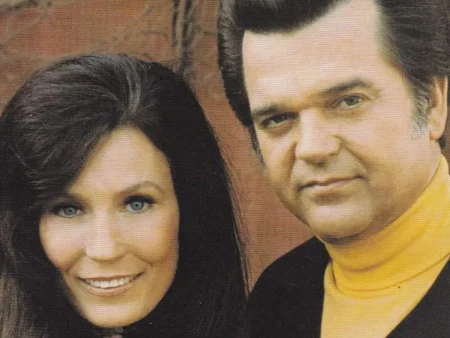
Country music loves a “power couple” story – but George and Norma Strait never played that game. They didn’t build a brand as a duo, didn’t chase red-carpet relevance, and didn’t sell their marriage as a marketing angle.
Instead, they built something rarer: a long-running partnership that existed before the fame, survived it, and kept going after the kind of heartbreak that breaks most people. If modern celebrity culture runs on oversharing, the Straits ran the opposite direction – and, in a strange way, that privacy became part of the legend.
High school sweethearts (before “King George” was a thing)
George Strait and Norma Voss dated while still in school in Texas, long before stadium tours and record-setting chart runs became the family business. Their story is the kind that feels almost fictional now: small-town roots, teenage romance, and a future that wasn’t supposed to turn into a worldwide career.
That “normal life first” foundation matters because it explains a lot about George’s public persona. In an industry that rewards drama, George Strait’s image is famously steady – and the stability starts at home.
One straightforward outline of their early relationship (including their school-years start and preference for privacy) is summarized in a mainstream biography profile.
The Mexico elopement: romantic, rebellious, and very Strait
They didn’t wait for a big showy wedding. George and Norma eloped to Mexico and married on December 4, 1971, then later held a small hometown ceremony in Texas – a detail that fits their entire style: do it for yourselves, then do something modest for family.
There’s an edge to that choice that often gets overlooked. In traditional circles, eloping can be seen as defiant – a refusal to let social expectations dictate your timeline. For the Straits, it reads like an early declaration of how they’d handle the spotlight later: quietly, on their terms.
A widely circulated feature on Norma’s low-profile role in George’s life also notes their early marriage and long-standing partnership.
Army life in Hawaii: where the stage lights first turned on
After marrying, George enlisted in the U.S. Army and the couple moved to Hawaii. This is one of those “sliding doors” chapters: remove it, and you arguably remove the beginning of George Strait the performer.
In Hawaii, he began playing music more seriously and performed with an Army-sponsored country band. The idea that the most traditional superstar in modern country got his early reps far from Nashville – on an island chain in the Pacific – is deliciously ironic.
Strait’s service-era performance experience has been described as a key part of the origin story.
Why Hawaii mattered musically
Hawaii is famous for its own deep musical identity, from slack-key guitar to local pop traditions, but Strait didn’t “go Hawaiian” stylistically. Instead, the distance from Texas and the routines of military life likely intensified what he already loved: straight-ahead country music, danceable tempos, and clean storytelling.
It’s also worth noting that being stationed away from the industry machine can keep an artist from absorbing trendy influences too early. In a sense, the isolation may have protected the core Strait sound before it even had a name.
Back to Texas: family first, gigs second, ambition always
George was honorably discharged in 1975. George and Norma returned to Texas with their daughter, Jenifer, born in 1972. He attended Southwest Texas State University (now Texas State University) and continued playing music while building the rest of his life like a regular guy with an irregular talent.
That “regular guy” part matters. Plenty of artists talk about being humble; Strait lived it by keeping one foot in everyday reality. For Norma, it meant being married to a man chasing music seriously – but not yet profitably.
1981: “Unwound,” a breakthrough, and a bigger family
George Strait’s first major-label single, “Unwound,” hit in 1981 and helped establish him as a new kind of star: modern, but not pop; youthful, but rooted in older country traditions. His rise is often discussed as a corrective to slicker trends in country at the time – a reset button for barroom authenticity.
That same year, George and Norma welcomed their son, George “Bubba” Strait Jr. In other words: while the industry was starting to pull him outward, the family was pulling him inward. That tension is a recurring Strait theme.
An overview of his early recording career and family basics appears in a standard reference bio.

The private tragedy that changed everything
In 1986, the Straits’ daughter Jenifer was killed in a car accident. She was 13 years old. Even in a genre that trades heavily in sadness, this is real-life grief that can’t be “written into a song” and resolved in three minutes.
George and Norma rarely speak publicly about the loss, and that restraint has sometimes been misread as emotional distance. It’s more accurate to see it as discipline: the refusal to turn personal trauma into public consumption. That choice is edgy in its own way, because it rejects how celebrity grief is usually monetized.
“Norma and I are so blessed that we found each other … and were able to do all of this together, experience this life together, to support each other through everything, good times and bad.”
George Strait (quoted in Biography.com)
How they honored Jenifer without turning it into a headline
Public details are limited, but the couple’s efforts to keep Jenifer’s memory tied to community giving rather than publicity are often noted. Local civic records and archives around Kerrville reflect the ongoing public recognition connected to the family’s legacy.
Norma Strait: the most powerful person in the Strait universe
Here’s the provocative claim: Norma Strait might be the most under-credited figure in modern country history. Not because she wrote the hits or booked the tours, but because the environment that allows a career like Strait’s to remain consistent for decades is a domestic one.
George Strait’s brand is “no scandal.” That’s not accidental in a business that practically breeds temptation. It’s a set of choices, repeated for decades – and those choices are easier to make when the relationship is older than the fame and anchored in mutual trust.
One entertainment bio feature emphasizes that Norma has remained largely out of the public eye despite decades of superstardom.
The numbers are absurd (and they’re part of the love story)
George Strait’s career stats are so big they can sound like myth: a towering catalog of hits, tours that define eras, and a reputation as the “King of Country.” The key detail for this story is simple: Norma was there for the climb, not just the victory lap.
His record-setting achievements on country charts underscore the historic scale of his run.
Industry recognition of his enduring impact and airplay dominance has also highlighted Strait’s staying power across decades.
A quick timeline (because this story spans generations)
| Year | What happened |
|---|---|
| 1971 | George and Norma elope to Mexico and marry (Dec. 4); later hold a small Texas ceremony. |
| 1972 | Daughter Jenifer is born. |
| 1975 | George is discharged from the Army; the family returns to Texas. |
| 1981 | Major-label breakthrough with “Unwound”; son “Bubba” is born. |
| 1986 | Jenifer dies in a car accident at age 13. |
Why their marriage works when so many celebrity marriages don’t
It’s tempting to reduce their longevity to “they’re just good people.” That’s a comforting answer, and it’s probably partly true. But it’s also incomplete.
A more realistic explanation is that they built a system: privacy, routine, boundaries, and a shared identity that isn’t dependent on fame. The Straits didn’t “perform” marriage for the public, which means the relationship didn’t have to collapse when the public got bored.
Three lessons musicians can steal from the Straits
- Protect the private life: If everything is content, nothing is sacred.
- Let the work be the headline: Strait’s reputation is built on songs and shows, not stunts.
- Choose a partner who knew you before the spotlight: Fame tests motives, and history helps.
Strait’s “traditional” image is more radical than it looks
George Strait is often framed as conservative or old-school, but there’s a rebellious streak to how he and Norma live. In a culture that demands access, they refused it. In an industry that rewards chaos, they chose steadiness.
That’s not boring – it’s disruptive. And it might be the most instructive “career move” of all: build the life first, then build the legacy.

Conclusion: the real duet is the one you never see
George Strait’s voice carried a generation of country fans, but the quiet harmony underneath it all has been his marriage. George and Norma Strait’s story is proof that the biggest myth in music isn’t about fame – it’s that fame has to cost you everything.
The Straits didn’t beat the odds by being loud about love. They beat the odds by staying stubbornly private about it, year after year.