NBC ordered a Christmas special. Colonel Tom Parker promised them one: Elvis in a tuxedo, twenty carols, goodnight America. What aired on December 3, 1968 instead was an hour of black leather, sweat and hunger that saved Elvis Presley’s career — and it exists only because a 23-year-old-at-heart director decided to ignore practically everyone.
The lowest point nobody names
It’s easy to forget how far Elvis had fallen by 1968. He hadn’t performed in front of a live audience in more than eight years; the movie machine had ground him into a punchline — three formula pictures a year, soundtracks he was openly embarrassed by — while the Beatles, Stones and Hendrix remade the world he’d invented. The teenager who scared America had become wallpaper. The NBC special, sponsored by a sewing-machine company, was conceived as more wallpaper: a safe seasonal hour, per the Colonel’s plan.
Director Steve Binder had other ideas, and — crucially — the nerve to pitch them to Elvis directly. His argument, as he has retold it for decades, was blunt: the special was a make-or-break moment, a chance to show who Elvis actually was rather than what he’d been packaged into. Do the Christmas hour, and nothing changes. Take the risk, and maybe everything does. Elvis — bored, restless, and by Binder’s account desperate for exactly this permission — chose the risk. The Colonel fought it to the end.
The accidental invention of Unplugged
The special’s masterstroke came from eavesdropping. Binder noticed that the real magic happened off-camera, in the dressing room, where Elvis jammed loose and joyful with his old bandmates — so he simply put the dressing room on stage: a small boxing-ring platform, an audience close enough to touch, Elvis in black leather with an acoustic guitar and the musicians of his youth, including original Sun sideman Scotty Moore and drummer D.J. Fontana, playing on chair backs and guitar cases.
Nobody had put a superstar in that format before. The sit-down section — loose, funny, ferocious, self-mocking — is the direct ancestor of every “unplugged” performance that followed, and it captured something television had never shown: Elvis enjoying himself. The leather suit, improvised by costume designer Bill Belew, gave the rawness a uniform. Twenty years of iconography came out of one staging decision.
The Colonel did not surrender the yuletide entirely — a single “Blue Christmas” survives in the sit-down section, tossed off with a grin that makes it sound anything but seasonal — and the shrewdness of that token gesture summed up the whole production war. Binder gave Parker exactly enough to claim a Christmas number existed, and spent every other minute of airtime on resurrection.
The show around the jam sessions had scale, too: production numbers, a gospel segment that reached back to the church music Elvis loved most, and the guitar-shaped “ELVIS” in lights that has been quoted by stage designers ever since. But everything orbited the small stage. Television had never seen a superstar placed that close to an audience, with that little protection.
“If I Can Dream”
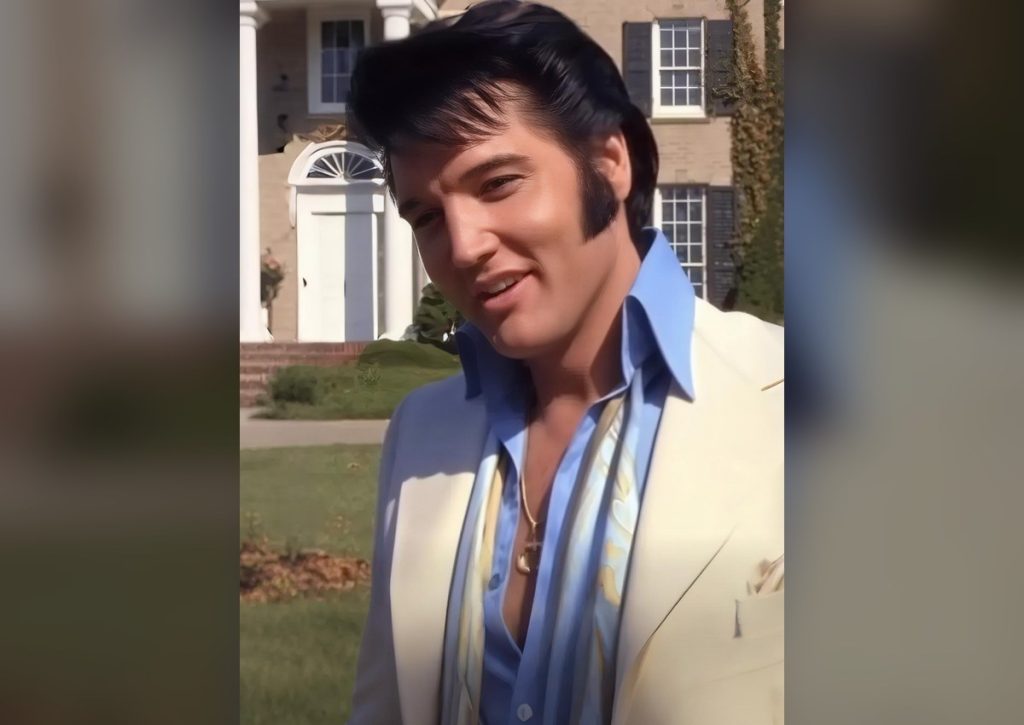
The other decisive battle was the ending. The Colonel wanted a Christmas song to close. Binder wanted a statement — and after Robert Kennedy’s assassination that June, with Martin Luther King murdered in Elvis’s own Memphis two months earlier, he asked songwriter Earl Brown to write one overnight. “If I Can Dream” — part gospel, part plea — was everything Parker hated and everything Elvis, who recorded it with his eyes closed and his fists clenched, had apparently been waiting years to sing. It closed the show in the white suit, and it remains among the most committed vocals of his life.
The audience verdict was immediate: the special topped the week’s ratings and became the season’s most-watched program, pulling an enormous share of the viewing public. The industry verdict followed within months — a return to serious recording in Memphis that produced “In the Ghetto” and “Suspicious Minds”, and then the Las Vegas engagement that relaunched him as a live performer for the rest of his life.
The night, and what it teaches
The ’68 special endures because it’s the rarest thing in pop culture: a manufactured television event that accidentally told the truth. Strip away the career stakes and what remains on screen is a 33-year-old man rediscovering, in real time, that he is Elvis Presley — leaning into the microphone on “One Night” until the take collapses into grinning chaos, sparring with Scotty like the Memphis kid he’d been before the whole strange rocket ride began.
Parker’s Christmas special would have aired, rated respectably, and evaporated. Binder’s gamble produced the template every faded icon has reached for since: go back to the small room, the first songs, the thing you could do before the machine found you. They call it a comeback. What it actually was, for one hour of American television, was an escape.