Dolly Parton spent the last months of her life keeping the details of her illness to herself. According to her younger sister, she spent part of that time thinking about what her doctors might be able to learn from her.
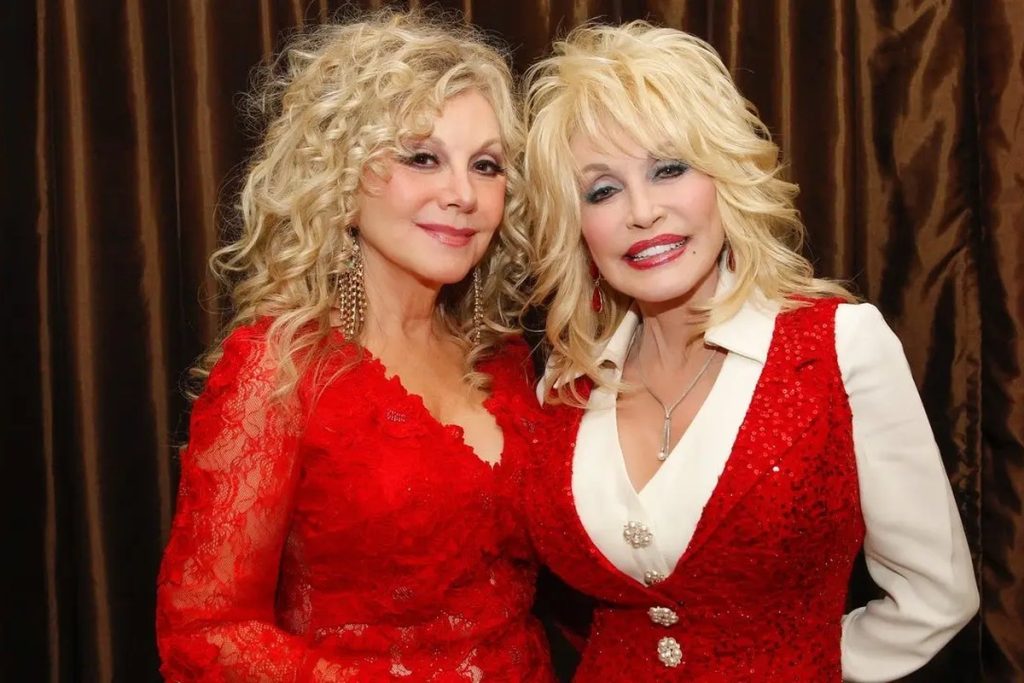
In a statement released on Thursday, two days after Dolly died at 80, Stella Parton said her sister had told her that if her own treatment reached a dead end, she wanted her medical team to keep going anyway — on her, with drugs that had not been proven, in the hope that something useful might come of it for somebody else.
“My sister was one of the most generous, thoughtful and kind people I’ve ever known,” Stella wrote. “What the world saw is exactly who she was, so much so, she told me recently that if there was no hope for her, she would still allow her medical team to try experimental drugs in the hope of helping others in the future.”
What the statement actually says
The line has been picked up almost everywhere, and it is worth being precise about it, because at least one outlet has framed it more definitively than the statement supports. WVLT, the East Tennessee station that carried the full text, summarized it as though the treatment had gone ahead, writing that the singer “allowed medical teams to try experimental drugs to treat her cancer.” Stella’s own words are conditional. What she describes is a willingness her sister expressed — if there was no hope — not a course of treatment anyone has confirmed took place. Fox News and Parade both kept the conditional intact. Nothing released so far says what, if anything, was actually tried.
There is a smaller discrepancy about where the statement appeared. Fox News and WVLT both point to Stella Parton’s official Facebook page; Parade cites an Instagram post. It appears to have gone out on both.
The Tuesday morning coffee
The rest of what Stella wrote has less to do with medicine than with mornings. She described a ritual the two of them had kept for years: a phone call before dawn every Tuesday, coffee in hand, which the sisters called their “kaffeklatsch.”
“Every Tuesday about this time, before the sun came up and the world was still asleep, she and I for many years had our coffee together over the phone,” she wrote. “Being little farm girls we’ve continued to be early risers. As she liked to say; ‘shoot Tedda we get more work done before the sun comes up than most folks do all day long!'”
Tedda was Stella’s family nickname. The calls were for gossip and plans, the ordinary business of two sisters who had known each other their whole lives. “My Tuesday morning coffee time will never be the same,” Stella wrote, “but her love, respect and goodness will remain.”
Dolly died on a Tuesday.
The statement also carries a flash of the humor that ran between them. Stella admitted she was the one who complained about the world. Her sister was not. “I would criticize and complain about it and she would laugh and say; ‘shoot Tedda, we’ve got more important things to do than worry about their silly asses.'”
A diagnosis the public never got to see
Parton had told fans earlier this year that she was having health problems, but she never said what was wrong, and she never gave them a prognosis. That reticence held right to the end. Her death was announced on Tuesday afternoon, and People reported that her team had confirmed she died after a brief battle with cancer. The type of cancer has not been disclosed. Her team has separately said she was working almost to the end, and gave an update on the projects she left unfinished.
That gap between what was known publicly and what was happening privately is part of why Stella’s statement landed the way it did. For two days the coverage had been retrospective — the songs, the businesses, the Imagination Library, the sheer scale of a career that ran from the Porter Wagoner show to a Glastonbury headline slot. Stella’s account was the first time anyone close to her had described the last stretch of it from the inside, and what she chose to describe was not suffering. It was her sister trying to be useful.
What the family has asked for
Stella did not ask for flowers or for silence. She asked for something closer to imitation.
“My sister was always thinking of others and if you want to honor her legacy, show more kindness, lift others up and give more of your time and resources as she continued to do to the very end,” she wrote.
The family has released funeral plans and asked that tributes take the form of generosity, pointing people toward the Imagination Library, the book-gifting program Parton founded in 1995 and which has now sent well over 200 million books to children. The Grand Ole Opry has announced a tribute of its own. Elsewhere the tributes have kept coming — Harry Styles stopping his Madison Square Garden residency to acknowledge her, Chris Stapleton reworking one of her number ones, Willie Nelson marking the end of a sixty-year friendship, Stevie Nicks remembering a week in the studio with her as a master class.
Stella closed on the same note she opened with, which was not really about dying at all.
“She left the world a better place by being in it so let’s follow her example.”