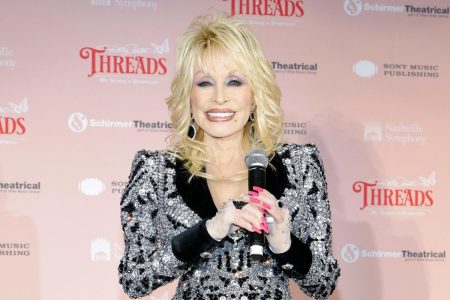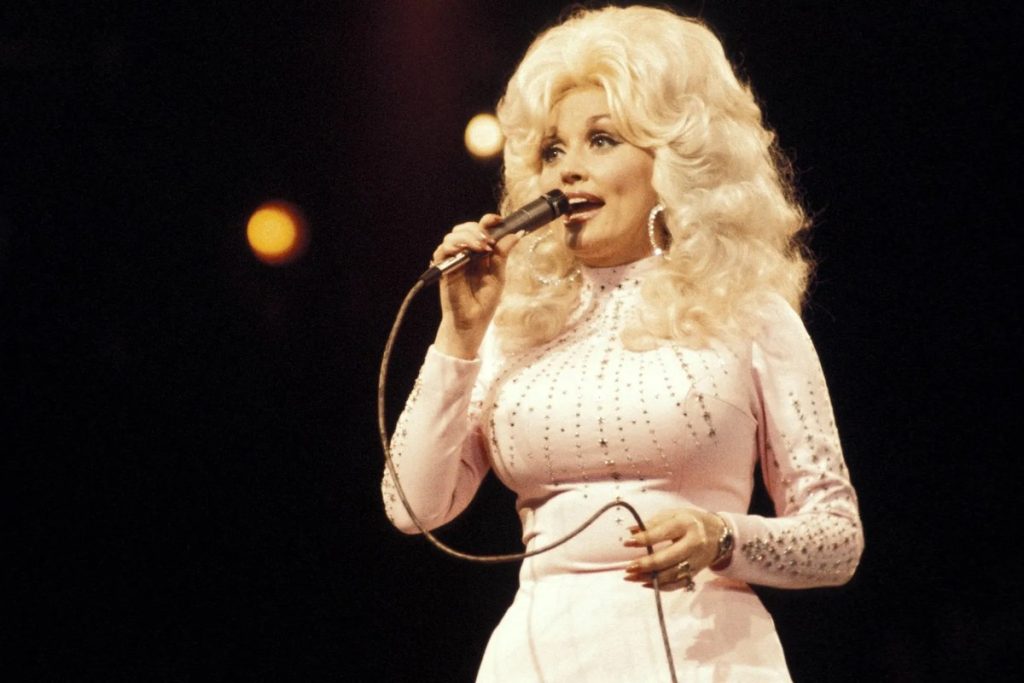
Dolly Parton died peacefully on Tuesday in Nashville, Tennessee. She was 80. No cause of death has been given.
The announcement did not come from a publicist. It came from her family, in a video posted to Parton’s own Instagram account, delivered by her nephew Bryan Seaver — the son of her sister Cassie Parton. “Dolly has lived in the light, and is in the arms of Jesus,” Seaver said, “surely met by Carl, her parents, and countless others who have watched her and longed for her to meet them in the heavens.” He added that his aunt “opened doors, not just for me, but for her entire family to reach the potential we didn’t even know was possible.”
The written family statement that followed described “a rhinestone life that shone bright enough for the world to see,” and said Parton would “forever stand as an inspiration not only through her timeless music and prolific songwriting, but also her wit, warmth and kindness.”
The Carl in Seaver’s video is Carl Thomas Dean, Parton’s husband of 59 years, who died in 2025 at 82. Theirs was one of the most determinedly private marriages in American public life — Dean almost never appeared alongside her — and in the months after his death Parton spoke candidly about how heavily the loss had landed on her.
That context is worth stating plainly, because this was not quite the bolt from nowhere the headlines make it look. In May she canceled a run of Las Vegas dates and disclosed that she had been treated for kidney stones over a period of several years. She was nevertheless still talking about unfinished business in interviews published only days ago, saying she had a great deal she still wanted to achieve. Her family has drawn no line between any of that and her death, and neither should anyone else until they do.
From Locust Ridge to the Opry stage
Dolly Rebecca Parton was born on 19 January 1946, the fourth of twelve children, in Locust Ridge, Tennessee, in the Great Smoky Mountains. The poverty was genuine and she never dressed it up, but she never treated it as a source of shame either — it became, instead, the raw material for a great deal of her best writing. Her uncle Bill Owens bought her a guitar and pushed her toward performing. She was appearing on Knoxville television by the age of 10 and made her first guest appearance at the Grand Ole Opry at 13.
She left for Nashville the day after her high school graduation in 1964. Early singles for a small Louisiana label and then for Mercury went nowhere. The break came in 1967, when she joined The Porter Wagoner Show — the partnership that made her a household name, and the one she eventually had to fight her way out of.
The songs, and the business she built on them
Her first solo number one was “Joshua” in 1971. Then came 1974, and a run that would have made a career on its own: “Jolene,” “Love Is Like a Butterfly” and “I Will Always Love You,” the last of them written as a farewell to Wagoner as she went out on her own. It is the sharpest illustration of who she was as a businesswoman. Elvis Presley wanted to record it; his management wanted half the publishing in exchange. She said no, and kept her copyright. Whitney Houston’s 1992 version subsequently became one of the best-selling singles ever released, and every cent of the songwriting went to the woman from Locust Ridge.
In 1977 she crossed into pop with Here You Come Again, her first platinum record, and by 1980 she was starring opposite Jane Fonda and Lily Tomlin in 9 to 5 and writing its theme. Film and television took up more and more of her time until, as she put it, she had had enough of being managed: “I loved doing television, but it tied me down. I don’t want to belong to anything that owns me.” She launched her own label, Dolly Records, in 2007.
Along the way she collected 11 Grammy Awards, four Emmys, a Recording Academy Lifetime Achievement Award, the National Medal of Arts, Kennedy Center Honors, a Library of Congress Living Legend Award and, in 2025, the Motion Picture Academy’s Jean Hersholt Humanitarian Award. She is a member of the Nashville Songwriters Hall of Fame, the Songwriters Hall of Fame, the Country Music Hall of Fame and the Rock & Roll Hall of Fame. Her own verdict on all of it was characteristically dry: “I am proud of the awards, but I am prouder of the work.”
What she actually leaves behind
Two things, mostly, and neither is a record.
The first is Dollywood, the theme park she opened in East Tennessee in 1985, built in the mountains she came from and now one of the South’s biggest tourist draws. The second is the Imagination Library, which posts one free book a month to children from birth to the age of five. It began in her home county and has since spread across the United States and into England and Australia. In lieu of flowers, her family has asked that donations go to it.
At Parton’s own request, only a small private service will be held, for immediate family. Fans have been asked to pay their respects publicly instead — by tagging her on social media, or leaving a message at dollyparton.com.
There is a line of hers that has been quoted a great deal in the past few hours, and it holds up better than most epitaphs: “If you don’t like the road you’re walking, start paving another one.” She paved a good many, and then let an extraordinary number of other people walk down them.