
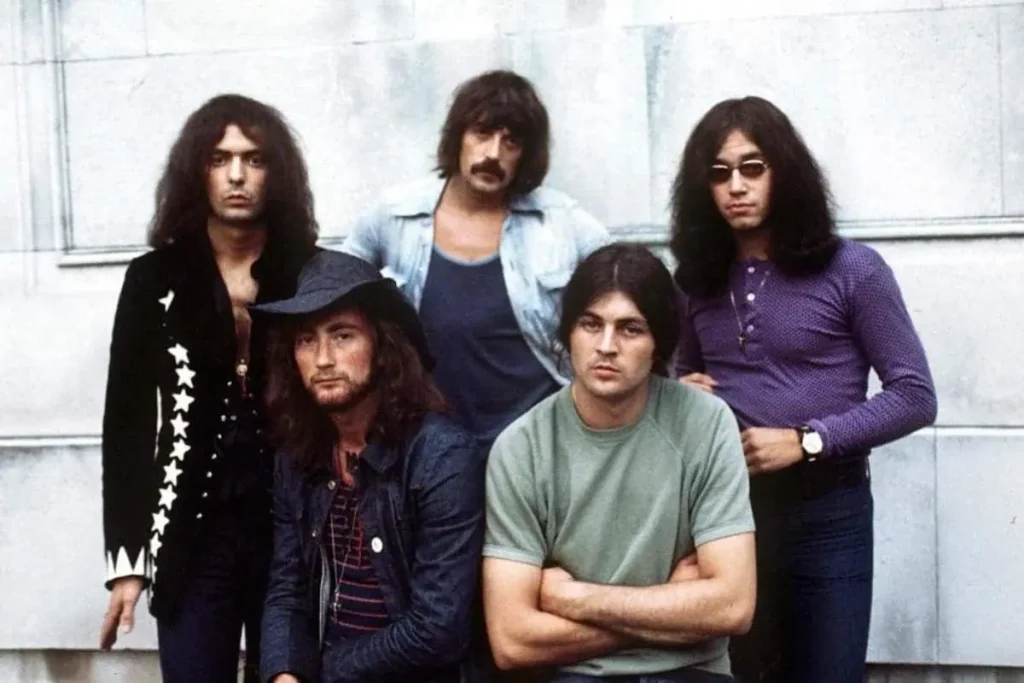
Deep Purple’s Mark II era did something that still feels slightly illegal in rock: it promoted the keyboardist from “texture guy” to co-lead combatant. Jon Lord’s Hammond was not a polite harmonic cushion under Ian Gillan’s vocal. It was a second front-line weapon, trading phrases, interrupting, provoking, and sometimes sounding like it wanted to win the song by force.
That “organ vs. voice” dynamic helped codify a hard-rock template: singer as lead instrument, keyboard as lead instrument, guitar as third act of arson. In the most electric Purple moments, Gillan and Lord behave like two soloists in a duel, and the band becomes the engine that keeps the fight fair.
The hard-rock move nobody saw coming: keyboard as co-lead
Before Purple’s heaviest peak, rock keyboards were often about color, pads, and polite fills. Lord treated the Hammond like a hot-rodded amp head with keys attached, pushing it into distortion and bite until it could stand in the same lane as Blackmore’s guitar.
This is not a minor arranging choice. It changes how the whole band breathes: when the organ can punch and sustain like a horn section and a rhythm guitar at once, the singer can phrase more aggressively, because there is a second melodic partner to answer back.
What “organ vs. voice” actually sounds like
On Mark II recordings and especially on stage, Lord commonly answers Gillan with three main tactics. Think of them as the Hammond’s three trash-talking dialects.
- Percussive stabs: short, blunt chord hits that punctuate Gillan’s ends of phrases.
- Fast runs: lines that mirror the vocal’s intensity rather than its exact notes, like a shadow sprinting next to the melody.
- Long, sustaining tones: notes that sit under Gillan like a second throat, reinforcing drama and pitch gravity.
The result is the charged feeling Purple fans describe as “live danger.” It is not only improvisation. It is structure built to feel like a brawl.
“The Hammond organ produced the sounds I wanted…I could get sustain and distortion, and it became part of my identity.”
Jon Lord, quoted in his obituary in his obituary
Why it hit hardest in 1970-73: Mark II’s internal physics
The Mark II lineup (Gillan, Blackmore, Glover, Paice, Lord) is often praised for raw firepower. The more interesting truth is that their most famous “heavy” moments are usually interlocking parts, not just loud parts.
Lord’s classical instincts and Gillan’s visceral attack created productive friction: ornate harmonic motion under a singer who could turn a single syllable into a siren. That tension becomes a signature: grand, almost baroque harmonic language in an unapologetically hard-rock frame.
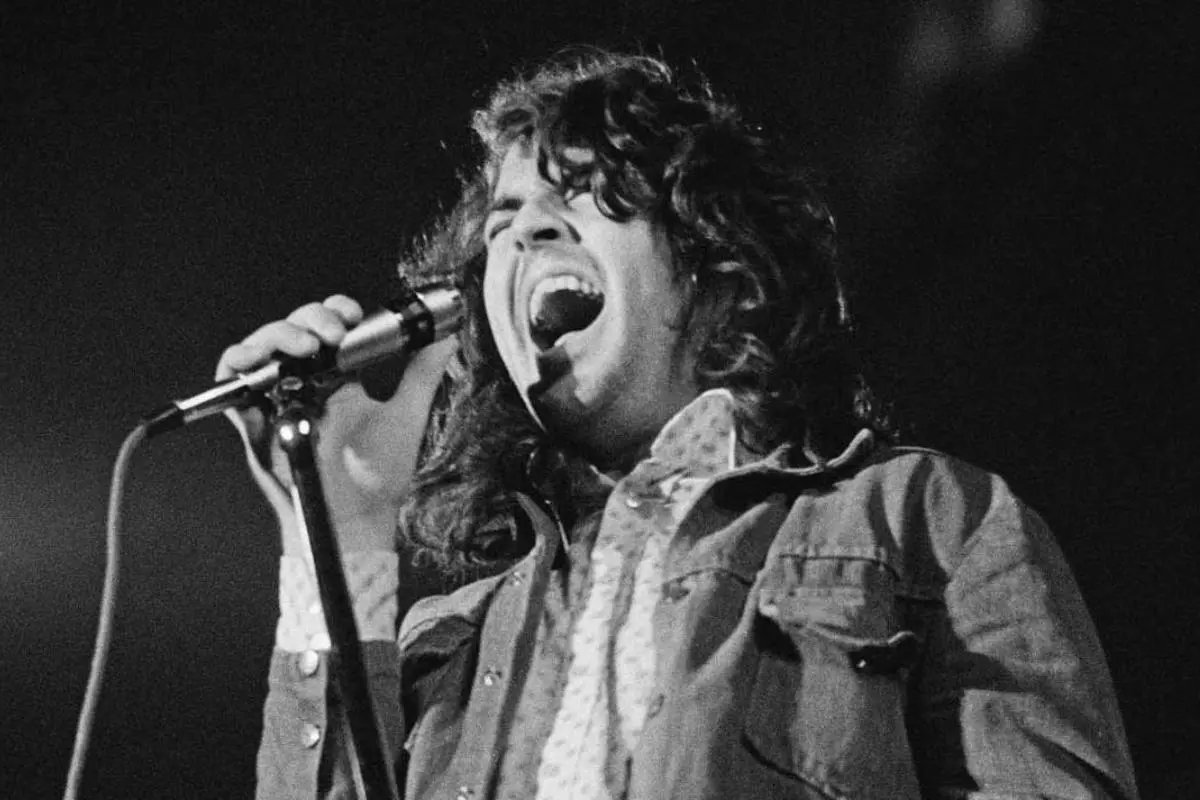
Provocative claim (and it holds up): Purple’s heaviest instrument was sometimes the organ
Guitars get the mythology, but Lord’s Hammond frequently does the heavier lifting in the midrange. In practical band terms, that means the Hammond occupies the sonic real estate that makes riffs feel massive on record and on tape-heavy live mixes.
It is also why later hard-rock and metal bands could add keyboards without becoming “soft.” Purple demonstrated that keys can be abrasive, percussive, and dominant when arranged like a second guitarist.
“Child in Time”: the clearest Gillan-Lord crescendo partnership
If you want the most obvious case study, it is “Child in Time.” Even in the studio version, the whole arc is built around long-range escalation: vocals rising from restraint to extremity while the organ intensifies the harmonic and dynamic pressure cooker.
Song-level trivia is less important than the mechanism: Gillan’s voice is the visible flame, and Lord’s organ is the oxygen feed. When Gillan goes for those famous screams, the Hammond is not merely accompanying. It is creating the harmonic floor that makes the leap sound both terrifying and inevitable.
The song’s background notes mention that “Child in Time” was inspired by It’s a Beautiful Day’s “Bombay Calling,” a reminder that Purple’s epic drama often came from reimagining existing ideas into something heavier and more theatrical.
Listening map: what to focus on
- Early verses: organ sustains and gentle motion frame Gillan’s restraint.
- Build section: Lord widens harmony and density, “orchestrating” without strings.
- Peak vocal moments: organ holds the center while the vocal becomes pure expression.
Live recordings feel so charged because the call-and-response becomes a sport
In the studio, you can design tension. Live, you have to earn it every night. Purple’s best live documents succeed because Gillan and Lord treat phrasing like a competitive conversation, not a fixed script.
The band’s history and lineup timeline frames the group’s history and lineup changes, but the Mark II period remains the reference point for this interactive chemistry.
One useful way to hear it is to stop listening for “solos” and start listening for interruptions. Lord will jab between vocal lines. Gillan will stretch a phrase as if daring the organ to keep up. The band then snaps back into riff unison like a referee calling the next round.
The Hammond-as-weapon: how Lord made a keyboard behave like an amp stack
To understand why the “organ vs. voice” thing worked, you need to understand why a Hammond can feel physical. It is not a piano with a different patch. It is a tonewheel instrument with drawbars and a performance interface that invites sculpting the sound in real time.
Hammond’s own legacy across genres highlights the instrument’s footprint, including the players who pushed it into rock contexts.
The key sonic tricks (no pun, but accepted)
- Drawbar shaping: Lord could brighten, thicken, or hollow the organ mid-performance.
- Percussion and key click: those transients help the organ “speak” through loud guitars.
- Overdrive and amplification: pushing the Hammond into grit makes it behave like a rhythm instrument with attitude.
That final point matters most. A distorted Hammond is not trying to be clean. It is trying to be present. Once it is present, it can trade lines with a singer and not disappear in the mix.
Studio vs. live: where the Gillan-Lord interaction is most obvious
Studio Purple is about architecture. Live Purple is about risk. Both show the template, but they emphasize different skills.
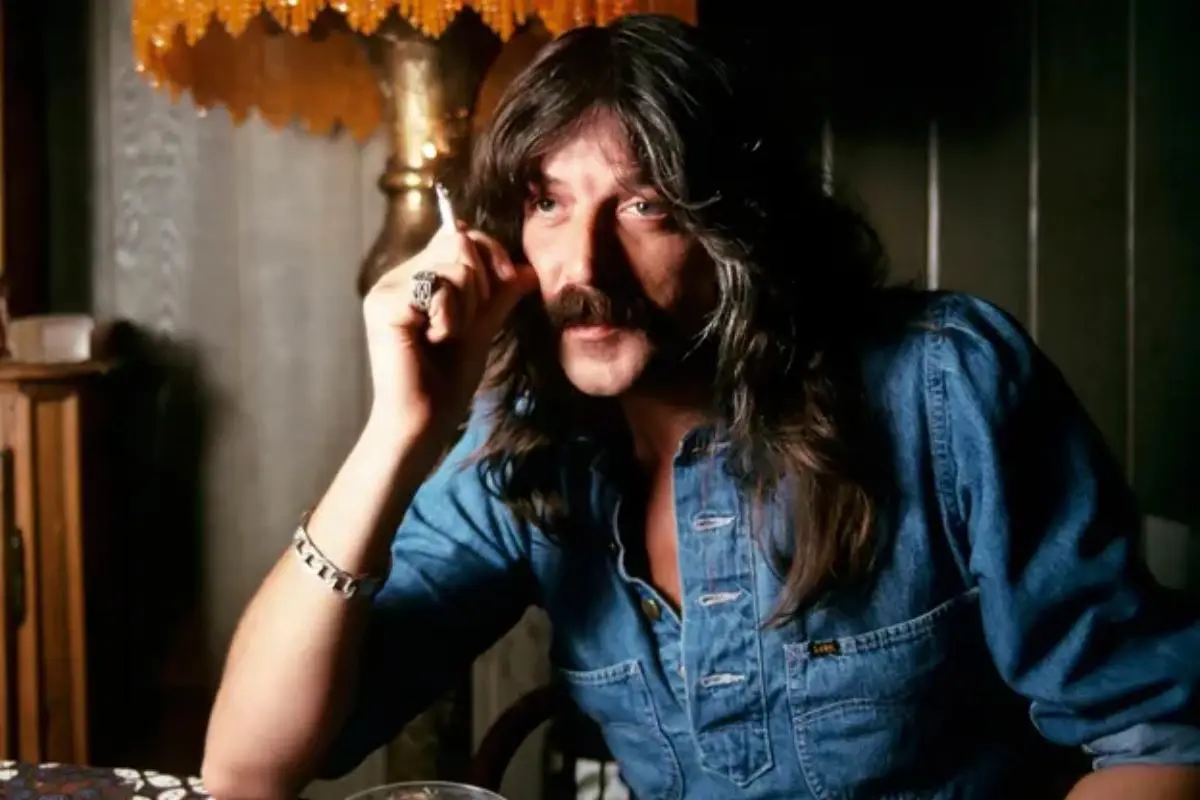
In Rock: the template gets formalized
Deep Purple in Rock is widely treated as the turning point where the band committed fully to heavier hard rock, with the Mark II lineup establishing its identity.
Listen here for how Lord’s organ is arranged to be an equal partner in hooks and transitions, not just in solos. The “second vocalist” concept is often harmonic: the organ underlines where Gillan is heading before he gets there.
Machine Head: riff culture, with keys still throwing punches
“Smoke on the Water” is often discussed like a guitar monument, but the band’s story behind it is tied to a very specific real-world event and location, which helps explain the documentary feel of the lyric.
Even when the riff is king, Lord’s role is to thicken the groove and keep the band’s harmonic movement alive. The point is not “keys replace guitar.” The point is “keys keep rock from becoming one-dimensional.”
Made in Japan: the interaction becomes visible
Made in Japan is often cited as a peak live hard-rock document because it captures the band extending forms and pushing dynamics rather than reproducing the studio.
On long live versions, Gillan and Lord effectively co-compose in real time. The organ answers vocals with timing so sharp it feels rehearsed, yet the micro-variations suggest it is closer to jazz conversation than rock autopilot.
How this partnership influenced later hard rock and metal (without turning it into prog)
One reason this template matters is that it is not the same as prog-rock keyboard dominance. Lord was not trying to float above the band with endless symphonic layers. He was trying to compete inside the rock core: riffs, rhythm, punch.
You can draw a straight line from this to later bands where keyboards act like a second guitar or a second singer. The influence is partly sonic and partly psychological: a keyboardist can be a front-line personality, not a background employee.
Try this at home: a quick listening checklist
If you want to actually hear the “organ vs. voice” mechanism rather than just nod along, run this checklist on any Mark II live cut.
| What to listen for | What it tells you |
|---|---|
| Organ hits right after vocal phrases | Lord is treating the voice like a lead to answer, not a lead to support |
| Organ sustaining under vocal peaks | The Hammond is acting like a “second vocalist” carrying emotional weight |
| Vocal phrases that stretch time | Gillan is using the band as elastic, daring the organ to follow |
| Band snaps back into tight unison | The “fight” is controlled by arrangement discipline and rhythmic authority |
One last twist: the aesthetic friction was the feature
Lord’s composing instincts (including large-scale classical crossover ambitions) and Gillan’s direct hard-rock force are sometimes presented as competing visions. That is true, and it is also why the band felt bigger than its parts.
In a lesser group, that friction would dilute the identity. In Deep Purple, it created a sound that could be both grand and savage, sometimes in the same bar.
Conclusion: the blueprint still matters
Deep Purple’s Mark II magic is not just that they played loud. It is that they arranged loudness like a dialogue: Gillan’s voice as a lead instrument, and Lord’s Hammond as an equally aggressive lead that could answer, provoke, and elevate.
If you want the most rewarding next step, pick a live “Child in Time” and follow only two lines: the vocal and the Hammond. Once you hear the conversation, you will start noticing it everywhere, and you may never accept “background keys” the same way again.
And if you want a concise overview of the Hammond’s historical place beyond Purple, Oxford Reference provides an authoritative entry on the instrument and its broader cultural footprint.


