If you remember blasting “Electric Youth” from a boombox or Walkman, you probably remember Debbie Gibson as the wholesome face of late 80s teen pop. What most casual listeners missed is that the girl in the hat was also the architect behind the songs, the sounds, and even much of the studio wiring.
While other teen idols were handed finished tracks, Gibson was in the control room writing, arranging and producing. She turned adolescent crushes into sophisticated pop records, and in the process set records that no female artist has beaten since.
From classical piano kid to garage-studio engineer
Gibson was not a manufactured discovery plucked from a mall. She studied classical piano from the age of five and was performing in community theater and children’s opera choruses before most kids can read music. That early discipline shows in the tight chord changes and key shifts that made even her most bubblegum hits quietly more complex than the competition.
By 12 she had already written a patriotic tune, “I Come From America,” won a $1,000 songwriting contest, and convinced her parents to let a manager help develop her talent. Her family then converted their Long Island garage into a small recording studio, giving a determined pre-teen access to multitrack tape, keyboards and drum machines instead of just a bedroom mirror and a hairbrush.
Writing a Top 5 hit at 14
In that garage she drafted the song that would change everything: “Only in My Dreams.” She later recalled writing it at 14, long before any label deal, then cutting it for Atlantic Records at 16; the single climbed to No. 4 on the Billboard Hot 100 in 1987, as profiled in a Washington Post feature. In other words, the “teen pop sensation” you saw on MTV was already the song’s sole composer with years of home-studio practice behind her.
Unlike many young singers who chase a record deal first and songs later, Gibson essentially brought Atlantic a catalog. Her demos were not rough sketches either; by her mid-teens she had been learning arrangement, engineering and production basics from her manager and studio mentors, treating the board as seriously as the piano.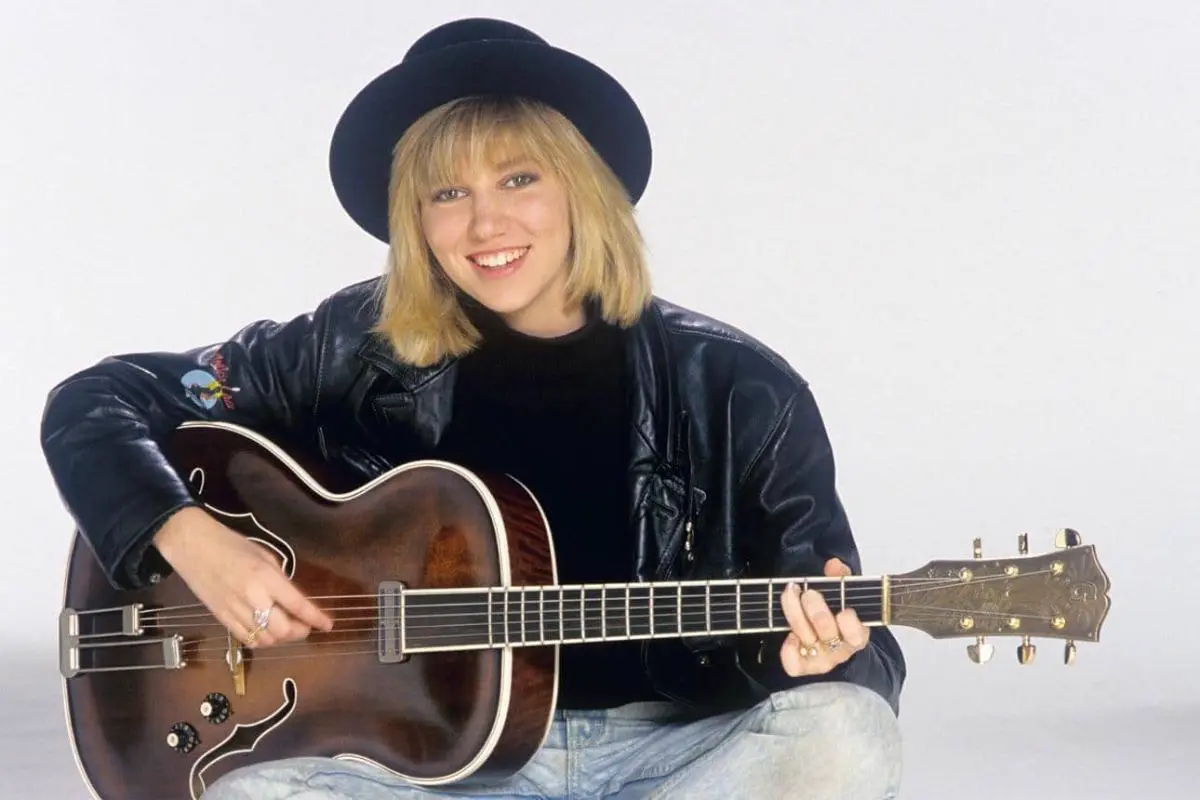
Early milestones at a glance
| Age | Year | Milestone |
|---|---|---|
| 5 | Mid-1970s | Begins classical piano studies and stage work in community theater. |
| 8 | Late 1970s | Joins children’s chorus at New York’s Metropolitan Opera, performing in major productions. |
| 12 | Early 1980s | Wins a songwriting contest with “I Come From America” and starts building a home studio. |
| 14 | Mid-1980s | Writes “Only in My Dreams” in that garage studio, years before it becomes a hit. |
| 16 | 1987 | Releases debut album Out of the Blue, writing every song and co-producing key tracks. |
| 17 | 1988 | Hits No. 1 with “Foolish Beat,” becoming the youngest artist to write, produce and perform a Billboard Hot 100 chart-topper. |
DIY pop in a laundry room and a garage
Gibson’s early records were not born in some million-dollar palace. While she was still in high school she was demoing Out of the Blue in a modest garage studio at home and cutting vocals in producer Fred Zarr’s basement laundry room in Brooklyn, a setup she has described in detail on her official site. She has joked about a sheet being pulled across to hide the washer and dryer while she sang harmonies into a mic.
The gear might have been low-budget, but the work ethic was not. Gibson wrote every song on Out of the Blue, co-produced most of the album, and even used Carvel rainbow sprinkles as makeshift shakers on her demos to get the right percussive feel. This was a teenager obsessing over arrangements, sounds and overdubs, not just hairstyles.
Label marketing still pushed her as a cute teen idol, yet behind the scenes she was arguing for specific intros, drum feels and vocal comps. Rhino’s retrospective on the album flatly notes that she penned all the material and self-produced the future No. 1 “Foolish Beat,” while chasing the kind of shamelessly hooky choruses she admired in Madonna and Wham! singles, as detailed in the 30th anniversary look at Out of the Blue.
“Foolish Beat”: the ballad that broke the record books
Then came the stat that should have blown up every lazy “manufactured pop” narrative. In June 1988, “Foolish Beat” reached No. 1 on the Hot 100, and Gibson – still just 17 – became the youngest artist ever to write, produce and perform a chart-topping single, a feat that landed her in the Guinness Book of World Records and remains unmatched by any other woman, according to her official biography.
Her official bio stresses that she did it again within a year with “Lost in Your Eyes,” making her the only female artist to have solely written, produced and performed two Hot 100 No. 1s. That is the sort of credit usually reserved for rock auteurs and studio tyrants, not a teenager whose image was packaged for Tiger Beat.
Listen closely to “Foolish Beat” and you hear why she fought to keep production in her own hands. The arrangement is deceptively simple: piano-led, space for melody, saxophone used as emotional punctuation rather than bombast. It is the sound of someone who understands that a ballad can devastate without a wall of reverb or a committee of co-writers.
Electric Youth: intelligent teen pop at stadium scale
If Out of the Blue announced a new writer-producer, Electric Youth was the victory lap. Released in 1989, Gibson co-produced the album with Fred Zarr, and many of its songs were drawn from a stack she had already written between ages 12 and 16, not rushed off between tour dates, as Rhino notes in its 30th anniversary retrospective on Electric Youth. That meant the supposed “sophomore” album actually showcased years of craft.
Rhino’s deep dive credits “Lost in Your Eyes” as the project’s anchor: a piano ballad that hit No. 1 and helped propel Electric Youth to multi-platinum status alongside follow-up singles like the title track and “No More Rhyme.” Again, Gibson’s name sits alone in the songwriting credits, and on six of the tracks she is the sole producer.
This is where the “intelligent pop” argument becomes impossible to ignore. Songs like “Electric Youth” are unapologetically catchy, but structurally closer to classic Brill Building writing than disposable jingle: clean modulations, middle eights that actually go somewhere, lyrics poking at agency and optimism rather than empty slogans. That she pulled this off while still juggling high school is absurd.
From bubblegum queen to orchestral ballads and Broadway
Most teen idols get two albums, a lunchbox and a nostalgia slot on reality TV. Gibson treated her early success as a launchpad into riskier territory. In the early 90s she moved toward pop-rock and R&B textures on albums like Body, Mind, Soul, and by 1995 she had issued Think With Your Heart, an adult contemporary record built largely around piano ballads and a 44-piece orchestra, a shift highlighted in an in-depth album review.
An in-depth review of Think With Your Heart points out that it is almost wall-to-wall ballads with live strings, far removed from freestyle drum machines and 80s synth stabs. Crucially, Gibson produced the album herself and wrote nearly all of the songs, doubling down on the idea that she was a musician first and a brand second.
At the same time she was rebuilding herself onstage. Broadway credits include Eponine in Les Misérables, Belle in Disney’s Beauty and the Beast, Sally Bowles in Cabaret, Betty Rizzo in Grease and even a run as Cinderella, roles documented in her IBDB Broadway credits that demand live vocal control and acting chops, not click tracks. For a supposed “pop lightweight,” her résumé looks suspiciously like that of a serious working musician.
The original teen auteur in a boys’ club
Decades later, long-form profiles have finally started saying the quiet part out loud. A Los Angeles Times feature on her forthcoming memoir notes that Out of the Blue was literally written and produced from a custom-built studio in her family garage, with her mother Diane pounding conference tables to secure creative control for her teenage daughter. At a time when labels expected young women to simply front tracks crafted by older men, the Gibsons insisted on something closer to Carole King than to a disposable poster girl.
The same piece frames Debbie and Diane as door-kickers for modern singer-songwriter-producers. It draws a straight line from a teenage Gibson wiring her own patchbay and programming sequences to today’s tech-savvy young women who write and co-produce their own hits, name-checking current stars who now enjoy the autonomy Diane had to fight for. In other words, Gibson was doing “bedroom pop” before laptops and Spotify made the phrase marketable.
Her official biography underlines just how far that battle took her: more than 16 million albums sold worldwide, Guinness-certified records for “Foolish Beat,” and the distinction of being the youngest artist ever to receive ASCAP’s Songwriter of the Year award, shared with Bruce Springsteen in 1989. That is not teen-idol math; that is songwriter royalty.

Second acts, chronic illness and staying “eternally electric”
Gibson did not quietly slip into the county-fair nostalgia circuit. In recent years she has launched her own indie imprint, continued to tour themed shows built around love songs and 80s material, and released new studio work like The Body Remembers, positioning herself as a fully independent pop veteran. A People profile on her memoir notes that she has been marking the 35th anniversary of Electric Youth with tours while preparing Eternally Electric: The Message in My Music as a candid look at her unconventional career.
That “second act” has not been simple. Gibson has spoken openly about living with Lyme disease since the 2010s, describing flare-ups, ER visits and the constant balancing act of touring while managing a chronic condition, as she detailed in a recent health update. Instead of hiding it, she has folded those experiences into a “peaceful warrior” narrative, aligning mental and physical health struggles with the resilience already embedded in songs like “Foolish Beat” and “Lost in Your Eyes.”
The net effect is that her catalog now plays like a timeline of one artist wrestling with fame, burnout, reinvention and survival in real time. For listeners who grew up with her records, that evolution feels less like nostalgia and more like watching a peer grow up without ever putting the instruments down.
What musicians can steal from Debbie Gibson
For players and songwriters, Gibson’s story is more than retro trivia. It is a free masterclass in how to survive the industry with your musical identity intact. Here are a few takeaways that matter whether you are writing synth-pop, jazz or Americana.
- Build your own lab. Her garage-turned-studio may have been primitive, but it let her experiment with arrangements, drum machines and keyboards long before a label cared.
- Insist on your credits. From day one she fought, with her mother’s help, to keep songwriting and production control instead of becoming just another face on someone else’s track.
- Marry hooks to harmony. The reason “Only in My Dreams” and “Electric Youth” still work is that beneath the earworm choruses you find real chord movement, key changes and dynamic structures, as the retrospective on her early records makes clear.
- Genre-hop without surrendering authorship. Whether she was cutting freestyle singles, orchestral ballads or Broadway cast albums, Gibson kept writing and often producing, so every era still sounds like her.
- Play the long game. Records come and go; contracts end. Catalog, skills and the ability to sit at a piano and deliver a song are what let her remain on the road and in print while many chart peers vanished.
More than a nostalgic crush
It is easy to remember Debbie Gibson as the teenager grinning from a cassette cover, but it is far more accurate – and frankly more interesting – to view her as one of pop’s earliest teen auteurs. She wrote her first hit in a garage, cut vocals next to a washing machine, and still managed to beat a male-dominated system at its own chart game.
Her story is not just “Electric Youth” frozen in time, but a four-decade argument that smart, self-produced pop can be both chart-topping and deeply personal. For anyone who ever dismissed her as fluff, the real shock is this: the kid you thought was just your crush was quietly outwriting and outproducing half the adults in the business.