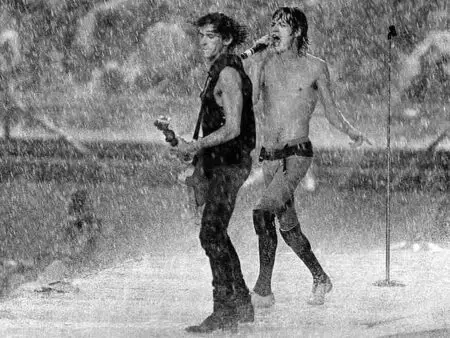
Charlie Watts spent decades behind the world’s loudest rock band looking like the only adult in the room. Then he’d open his mouth and say something even more subversive than the Stones ever did: he wasn’t a virtuoso, and he didn’t want to be.
“I’m not Buddy Rich… I’ve never had that virtuosity… It takes about three or four gigs before I feel comfortable.”
Charlie Watts
In an era that treats speed as truth and chops as morality, Watts’ self-assessment feels like heresy. But if you trace what he admired – band drummers, long-running units, leaders who made everyone sound better – you land on a blueprint for musical longevity that’s far more useful than another “32nd-note fill” tutorial.
Watts’ ‘not Buddy Rich’ line is a philosophy, not an apology
Watts didn’t hate virtuosity; he just didn’t confuse it with musicianship. His fear of turning up cold to a gig with strangers is the opposite of the drummer-as-athlete myth, and it’s refreshingly honest for anyone who’s ever felt stiff on the first set.
That honesty also hints at how he thought groove works. Chemistry isn’t downloaded – it’s earned, rehearsal by rehearsal, gig by gig, argument by argument, and boring van ride by boring van ride.
Virtuosity vs. usefulness: the uncomfortable question
Here’s the provocative claim: in a band context, “virtuosity” can be a liability if it makes you play like a soloist when the job is to be infrastructure. Watts’ greatness is that he treated the drum kit like the chassis of a car – invisible when it works, catastrophic when it doesn’t.
Listen to the Stones’ best records and you’ll rarely hear him announce himself. Instead you hear a consistent pocket and a refusal to over-explain the music with drums.
Why Watts admired “band guys” like Sonny Greer
Watts name-checked Sonny Greer because Greer wasn’t just a drummer; he was a long-term voice inside Duke Ellington’s organism. That’s the model Watts recognized: a drummer as a permanent musical citizen, not a hired spark plug.
Greer’s era required drummers to shape entire nights of music, not just survive a three-minute single. Watts brought that long-form mindset into rock, where stamina and feel beat flash every time.
The ‘unit’ mindset: rock bands forget this at their peril
Watts also observed that stable “units” don’t happen so much anymore. He’s right in spirit: modern music culture rewards flexible freelancing, fast turnaround, and content velocity, which can discourage the slow burn of a band learning to breathe together.
That doesn’t mean freelancing is inferior. It means the skills are different – and Watts was proudly, almost stubbornly, built for the band life.

Roy Haynes: the drummer Watts basically endorsed as a life coach
In Watts’ quote, the emotional center isn’t Buddy Rich at all – it’s Roy Haynes. Watts talked about Haynes like he was describing a rare piece of engineering: eternally young, solid, and still playing at a frighteningly high level.
“If any young person asked me who they should follow in one’s life, I’d say Roy Haynes.”
Charlie Watts
Haynes’ career is a masterclass in adaptability. He’s associated with giants across swing, bebop, cool, hard bop, and beyond, and his discography reads like a map of jazz leadership: Charlie Parker, Lester Young, Thelonious Monk, Stan Getz, John Coltrane, Gary Burton, and more through Coltrane-related discography listings.
Watts’ praise is revealing: he didn’t idolize the drummer with the most notes. He idolized the drummer who kept winning the time war, decade after decade.
About those specific records Watts mentioned
Watts referenced a “Five Spot” Monk recording and praised its impact. The most famous Monk live document tied to that room is At the Five Spot, but the personnel varies by release and session details can get messy across reissues and archival projects. Rather than pretend certainty, take the practical point: Watts was listening for how Haynes could make challenging music feel inevitable.
Watts also cited an album “with Coltrane called To the Beat of a Different Drum.” Haynes did record extensively with Coltrane-era innovators and appears in biographical notes about Watts’ musical influences, but that specific title is not a widely recognized core Coltrane release. Treat it as an example of how memory, liner notes, and jazz catalog history can blur together, especially when a drummer has played on thousands of sides.
Longevity: the Rolling Stones’ most underrated flex
Watts made another sharp observation: the Stones didn’t just get famous, they outlasted their peers. That is a different kind of achievement, one rock history often downplays because it’s not as romantic as the flames-out-at-27 story.
“When the Rolling Stones started… now we’ve gone past them in years, in longevity… It’s just longevity, actually.”
Charlie Watts
Watts wasn’t being modest for effect. Longevity is a discipline, and it’s often the most brutal discipline because it demands you show up long after the glamour evaporates.
By the time of his death at 80, obituaries emphasized his steady presence and crucial role in anchoring the Stones’ sound.
Why drummers are the hidden longevity engine
A band can replace almost any role and claim continuity. Replace the drummer and you often change the band’s nervous system. Watts’ consistency gave the Stones a reliable internal clock, and that kind of reliability reduces musical stress, interpersonal stress, and rehearsal stress over decades.
That matters more than fans realize: fewer musical emergencies means fewer reasons for a band to stop touring, stop recording, or stop liking each other.
The anti-hero drummer: restraint as power
Watts cultivated a persona that felt almost antagonistic to rock drummer stereotypes. No spinning sticks, no “look at me” fills, no anxious proving of worth. In a culture where musicians are pushed to brand themselves loudly, Watts’ restraint reads as power.
Obituaries noted Watts as the band’s steady rhythmic anchor, admired for taste and time over theatricality.

What his playing teaches working drummers (and bands)
| Watts principle | What it looks like on a gig | Why it helps longevity |
|---|---|---|
| Comfort takes reps | First set is simple; dynamics improve as the night goes on | Reduces panic playing and “overplaying to impress” |
| Serve the unit | Parts reinforce vocals, riffs, and phrasing instead of competing | Makes the band feel bigger without adding clutter |
| Time is the product | Backbeat placement stays consistent under pressure | Creates trust among bandmates and audiences |
| Identity through taste | Signature feel emerges from touch, swing, and choices | Harder to “age out” than chops-based identity |
How to apply Watts’ mindset without becoming boring
Restraint is not the same as passivity. Watts could be aggressive, but he chose his moments. The trick is to build a “quiet default” and then turn up the heat with intention.
Three practical exercises (no jazz degree required)
- Delay your fills: For one rehearsal, forbid fills until the second chorus. Notice how much stronger the groove feels when you stop narrating.
- Play behind the beat on purpose: Record yourself placing the snare slightly late, then slightly early. Pick the placement that makes the band feel best, not the one that flatters your ego.
- Stay in one “unit” longer: If you can, commit to a band for a year. Watts’ whole point is that the magic shows up after the awkward phase, not before.
One last uncomfortable thought: modern drumming culture might be training the wrong muscle
Social media rewards drummers who can shock you in 15 seconds. Watts built a career on what happens in minute 75 of a show when everyone’s tired and the band still needs to swing.
He wasn’t Buddy Rich, and he didn’t pretend to be. He was something rarer in rock: a drummer who understood that the highest level isn’t “more” – it’s enough, delivered for 60 years without collapsing the band.
Conclusion: Watts’ quote reads like humility, but it’s really a manifesto. Follow the band guys, respect the unit, fear the cold sit-in (it keeps you honest), and chase the kind of musicianship that gets better with age.