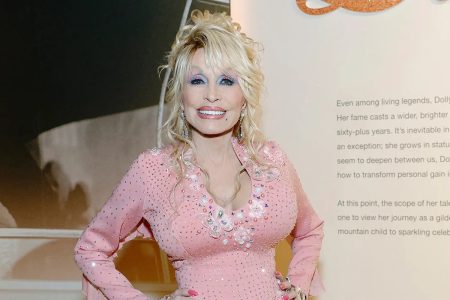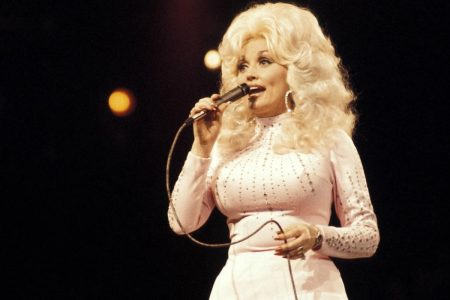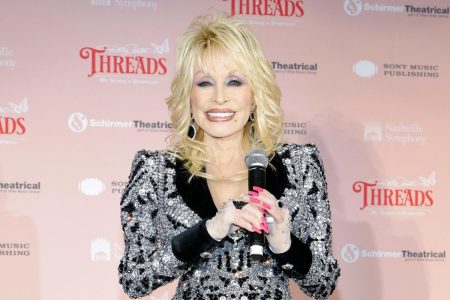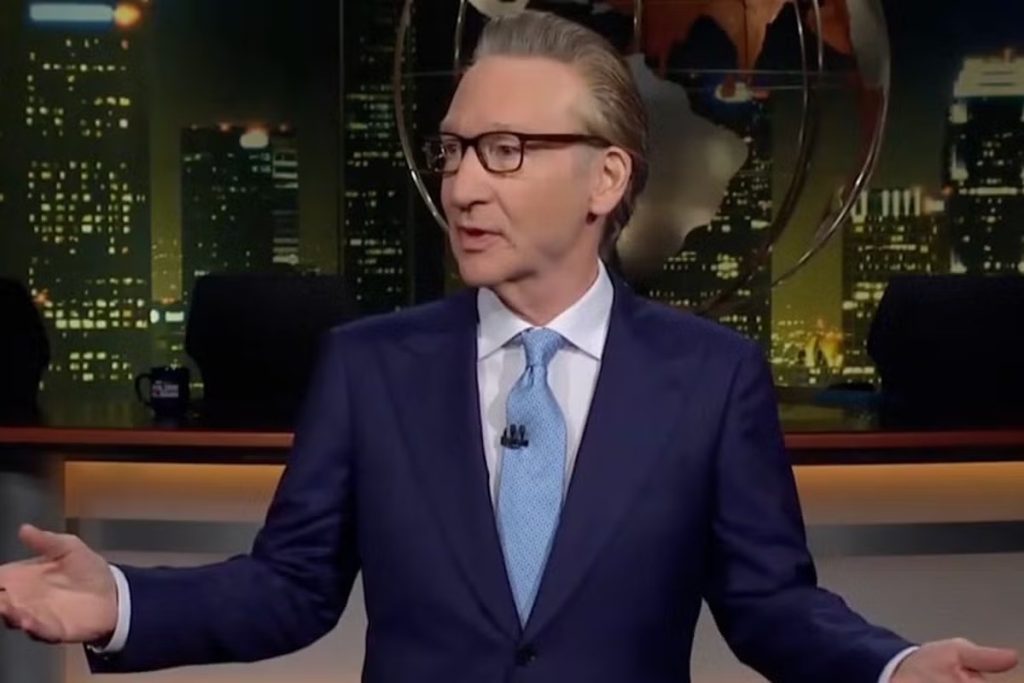
Bill Maher gave over part of his Friday night monologue on HBO’s “Real Time” to Dolly Parton, who died on Tuesday at the age of 80. By Saturday morning four entertainment trade publications had filed stories about it, and not one of them was complimentary.
The segment came near the top of the show. Maher thanked his audience for being in a good mood and allowed that it had been a tough week, listing Parton’s death alongside severe flooding in Nepal and a running complaint about Canadian trade policy. He then spent several minutes on tariffs and the war in Iran before circling back to the singer.
“All this is going on and all America could really talk about this week was how sad it is that we lost Dolly Parton,” Maher told the studio audience, according to TheWrap. He then ran through the memorials that had gone up around the world — things happening in London, hearts lit on the Santa Monica Ferris wheel, the Empire State Building turned pink — and finished the list with a line about the Sphere in Las Vegas adding “a nipple.”
That was the whole of it. Maher moved on to Meta’s $18 billion settlement over teen social media harm and never came back to her.
What the trades made of it
The reaction from the industry press was unusually uniform. Variety called it the lamest tribute Parton has been given yet. The Hollywood Reporter described it as an unsavory tribute delivered while Maher criticized the media’s coverage of her death. Deadline led on the joke itself. TheWrap took the narrower line, framing the segment as a dig at the scale of the global mourning rather than at Parton personally.
That distinction matters more than it looks. Read one way, Maher was doing what he has always done — needling the culture for what it chooses to grieve loudly over, with the Sphere line as the punchline to a list rather than a shot at the woman. Read the other way, a comedian made a breast joke about someone who had been dead for three days. The coverage has not settled on which it was, and the monologue supports both readings.
One detail complicates the pile-on. The audience in the room liked it. TheWrap reported that as Maher fought back a laugh of his own, the crowd broke into applause and cheers.
Not the first time Maher has gone after public mourning
Maher has a long record here, and the closest parallel is not a music story at all. When Stan Lee died in 2018, Maher wrote a blog post observing that America was in “deep, deep mourning” for a man who, as he framed it, had inspired millions to watch a movie. Comic book readers reacted about as well as you would expect, and the argument ran for weeks. TheWrap has catalogued a long list of similar moments stretching back to his ABC show.
The pattern is consistent enough to count as a house style. A beloved figure dies, the public response turns out to be enormous, and Maher treats the size of that response as the actual story. Whether that is bracing or simply cheap has been the argument about him for twenty-five years and across two networks.
A week in which tributes kept going wrong
Maher’s is not the only Parton tribute to have drawn criticism this week. Allie Colleen Brooks, the daughter of Garth Brooks, was widely criticized over an Instagram post connecting Parton’s death to her own fear of one day watching the world mourn her father. Detractors said she had made a stranger’s death about herself. Other children of country musicians defended her, arguing she had put words to a specific and real dread. Reports differ on how the wider public landed, which is itself part of the story: the same post read as narcissism to one group and as honesty to another.
The volume of coverage is the context for all of it. Parton died on Tuesday at the Vanderbilt-Ingram Cancer Center in Nashville after what her representatives called a brief battle with cancer. Their statement pointed to the hundreds of millions of books distributed through her Imagination Library and to her funding of research behind a vaccine used around the world. Streaming of her catalog climbed steeply in the days that followed. Tennessee’s governor has backed a proposal to put her name on Nashville International Airport, and her family gathered this week for a private burial in the city.
As for what happens next: probably very little. Maher does not apologize, and there is no sign HBO intends to say anything about the segment. “Real Time” is back next Friday.
The more interesting thing is the question his monologue raised without meaning to. His complaint was that one singer’s death crowded everything else out of the week. The week’s evidence is that a great many people did not experience that as a problem, and went out and lit up buildings to say so. That is not a media failure. That is what it looks like when somebody is actually loved.