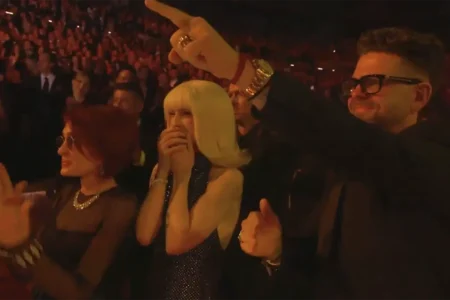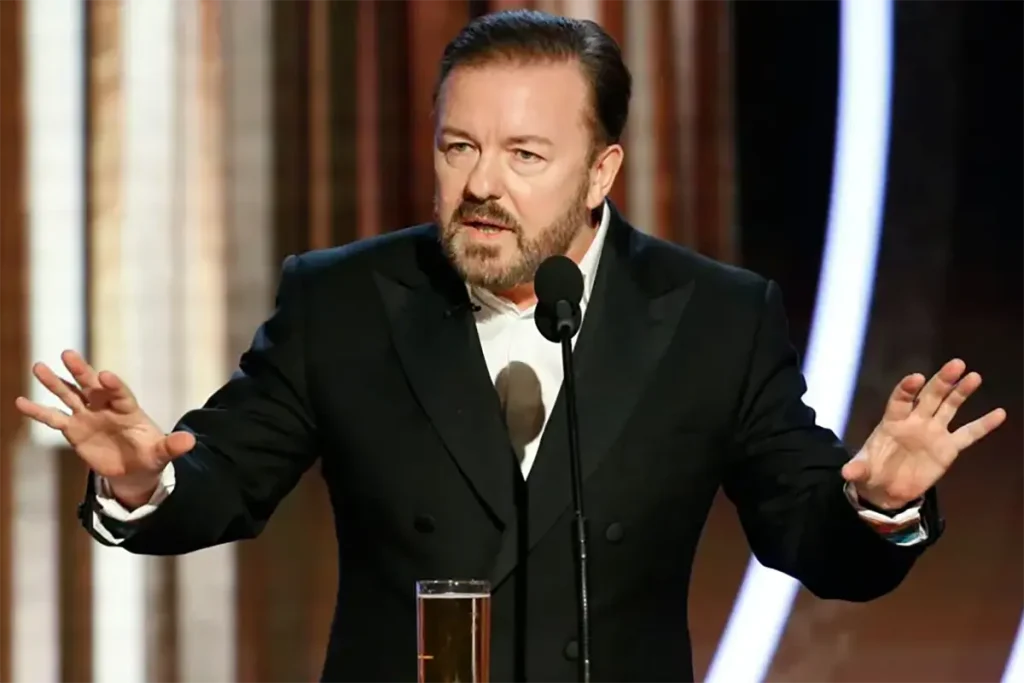
Ricky Gervais tried to revive one of his most viral lines about celebrity activism, but the punchline landed on him. In a new X post, the comedian reposted a screengrab highlighting his 2020 Golden Globes warning that winners should not use awards shows “as a platform to make a political speech,” adding: “They’re still not listening.”
The post came as Grammy acceptance speeches again became a battleground for U.S. politics, with some artists calling out Immigration and Customs Enforcement (ICE) from the stage. Commenters quickly accused Gervais of recycling old material and, more pointedly, of preaching about “platforms” while using his own to lecture everyone else.
What Gervais posted and why it sparked backlash
Gervais’ message was a throwback: the same “no political speeches” scolding he delivered while hosting the Golden Globes in 2020, a monologue that went viral precisely because it mocked Hollywood’s appetite for moral posturing. He framed the repost as proof that awards shows still have not absorbed his critique, tying it to the latest round of on-stage statements at the Grammys.
On social media, the complaint was not just ideological. Many responses were aesthetic: quoting yourself is “cringe,” the joke is getting worn out, and reposting your own greatest hit starts to look like a performer stuck in the old set list. Even sympathetic fans treated it like a timing issue: the Internet tends to punish self-mythologizing faster than it punishes hypocrisy.
The “David Brent” problem
Several commenters compared the move to David Brent, Gervais’ fictional boss from The Office, the kind of character who mistakes awkward self-regard for charisma. The comparison stings because it is not a political critique; it is a comedic one. Being told your bit is “Brent-coded” is a way of saying you have become the thing you once satirized.
The real issue: music stages are becoming political stages again
Awards speeches are a unique microphone: brief, unscripted, and guaranteed to travel. That is why artists use them for gratitude, grief, and yes, politics, even when viewers complain that entertainment should stay “neutral.” The Grammys have leaned into that reality by publishing and promoting winner coverage across their own news channels.
In this case, the political target was ICE, a federal agency within the Department of Homeland Security that handles immigration enforcement and related investigations. The Department of Homeland Security describes DHS as the parent department for components responsible for immigration and enforcement functions.
“If you do win an award tonight, don’t use it as a platform to make a political speech.”
Ricky Gervais, Golden Globes monologue excerpt shared by ABC News
ABC News’ reporting on the 2020 monologue captured the core of Gervais’ argument: celebrities are “in no position to lecture the public,” and many know little about the world they are addressing.
Why the “stop lecturing” line keeps resurfacing
Gervais’ Golden Globes takedown was widely covered at the time because it voiced a frustration many viewers already had: wealthy entertainers scolding ordinary people from gilded rooms. NBC News summarized the moment as an opening monologue that roasted the room and urged winners to accept awards quickly and leave without preaching.
But the argument has a boomerang built in. The moment a celebrity says “celebrities should stop talking,” they are still a celebrity talking, often to defend a personal brand built on being the guy who “tells hard truths.”
Old-school free speech vs. modern audience speech
Gervais frames his comedy as provocation and insists critics misunderstand jokes as hatred. That may be his intent, but social media is not a comedy club, and “free speech” online includes the audience loudly replying. The ACLU’s overview of free speech notes that free speech principles protect expression, including controversial viewpoints, while leaving room for counterspeech and criticism from others.
ICE as the new pop culture lightning rod
For artists who spoke up, ICE is not an abstract concept. The agency’s description of its enforcement and investigative responsibilities is a reminder that it operates with significant federal power that touches real lives.
Human rights groups have also repeatedly criticized U.S. immigration enforcement practices more broadly. Human Rights Watch’s ongoing coverage of U.S. immigration policy issues reflects how immigration enforcement remains a persistent flashpoint for advocacy and protest.
That is the context for the blunt fan pushback captured under Gervais’ post: you can argue about taste, timing, or hypocrisy, but people will not treat “don’t talk politics” as neutral when they believe lives are at stake.
Gervais’ platform paradox (and why commenters noticed)
Part of the Instagram roasting was pragmatic: Gervais has used his own public profile for causes, especially animal welfare, so telling musicians not to “use their platform” can sound less like principle and more like gatekeeping. Online audiences are quick to spot selective outrage: advocacy is acceptable when it matches your values, but “virtue signaling” when it does not.
There is also a structural irony. Gervais’ 2020 Globes monologue was itself a political speech in comedic form: a critique of elite power, corporate hypocrisy, and media virtue. The Hollywood Reporter’s coverage at the time emphasized how pointed and political the monologue was, despite the “don’t get political” punchline.
Where Bill Maher fits into this week’s “shut up, celebrities” cycle
The argument is bigger than Gervais. It is part of a repeating media cycle where comedians and pundits warn Democrats (or the public) that celebrity activism backfires, and where artists respond that silence is its own kind of politics. Maher’s long-running brand on Real Time has centered on that friction between cultural elites and mass opinion.
Key takeaways for music fans (especially older listeners)
- Awards shows have always been political – the difference now is speed: speeches hit Instagram before the applause dies down.
- “Don’t lecture” is no longer a conversation-stopper – it invites a credibility audit of the person saying it.
- Recycling old bits is riskier than ever – social media rewards novelty and punishes self-quotation.
- ICE is not a symbolic target – it is a real federal agency with enforcement authority, which raises the stakes for artists who see activism as protection, not performance.
Conclusion
Gervais’ repost was meant to dunk on Grammy speeches, but the louder story became the reaction: a crowd telling a famous comedian that self-quoting is its own kind of cringe, and that “stay out of politics” sounds different when the subject is state power. Whether you agree with the artists or with Gervais, the same rule now applies to everyone with a microphone: if you speak, expect to be answered.