“Sing me back home, before I die…” is one of those lines that doesn’t feel written so much as survived. Merle Haggard’s “Sing Me Back Home” (recorded and released in 1967) is often described as a prison song, but that label is too small. It is a plea for dignity at the very moment the system is designed to erase it.
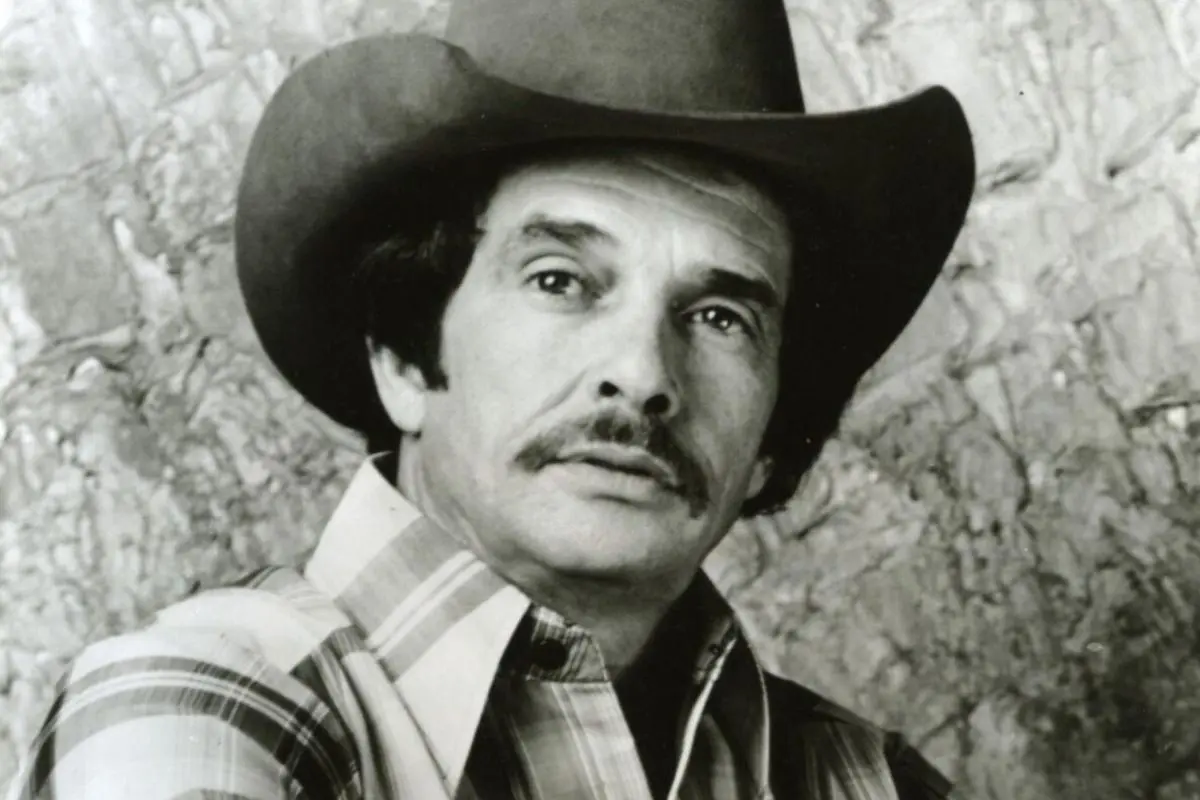
Haggard had the credentials nobody should want: a troubled youth, time served, and hard-won self-knowledge. His lived experience in California prisons gave his writing an authority that Nashville polish could not fake, and “Sing Me Back Home” became one of the sharpest examples of country music’s ability to stare straight into darkness without blinking.
The real-life spark: an execution walk and a last request
The story attached to the song is chillingly simple: while incarcerated at San Quentin, Haggard witnessed a condemned inmate being led to his execution, and the man asked to hear one last song. That image stayed with Haggard and later became the emotional engine of “Sing Me Back Home.” The song doesn’t wallow in gore or details. It focuses on the human moment: the thin thread between fear and comfort, tightened by music.
“Sing me back home with a song I used to hear, make my old memories come alive.”
Merle Haggard, “Sing Me Back Home” lyrics
Whether every detail is perfectly literal matters less than the deeper truth: Haggard knew prison life from the inside, and he wrote like a man who had listened to other men try to stay human inside a machine that prefers numbers and file folders.
Merle Haggard and San Quentin: not a costume, a scar
Plenty of artists have worn outlaw imagery like a stage jacket. Haggard wore it like a bruise. His biography is clear about the arc: juvenile trouble, adult convictions, and incarceration that shaped his worldview long after he was released. That authenticity is why “Sing Me Back Home” doesn’t feel like “a song about prison.” It feels like prison itself humming in the walls.
In a culture that loves neat redemption stories, Haggard’s life is messier and therefore more believable: he wasn’t “saved” by a single moment. He built a career out of telling uncomfortable truths in plain language, which is why his work still lands with listeners who don’t even like country music.
Accounts of Haggard’s early life and incarceration have been widely documented in mainstream biographies, and his early legal troubles and rise to stardom reinforce that his prison writing is rooted in lived experience rather than genre fantasy.
What the song actually does: it shifts the spotlight from guilt to humanity
The most provocative thing about “Sing Me Back Home” is what it refuses to do. It doesn’t argue the inmate is innocent. It doesn’t pick a fight over policy. Instead, it commits an artistic act some listeners find harder to stomach: it extends empathy to a person at the end of his rope.
That’s why the song can feel subversive. It suggests that even if the condemned man has done terrible things, he still contains memory, longing, shame, and tenderness. Country music has long been called “three chords and the truth,” but Haggard’s special talent was recognizing that truth often includes compassion we’d rather not hand out.
Key lyrical moves that make it hit so hard
- Music as transport: the singer isn’t asking for freedom, he’s asking to be carried back to a time before everything went wrong.
- Memory as mercy: the “old memories” aren’t nostalgia, they’re relief from the present moment.
- A witness, not a judge: the narrator’s job is to sing, not to sentence.
To put it bluntly: “Sing Me Back Home” is a reminder that the last thing many people want is not a sermon. It’s something familiar. Something that tells them their life contained more than their worst day.
Release context: 1967 and the peak of prison realism in country
“Sing Me Back Home” arrived in the late 1960s, when country music was wrestling with identity and class in public. Haggard’s prison narratives were not quaint throwbacks. They were contemporary stories about American institutions and American consequences.
The song’s release as a single and its connection to the album of the same name are commonly summarized in reference sources, reinforcing its place in Haggard’s breakthrough era.
If you listen closely, you can hear the craft behind the heartbreak. The arrangement stays disciplined, almost restrained, as if any extra flourish would feel dishonest. The result is a performance that sounds like a man trying not to crack.
Why it feels like a “prayer set to music” (even if you’re not religious)
There’s a spiritual logic to the song, but it’s not preachy. The inmate’s request is essentially sacramental: give me a last rite made of melody and memory. In many religious traditions, the final moments are about reconciliation, release, and blessing. Here, the blessing is a song.
That’s one reason “Sing Me Back Home” has endured beyond its era. Even listeners who reject the death penalty debate, or who dislike prison songs, still recognize the human craving underneath: to be known, to be remembered, to be soothed.
The uncomfortable edge: country music’s empathy can be politically inconvenient
Haggard’s catalog is often pulled into political arguments, sometimes simplistically. “Sing Me Back Home” complicates that because it refuses ideological purity. It neither celebrates crime nor celebrates punishment. It sits in the middle where real people sit: grieving, scared, and wanting someone to sing.
This is where the song becomes edgy in the best way. It challenges the listener to admit a difficult possibility: you can believe someone must pay for their actions and still believe they deserve kindness before the end.
Ken Burns and PBS’s Country Music series has helped frame Haggard’s significance as a major voice in American music, and it places his work in a broader narrative of class, struggle, and realism.
San Quentin as symbol: a famous prison with a cultural echo
San Quentin isn’t just a backdrop; it’s a loaded symbol in American culture, frequently associated with incarceration, punishment, and the state’s ultimate power. Haggard’s story lands harder because the place is real, famous, and historically linked to capital punishment in California.
If you’re not familiar with the institutional side, California’s Department of Corrections and Rehabilitation provides official public information about state prison facilities, underscoring how prison systems present themselves in neutral administrative language.
That contrast is part of the song’s power: the bureaucracy is clean, but the human experience is not. “Sing Me Back Home” fills in what official language can’t capture.
Listening guide: what musicians should pay attention to
If you’re a singer, guitarist, or bandleader, “Sing Me Back Home” is a masterclass in emotional control. It proves you don’t need to shout to devastate an audience. You need believable phrasing and dynamics that serve the story.
Performance lessons you can steal (legally)
- Don’t over-sing the hook: the line works because it sounds like a request, not a chorus for radio.
- Use space as tension: small pauses feel like the inmate trying to breathe.
- Keep the tempo honest: too slow turns it into melodrama; too fast turns it into narrative wallpaper.
If you want to reference a widely accessible recording entry for the album in a classroom or listening session, a public LP listing with catalog context and track information can be a useful starting point.
Covers, afterlife, and why the song refuses to die
Great country songs become standards because they hold up under different voices. “Sing Me Back Home” has been covered and revisited across decades because its core idea is universal: the desire to be carried back to oneself in the final minutes.
Its long tail is also reflected in how easy it remains to find and revisit: Haggard’s discography and legacy materials keep the song situated inside the larger story of his career.
For readers who want a deeper, book-length lens on how life experience shaped his writing voice, the University of California Press listing for a dedicated Haggard volume is a useful guidepost.
The bigger Merle Haggard picture: the poet of consequences
Haggard didn’t romanticize prison. He didn’t reduce it to punchlines. He wrote about consequences in a way that felt like a warning and a confession at the same time. That’s why his prison-era songs still feel more “adult” than a lot of modern storytelling: they admit that people can be guilty and still be worth listening to.
Another strong entry point for context is David Cantwell’s book on Haggard, which frames how the tension between responsibility and social reality echoes through his songs.
Quick facts table
| Item | What it tells you |
|---|---|
| Core lyric idea | Music as a last request, and memory as mercy |
| Setting | Prison execution context, associated with San Quentin lore |
| Emotional trick | Empathy without absolution |
| Why it lasts | It treats the condemned as human, not as a headline |
Conclusion: a farewell that indicts and forgives at once
“Sing Me Back Home” endures because it’s not trying to win an argument. It’s trying to tell the truth about what a human being might ask for when the door is closing for good. And it dares the listener to admit something unsettling: sometimes the last mercy we can offer isn’t a verdict, it’s a song.
In that sense, Merle Haggard didn’t just write an unforgettable country ballad. He built a small, quiet chapel inside three minutes of music, and he left the door unlocked for anyone brave enough to walk in.