Late-night TV in the mid-1980s wasn’t just entertainment – it was a national campfire. If you wanted to know what “America” was thinking, you didn’t doomscroll; you watched Johnny Carson steer The Tonight Show with the calm confidence of a guy who could make presidents sweat and movie stars relax.
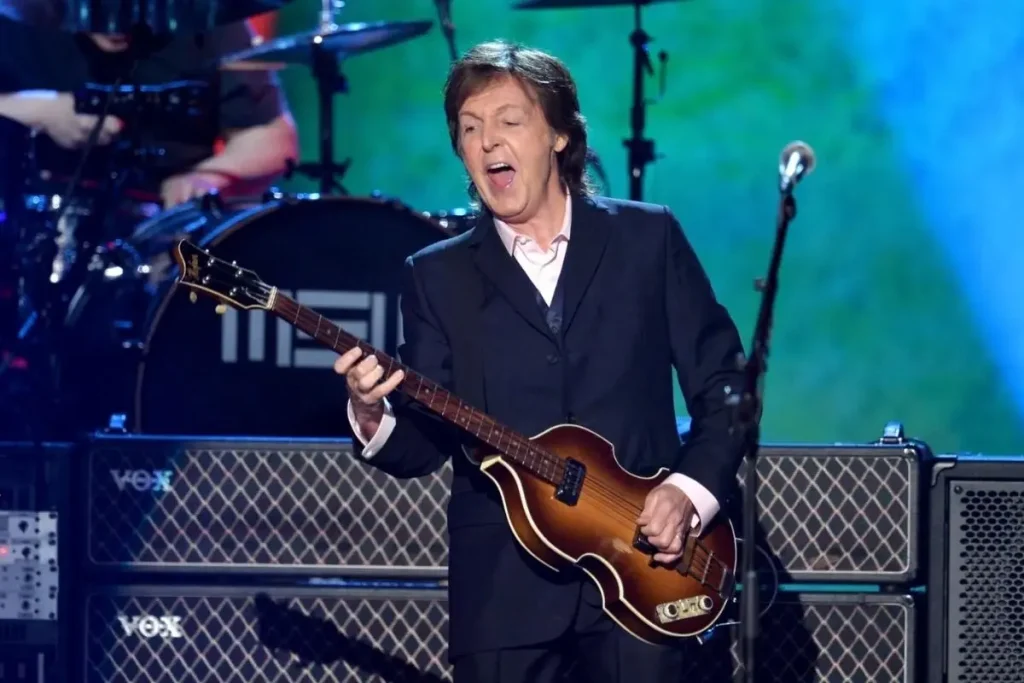
Then came one of the most gloriously unnecessary acts of celebrity chaos ever broadcast: Paul McCartney showing up on Carson’s stage with a birthday cake. Not a medley, not a promo blitz, not a carefully staged “exclusive.” A cake. And the reason this still hits decades later is simple: it looked like pure spontaneity, and on late-night TV, that’s rarer than a polite comment section.
The setup: when Carson wasn’t just a host, he was the gatekeeper
Carson’s influence on American culture is hard to overstate. In the Carson era, a Tonight Show appearance could legitimize a career or signal a new chapter, because the show was the hub of mainstream attention.
That power mattered in 1984. Late-night had competition, but Carson was still “the couch” – the place where entertainment became history. When something unexpected happened on that stage, it didn’t just go viral; it became part of the shared memory of a whole generation.
Why McCartney with a cake felt “insane” (in the best way)
Paul McCartney didn’t need Carson. By the mid-’80s he was already beyond myth: a Beatle and a stadium-level solo star, and an artist whose back catalog could fill a lifetime of radio.
So when he walked out carrying a birthday cake for Carson, the gesture landed as the opposite of publicity. It was goofy, intimate, and slightly surreal – like watching a marble statue wink at you.
“Paul McCartney surprises Johnny Carson with a birthday cake on The Tonight Show.” – NBC News description of the archival clip.
The moment itself: a pop icon chooses kindness over cool
The clip has circulated for years, partly because it’s so watchable. McCartney comes out, the audience loses its mind, Carson laughs, and for a minute the entire machine of late-night TV becomes a living room in the circulating video upload.
What’s striking is how McCartney’s presence changes the room. Carson was famously unflappable, but even he reads as genuinely delighted. It’s a reminder that “celebrity” is often a costume, and sometimes it slips.

Why the cake works as theater
Musicians normally enter talk shows through a narrow door: plug the album, play the single, tell a safe story, shake hands, leave. The cake breaks that script. It turns the host into the honoree and the megastar into the guest who’s just happy to be there.
That inversion is why it feels electric. It isn’t a flex. It’s a bit of social magic where status gets briefly suspended, and the audience senses it instantly.
Was it really “out of nowhere”? The hidden mechanics of a perfect surprise
Let’s be provocative: talk-show surprises are almost never fully spontaneous. They’re negotiated, rehearsed enough to keep cameras ready, and built to land cleanly. Even when it’s a “surprise,” it’s often a surprise to the host and the audience at home, not to the producers.
That doesn’t make it fake. It makes it well-executed. And in late-night, execution is everything because timing is the whole artform.
What we can say with confidence
- McCartney did appear and present Carson with a birthday cake, and the footage is preserved and widely shared.
- Carson’s birthday is October 23, which fits the tradition of on-air acknowledgments and celebratory stunts.
- McCartney’s public image has long included a disarming, everyman warmth that makes the bit believable.
Why 1984 made this hit harder
Pop culture in 1984 was loud. MTV was shaping aesthetics, arena tours were big business, and celebrity was becoming more manufactured by the year. Against that backdrop, a simple cake reads almost punk: a rejection of overproduction.
It also came at a time when McCartney’s post-Beatles identity was fully established. He wasn’t trying to prove he was “still relevant.” He could afford to be silly, which is the ultimate flex.
Carson’s reaction: the genius of letting the moment breathe
Carson’s brilliance wasn’t only his jokes; it was his restraint. He could step back and let a guest’s charisma fill the space, which is why the show could host everyone from comedians to rock stars without feeling like a hostage situation.
With McCartney, Carson doesn’t rush the beat. He lets the audience roar, lets the absurdity register, and plays the straight man just enough to keep it grounded. That’s what keeps the moment from turning into a corny skit.
How a cake became a cultural artifact
Some TV moments survive because they’re controversial. Others survive because they’re technically impressive. This one survives because it’s emotionally legible: it’s joy, surprise, and a little disbelief all at once.
Modern coverage keeps resurfacing the clip because it captures a version of celebrity we don’t always get anymore: famous people doing something that doesn’t obviously benefit them. The standout Carson memory still plays as a crowd-pleaser decades later.
Proof it’s still a “thing”: the archival afterlife
When NBC’s own archives publish and recirculate a clip, it’s a signal that the network views it as part of the show’s legacy, not just a random segment.
And when major outlets revisit Carson’s cultural dominance, they often cite the way his show functioned as the stage where entertainment history kept happening in real time.
What musicians can learn from McCartney’s move
If you perform, write, or even just obsess over music history, this is more than a cute anecdote. It’s a case study in how to create a memorable “moment” without spending a fortune or overselling yourself.
Practical takeaways (yes, really)
| McCartney’s choice | Why it worked | How to apply it |
|---|---|---|
| Bring a simple prop (the cake) | Instant story with zero explanation | Use one clear visual hook in your promo or stage banter |
| Make the host the focus | Disarms the “promo” vibe | Center the other person in interviews and collabs |
| Lean into warmth, not image control | Feels human and therefore memorable | Share one genuine, specific gesture instead of generic branding |
| Let the crowd react | Energy becomes the content | Give audiences space to respond before rushing to the next beat |
The edgy claim: this is McCartney’s quietest kind of domination
Here’s the take that might irritate cynics: the cake wasn’t “random.” It was McCartney showing total command of his own legend. When you’re truly iconic, you can lower your status on purpose and the room still bows. That’s not insecurity; that’s power.
Carson’s stage was the peak late-night proving ground, and McCartney didn’t conquer it by performing. He conquered it by turning it into a birthday party.
Where to watch and how to appreciate it like a music nerd
The easiest way to revisit the moment is through circulating video uploads, which preserve the audience reaction and Carson’s timing.
Watch it twice: first for the spectacle, second for the micro-details. Notice how long the applause runs, how Carson waits, and how McCartney’s body language stays relaxed. It’s performance, but it’s also social intelligence.
Conclusion: a slice of cake, a slice of eternity
In the grand timeline of rock history, “McCartney brings Carson a cake” sounds trivial. But in television terms, it’s exactly the kind of unscripted-looking warmth that becomes permanent. The bit reminds us why late-night used to feel like an event, and why the best pop-culture moments aren’t always louder – they’re simply more human.
McCartney didn’t just show up as a legend. He showed up as a guy with a cake, and that’s why the legend still feels alive.