
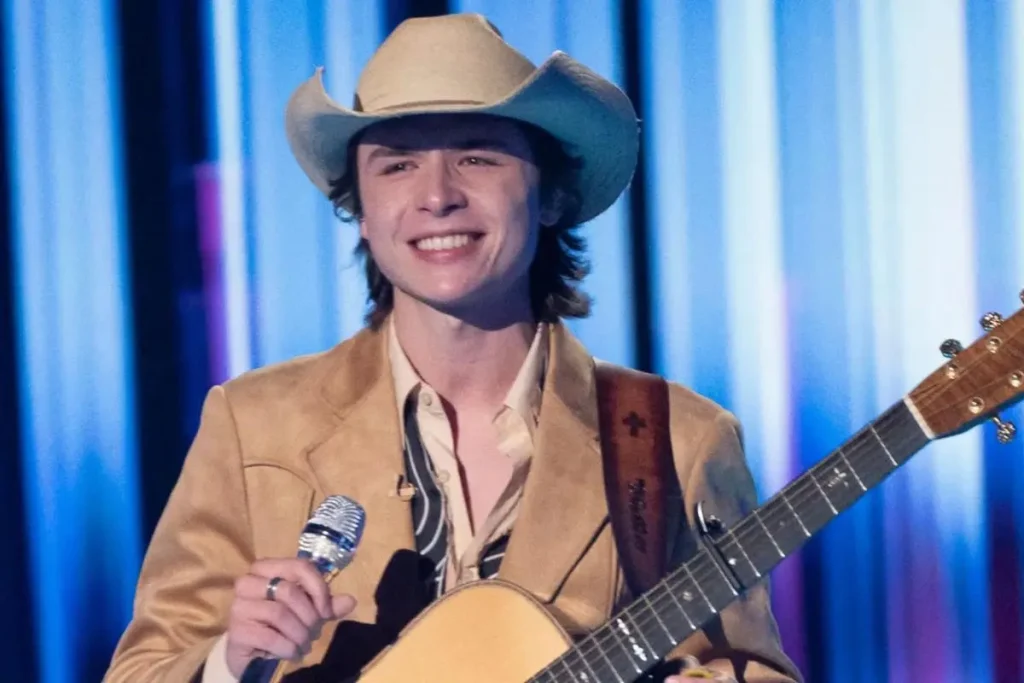
Every season of American Idol promises a “moment” that feels bigger than the show: the audition (or live performance) where a contestant stops playing the game and starts acting like an artist. John Foster, an 18-year-old country singer-songwriter from Benton, Kentucky, is being talked about in exactly those terms after performing an original tearjerker that hit the room like a cold front rolling over a cornfield.
Online chatter has painted the scene in cinematic detail: worn-in boots, a small-town twang, and lyrics aimed straight at the soft part of the ribcage. Some posts even claim judges were openly emotional and that Carrie Underwood (now part of the on-air Idol universe in 2025) called him “the future of country music.” Those are big claims, and the smart way to process them is to separate verifiable show facts from the viral glow that always follows a breakout performance.
“A great song doesn’t just tell you what happened – it makes you feel what happened.”
– Garth Brooks
What we can verify (and what we can’t) about the “John Foster moment”
American Idol is an ABC series with a weekly news pipeline and a well-oiled highlight machine, which means the official record matters when you’re trying to confirm a specific quote or reaction. The show’s official hub is ABC’s American Idol page, which is where episode recaps, clips, and contestant features are typically referenced.
What’s harder: confirming viral quotes word-for-word if they’re circulating as captions, fan edits, or stitched TikToks. If you saw a line like “Y’all, we just found the future of country music!” attributed to a judge, treat it as unverified until you can match it to an official clip or transcript – because the internet is allergic to accuracy when it’s busy falling in love.
Why his original song (apparently) landed so hard
Even without a full transcript, the most repeated lyric fragment (“Heaven knows I miss her, tell that angel I love her…”) signals a classic country structure: plain language, direct loss, spiritual imagery, and a conversational hook. That blend isn’t new, but it stays effective because it puts the listener inside a scene instead of outside it.
Country audiences are famously picky about “realness,” and a young singer can get side-eyed fast if the emotion feels borrowed. But when a contestant performs an original that sounds lived-in, the crowd tends to forgive everything else: nervous hands, slightly sharp notes, even a beginner’s strum pattern.
The “tearjerker” formula (when it’s done right)
- One clear relationship (lover, parent, friend) rather than a vague “you.”
- Specific details that imply memory (a place, a habit, a phrase).
- A spiritual or symbolic frame (“angel,” “heaven,” “prayer”) that expands the emotion without getting preachy.
- A chorus that can be quoted by people who don’t know the verses.
Is he “new country,” traditional country, or something else?
“New country” is a messy label. Sometimes it means pop-leaning production and arena hooks; other times it means a young singer reviving older storytelling values with modern phrasing. Foster’s appeal, based on the way viewers describe him, sits in the second category: traditional emotional stakes delivered with young-person immediacy.
This matters because Idol winners and finalists don’t just need a good voice – they need a market story. “Small-town Kentucky kid writing his own heartbreak songs” is a cleaner narrative than “good singer who covers hits,” and the show knows it.
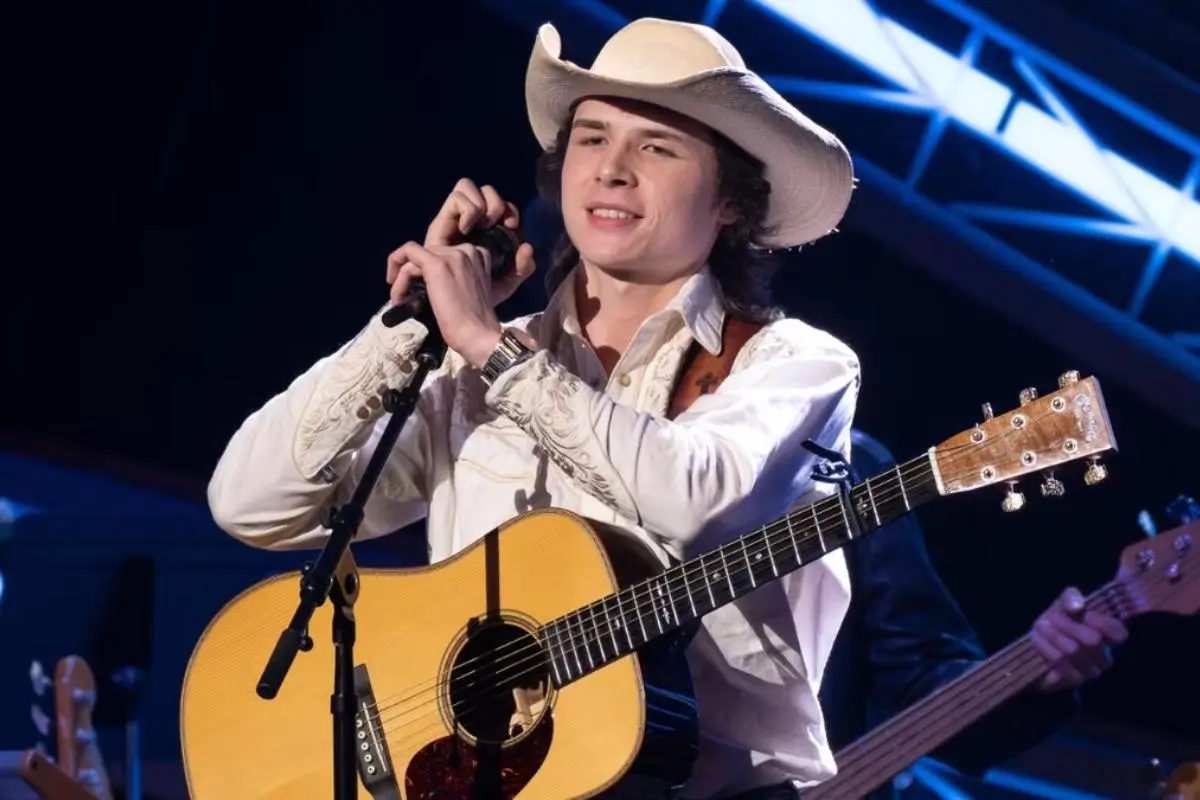
The instrument angle: why a guitar changes how we hear him
At Know Your Instrument, we’ll say it plainly: singing while playing guitar is a credibility multiplier on TV, especially in country. The guitar does three things at once: it gives the singer something to do with nerves, it makes the performance feel “self-contained,” and it signals authorship even before the audience hears the word “original.”
Also, the sonic palette of a solo acoustic performance forces vocal tone to do the heavy lifting. If Foster’s voice is really as smooth as fans say, a minimal accompaniment would make that texture impossible to ignore.
Three performance choices that win televised country crowds
- Keep the strum steady so the lyric stays front and center.
- Lean into consonants (t, k, d) so the story reads clearly through broadcast compression.
- Save the big note for a single peak; multiple peaks feel like trying too hard.
American Idol’s “country pipeline” is real (and it cuts both ways)
American Idol has a long history of producing country stars, and the format itself tends to reward country because the genre is built on direct connection. The show’s brand and longevity are well documented, including its network history and judging eras.
But there’s a catch: TV country can become a costume. The hat, the boots, the “aw shucks” charm – they work until the audience senses packaging. If Foster is the real deal, his safest move is to keep the visuals simple and let songwriting remain the headline.
About those judge reactions: how to evaluate what you’re hearing
When people say “Lionel Richie was dabbing his eyes,” that’s plausible because emotional judge reactions are part of the show’s language. But the exact phrasing matters if you’re treating it as a quote rather than a vibe. For ongoing entertainment coverage that can help you verify what actually aired, start with recaps and reporting on American Idol moments before trusting isolated fan clips.
If you’re watching fan clips, check for edits that cut away from the audio or splice different moments together. Viral content frequently rearranges reaction shots, and the more “perfect” the timing, the more skeptical you should be.
The bigger question: can a teenager sell adult heartbreak?
This is where the conversation gets spicy. Country fans love authenticity, but they also love interpretation. An 18-year-old doesn’t need a lifetime of loss to sing about loss well; he needs observational skill, a strong melodic instinct, and the willingness to sound emotionally exposed on national TV.
Still, the industry will test him. If he leans too far into “sad boy ballads,” he risks being typecast. If he pivots too quickly into party-country, he risks losing the one thing that made people stop scrolling.
What Foster should do next (practical career moves that actually matter)
Whether he wins or not, the post-Idol window is brutally short. The goal is to convert “that kid from TV” into “an artist with a catalog.” Here’s the playbook that tends to separate long-term careers from one-season fireworks.
1) Lock down songwriting and publishing basics
Original songs create opportunity and legal complexity at the same time. Foster should make sure he understands how performance royalties and publishing work by registering with a performing rights organization such as a performing-rights organization and royalty basics.
2) Record a clean, honest studio version of the breakout song
The studio cut should match what people fell in love with: simple, emotional, and lyric-forward. Overproduction is the fastest way to turn a tearjerker into background music.
3) Build a three-song identity, not a one-song moment
He needs two more originals that show range: one uptempo with storytelling swagger, and one mid-tempo that proves he can write beyond pure tragedy. That trio becomes the foundation for an EP, a live set, and a label conversation.
4) Protect the “small-town” brand by doing real small-town things
Play county fairs. Do radio visits in regional markets. Keep the social media tone human. That’s not nostalgia; it’s country music’s relationship infrastructure.
Why viewers are calling him “the one to watch”
When a young performer hits with an original song on a show built on covers, audiences respond because it feels like discovering someone early. Even basic background about the series’ reach and evolution helps explain why a single performance can jump from TV to national conversation overnight, and the show’s long-running format and cultural footprint are a big part of that.
And if you want the blunt truth: talent is common, but story clarity is rare. A singer who can make millions of strangers feel like they know exactly who he is after two minutes has a real shot in 2025’s crowded country landscape.

Quick listener’s checklist: is the hype deserved?
| What to listen for | Why it matters |
|---|---|
| Lyric specificity | Specific beats generic every time on TV. |
| Pitch under pressure | Emotion is great; consistent intonation is a career. |
| Dynamic control | Great singers get quiet on purpose, not by accident. |
| Believability | Country is a trust exercise between artist and audience. |
Where to watch and follow the official trail
For the most reliable clips and updates, start with ABC’s official show page and news hub rather than reposts. If you want to track how the broader entertainment press frames the season, season coverage and roundups of big Idol moments can help you see what’s getting emphasized.
Social platforms can be useful for quick highlights, but treat them as secondary evidence. Even an official account can post short edits that remove context, and unofficial accounts will absolutely post “quotes” that were never spoken.
Conclusion: Foster might be a moment – or he might be a career
John Foster’s buzz fits a pattern we’ve seen before: a young country voice, an original song, and a room full of people reacting like they’ve been waiting for this exact type of artist. If the performance was as strong as fans claim, the next step is simple: repeat the magic without repeating the trick.
Country music doesn’t need another perfectly polished reality-TV graduate. It needs writers with nerve, singers who can live inside a lyric, and performers who can make a guitar feel like a confession. If Foster can keep that promise beyond the Idol stage, the hype won’t be hype for long.


