
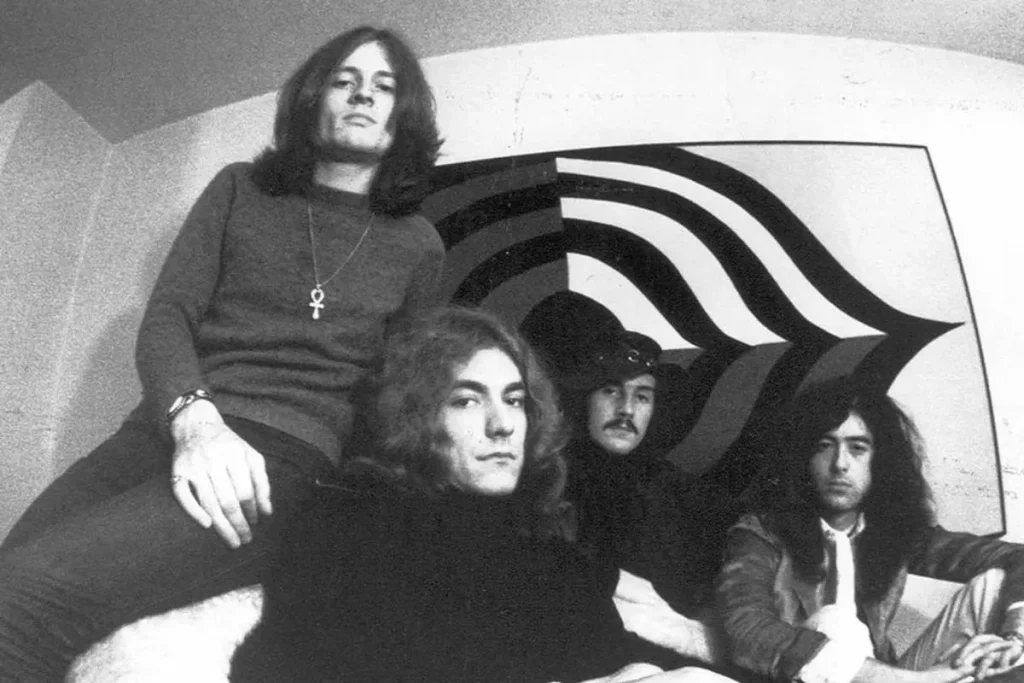
Some debut albums sound like a band introducing itself. Bad Company (1974) sounds like a band already closing arenas, already sure of its swing, already bored with showing off. It is the rare first statement that feels less like a launch and more like a takeover.
The origin story has the kind of rock mythology you almost want to roll your eyes at: a new supergroup signs to Led Zeppelin’s freshly minted label, sets up in the same creaky English mansion where Zeppelin chased thunder, and comes out with a record so direct it practically invents “classic rock radio” before classic rock radio knows it exists. It is also, inconveniently, true enough to be useful.
From “new band” to instant institution
Bad Company formed out of serious pedigree: Paul Rodgers and Simon Kirke had been the engine room of Free, while guitarist Mick Ralphs came from Mott the Hoople. The new band’s first major move was signing to Swan Song Records, the label launched by Led Zeppelin as both power play and sanctuary for artists they believed in.
Swan Song’s early roster had a “we do what we want” vibe, and that matters. Bad Company were not trying to win over gatekeepers with cleverness. They were aiming for something more dangerous: songs that feel inevitable.
Headley Grange: the “good mojo” studio that wasn’t a studio
Headley Grange is not Abbey Road. It’s a former workhouse turned residential estate, and in the rock imagination it functions like a haunted amplifier: bring a mobile recording rig, crank up, and the building gives you back a bigger version of yourself. The place is famously tied to Led Zeppelin’s most mythologized sessions, including work that fed into Led Zeppelin IV – and it’s also where the band cut their debut, as detailed in the story behind Bad Company’s debut album.
Paul Rodgers pushed for Bad Company to cut their debut there, and it makes sense when you listen. The album has space around the instruments, a natural room punch on drums, and a vocal that feels like it’s coming from a human being in front of you, not from a glossy production plan.
“Rock & roll is really more of an attitude than a style: it’s about getting on stage and telling the truth.” – Paul Rodgers
That ethos, not just the location, is the real “mojo.” When you choose a place that encourages performance over perfection, you commit to the take. You commit to the moment.
The sound: less flash, more force
If you want a single sentence summary, try this: Bad Company is hard rock without the circus tricks. It is riffs, groove, hooks, and a singer who can turn two syllables into a headline.
Why the production still works
- Guitars stay midrange and muscular – more bark than sparkle.
- Drums feel like a band in a room – present but not hyped into parody.
- Vocals sit forward – Rodgers is the emotional narrator, not a texture.
- Arrangements are economical – no “look what we can do,” only “here’s the song.”
That economy is why the album has aged better than a lot of 1974 hard rock. Where many records of the era chase bigness, this one chases impact.
Track-by-track: the hits that made the myth
The album’s reputation is not built on deep-cut apologetics. The big songs really are that strong, and each one shows a different method of dominating a room.
“Can’t Get Enough”: the riff as an opening argument
“Can’t Get Enough” is a masterclass in saying the most with the fewest notes. Mick Ralphs’ riff is blunt, catchy, and perfectly spaced, like it was designed to echo off sports arenas before anyone booked them.
Song histories of “Can’t Get Enough” consistently point to Ralphs bringing the core idea in, with the band shaping it into the version that became the breakthrough single.
“Rock Steady”: groove over speed
“Rock Steady” is the “don’t rush it” anthem that still feels like a threat. It’s less about volume than swagger: the band sits in the pocket and lets the chorus land with confidence instead of fireworks.
“Ready for Love”: proof they weren’t just a bar-band fantasy
“Ready for Love” adds tension and shade to the album’s mostly sunlit punch. It also carries history: the song existed in an earlier form connected to Rodgers’ pre-Bad Company writing, then got the bigger, heavier framing it deserved on the debut.
“Bad Company”: the title track as a manifesto
There’s a reason the title track endures. It plays like a slow walk into trouble, cinematic and self-mythologizing, but never cartoonish. The chorus is a brand stamp: once you hear it, you know exactly who you’re dealing with.
One persistent bit of trivia: the band name and the song title also intersect with earlier cultural material (including the 1972 film Bad Company), which helped the phrase feel instantly familiar rather than invented – an angle echoed in the album’s reissue notes and packaging.
Did it really hit #1 and sell millions? Yes, and the details matter
The commercial story is not just “successful debut.” Bad Company reached No. 1 on the US album chart and stayed a staple seller long after the initial run, becoming one of those records that never truly leaves circulation.
On the certification side, the album is widely documented as multi-platinum in the United States, commonly cited at 5x Platinum, which translates to five million units certified under RIAA rules for albums.
Here’s the uncomfortable take: if a debut can go No. 1 with this kind of stripped-down songwriting, the “more complicated equals more artistic” argument starts to wobble. Bad Company didn’t win by being clever. They won by being undeniable.
Why critics and musicians keep coming back to it
Plenty of albums sell. Fewer become templates. The debut’s afterlife shows up in how critics and musicians talk about it: as a benchmark for unpretentious hard rock that still feels premium.
Critical canon talk around the album’s directness and songcraft often frames Bad Company as essential listening rather than nostalgia.
Retrospectives also tend to frame the album as the moment the members’ past experiences crystalized into something cleaner and broader than their previous bands, without sacrificing grit.
What Headley Grange “taught” Bad Company (and what modern bands can steal)
You don’t need an English mansion to learn the lesson. The point is how constraints and environment push a band toward performances that feel alive. If you record like you’re building a museum piece, you usually get one.
Steal these practical moves
- Choose a room that flatters drums and commit to capturing ambience early, not faking it later.
- Rehearse arrangements until they’re boring – then record, so the emotion is free to move.
- Track with sightlines so players respond to each other, not to a click track’s authority.
- Keep guitar tones honest: one great amp sound beats five layers of “fix it in the mix.”
- Let the vocal lead the mix if the singer is your identity (Rodgers absolutely was).
If you want to understand why this works, compare it to modern hard rock productions that compress the life out of a band. Bad Company breathes, and breathing is what makes it feel powerful decades later.
The Swan Song effect: credibility, distribution, and attitude
Signing to Swan Song did more than create a cool logo on the sleeve. It also positioned Bad Company inside Zeppelin’s gravitational field, with the implied message: “this band is protected.” The label’s formation and mission is well documented as Zeppelin’s move to control releases and champion select artists.
That affiliation can be dangerous – it invites constant comparison. Bad Company’s trick was refusing to play Zeppelin’s game. They offered something Zeppelin didn’t: compact songs you could sing in the car without needing a 9-minute detour.
Collector and listener notes: which versions to check out
Reissues keep coming because the core audience never really left. The fact that the band later announced a reissue campaign for their first six albums is a neat reminder that this catalog is still treated like a living thing, not a museum piece.
If you’re hunting for the “feel” more than the extras, prioritize versions that preserve dynamics and don’t turn the cymbals into sandpaper. The album’s magic is in the natural push and pull, not in hyper-detail.
Conclusion: the debut that made “no nonsense” sound like a superpower
Bad Company’s first album is not legendary because it’s rare or obscure. It’s legendary because it’s simple in the hardest way: every song has to work, every performance has to hit, and there’s nowhere to hide. The Headley Grange gamble gave it a room to roar, Swan Song gave it a platform, and the band gave it discipline.
If you want to understand how a rock band becomes a household name without gimmicks, put on the title track loud and listen to how calmly it dares you to look away. You won’t.


