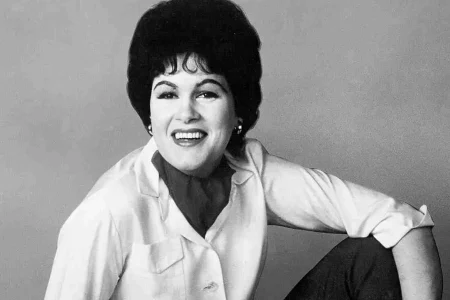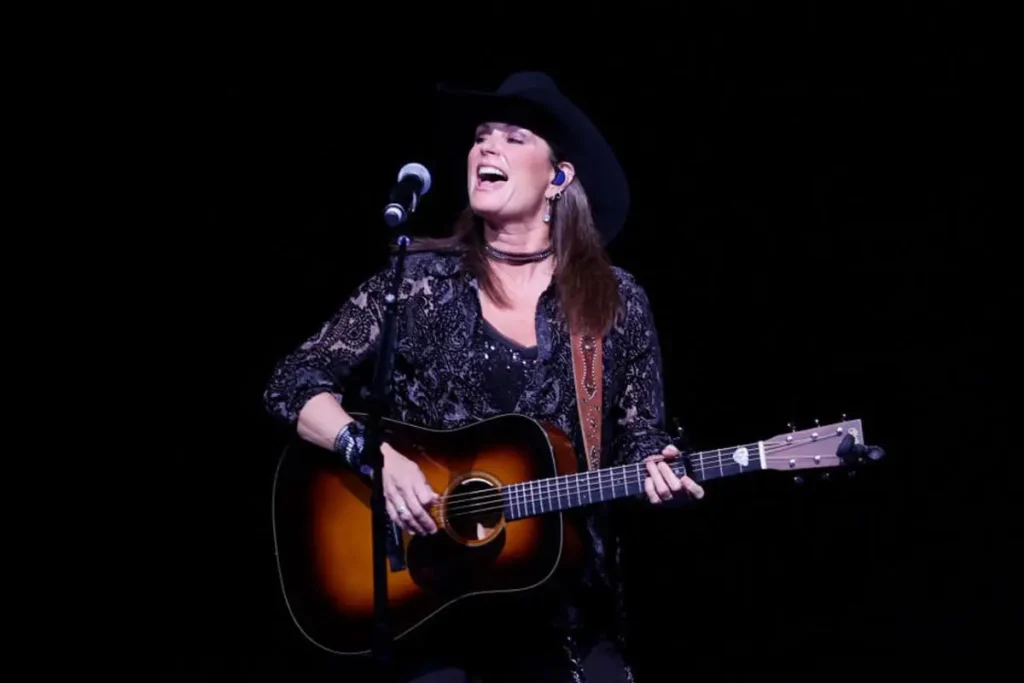
Terri Clark is proof that country music does not belong to one zip code. Born in Montreal, Quebec, she walked into Nashville with a Canadian accent, a Telecaster mentality, and a stubborn streak that fit the genre better than any costume ever could. Her career is a reminder that country is not about geography – it is about nerve.
Clark’s story also pokes at a comfortable myth: that the Grand Ole Opry is only for artists who “come up the right way” inside the American system. She did not. She earned her spot by being too good, too consistent, and too un-ignorable for the gate to stay closed.
Born in Montreal, but built for honky-tonks
Terri Clark was born in Montreal, Quebec, Canada, and her Canadian roots remain a central part of her public identity and recognition. That basic biographical fact matters because it frames what came next: a cross-border climb into a genre that can be territorial about authenticity. Her birthplace and early background are widely documented in standard biographical references.
Before the Opry spotlights and arena sing-alongs, she was a working musician learning the unglamorous side of the craft: keeping time, reading crowds, and understanding that “great tone” is worthless if you cannot deliver under pressure. If you want a single reason she lasted, it is this: Clark learned to be dependable before she learned to be famous.
The Nashville leap: why her “outsider” angle worked
Nashville is packed with talent, but it is also packed with people who sound like they were designed by committee. Clark arrived as an outsider, and instead of sanding down her edges, she made them the point. That is a risky move in any genre, and especially in a town where gatekeepers can smell desperation.
Her standing as an Opry member and her broader profile as a major figure in modern country are the kind of institutional recognition that artists do not get through luck alone. Clark’s career is built on the kind of work ethic that looks boring until you realize it is rarer than raw talent.
“It’s not about being perfect. It’s about being real.” – Terri Clark (paraphrased sentiment commonly expressed in her interviews and public commentary)
The point is not the exact wording, it is the worldview: deliver the song honestly, and audiences will forgive a lot. That philosophy is the backbone of the hits that made her a staple on country radio.

Three signature hits and what they reveal about her style
Terri Clark’s catalog is bigger than any three titles, but a few songs are useful as shorthand for her lane. They show how she balances toughness, humor, and emotional clarity without sounding like she is trying to win a debate.
“Girls Lie Too”: the playful provocation that aged well
“Girls Lie Too” is mischievous, but it is also pointed: it flips a familiar country trope without turning into a lecture. The genius is that the hook is funny enough for casual listeners, while the subtext lands for anyone who has lived through a messy breakup and decided to reclaim the narrative.
What makes Clark convincing is that she sells the attitude without sounding cartoonish. In country music, the difference between “sassy” and “cringe” is usually phrasing, timing, and whether the singer sounds like they have actually earned the confidence.
“Better Things to Do”: efficiency as a weapon
“Better Things to Do” is a masterclass in short, sharp storytelling. No wandering verses, no emotional over-explaining – just a firm boundary set to a beat you can drive to. Clark has always been good at this: cutting to the emotional bottom line fast, like a great barroom conversation.
For older listeners who grew up on concise songwriting, this track hits because it respects your time. It is country music acting like country music.
“Poor Poor Pitiful Me”: honoring the source, owning the moment
Clark’s version of “Poor Poor Pitiful Me” is a reminder that a cover can be a statement, not a shortcut. It is a song with history, and she approaches it like a working musician: keep what is essential, then add your own grit. The result feels like a live-band performance captured on tape, not a museum piece.
If you want to understand her appeal, listen to how she phrases the lines – she sounds amused and irritated at the same time, which is exactly how real people tell stories when life gets ridiculous.
The Grand Ole Opry: membership as a career verdict
Plenty of artists have hits. Far fewer are invited into the Grand Ole Opry, where membership signals more than popularity: it signals trust. The Opry profile positions Clark as an official member, embedding her into the institution that has defined country’s public image for generations.
Here is the edgy part: Opry membership is not just an honor – it is a kind of industry verdict on whether you are built to last. It suggests your peers believe you can represent the music when trends shift and the attention moves elsewhere.
Canadian Hall of Fame honors: the home-country stamp
Clark’s career is a rare case where cross-border success did not dilute her Canadian recognition. She is listed among inductees in the Canadian Music Hall of Fame, an honor administered through the JUNO Awards ecosystem.
She was also inducted into the Canadian Country Music Hall of Fame, adding a genre-specific legacy marker in her home country. The CCMA’s Hall of Fame program documents the institution that celebrates artists who shaped Canadian country music at a national level.
These honors matter because they are not purely commercial metrics. They are cultural receipts – a way of saying, “This artist changed the conversation.”
Why Terri Clark mattered in the ’90s, and why she still matters now
The ’90s produced a generation of women who could headline, but were often pressured to fit narrow “radio-friendly” templates. Clark’s records kept a muscular, guitar-forward feel while still landing on mainstream playlists, which is a harder balancing act than it sounds. She had the hooks, but she also had backbone.
Her durability also challenges a lazy story people tell about country music: that it only rewards novelty. Clark’s career argues the opposite – that the genre quietly rewards people who tour, sing live, and do not fake the accent of the week.

Listening guide: start here if you only know the hits
If you are revisiting Terri Clark after a long break, build a quick playlist that shows range rather than just chart position. Use the hits as entry points, then follow the thread of her voice: conversational, slightly raspy, and confident without over-singing.
| What you want | Play this Terri Clark mood | Why it works |
|---|---|---|
| Funny, sharp, and relatable | “Girls Lie Too” energy | Flips the script without sounding preachy |
| Breakup strength | “Better Things to Do” attitude | Boundary-setting country, no wasted words |
| Classic-rock grit in a country frame | “Poor Poor Pitiful Me” swagger | Proves she can inhabit a song with history |
What musicians can steal from Terri Clark (in the best way)
1) Treat the vocal like conversation, not gymnastics
Clark rarely sounds like she is trying to impress you. She sounds like she is telling you something, which is more persuasive than any high note. That approach is especially effective in country, where the lyric is supposed to land like truth.
2) Make the band feel like a band
Even on polished recordings, her music often keeps a live, human pulse. That “players-first” sensibility is what lets her catalog travel across decades without feeling trapped in a production trend.
3) Let identity be real, not marketed
Clark’s Canadian background is not a gimmick. It is simply part of who she is, and audiences can tell the difference. Her biography is widely summarized in overviews of her Canadian country career, reinforcing that she never had to choose between authenticity and ambition.
Fast facts: Terri Clark in one snapshot
- Born in Montreal, Quebec, Canada
- Grand Ole Opry member
- Inductee: Canadian Music Hall of Fame (JUNO Awards)
- Honored by Canadian Country Music Hall of Fame program (CCMA)
Conclusion: the secret is not the spotlight, it’s the stamina
Terri Clark’s career is what happens when a great singer refuses to wait for permission. She took a Montreal beginning and turned it into a Nashville-certified legacy, then brought that legacy back home to be honored in Canada’s biggest music institutions. If country music is supposed to be honest, her story is one of its most believable verses.