
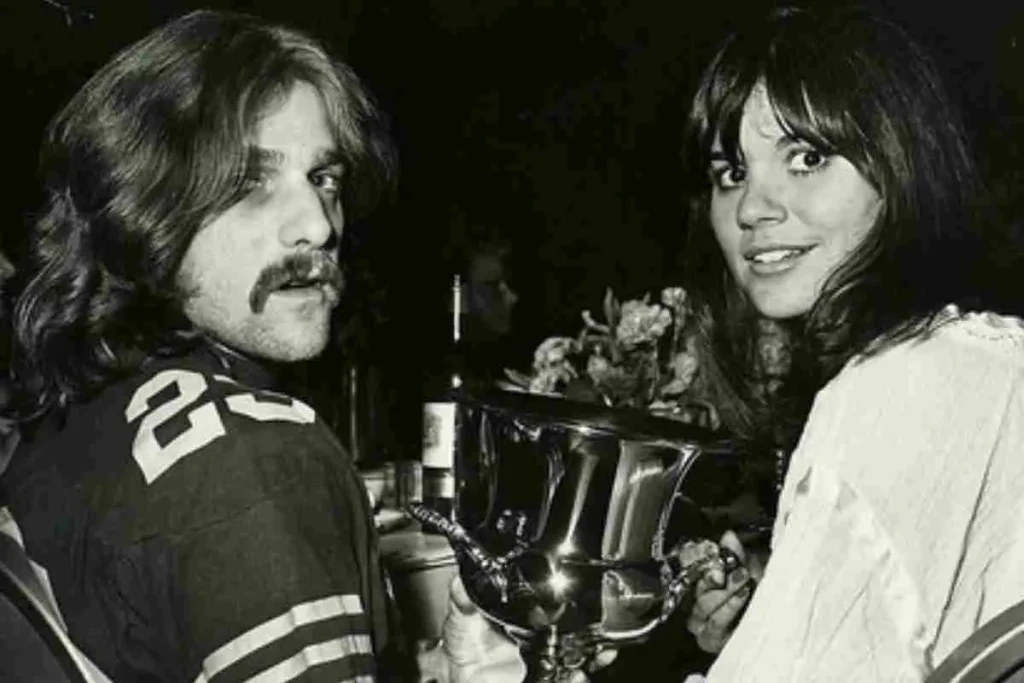
There are celebrity rumors, and then there are celebrity rumors with a photograph: one frozen frame that looks like the first chapter of a scandal. In 1976, Mick Jagger and Linda Ronstadt posed for photos at Ronnie Wood’s house in Malibu, California. It is one of those images that practically dares you to invent a storyline.
The question that keeps getting re-litigated is simple and spicy: did they or didn’t they? Did the shoot turn into a flirtation, a hook-up, or something more, before, during, or after the rendezvous?
Let’s treat it like music history, not fan fiction. We’ll separate the documented facts (who, where, why the photo exists) from the softer stuff (what people “heard,” what the body language “suggests,” and what’s missing from the record). And yes, we’ll address the sexual-rumor angle, but with the grown-up rule: extraordinary claims need something sturdier than vibes.
The hard facts: the photo exists, and it’s tied to Ronnie Wood’s Malibu orbit
The anchor point is the photo itself: Jagger and Ronstadt captured together in 1976 at Ronnie Wood’s house in Malibu, as described in the captioning and metadata attached to widely circulated image listings. That detail matters because it pins the encounter to a real place, a real year, and a real social ecosystem rather than an anonymous “backstage” myth.
Ronnie Wood was not just “the other guy in the photo.” By the mid-1970s, he was a key connector in the Stones’ world, newly integrated into the band and deeply embedded in the Los Angeles to Malibu party circuit that overlapped with West Coast rock royalty.
Linda Ronstadt, meanwhile, was at a commercial and cultural peak. If you want to understand why her presence in any rock-star tableau read as electric, it’s because she was not a “guest singer.” She was a headline force with crossover power and a public image that mixed toughness and glamour, as outlined in her career biography.
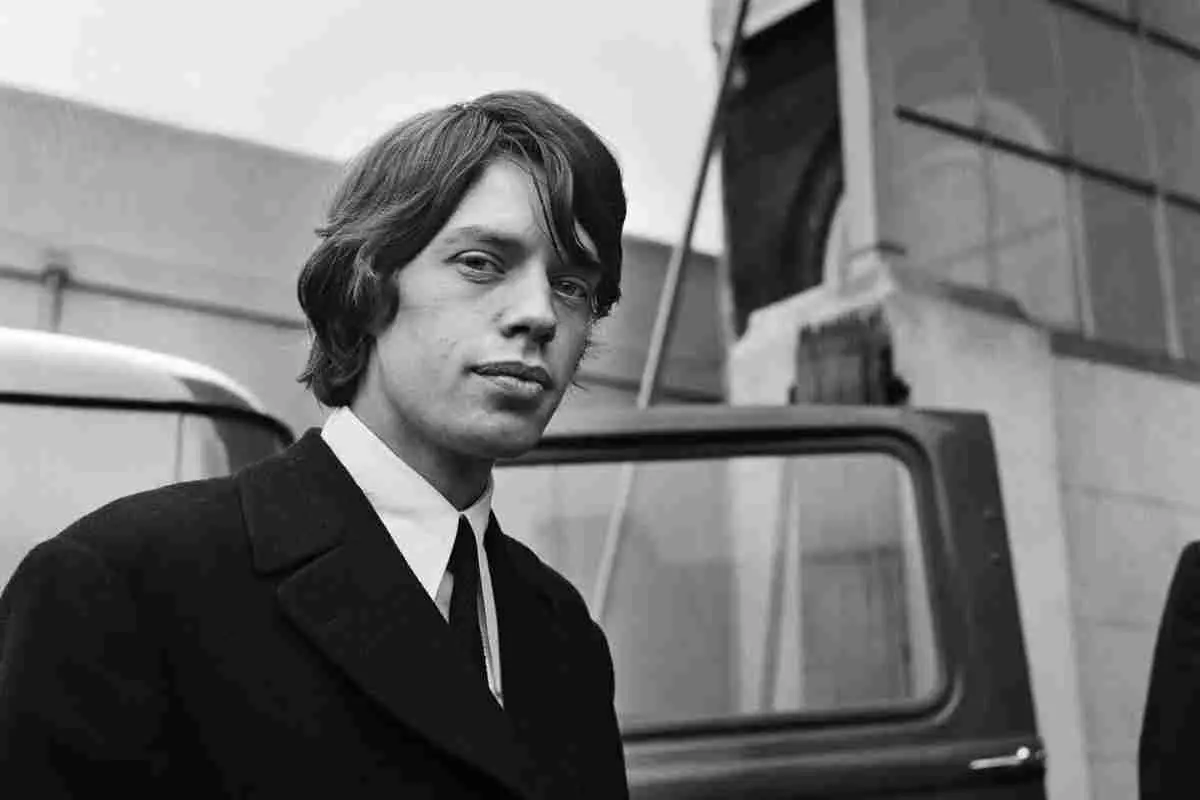
Why one photo detonated a thousand rumors
Rock culture is a rumor engine, and photography is its fuel. A single image can suggest chemistry, secrecy, and proximity, even if the reality was mundane: “come by, say hi, the photographer’s here.”
But the 1970s in particular created perfect conditions for romantic speculation. The era normalized blurred boundaries: afterparties as networking, friendships as alliances, and alliances as… well, sometimes as something else. The public also expects Jagger to be the protagonist of every temptation story because his biography is famously saturated with them – an idea reinforced by how his world is contextualized in long-running official artist narratives and public-facing histories.
Ronstadt’s public persona adds another spark. She was widely viewed as independent and selective, not someone easily slotted into the cliché of “groupie lore.” That contrast makes the idea of a Jagger-Ronstadt incident feel like a plot twist people want to be true.
What’s actually been said on record (and what hasn’t)
When stories are real in the rock world, they tend to leak in predictable places: memoirs, long-form interviews, authorized documentaries, or at least consistent secondhand accounts from people who were there. The Jagger-Ronstadt Malibu rendezvous has plenty of chatter, but not much in the way of direct, primary confirmation.
Ronstadt did publish a memoir, and it’s a sensible place you’d expect a memorable Jagger encounter to appear if it had emotional weight, lasting consequences, or the kind of hilarious disaster detail rock memoirs love. The very existence of major-publisher book projects about the era’s inner circles also matters because it sets a standard: the 1970s rock ecosystem has been documented in detail, and genuinely legendary anecdotes tend to surface somewhere in that record.
Ronnie Wood has also been the subject of major-profile projects that map his life and circles, which again is relevant: if the Malibu moment was a legendary tryst at his house, it is the kind of anecdote that usually becomes part of the Wood mythology, rather than living only as free-floating hearsay.
Instead, what you mostly find in the public record is the photo, the caption, and a long tail of “I always heard” retellings. That doesn’t disprove anything, but it does lower confidence.
Rumor taxonomy: five versions of the story people repeat
When you listen closely, the “did they” rumor actually splinters into several different claims. Sorting them helps you judge plausibility.
1) “It was just a photo shoot. Nothing happened.”
This is the boring version, but boring is often true. Malibu houses in that scene were social crossroads. People dropped by, hung out, got photographed, left. The fact that the image exists does not imply intimacy; it implies a camera. The simplest interpretation is that it was exactly what it looked like: a posed moment in a social setting.
2) “They flirted, but it never went further.”
This is the most psychologically realistic rumor. Two charismatic stars in their prime, in a relaxed setting, with friends nearby, could easily have shared playful energy. Flirting also leaves no paper trail. It survives as “everyone could feel it,” which is basically the native language of gossip.
3) “They hooked up that day.”
This is the claim people want because it completes the implied narrative arc. But it is also the version that demands evidence: a reliable witness, a quote, a consistent account, or a later admission. Without that, it lives in the same category as most rock-bedroom folklore: possible, but not responsibly assertable as fact.
4) “Something happened before or after, and the photo is just a clue.”
This version is popular because it solves a logical problem: if there’s no proof tied to the day of the shoot, maybe the relationship occurred off-camera. Again, it’s possible. It’s also unfalsifiable. And unfalsifiable stories are the ones that never die.
5) “It was staged to look provocative.”
Remember: celebrities have long understood how to weaponize imagery. A slightly suggestive photo creates headlines without requiring commitment to a real affair. In that sense, the “did they” energy could be an accidental byproduct of a staged hangout, or even an intentional one.
The credibility checklist: how to judge a rock rumor like a pro
If you’re going to discuss whether two real people had sex, your best move is to use a stricter filter than “it sounds right.” Here’s a practical checklist.
| Test | What counts as strong | Where the Jagger-Ronstadt rumor lands |
|---|---|---|
| Primary confirmation | Direct quote or memoir passage from either person | Not clearly established publicly |
| Consistent witnesses | Multiple named, reliable people tell the same story | Mostly anonymous or recycled |
| Timeline fit | Verified proximity and opportunity | Opportunity plausible due to shared scene |
| Motivation to hide | Clear reasons secrecy would be maintained | Possible, but not unique to this case |
| Independent documentation | Contemporaneous reporting, diaries, session notes | The photo is documentation, but not of sex |
So… did they? A responsible answer that still respects the intrigue
Based on what’s verifiable from authoritative, on-record material: we can confidently say they were photographed together at Ronnie Wood’s Malibu home in 1976, with the Malibu photo listing pinning the moment to a place and year.
We cannot responsibly say that they had sexual relations before, during, or after that day because public documentation does not appear to include a direct confirmation from either party or a corroborated contemporaneous account that meets basic credibility standards. That absence is especially notable given how exhaustively Jagger’s romantic history has been chronicled in the broader ecosystem of public profiles and career timelines.
However, “not provable” is not the same as “impossible.” In that social world, a flirtation or brief affair would be plausible. What’s missing is the part where plausible becomes demonstrable.

Why the rumor persists: fame, archetypes, and the irresistible mismatch
The story sticks because it is built from contrasting archetypes. Jagger is the classic libertine frontman. Ronstadt reads, to many fans, as the high-caliber artist who cannot be reduced to a conquest narrative. Put them in a Malibu room together and the public instantly imagines a power struggle or a spark. Ronstadt’s own ongoing presence in music media helps keep her stature – and the “what if” factor – alive in the culture.
It also persists because the “proof” is aesthetic. The photo offers body language for people to interpret. And body language is the world’s most convenient evidence because it can be read any way you want.
“Sometimes a photograph is less a document than an invitation.”
Joan Didion
Didion’s line isn’t about this specific image, but it explains the mechanism: photos invite stories, and celebrity culture supplies endless ink – especially in the kind of archived rock-media attention around figures like Ronnie Wood.
Malibu, 1976: the scene that made every hangout feel like a scandal
Ronnie Wood’s Malibu setting matters because it places the encounter in a famously porous social circuit where musicians, models, photographers, managers, and friends overlapped. One “private” house could function like a salon, a studio, and a party venue in the same afternoon.
Wood’s public career framing also supports the idea that his world blended art, music, and nightlife. Even when the project you’re looking at is about him as an artist, the surrounding story is about access and personality, the kind that turns a simple visit into a legend.
How to talk about it without turning it into gossip sludge
There is a way to keep the topic fun without slipping into invented certainty. Here’s the balanced approach:
- State the verified fact: they did a Malibu photo session connected to Ronnie Wood’s house, as reflected in archived photo captions and listings.
- Label the rest clearly: “rumored,” “speculated,” “unconfirmed.”
- Watch the power dynamics: sex rumors often erase women’s agency by default, especially in classic-rock storytelling.
- Keep the focus musical: the most interesting part is what it says about the 1970s rock ecosystem, not bedroom accounting.
Conclusion: the photo is real – the affair is a maybe, not a fact
That 1976 Malibu photo shoot is a genuine piece of rock ephemera: two major figures caught in Ronnie Wood’s gravitational field. The rest is interpretive theater.
If you want the most honest verdict, it’s this: the image proves they crossed paths. It does not prove they crossed lines. And that ambiguity is exactly why the rumor still sings.


