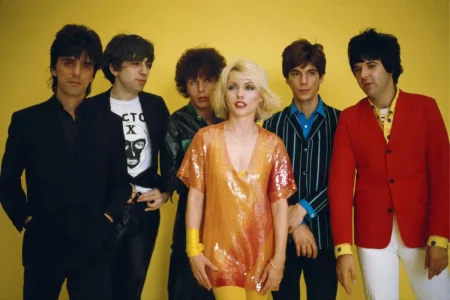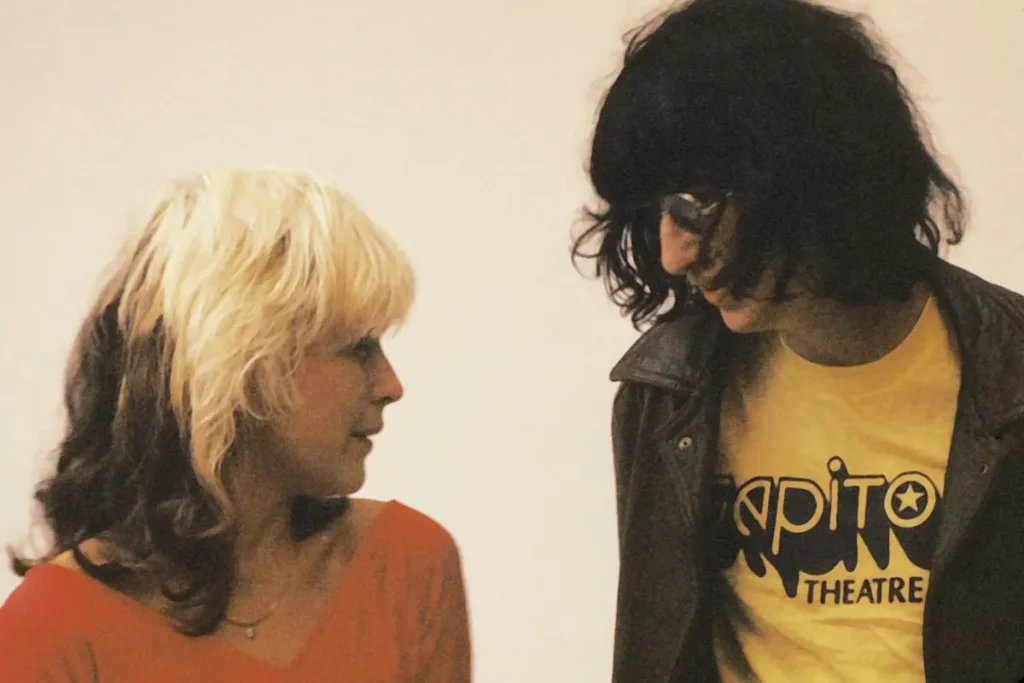
Punk loves to sell itself as a cold shower: no feelings, no soft edges, no sentimentality. But one of the most durable CBGB-era stories is basically a messy romantic triangle – and the reason it still hits is that it sounds exactly like a band argument turned into a three-chord anthem.
The short version: Joey Ramone nursed a serious crush on Blondie’s Debbie Harry. Debbie has said it was more of a crush than a full-blown romance. Then she dated Johnny Ramone, the Ramones guitarist and Joey’s long-running internal rival, and the band’s already-toxic chemistry got worse.
“He had a big crush on me.” – Debbie Harry, describing Joey Ramone
Why this story won’t die (and why it matters)
On paper, “singer has crush on scene icon” is not exactly rare. What makes this one legendary is the combination of (1) the Ramones’ famously brittle relationships, (2) Debbie Harry’s stature in the New York scene, and (3) the way fans mapped a specific song onto the drama.
That song is “The KKK Took My Baby Away,” released on Pleasant Dreams in 1981. The rumor says Joey wrote it after Debbie was “taken” by Johnny. It has never been definitively proven as the literal subject, but the lore persists because it fits the emotional temperature of the band and the punk-era New York timeline people repeat in interviews and books.
CBGB-era overlap: the same rooms, the same bills, the same mythology
The Ramones and Blondie didn’t emerge from different galaxies. They were part of the same downtown New York ecosystem of clubs, rehearsal spaces, photographers, and promoters, with CBGB as a key hub in the story people tell about punk’s birth – an overlap reflected in general Ramones overview context.
That scene closeness matters: a crush is easier to sustain when you’re always in the same rooms, watching the same sets, and building the same “we’re inventing something” camaraderie. Even when you’re not dating, you can still be emotionally entangled – especially in a small scene where everyone’s social life is also their work life.
Debbie Harry as a punk-adjacent lightning rod
Debbie Harry was not a background character. She was a frontwoman with pop instincts and downtown credibility, which meant she was visible to everyone – including Joey, whose songwriting often turned vulnerability into a cartoonish hook.
If you’re looking for a practical takeaway as a music fan: scenes create proximity, and proximity creates stories. Those stories then get “finished” by the songs that survive.
Joey’s crush: big feelings, not necessarily a big relationship
The most responsible way to describe Joey and Debbie is: friendly, connected through the same scene, with Joey carrying the bigger emotional charge. Debbie has spoken about Joey’s feelings in a way that emphasizes affection and intensity without necessarily labeling it as a sustained romance, including her recollection that Joey had a big crush on her.
And that distinction matters. Fans often hear “crush” and mentally rewrite it as “secret epic relationship.” But a crush can be powerful enough to change behavior, spark jealousy, and fuel songwriting – without ever becoming a conventional couple.
Joey’s persona also encourages romantic projection. He wrote like an outsider begging for a miracle, and he sang it in that half-sneer, half-plea delivery. If anyone was going to mythologize longing into punk scripture, it was Joey.
The twist: Debbie dates Johnny (and the band pays for it)
Here’s the part that turns a crush into a cautionary tale: Debbie later dated Johnny Ramone. That was always going to be gasoline on the Ramones’ internal fire, because Joey and Johnny were already ideologically and personally opposed for years.
Multiple accounts of the Ramones’ history describe the group dynamic as functional in a strictly mechanical way: show up, play fast, get paid, repeat. Emotional repair was not the band’s strong suit, and personal conflicts often sat unresolved for decades.
Johnny’s version (and why you should treat it carefully)
Johnny Ramone’s autobiography is one of the key texts fans point to when discussing his worldview and the band’s interpersonal coldness. It’s a primary viewpoint, but it’s also a self-portrait – blunt, selective, and proud of not being sentimental; you can track the book itself via the Open Library record for Commando.
That said, even the existence of the book reminds you what kind of operator Johnny was: disciplined, controlling, and not the type to prioritize band harmony over personal decisions. In a band with no HR department and no therapy vocabulary, that can be lethal.
“The KKK Took My Baby Away”: what the song says (and what it doesn’t)
Let’s separate the record from the rumor. “The KKK Took My Baby Away” is built like classic Ramones: bright tempo, singable melody, and lyrics that are both simple and unsettling. The title deploys the KKK as a grotesque villain, the kind of over-the-top shorthand Joey often used to make emotional pain feel like a crime story.
If you want the plain text of the lyric for your own reading, it’s widely reprinted and easy to compare against the fan theory via the song’s lyrics.
The strongest argument for the Debbie-Johnny theory
- It matches the vibe – a jealous, hurt narrator watching someone disappear behind a metaphorical mask.
- It matches the band’s reputation – the Ramones aired feelings indirectly, often through songs rather than conversations.
- It matches the human need for a “real story” – fans love when a great song has a specific name and face attached.
The strongest argument against over-certainty
- Punk lyrics are rarely court affidavits – Joey used exaggerated villains and comic-book language.
- Rumors harden into “facts” fast – repeated anecdotes can become more confident than their evidence.
- Even if inspired by real events, the final song can be a composite of multiple hurts.
Song lore sites often present the Debbie-Johnny connection as a popular explanation, but not an officially proven one, which is why it’s best treated as a widely repeated (not definitively settled) interpretation.

A quick timeline table (to keep the lore from turning into mush)
| Piece of the story | What’s generally agreed | What’s debated |
|---|---|---|
| Joey and Debbie in the same scene | They moved in overlapping NYC circles and were friendly, as suggested by broad scene-and-band overview histories. | How close, how often, and in what context. |
| Joey’s feelings | Debbie has described Joey as having a big crush. | Whether it ever became an on-and-off romance. |
| Debbie dates Johnny | It’s a widely circulated piece of the story in punk talk and media, including a BBC programme page that reflects the relationship being discussed as part of the lore. | Exact dates and the depth of the relationship. |
| Song attribution (“KKK”) | The theory is widespread and attached to band dynamics within the broader punk-era New York narrative. | Whether the song is literally about Debbie and Johnny. |
The uncomfortable question: did the Ramones’ dysfunction help the art?
It’s tempting to romanticize misery: “They hated each other, therefore genius.” Reality is uglier. A band can survive on discipline and routine, but it can also calcify – and the interpersonal cost can be enormous even when the records are great.
What this triangle reveals is a punk-specific contradiction. The music preached freedom and honesty, but the people often chose avoidance and control. When you don’t talk, you write songs. When you can’t resolve conflict, you tour through it.
“Punk” is often remembered as a sound, but it was also a social system: intense proximity, limited privacy, and constant judgment.
Listening guide: hear the story without turning it into tabloid fiction
If you want to explore the lore in a way that respects the music, use the songs as your anchor and treat the rumor as an optional lens.
1) Start with the track itself
Listen to “The KKK Took My Baby Away” and ask two questions: What emotion is it selling? What details are missing? The missing details are where mythology rushes in.
2) Compare it to Joey’s broader writing style
Joey often wrote about rejection, longing, and being shut out. When you hear the “KKK” lyric as hyperbole rather than reportage, the song becomes less of a gossip clue and more of a character study.
3) Read the band’s history with skepticism and empathy
Oral histories and memoir summaries can be brutally revealing, but they’re still curated memories. A book like Please Kill Me is essential for understanding how stories in the punk scene circulate and mutate, and one example of the way these stories get repeated is the popular “KKK” backstory write-up.
What Debbie Harry’s role really shows
In the popular retelling, Debbie becomes “the baby,” an object passed between feuding men. That’s the least interesting way to see it. The more honest read is that she was a major artist navigating a scene full of strong egos, and her choices triggered consequences inside a band that already ran on resentments.
Debbie isn’t responsible for the Ramones’ inability to process conflict. The triangle just exposed a weakness that was already there.
Conclusion: punk’s greatest love story is mostly about people refusing to talk
Joey Ramone’s crush on Debbie Harry, her later relationship with Johnny, and the shadow the rumor cast over “The KKK Took My Baby Away” are punk lore because they sound like punk: blunt, funny, cruel, and heartbreakingly human.
Whether the song is literally about Debbie is less important than what the story captures. In a scene built on speed and attitude, feelings still found a way to get loud.