Guns N’ Roses built their myth on danger, speed, and the sense that the whole thing could fly apart at any second. Then they did something that felt almost punk in the opposite direction: they disappeared into the studio for so long that Chinese Democracy became less an album than a running joke, a rumor, and finally a case study for how the modern music industry can lose control of its own machinery.
Between the end of the Use Your Illusion era and the eventual release of Chinese Democracy, the band’s public identity mutated, the lineup rotated, and the entire business model of rock changed. The record finally arrived in late 2008, after years of false starts and a reported budget that landed in the “multi-millions” category, with the most repeated number hovering around $13 million.
“It’s not the best record I’ve ever heard, but it’s better than I ever thought it could be.”
Chuck Klosterman, The New York Times (quoted in coverage of the album’s release)
The 17-year gap that turned an album into a meme (before memes)
Chinese Democracy is famous for being late, but the deeper story is what happened while it was late. Guns N’ Roses did not just take a long time between releases; they tried to build a new creative center of gravity around Axl Rose while the rest of the band’s classic chemistry drifted into history.
The official Guns N’ Roses discography now simply lists Chinese Democracy as a 2008 studio album, which is true in the narrow sense and hilarious in the broader context. When an album takes long enough, the wait becomes part of the marketing, even if nobody planned it that way.
Why the clock mattered so much
The delay coincided with the death of “album-cycle” rock culture and the rise of internet leaks, forum obsession, and 24/7 speculation. By the time the record landed, listeners were not just judging songs; they were judging the years.
One reason the saga hit so hard is that Guns N’ Roses were not a boutique art-rock project. They were one of the biggest rock brands on earth, inducted into the Rock & Roll Hall of Fame on the strength of an earlier, classic lineup and era.
What actually went wrong: rewrites, resets, and rotating lineups
There’s no single villain behind Chinese Democracy. The legend was built from a pileup: personnel changes, changing tastes, changing technology, and the kind of perfectionism that can be either genius or self-sabotage depending on the day.

Axl Rose as project manager (and the upside of obsession)
Whatever you think of the final record, it sounds like an artist who refused to deliver a half-finished draft. That determination can produce brilliance, but it also creates a brutal feedback loop: as years pass, expectations rise, and the temptation to redo everything becomes stronger.
Industry coverage at the time described a record that went through repeated studio approaches and personnel changes, which is a polite way of saying the “finish line” kept moving. The longer the project ran, the more it started behaving like a movie production with endless reshoots.
The band that shipped Theseus’s guitar
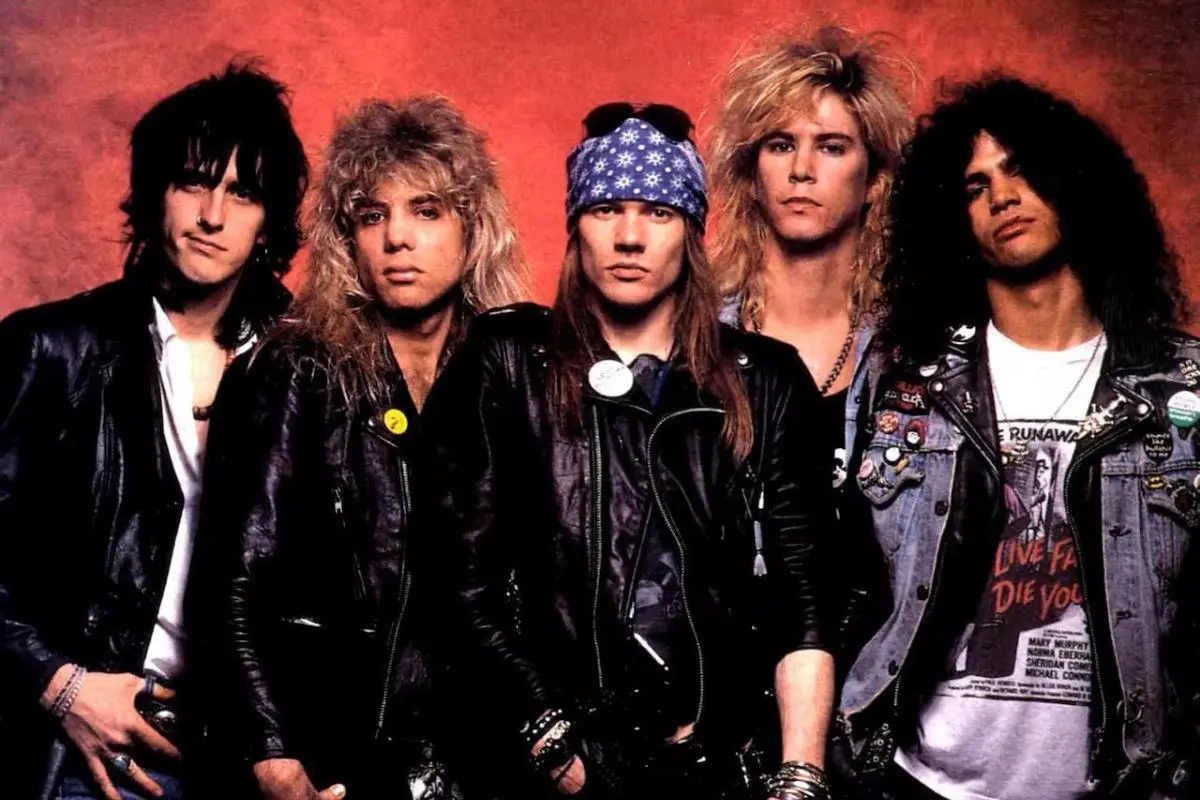
Part of the cultural friction is that fans were waiting for a Guns N’ Roses album, but the people making it were, in many periods, not the band they remembered. New players arrived, old players left, and the sound drifted toward a dense, modern, multi-layered rock style that fit the studio era it was built in.
That is not automatically bad, but it changes the emotional contract. It’s the difference between “the band is back” and “the brand is back.”
The money myth: was it really a $13 million album?
The headline number matters because it tells you what the industry thought rock albums could still be. In a world where recording budgets were already shrinking, Chinese Democracy stood out as an expensive outlier, and that expense became part of the record’s identity.
In 2005, The New York Times reported that the album had already cost at least $13 million, citing industry sources, and framed it as one of the most expensive recording projects in rock history. Whether the true total was exactly that figure or “multi-millions,” the point is that the album became a symbol of runaway costs.
Where big budgets really go (and why they can still fail)
A mega-budget doesn’t just buy “better songs.” It buys time, studio rooms, engineers, editors, gear rentals, producer changes, re-recordings, hard-drive archaeology, and the expensive process of deciding what not to use.
| Cost driver | How it shows up in long projects |
|---|---|
| Endless revisions | Redoing parts to match a new vision or a new lineup |
| Producer and engineer turnover | New teams bring new workflows and new “must-fix” lists |
| Technology changes | Sessions migrate across formats, DAWs, and storage systems |
| Decision fatigue | More options create more uncertainty, not necessarily better outcomes |
The release itself was weird: exclusivity, hype, and culture war energy
When Chinese Democracy finally became real, the release strategy felt like a time capsule from the last gasp of CD-era retail power. The album came out through a high-profile exclusive deal with Best Buy, which became part of the story almost as much as the songs.
Coverage of the release and its surrounding hype captured how formal and “big label” the rollout was, even though the album’s legend was essentially internet folklore by then.
The Dr Pepper moment: a punchline turned into marketing
One of the most telling side plots is the Dr Pepper promotion promising free soda if the album came out within a set window. It worked because it treated the album’s delay as public property, a shared joke that even a soft-drink brand could cash in on.
Fuse later summarized how that promotion amplified the record’s “will it ever happen?” aura and turned the wait into pop-culture theater.
Why it became a “never finished” legend (even after it was finished)
Here’s the twist: even after release, Chinese Democracy didn’t stop feeling unfinished to the public. Not because the mixes were rough or the performances were sloppy, but because the narrative demanded endless continuation: outtakes, alternate versions, “what could have been,” and arguments about which lineup counts.
That is what happens when a record’s process becomes more famous than its content. The album had to compete with a story that was already bigger than it could ever sound.
It also arrived in a different industry than it started in
The album began in a world of monster CD sales and ended in a world tilting toward downloads and streaming. That matters because massive recording budgets were traditionally justified by massive physical revenue, and that math was collapsing.
Even without pinning Chinese Democracy to a single industry statistic, the broader shift is undeniable: the project ran across the moment when the “big rock album as a financial engine” stopped being a safe bet.
What musicians can learn from the saga (without having a Geffen-sized budget)
You don’t need to make a 17-year record to learn from one. In fact, the useful lessons come from the pressure points: decision-making, version control, and the psychology of finishing.
Practical takeaways
- Set a finish definition before you start. Decide what “done” means (track count, deadline, sound palette) so perfectionism has a fence.
- Limit collaborators intentionally. A rotating cast can add color, but it can also erase identity.
- Archive like a professional. Long projects die in hard-drive chaos; name sessions, keep stems, and document versions.
- Don’t confuse “options” with “progress.” Ten guitar tones can be worse than one decisive tone.
If you want a nerdy reminder that formats and workflows matter, the UK National Archives’ PRONOM entry on the MP3 audio format underlines how quickly digital standards shift and why long-running sessions can become a technical headache.
So, is Chinese Democracy actually good?
It depends on what you came for. If you expected Appetite for Destruction 2, you were always going to hate it. If you treat it as Axl Rose’s maximalist, industrial-tinged hard rock opera, it’s far more interesting than the punchlines suggest.
A contemporary review argued the album was ambitious and polished, yet oddly detached from the sleazy street volatility that made the band legendary in the first place – an observation that captures the central tension at the heart of the Chinese Democracy-era reception. That mismatch is exactly why it fascinates people who don’t even like it.
Conclusion: the ultimate slow-motion rock record
Chinese Democracy became a music-industry legend because it inverted everything Guns N’ Roses represented at their peak: immediacy replaced by delay, chaos replaced by control, swagger replaced by architecture. The result is not just an album, but a warning label and a monument.
And maybe that’s the most punk part of the story: the band that once sounded like it could end mid-song built a record so overbuilt, overthought, and over-budgeted that it turned the idea of “rock spontaneity” into a debate topic for decades.