
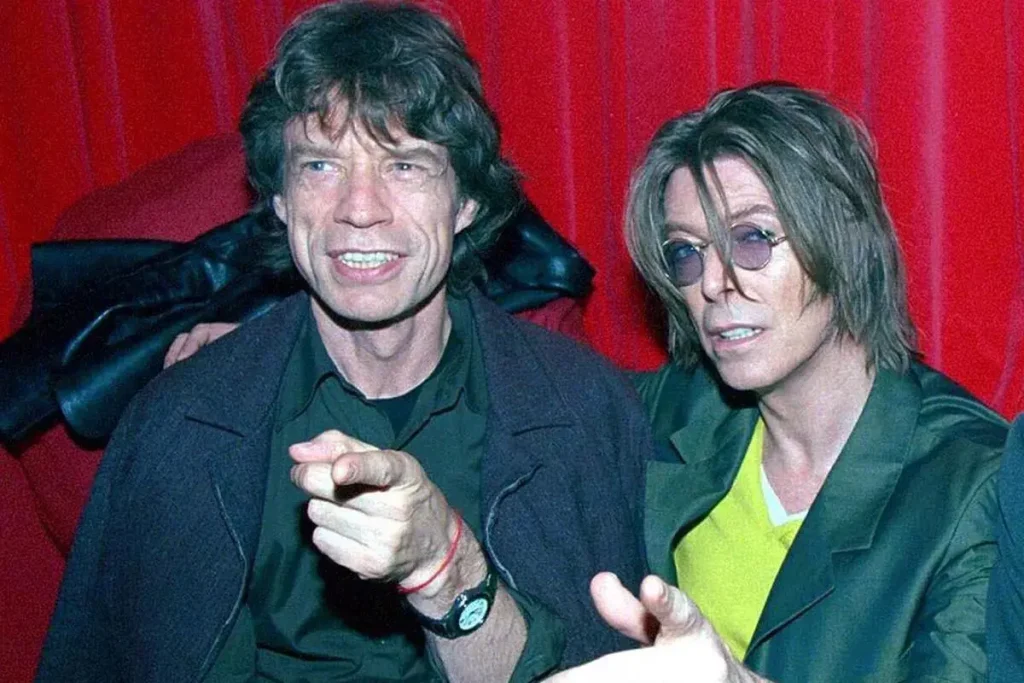
1973 is the year Mick Jagger and David Bowie stop feeling like “separate planets” and start looking like competing suns. Jagger is already rock’s most famous frontman, a man who can weaponize a hip swivel. Bowie is in his most combustible phase: Ziggy’s afterburn, Aladdin Sane’s nerves, and a reputation for turning identity into high art.
Put them in the same room and you get fascination, imitation, and a little fear. The relationship around 1973 was not a tidy “buddies who jammed” story. It was a high-voltage mix of admiration, opportunism, and the uncomfortable truth that both men understood the same thing: image is music, and music is power.
Why 1973 matters: both men were rewriting what a rock star could be
By 1973, Jagger had spent a decade building the Rolling Stones into a global brand of danger and pleasure. Bowie, meanwhile, was sprinting through personas and sounds fast enough to make yesterday’s self look obsolete. When two artists are that ambitious, friendship never stays purely personal.
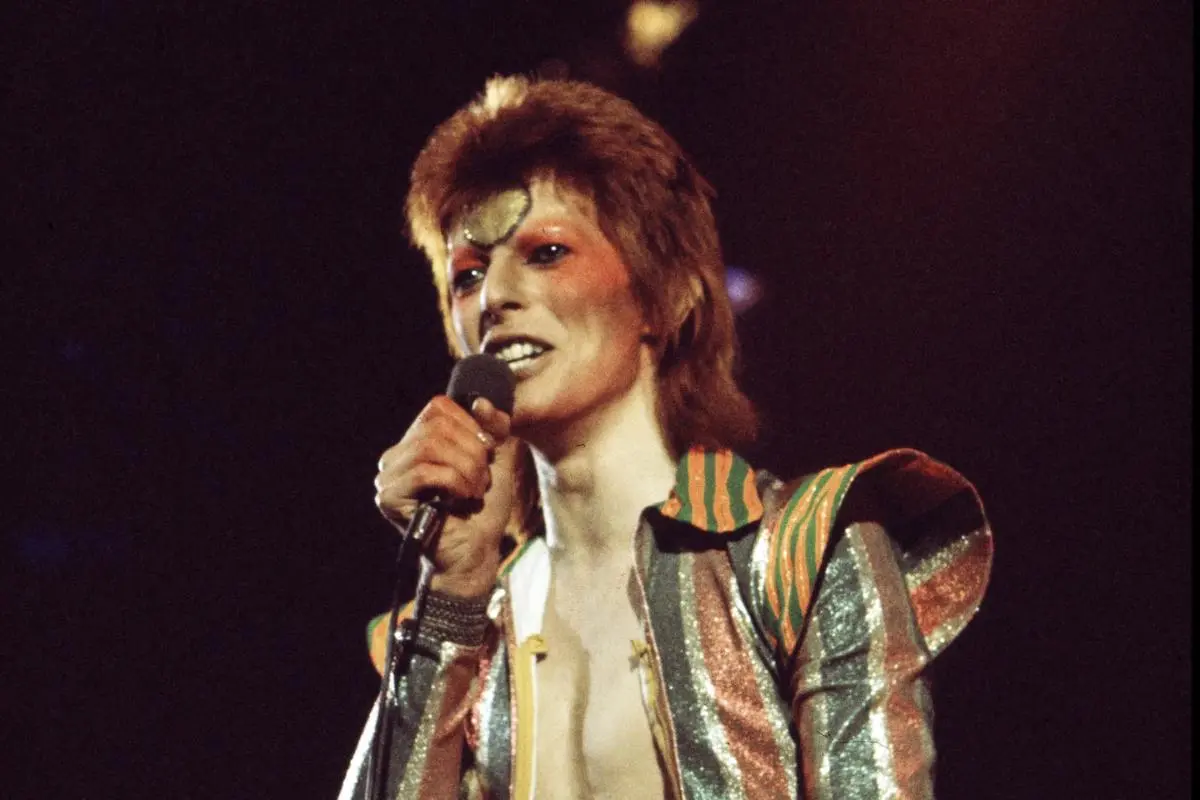
Bowie’s Aladdin Sane era is especially relevant because it’s where his “glam alien” aura begins to fuse with harder American rock instincts and a more predatory kind of stage charisma.
The magnetism: Bowie admired Jagger because Jagger made “performance” feel illegal
Bowie didn’t need to copy Jagger’s moves, but he clearly studied the Stones’ command of the crowd and their erotic threat. Jagger’s gift was making the audience feel complicit. Bowie’s gift was making the audience feel implicated.
On record, Bowie’s 1973 vocals sometimes flirt with that slurred, prowling delivery people associate with Jagger. “Watch That Man” is a useful case study: it’s messy, loud, and deliberately hard to parse, like a souvenir from a Stones show where the microphone is barely surviving.
Then there’s Bowie’s larger decision in 1973 to release Pin Ups, a covers album that openly worships the British scene that shaped him. It’s a move a younger Bowie probably wouldn’t have made because it admits lineage, and lineage points straight toward bands like the Stones as cultural gravity.
The rivalry: Jagger had reason to watch Bowie closely
Jagger did not become Jagger by ignoring new threats. Bowie in 1973 represented something the Stones didn’t fully control: a pop-cultural revolution where androgyny and theatricality weren’t side effects, they were the main event.
There’s also the uncomfortable subtext: Bowie made queerness, ambiguity, and roleplay feel not just acceptable, but fashionable and profitable. Jagger had always played with gender and decadence, but Bowie systematized it, packaged it, and sold it back to the mainstream with a wink. That sort of innovation forces everyone else to either evolve or look dated.
The “unofficial collaboration” vibe: influence without paperwork
Around 1973, the Jagger-Bowie connection is less about studio credits and more about shared language. They’re both students of American music, both obsessed with Black vocal styles, both tuned into fashion as a weapon, and both willing to play the press like an instrument.
Bowie’s “Drive-In Saturday” is a great snapshot of his early-70s headspace: retro-futurist, sex-drenched, and haunted by media imagery. Even when he isn’t “doing Jagger,” he’s writing inside the same tradition of rock as myth-making.
One rumor never dies: that the two were constantly circling the same London parties, the same photographers, the same hangers-on, and the same temptations. The point isn’t whether every anecdote is true. The point is that the culture around them made the relationship feel inevitable.
What they shared in 1973: the art of the frontman as a total instrument
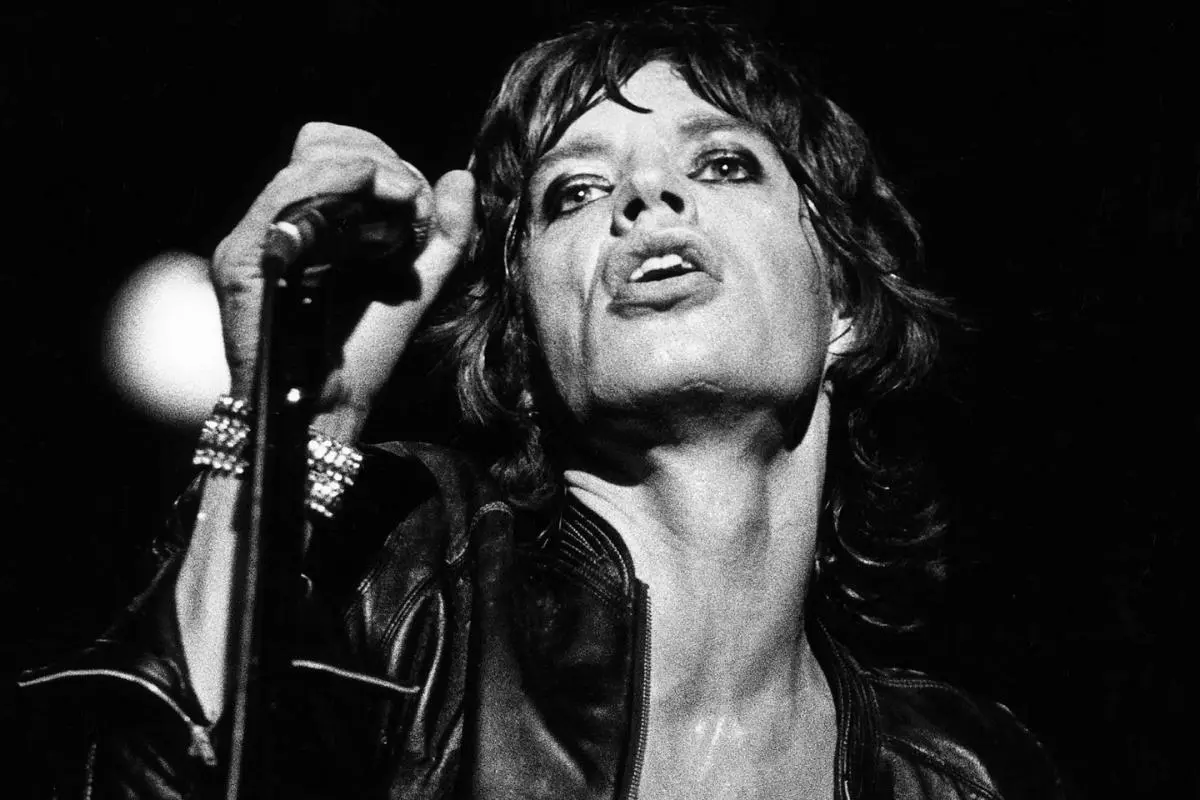
For musicians and music fans, 1973 is useful because it shows how “frontman technique” was changing. Jagger is physical and direct, a blues shouter turned stadium ringmaster. Bowie is conceptual and cinematic, a singer who uses posture and costume like chord changes.
Both approaches are valid, but in 1973 they start cross-pollinating in public. If you want to understand why later decades are full of “character” singers and hyper-stylized tours, you can trace a line through the Jagger-Bowie axis.
A quick comparison table: Jagger vs Bowie (1973 energy)
| Category | Mick Jagger (1973) | David Bowie (1973) |
|---|---|---|
| Core weapon | Physical charisma, call-and-response, threat | Persona, narrative, visual symbolism |
| Sex appeal | Dirty and immediate | Ambiguous and theatrical |
| Relationship to tradition | Roots-driven (blues, R&B) | Roots as collage (covers, sci-fi, cabaret) |
| What scares rivals | Control of the room | Control of the conversation |
The provocative claim: Bowie didn’t “copy” Jagger – he outflanked him
Here’s the edgy version that actually holds up: Bowie in 1973 isn’t a Jagger impersonator, he’s a Jagger strategist. He takes the idea of the frontman as erotic disruptor and makes it modular: new haircut, new accent, new myth, new record. Jagger’s danger feels biological; Bowie’s danger feels designed.
That design-minded approach is why Bowie could retire Ziggy and still stay relevant. It’s also why Jagger (and plenty of others) couldn’t dismiss him as a passing glam novelty. Bowie had built a machine for reinvention.
Receipts we can actually point to: songs and artifacts that echo the relationship
Because people love a smoking gun, let’s stick to items you can verify without leaning on gossip.
- Bowie covering Stones-adjacent material in his orbit: Bowie’s recording of “Let’s Spend the Night Together” is a direct, loud nod to the Stones songbook, and it reinforces how close he felt to their repertoire.
- Bowie’s 1973 covers project: Pin Ups frames Bowie as a curator of the scene that produced the Stones-era revolution in British rock.
- Jagger as the benchmark for swagger-rock vocals: “Watch That Man” shows Bowie choosing that chaotic, Stonesy attitude on purpose.
- The long game title of their chemistry: “Fascination” matters because it would later become part of the Jagger-Bowie songwriting tangle, and it begins with Bowie’s fascination as a theme rather than a footnote.
What their later partnership reveals about 1973
It’s tempting to treat their famous 1980s moment as a separate, MTV-era novelty. But the later collaboration only makes sense if you accept that the relationship had deep roots in the early 70s: shared circles, shared taste, and mutual recognition.
The “Dancing in the Street” video is often remembered as camp, but its very existence proves that whatever competition existed, it never fully killed the affection. The official video remains one of the cleanest public records of their chemistry: playful, physical, and slightly unhinged in a way neither man would risk with someone he didn’t trust.
“He would share so much with me.”
Mick Jagger, quoted in Rolling Stone
Jagger’s own words underline that the relationship wasn’t just a media story. In his remembrance of Bowie, he describes a bond where they shared ideas and creative energy, which helps explain why their early-70s proximity mattered even before it produced obvious “product.”
How to listen to 1973 with “Jagger vs Bowie” ears (a mini guide)
If you want to hear the relationship instead of reading about it, use a short listening drill. You’re not chasing a conspiracy, you’re listening for two masters solving the same problem: how to dominate attention.
- Play Bowie’s “Watch That Man” and listen for the deliberate chaos and half-swallowed phrasing.
- Play Bowie’s “Drive-In Saturday” and notice the retro-sexual mood and the theatrical framing.
- Put on any peak-Stones live clip from the era and compare the way Jagger uses stillness vs motion (he’s rarely doing “random”).
- Finish with “Dancing in the Street” and watch how easily they share the frame when the rivalry is no longer the headline.
A note on myth vs fact (because 1973 is a rumor factory)
Any story involving early-70s London, superstars, and nightlife quickly becomes a hall of mirrors. Some accounts are firsthand, some are secondhand, and some are just too good to die. The responsible approach is to treat sensational claims as context rather than proof unless they’re backed by direct testimony or documentation.
What is solid is the artistic logic: Bowie and Jagger were too similar in ambition to be indifferent to each other. Even when they weren’t collaborating, they were communicating through the culture, the clothes, the press, and the sound of what they released.
Conclusion: 1973 was their “shared mirror” year
Mick Jagger and David Bowie in 1973 are best understood as a shared mirror: each man reflecting a different possible future for rock stardom. Jagger represents the primal, blues-lit body as spectacle. Bowie represents the mind as spectacle, turning identity into a stage set.
Their relationship in that year is compelling because it’s not sentimental. It’s competitive friendship, the kind that makes you better and makes you paranoid, sometimes in the same night.


