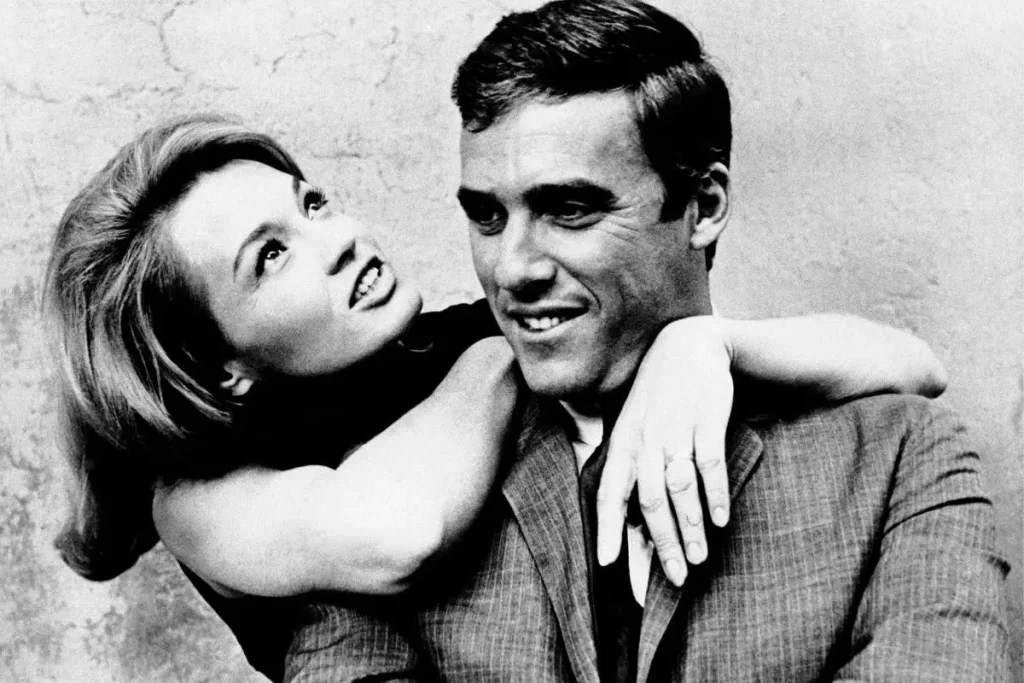
Burt Bacharach supplied the soundtrack to countless candlelit dinners, yet his own great romance with Angie Dickinson was turbulent, unsparing and, in the end, tragic.
If you grew up with their faces in magazines and their songs on AM radio, their story looks like pure Hollywood glamour. Look closer and it starts to feel more like one of Bacharach and Hal David’s saddest ballads: sophisticated, catchy and quietly devastating.
Two golden careers collide
By the early 1960s, Bacharach was already the suave king of Brill Building pop, co-writing hits like “Walk On By” and “Do You Know the Way to San Jose” and becoming a TV-friendly conductor and pianist in his own right. Dickinson, meanwhile, was the tough, witty brunette in a world of blond bombshells, stealing scenes in films like “Rio Bravo” and later fronting the cop series “Police Woman.”
They moved in the same rarefied circles: Vegas showrooms, Hollywood soundstages, European film sets. When they finally coupled up, Dickinson would later say she fell for him because he was “so different” from the macho leading men she usually met. In 1965, the movie star and the songwriter married and instantly became one of show business’s most glamorous couples.
From the outside, it looked like the perfect mid-60s power union – her movie-star allure matched with his tuxedoed sophistication at the piano. In reality, they were already building on sand.
A chaotic Vegas wedding and early warning signs
Bacharach’s own memoir, as summarized by one critic, opens with an astonishing confession: less than a year into the marriage, he was already thinking about divorce. He proposed in a casual, almost flippant way and the wedding itself took place in Las Vegas in the middle of the night, after hours of drinking, with the bride and groom breaking into giggles during their vows.
According to the same account, Bacharach later handed Dickinson a written list of more than twenty things she needed to change if the marriage was to continue, and even chose a daytime talk show appearance to air the idea that he should probably ask her for a divorce. That is not the behavior of a man desperate to protect his home life – it is the move of someone who treats real people like supporting characters.
Yet the public image stayed glossy. Throughout the 1970s, the couple appeared together in television commercials for Martini & Rossi, with Bacharach even penning the jingle, and he kept turning out hit scores and albums while she anchored a hit network drama. Viewers saw a stylish power couple; they did not see a marriage quietly coming apart.
Nikki: the child who changed everything
In 1966 Dickinson gave birth to their only child, Lea Nikki Bacharach, three months premature and weighing just 1 pound 10 ounces. For months the baby was kept in an isolette with no touching, an experience Dickinson later linked to Nikki’s lifelong sense of floating outside normal human contact.
As Nikki grew, she was startlingly bright and musical yet increasingly troubled. Dickinson has described a little girl who played piano “like a prodigy” but also hoarded odd objects and flew into anguished rages, at a time when autism spectrum conditions were barely discussed and certainly not understood in high-functioning children. Doctors talked about “behavior problems,” not Asperger’s, and the family stumbled in the dark for years.
In a long, unsparing first-person piece, Dickinson recalled devoting Nikki’s first seven years almost entirely to keeping her grounded and calm. She writes that the exhaustion, misunderstanding and constant crisis eventually hollowed out the marriage and that “Burt and I split up in 1976 after 11 years,” even though legal proceedings dragged on longer.
Eventually, Bacharach persuaded Dickinson that Nikki needed distance from her, and the teenager was sent for what was supposed to be treatment at the Constance Bultman Wilson Center in Minnesota, where she stayed for ten years. Dickinson later concluded the institution tried to make Nikki “like everybody else,” forcing her to drive, work and conform in ways that only deepened her despair.

The hard timeline
| Year | Event |
|---|---|
| 1965 | Burt Bacharach and Angie Dickinson marry in Las Vegas. |
| 1966 | Daughter Lea Nikki is born extremely premature. |
| Mid 1970s | Couple separate while remaining legally married. |
| 1980-81 | Divorce is finalized after roughly 15-16 years of marriage, as reflected in Bacharach’s biographies and in later interviews Dickinson gave about her life. |
| 2007 | Nikki dies by suicide at age 40. |
Genius at work, damage at home
Reviews of Bacharach’s autobiography were struck by how starkly it reveals a split personality: a perfectionist artist and a remarkably self-centred husband. One reviewer noted that his second wife, Dickinson, flatly calls him a “son of a bitch,” while his third wife, Carole Bayer Sager, observes that nothing about him changes when he changes wives except the woman standing next to him.
Another critic of the book goes further, painting Bacharach as “a cad” who recounts affairs with almost clinical detachment and seems fundamentally unable to be there for anyone who needed him emotionally. From that perspective, his marriage to Dickinson reads less like a love story and more like a collision between a woman who craved genuine partnership and a man who always kept one eye on the exit.
The Guardian’s account of the memoir includes an especially brutal anecdote: Bacharach once presented Dickinson with a 26-point list of things that had to change, prompting her to joke in retrospect that if he had actually written it out she would have “stuck pins in it” to show “what a prick I married.” The same piece notes that it was Bacharach who pushed hardest to have Nikki committed for a decade, a decision Dickinson now regards as both futile and cruel.
Bacharach, for his part, admitted his serial infidelity in the book, and later interviews summarised his view that he did not set out to hurt anyone but was simply unwilling to stay in a marriage that felt wrong, even if that meant leaving a trail of pain behind him. It is hard not to hear that as the rationalization of a man who treated commitment as one more arrangement to rewrite when the mood struck.
How Burt and Angie tell the story differently
In a remarkably candid television interview late in life, Dickinson said bluntly that Bacharach “never loved me the way one loves,” and added that he “should never have been married.” She also insisted she still liked him a great deal, which may be the most Dickinson-like twist of all: tough, unsentimental and still capable of affection for the man who hurt her.
Asked about their breakup in a magazine essay on autism, Dickinson is almost shockingly generous, writing that when a child’s needs are that overwhelming, “I don’t blame anyone for leaving.” She reserves her real fury not for Bacharach but for the professionals and institutions that failed Nikki, saving her harshest language for psychiatrists and treatment centers she believes misunderstood her daughter completely. Those failures, she suggests, were far more devastating than one man’s selfishness.
Bacharach’s own comments about his four marriages later in life are cool, almost philosophical: he talks about “bodies strewn in your wake,” concedes that being nice does not go with being married four times, and advises his son not to stay in a marriage that is not working, whatever the emotional cost. It is the perspective of a man who accepts the wreckage as collateral damage of pursuing his own version of happiness.
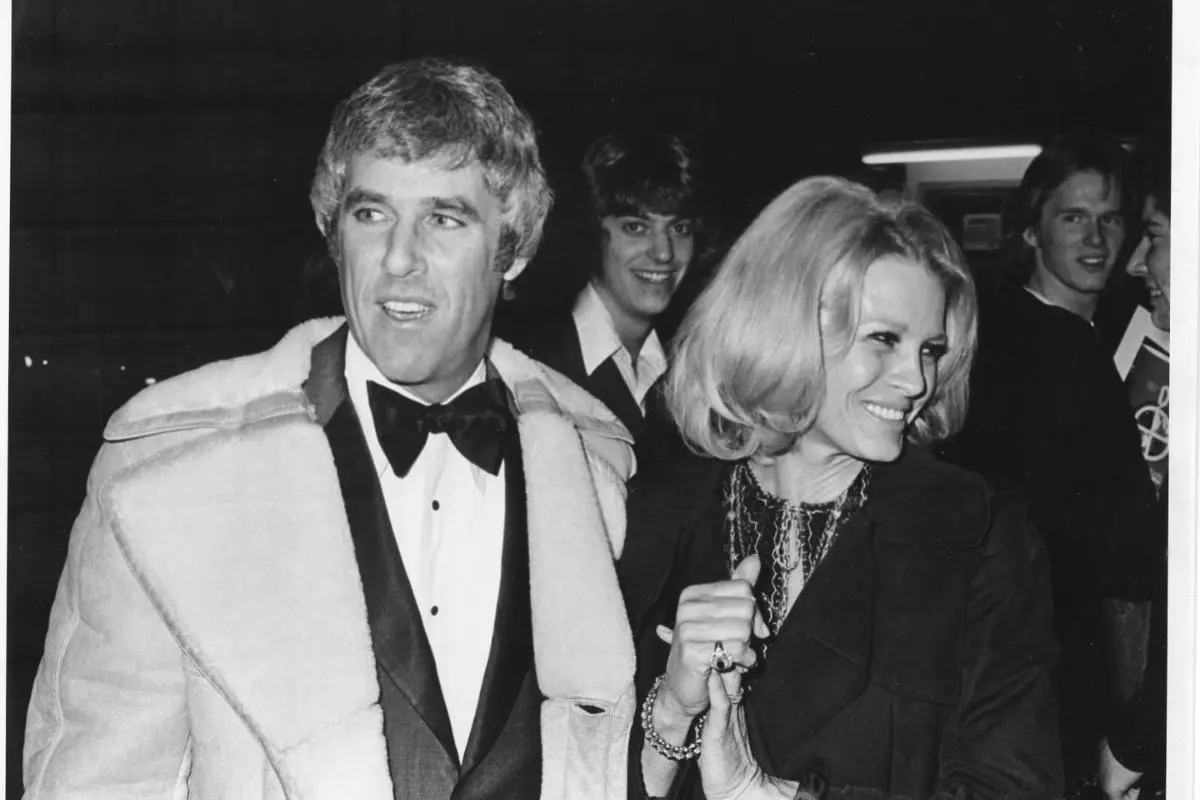
When the songs hit too close to home
Bacharach and Dickinson’s relationship even seems to echo in his catalog if you know where to listen. During the London years when he was scoring “What’s New Pussycat?,” the couple were living together and, according to an oft-retold story, an exasperated comment by Dickinson about a ringing doorbell gave lyricist Hal David the title “One Less Bell to Answer.” That elegant hit about domestic routines after a breakup suddenly sounds less theoretical once you picture a fed-up Angie in a London flat.
For Nikki, Bacharach wrote the instrumental “Nikki,” later used on television, with Hal David supplying tender lyrics about longing and fear of loss. Decades later, the same daughter, now diagnosed with Asperger’s syndrome, killed herself with a plastic bag and helium in her California home, prompting Bacharach and Dickinson to issue a joint statement that she had ended her life to “escape the ravages” of her condition.
If you enjoy easy listening, this is where it stops being easy. The man whose melodies once seemed like pure romantic fantasy turns out to have translated some of the darkest corners of his own family life into lush, hummable songs that played softly while other couples slow-danced.
After Nikki: guilt, grief and late attempts at atonement
Writing his autobiography forced Bacharach to confront Nikki’s death directly. He said the hardest part was revisiting her lifelong struggle. He acknowledged that he retreated into music while the family crisis deepened around him, using work on scores like “What’s New Pussycat?” and “Casino Royale” as an emotional escape hatch.
In later years he composed the score for the film “A Boy Called Po,” about a child with autism, explicitly describing it as a tribute to Nikki and saying that the story of a boy on the spectrum “touched me very much” because of what he had lived through with his daughter. It was a rare instance of the famously guarded composer trying, however late, to turn his private shame into something that might help others understand.
Dickinson, by contrast, largely stepped away from Hollywood to become Nikki’s full-time anchor, eventually giving up most social and professional commitments to travel, watch movies and simply exist alongside her daughter. After Nikki’s death and Bacharach’s in 2023, she has spoken of living alone in Beverly Hills with memories, grief and a characteristic gallows humor. It is a lonely, unsparing coda to a life once lived at the center of Hollywood.
What their story really tells us
The Bacharach-Dickinson marriage is not just gossip about two famous names. It is a case study in what happens when great talent, bottomless work ethic and sexual opportunism collide with the unglamorous demands of raising a profoundly vulnerable child.
For fans who grew up believing Bacharach’s songs were the voice of adult romance, the reality is uncomfortable: the man who wrote “Anyone Who Had a Heart” could be startlingly careless with the very hearts closest to him. Dickinson, equal parts movie siren and North Dakota farm girl, emerges as the tougher soul – clear-eyed about his failures, savage in her one-liners, yet still fiercely protective of their daughter to the end.
In the end, their relationship looks less like a failed love affair and more like a beautiful, broken duet: brilliant when the melody and harmony lock together, painful when the parts pull in different directions, and unforgettable precisely because it never really resolves.