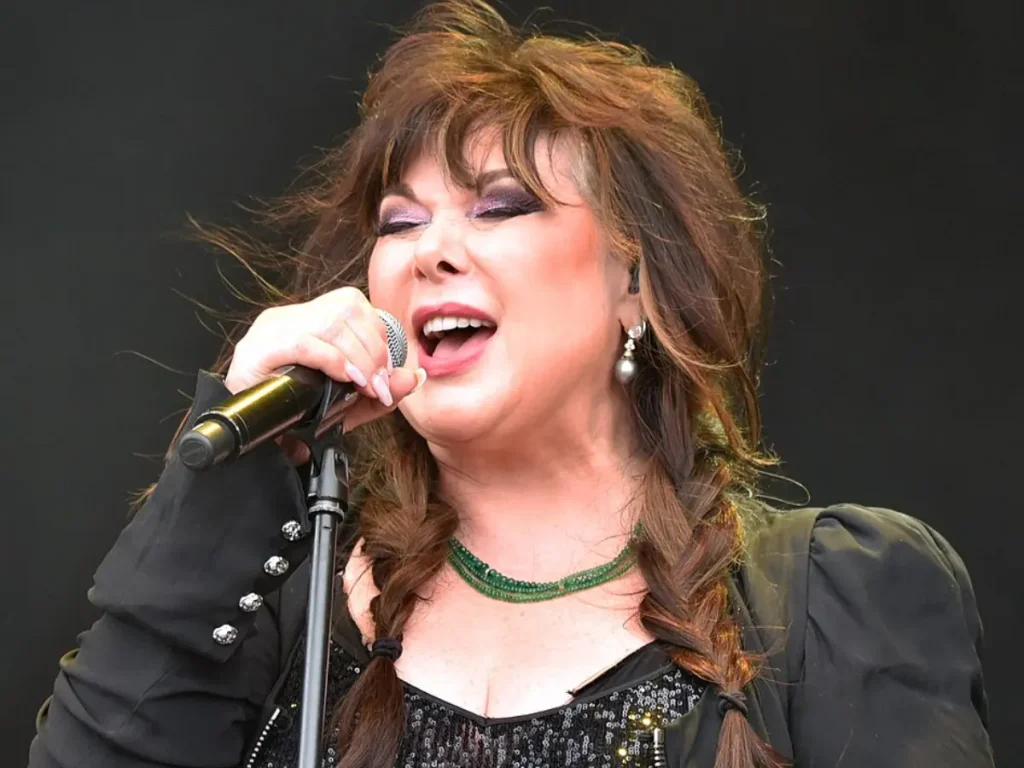
Put on the opening riff of “Barracuda” or the acoustic whirlwind of “Crazy on You” and it is obvious: Ann Wilson is not just singing, she is attacking the song from the inside out. Her voice is part jet engine, part cathedral organ, and it still makes younger rock singers sound cautious.
Yet behind that volcanic sound is a childhood spent soaking up opera records, a brutal battle with shyness and a music industry that tried hard to turn her into eye candy instead of a bandleader. That collision of operatic control, raw emotion and stubbornness is exactly what made Heart one of the most powerful voices – literally and figuratively – in rock history.
Pancakes, opera and a shy girl with a stutter
Ann Dustin Wilson was born in San Diego to a U.S. Marine Corps family that bounced from base to base before finally landing in the Seattle suburbs. To make every rented house feel like home, her parents cranked music: classical records, jazz, pop, and on Sundays a ritual her sister Nancy later summed up as “pancakes and opera,” with their dad mock-conducting in the living room.
Ann was painfully shy and developed a stutter that turned classroom roll call into a small nightmare. In their joint memoir she describes being sent out of class for speech therapy, humiliated as teachers announced “time for speech class” in front of everyone; the Stuttering Foundation has highlighted her story as a rare example of a rock star openly discussing how debilitating that felt. Singing became her loophole: melody flowed where spoken words jammed, and the girl who struggled to read aloud suddenly found she could hold a room silent with a song.
From Seattle bar band to songs that blew the doors off FM radio
By the early 1970s, Wilson had joined a local Seattle group that cycled through names before settling on Heart, with Nancy eventually coming aboard on guitar and backing vocals. The band’s blend of hard rock muscle and folk-rooted acoustic textures, driven by Ann’s voice, quickly stood out on a male-dominated bar circuit and soon on Canadian stages after they relocated to Vancouver.
Heart’s debut album Dreamboat Annie arrived in the mid 1970s, powered by singles like “Magic Man” and “Crazy on You” that turned them into staples of North American FM radio and helped launch a run of hit albums stretching into the 1980s with chart-toppers such as “These Dreams” and “Alone.” Encyclopaedia Britannica notes that the band sold millions of records across these decades and that the Wilson sisters’ songwriting and vocal chemistry were central to Heart’s rise.
If you want to hear why other singers still talk about Ann Wilson with a hint of fear, start with the way “Crazy on You” explodes. Nancy’s frenetic acoustic intro sounds almost like flamenco on caffeine, and then Ann arrives, leaping from an intimate murmur to a full-throated wail in a single line, never losing pitch, support or clarity. It is as close as classic rock gets to an aria disguised as a protest song.
| Song | Year | What her voice does |
|---|---|---|
| “Crazy on You” | 1975 | Jumps from breathy storytelling to sustained high belts, using dynamics almost like a classical singer riding an orchestra. |
| “Barracuda” | 1977 | Spits consonants like gunfire over a galloping riff, then soars on long, vibrato-rich notes that would not shame an opera stage. |
| “Dog & Butterfly” | 1978 | Shows off her softer side, with controlled, warm midrange lines that still bloom into ringing climaxes. |
| “Alone” | 1987 | Turns a power ballad into an emotional demolition job, lifting the final chorus into a high, sustained plea without cracking. |
Those songs were not just technical showcases. Nancy has said “Crazy on You” was written out of their disgust with the Vietnam War era and a sense of shame about American politics, while “Barracuda” was her sister’s venomous response to a sleazy industry figure who tried to sexualize the band for profit. Decades later, Nancy has called “Barracuda” even more relevant in an age of “billionaire” misogyny, drawing a straight line from that 1977 snarl to the grab-them-by-anything culture of modern power.
So was Ann Wilson really classically trained?
Among fans, a persistent story says Ann Wilson was a classically trained opera singer who simply defected to rock, sometimes embellished into claims that she formally studied opera at the University of Washington. The documented biographies tell a different, messier tale: an opera-obsessed household, some arts study in Seattle, but a vocal education built mostly in sweaty clubs, studios and on the road rather than in a conservatory classroom. No serious source describes her completing a degree in classical voice or spending years in an opera program.
What is true is that trained ears hear classical technique under the leather jacket. Reviewers who have caught her solo shows in recent years describe a lyric-soprano instrument that can climb into “operatic ranges” one moment and unleash “banshee screams” the next, still riding solid breath support well into her seventies. In other words, she sings like someone who understands how to use the whole body as an instrument, but she weaponizes that knowledge in service of rock’s grit rather than opera’s polish.
That may actually be more impressive than a conventional conservatory pedigree. Plenty of singers come out of music schools with tidy technique and no danger in their delivery. Ann Wilson learned to do the hard, boring technical work – long phrases, control at high volume, precise pitch after huge leaps – while standing in front of guitar stacks and indifferent drunks. The result is a voice that sounds like it could have handled Puccini but chose to breathe fire over power chords instead.

Trailblazers in a hostile boys’ club
When Heart finally joined the Rock & Roll Hall of Fame, the Hall’s own write-up hammered home how rare they were in the 1970s: the first female-fronted hard rock band to achieve sustained mainstream success, mixing heavy riffs with folk and pop in a way that inspired generations of women to pick up electric guitars. In an era when “serious” rock meant swaggering male frontmen and anonymous backup women, the sight of two sisters up front, writing the songs and driving the sound, was quietly revolutionary.
Ann has been blunt in later interviews about how ugly the pushback was. She recalls that labels and media knew only one template for women in rock – the “porn-girl” fantasy in latex and stilettos – and kept trying to shove the Wilsons into it, pressuring Nancy to strip down and jump off metaphorical cliffs with a guitar while dismissing their musical seriousness entirely. She has said that for a long time “nobody took you seriously” as a woman in rock and that only after a few artists “kicked the door open” did more women feel able to walk through. “People used to misinterpret us a lot,” she recalled.
And yet, even with the industry treating them like props, Heart quietly racked up the kind of numbers macho peers bragged about. Blabbermouth notes that Wilson’s voice has anchored more than 35 million record sales worldwide, a Rock Hall induction and a Grammy Lifetime Achievement Award, with “Barracuda,” “Crazy on You” and “Magic Man” lodged permanently in rock radio’s DNA. On a good night in the late 70s, Ann could out-sing half the leather-clad male metal heroes before they even finished soundcheck, and the uncomfortable truth is that many of those guys knew it.
Why Ann Wilson still matters on your turntable
For listeners who grew up when rock radio still played real bands, Ann Wilson’s voice is a reminder of what was possible before Auto-Tune and backing tracks. She hits huge notes, yes, but the real magic is in how she shapes a line, swelling a syllable, leaning on a consonant, or dropping to a near-whisper before detonating again. That is the opera in her – not a framed diploma, but a sense that singing is storytelling, not shouting.
If you want a fresh way to revisit Heart, listen like a vocal coach. On “Crazy on You,” track how she moves from chest voice to a higher, brighter placement without losing grit. On “Barracuda,” notice how the rhythmic bite of her phrasing is every bit as important as the pitch. Then remember that when she and Nancy started doing this, the rock world expected women to be decoration, not demolition experts. Ann Wilson did not just survive that world – she bent it, one high note and one furious lyric at a time.