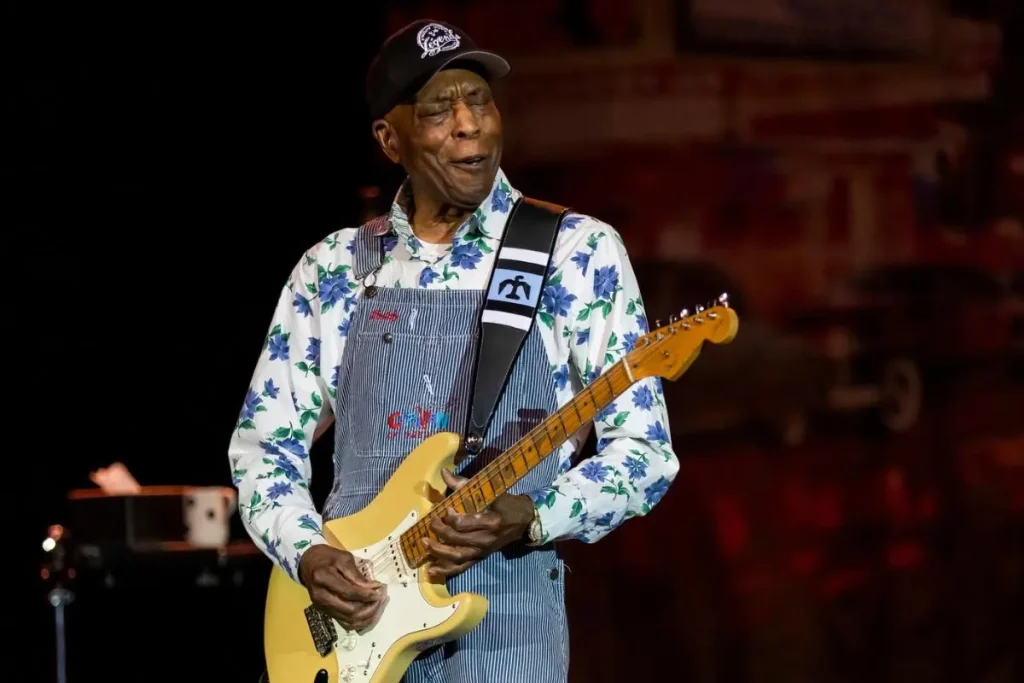
Buddy Guy’s bleeding fingers and the “stepchild” blues
Picture a skinny Louisiana kid choosing a beat up guitar over the only real entertainment in town: sandlot baseball. Buddy Guy wanted to do something the other boys could not, and when he finally cracked the riff to John Lee Hooker’s “Boogie Chillen,” he clamped his fingers on the strings so long they bled rather than risk losing it. Years later, with Grammys on the shelf and stadiums behind him, that same kid would snarl that modern radio treats the blues “like a stepchild” and ask, very pointedly, what the music ever did to deserve being shoved out of earshot. modern radio treats the blues “like a stepchild”.
That tension – the joy of discovery versus the fury of neglect – runs through Buddy Guy’s life. It is the story of how a single hypnotic riff lit up a sharecropper’s shack and turned into a lifelong battle to keep Muddy, Wolf, B.B. and the rest from being quietly erased by playlists and programming meetings.
Sandlots, screen wire and a Harmony on the porch
Guy was born in Lettsworth, Louisiana, into a family of Black sharecroppers with no electricity, no glass windows and a lot of hard field work. As a boy he built a two string diddley bow from screen wire, then graduated to a cheap Harmony acoustic a stranger bought after seeing the kid “making noise” on his sister’s porch steps, an instrument he later donated to the Rock & Roll Hall of Fame. His searing, stuttering attack would go on to shape Eric Clapton, Jimi Hendrix, Jimmy Page, Jeff Beck, Stevie Ray Vaughan, Gary Clark Jr. and John Mayer, while earning him eight Grammys, a National Medal of Arts and Kennedy Center Honors. eight Grammys, a National Medal of Arts and Kennedy Center Honors.
Out in the country there were no parks, no pools and not much to do after dark, so the radio became church. Guy remembers halting pickup baseball games when the local station finally gave the blues a precious half hour, fighting off exhaustion from a day in the fields just to hear Lightnin Hopkins, T Bone Walker, Mahalia Jackson and country records spill out of the same speaker. That tiny window, he recalls, let him sleep a little easier. That tiny window, he recalls, let him sleep a little easier.
The “Boogie Chillen” epiphany
The first song that truly sounded right under his fingers was Hooker’s “Boogie Chillen.” Banished from the house for his untuned clatter, the young Buddy lay half asleep on a woodpile, idly picking until his hands fell into that droning, one chord groove. When he woke, he was terrified that moving a finger would break the spell, so he played the riff for six straight hours before walking a mile to every friend he had, announcing “I got it” like he had just cracked a safe. he played the riff for six straight hours.
Hooker’s original recording of “Boogie Chillen” was more than a personal lightbulb moment. Cut in Detroit in 1948 with nothing but voice, electric guitar and foot stomps, it became the first down home electric blues record to hit number one and pushed labels to hunt for more raw, amplified country bluesmen. The Blues Foundation notes that this single record “set the nation rocking” and effectively opened the door for the entire electric blues generation that raised Buddy Guy. “set the nation rocking”.
When Guy talks about learning that tune, he is not just remembering a party trick. He is remembering the exact moment rural acoustic blues, urban electricity and a teenager’s desperation collided in his hands. Everything he did later – from Chicago club battles to stadium shows – sits on that droning B chord.
Last fluent speaker of a dangerous language
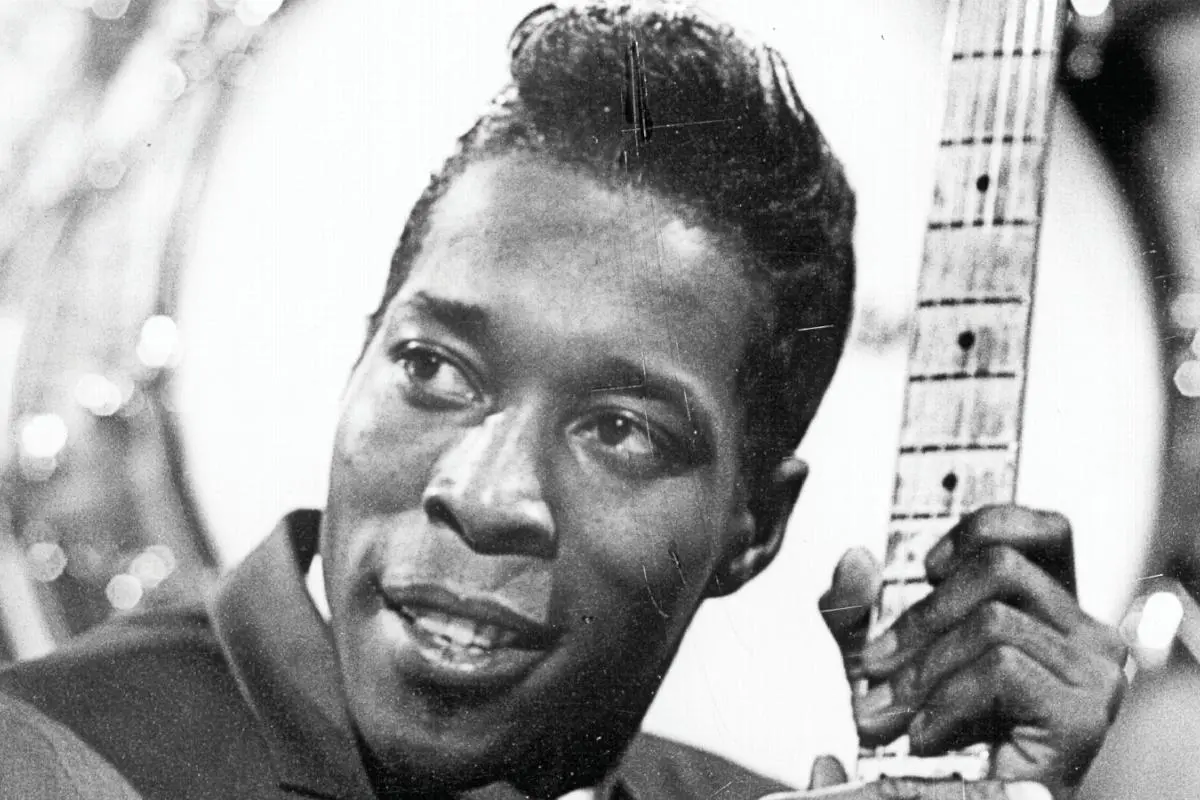
By the time most listeners over fifty first saw him, Buddy Guy was already a legend on the Chicago West Side: the wild man playing behind his back, with his teeth, out in the middle of the room on an extra long cable while more polite players stayed seated. Those theatrics, and his molten, on the edge solos, seeped directly into Hendrix, Beck and Clapton, who would drag his sound onto rock stages and into white record collections. his molten, on the edge solos.
Yet even as tourists line up at his Chicago club Legends for selfies with an “icon,” Guy worries he may be the last full blood carrier of that language. In a New Yorker profile he likened himself to the final fluent speaker of an obscure tongue, haunted by the list of Muddy Waters, B.B. King, Otis Rush, Koko Taylor and others he has already buried, and unsure whether the blues will survive as anything more than a museum piece once he is gone.
Albums that talk back to history
Guy’s late career is one long argument with anyone who thinks the blues is nostalgia. The 1991 breakout Damn Right, I’ve Got the Blues finally gave him a proper budget and audience, but his more recent run – Born to Play Guitar, The Blues Is Alive and Well, The Blues Don’t Lie – reads like a running rebuttal to the idea that this music’s time has passed. On The Blues Don’t Lie he sings about grief, political violence and a world short on love, wrapping them in solos that feel like a man testifying that the human mess those songs describe has not gone anywhere.
At 89, on his new album Ain’t Done With The Blues, he doubles down. The record opens with “Hooker Thing,” just Buddy, a low down acoustic and a hushed quotation of “Boogie Chillun,” punctuated by him saying softly, “It’s the first thing I learned to play.” Later he picks up the acoustic again, offers “a little Lightnin” and breaks into a raw, Hopkins inspired verse before signing off with “Love Lightnin Hopkins,” like a benediction. Ain’t Done With The Blues.
These are not casual nods; they are receipts. Every time Guy quotes Hooker or Lightnin he is saying, in effect, “This is where all your favorite rock records came from, and I am not going to let you forget it.”
“Blues is like a stepchild now” – the radio problem
For all the honors, Guy is blunt about how the business treats his music. In a Billboard interview he growled that “blues is like a stepchild now,” complaining that big FM stations simply do not play it, and that even a great blues record is “just there” if nobody hears it. He reaches for home cooking to explain it: you will never know how good Louisiana gumbo tastes unless somebody actually lets you try a bowl, and right now the gatekeepers are refusing to serve it. “What did we do to be treated like that?” he asks. “What did we do to be treated like that?”
The insult is not abstract. Guy tells stories of his own children growing up with no idea who their father was onstage, because he was invisible on mainstream radio and television. In one interview he recalls a disc jockey refusing to spin his track because it sounded “too black,” while the same stations happily played rock covers of Muddy Waters and Howlin Wolf instead of the originals, packaging Black pain in a whiter, safer wrapper for advertisers. a disc jockey refusing to spin his track because it sounded “too black”.
A century of stacked decks in the playlist
Historically, the cards were marked against the blues. Country music thrived on early radio partly because rural stations could blanket huge areas with a single signal and attract sponsors selling tractors, feed and household goods to white farmers. Blues, clustered in urban Black neighborhoods, split across many smaller stations with less reach, and advertisers who did not want their brands tied to African American music frequently looked the other way. As one recent survey of the era notes, segregation, weak label support and lower perceived “purchasing power” meant blues simply did not get the airplay boosts that powered country. segregation, weak label support and lower perceived “purchasing power”.
Guy’s “stepchild” complaint is not just bitterness from an aging star. It is a lived summary of how structural racism, risk averse programming and ad driven radio conspired to treat the very music that built rock culture as something you shove in the back room and close the door on.
Streaming, cinema and a strange new hope
Ironically, the same industry that sidelined the blues is now watching data that says audiences still want it – if somebody puts it in front of them. In 2025, Buddy’s appearance in Ryan Coogler’s film Sinners and the release of Ain’t Done With The Blues coincided with a measurable jump in U.S. on demand blues streams, with analytics firm Luminate calling it a small “resurgence of the blues” driven by the movie’s soundtrack. Guy says strangers now stop him in grocery stores to talk about the music they heard in the film, but, he notes acidly, “they ain’t never gonna come in and say, ‘I heard it on the radio.’”
In that same interview he returns to the gumbo metaphor: music, like a good pot in Louisiana, has chicken, sausage and seafood all sharing the same broth. The blues is one of those core flavors, even when people meet it disguised as rock, soul or hip hop, and once they finally taste the undiluted version many are surprised by how familiar it feels.
Streaming and cinema are not perfect saviors; algorithms can be as conservative as program directors. But they have, at least, made it possible for an 89 year old bluesman to shake the culture again without begging for a slot between soft rock ballads and car commercials.
What Buddy Guy’s fight means for players and listeners
If you play guitar: start where Buddy started
If you are a guitarist, there is a brutal kind of honesty in Guy’s story. He became Buddy Guy not by obsessing over 32 bar jazz changes, but by grabbing a handful of simple riffs – Hooker’s boogie, Lightnin’s licks, T Bone’s glide – and holding them until his hands hurt. The modern gear market knows there is still hunger for that sound; even a practical site like Know Your Instrument keeps a dedicated list of “best blues guitars”, from semi hollow Epiphones to SGs and PRS models that are explicitly sold as tools for chasing those tones.
The point is not the brand, though. It is the attitude. Take one riff you love and do what Buddy did on that woodpile: repeat it until you can play it in your sleep, then start bending, choking and manhandling it until it begins to sound like your own bad habits instead of a museum piece.
If you just love music: override the playlist
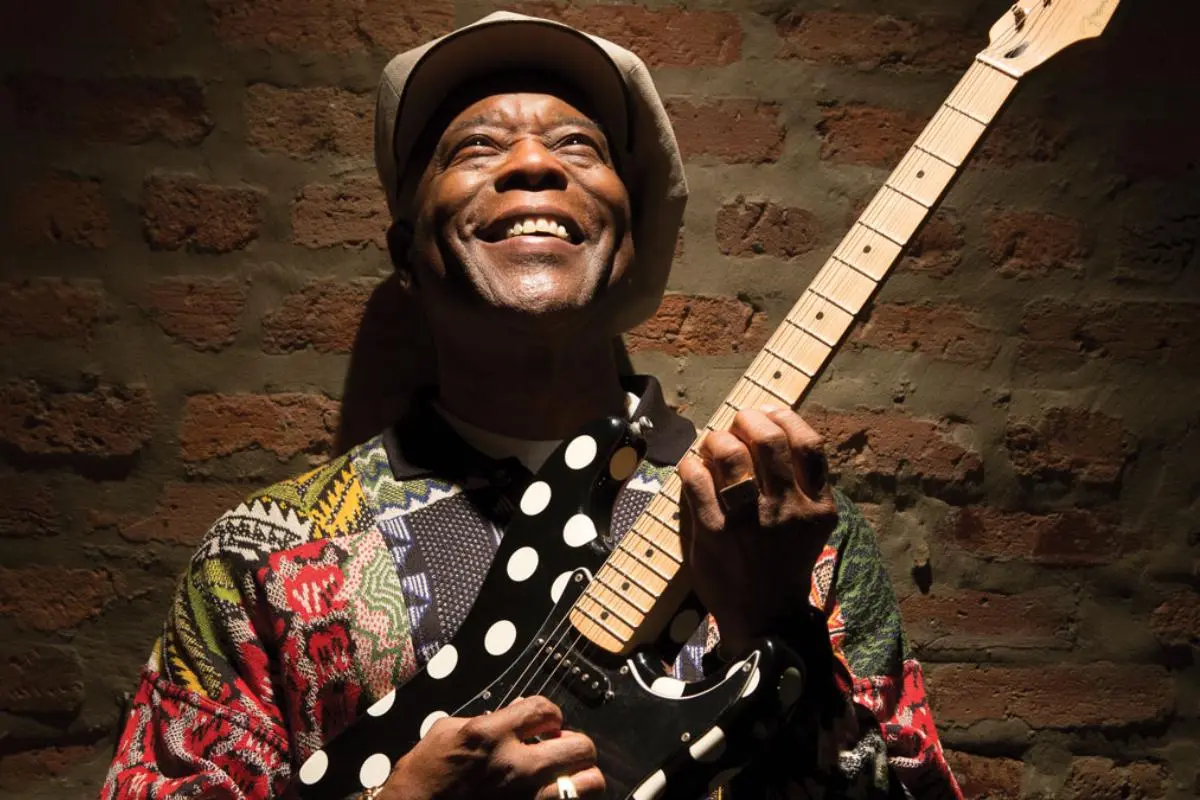
For listeners, the most radical thing you can do is bypass the curated blues flavored wallpaper and go straight to the source. Put John Lee Hooker’s “Boogie Chillen,” Muddy Waters’ “Country Blues,” Howlin Wolf’s “Smokestack Lightning,” B.B. King’s live records and Buddy’s early Chess and Silvertone sides in the same personal rotation as your favorite rock and soul. Then follow the thread forward to people he has championed, like Christone “Kingfish” Ingram, who trades licks with Buddy on the new album and is already carrying the flame into another generation. trades licks with Buddy on the new album.
Just as important, support the places still taking the risk to book real blues: tiny bars, local festivals, regional clubs. Guy built Legends in Chicago as a physical answer to the question “Where do you go to hear this stuff for real?” If you are lucky enough to have a room like that within driving distance, showing up does more for the music than any social media post.
The kid on the levee, the stepchild music, and you
Somewhere in that story of a boy on a levee squeezing a stolen Hooker riff until his fingers bled is a choice all of us face. We can accept a world where the deepest American music gets treated like an unwanted stepchild, or we can do what Buddy Guy did and insist on doing something the other kids are not doing: turning up the real thing, loud, in public.
The big FM stations may never “straighten it out.” But if enough people taste the gumbo for themselves, the stepchild might yet outlive the family that tried to lock it in the attic.